How Professional Skills Can Help Individuals Build Long-Term Careers in India
By BONC Editorial Team • Published on 04 Nov 2026
Introduction
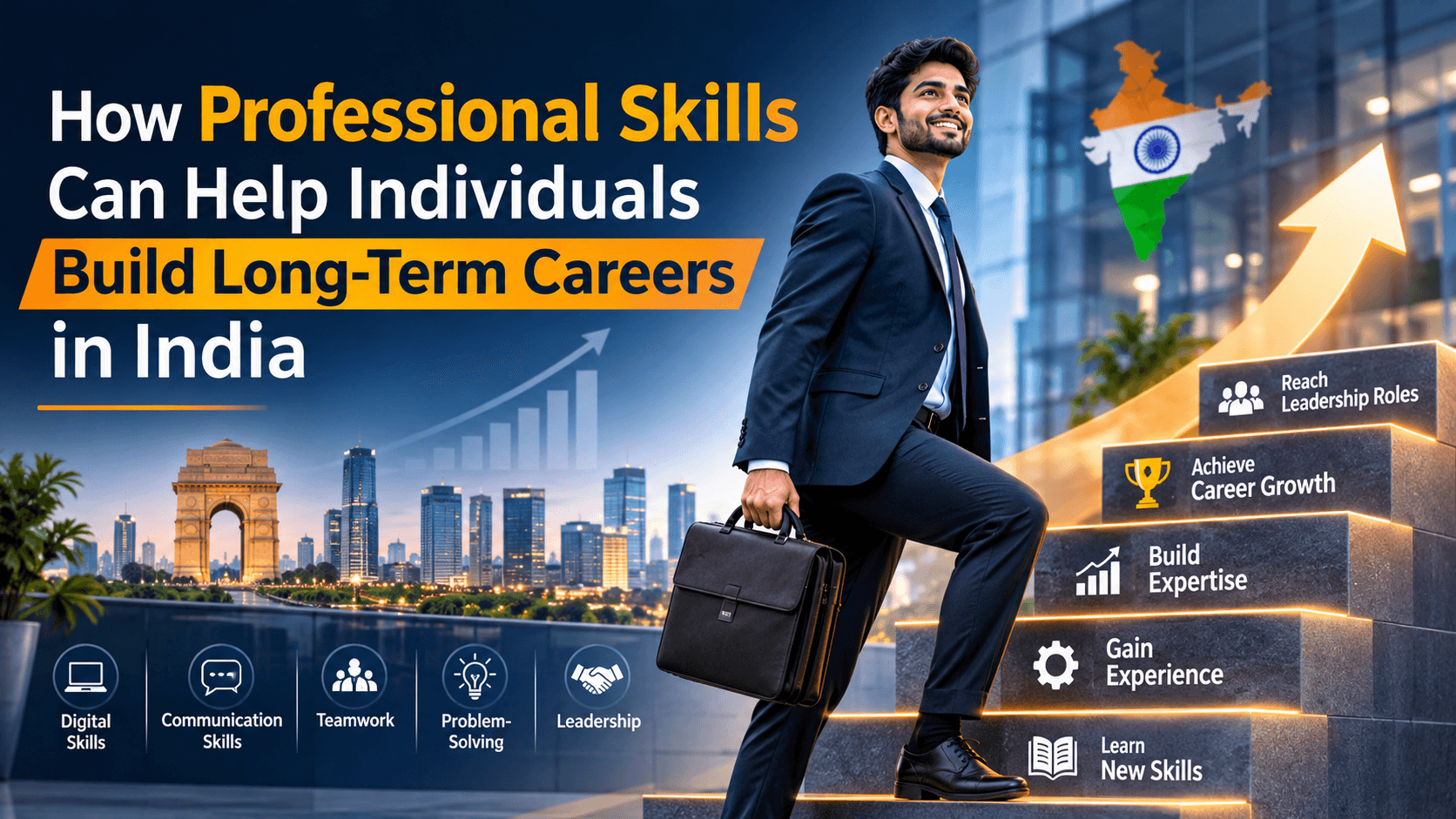
Building a successful career is not simply about finding a job and earning a regular income. In today's competitive professional environment, individuals need to continuously improve their abilities, adapt to changing workplace expectations, and develop the skills required to perform effectively. Across India, industries are evolving because of technological advancements, changing customer expectations, digital transformation, global business connections, and new economic opportunities. These developments are creating new career possibilities while also changing the expectations employers have from professionals.
Professional skills play an important role in helping individuals navigate these changes. Whether someone works in information technology, manufacturing, healthcare, finance, education, retail, logistics, marketing, or another industry, the ability to communicate, solve problems, manage responsibilities, collaborate with colleagues, and understand industry-specific requirements can influence long-term career development.
Academic qualifications and technical knowledge may help individuals enter a profession, but professional skills often determine how effectively they grow within it. Employees who can take responsibility, learn new methods, manage workplace challenges, and contribute to organisational goals are better prepared to handle changing career requirements.
In India, where the employment landscape includes established industries as well as emerging sectors, professional skill development is becoming increasingly important. Fresh graduates need workplace readiness, experienced employees need to update their capabilities, and career changers need to build transferable skills that can help them enter new fields.
Understanding which skills matter, how to develop them, and how to apply them in practical situations can help individuals build careers that remain relevant over time.
Understanding Professional Skills and Their Importance
Professional skills are the abilities, behaviours, and practical competencies that help individuals perform effectively in a workplace. They include technical knowledge, communication, teamwork, leadership, decision-making, time management, adaptability, and professional conduct.
These skills are useful across different job roles and industries. A software developer may need problem-solving and analytical thinking, while a sales professional may depend heavily on communication, negotiation, and relationship management. A manufacturing supervisor may require technical understanding, safety awareness, team coordination, and production planning.
Professional skills connect individual capabilities with workplace expectations. They help employees complete responsibilities, interact with others, understand organisational objectives, and respond to professional challenges.
Professional Skills Go Beyond Academic Qualifications
Educational qualifications provide theoretical knowledge and a foundation for entering a particular profession. However, real workplace situations often require individuals to apply that knowledge in practical ways.
For example, a graduate with a business administration degree may understand management principles, but managing an actual project requires planning, communication, coordination, and decision-making. Similarly, someone with an engineering qualification may understand technical concepts but still need teamwork and problem-solving abilities to work effectively with production teams.
This is why employers often consider both educational qualifications and practical workplace capabilities when evaluating candidates.
Skills Help Professionals Remain Relevant
Industry requirements do not remain constant. New software, automation systems, business models, regulations, and customer expectations can change the way organisations operate.
Professionals who regularly update their knowledge are better prepared to respond to these developments. Instead of depending entirely on skills learned during formal education, they continue learning through training, professional experience, industry resources, and practical projects.
Long-term career development therefore requires a combination of existing expertise and a willingness to acquire new capabilities.
Communication Skills Build Strong Professional Relationships
Communication is one of the most important professional skills because almost every workplace depends on the exchange of information. Employees communicate with managers, colleagues, customers, suppliers, business partners, and other stakeholders.
Clear communication reduces misunderstandings, improves coordination, and helps individuals express ideas confidently. It also allows employees to understand instructions, share progress, explain challenges, and participate in discussions.
Verbal Communication
Verbal communication includes speaking clearly during meetings, presentations, interviews, client discussions, and everyday workplace interactions.
Professionals should learn to explain information in a structured and understandable way. They should also consider the audience, purpose, and context of a conversation.
For example, a technical employee may need to explain a complicated issue to a non-technical manager. The ability to simplify information without losing its meaning can improve decision-making and collaboration.
Written Communication
Emails, reports, proposals, business messages, presentations, and project updates are common parts of professional work.
Strong written communication helps employees present information accurately and professionally. It involves clear sentence structure, appropriate language, correct grammar, and logical organisation.
Employees who can write concise reports and meaningful updates can help teams understand important information more efficiently.
Listening and Understanding
Communication is not limited to speaking and writing. Active listening is equally important.
Professionals should pay attention to instructions, understand different viewpoints, ask relevant questions, and confirm important details before taking action. Listening carefully can prevent avoidable errors and improve workplace relationships.
Communication Supports Career Advancement
Employees who communicate effectively can explain their contributions, discuss performance expectations, participate in team activities, and handle professional conversations more confidently.
These abilities become especially valuable when individuals move into supervisory, managerial, client-facing, or leadership responsibilities.
Technical Skills Help Individuals Develop Industry Expertise
Technical skills are the practical abilities required to perform specific tasks within a profession. They differ according to industry, occupation, and job responsibilities.
As Indian businesses adopt new technologies and improve their operating processes, technical knowledge is becoming important across a wide range of sectors.
Technical Skills in the IT Industry
Information technology professionals may require programming, software development, cybersecurity, cloud computing, data analysis, database management, and artificial intelligence-related knowledge.
Technology changes quickly, so IT professionals need to update their skills as tools, programming languages, and industry practices evolve.
Learning new technologies and applying them through practical projects can help professionals strengthen their expertise.
Technical Skills in Manufacturing
Manufacturing professionals may need knowledge of production processes, quality control, machinery, industrial automation, inventory management, maintenance, and workplace safety.
Employees who understand both technical operations and production requirements can contribute to efficiency and product quality.
As factories introduce modern equipment and digital production systems, workers may also need to understand automation, monitoring software, and data-based production methods.
Technical Skills in Healthcare and Pharmaceuticals
Healthcare professionals require specialised knowledge related to patient care, medical procedures, laboratory operations, healthcare technology, documentation, and regulatory requirements.
The pharmaceutical sector also requires technical capabilities in areas such as research, quality assurance, manufacturing processes, testing, and compliance.
Because these industries directly affect public well-being, professional competence and responsible working practices are particularly important.
Technical Skills in Finance and Business
Finance professionals may need accounting, financial analysis, taxation, auditing, budgeting, risk management, and knowledge of relevant software.
Business professionals may benefit from skills in market research, business analysis, project management, customer relationship management, and digital tools.
Technical expertise helps employees perform specialised responsibilities, while continuous learning allows them to remain prepared for new professional requirements.
Problem-Solving Skills Improve Workplace Performance
Every profession involves challenges. Projects may face delays, customers may raise concerns, production processes may experience difficulties, and teams may need to work with limited resources.
Problem-solving skills help individuals understand these situations, identify possible causes, evaluate alternatives, and choose practical solutions.
Identifying the Actual Problem
An effective solution begins with understanding the issue correctly. Professionals should avoid making assumptions before examining the available information.
For example, if a manufacturing unit experiences repeated production delays, the reason may involve equipment maintenance, raw material availability, workforce coordination, or planning. Identifying the actual cause is more useful than responding only to the visible symptoms.
Evaluating Different Solutions
Workplace problems may have several possible solutions. Professionals need to compare them based on time, cost, resources, quality, and potential consequences.
Analytical thinking helps employees understand which option is practical and which risks may need attention.
Learning From Workplace Challenges
Problems can also become learning opportunities. Employees who review what happened, identify mistakes, and apply lessons to future tasks can improve their professional judgement.
This approach helps individuals become more independent and better prepared for responsibilities that require decision-making.
Adaptability Helps Professionals Manage Industry Changes
Adaptability is the ability to respond constructively when workplace conditions, responsibilities, technologies, or business requirements change.
The Indian employment market includes traditional sectors, fast-growing industries, and businesses undergoing digital transformation. Professionals may need to learn new tools, adjust to different teams, or take on responsibilities that were not part of their original role.
Adjusting to New Technologies
Digital tools are changing how organisations communicate, manage information, serve customers, and deliver products or services.
Employees who are willing to learn new software and systems can adjust more easily when their organisation introduces new processes.
For example, a sales professional may need to use customer relationship management software, while an operations employee may need to work with digital inventory systems.
Managing Changing Responsibilities
Career growth often involves taking on new responsibilities. An employee may move from individual tasks to project coordination, team supervision, or client management.
Adaptability helps professionals approach these changes with a learning mindset rather than resisting unfamiliar responsibilities.
Working in Changing Business Environments
Market demand, customer preferences, supply-chain conditions, and organisational priorities can change. Professionals who understand the importance of flexibility can respond more effectively while maintaining their focus on quality and performance.
Adaptability does not mean accepting every change without consideration. It means understanding new requirements, learning what is necessary, and responding thoughtfully.
Leadership Skills Prepare Individuals for Greater Responsibilities
Leadership is not limited to senior managers or business owners. Employees at different career stages can demonstrate leadership through accountability, initiative, teamwork, and responsible decision-making.
Developing leadership skills can help individuals prepare for supervisory and managerial positions.
Taking Ownership of Responsibilities
Professionals demonstrate ownership when they complete assigned work, communicate delays, take responsibility for mistakes, and look for ways to improve outcomes.
Managers value employees who can be trusted to handle responsibilities with limited supervision.
Supporting Team Members
Strong leaders understand that workplace success often depends on teamwork. They share useful knowledge, support colleagues, encourage cooperation, and help resolve disagreements.
An employee who contributes positively to team performance can gradually develop the experience required for leadership roles.
Making Responsible Decisions
Leadership requires the ability to consider different perspectives, evaluate risks, and make decisions based on available information.
Professionals should also understand when a decision requires consultation or approval from someone with greater authority.
Developing Emotional Intelligence
Emotional intelligence involves understanding one's own emotions and recognising how others may respond in different situations.
It can help professionals manage disagreements, receive feedback, communicate respectfully, and maintain productive working relationships.
Time Management and Organisation Support Consistent Performance
Time management is an essential professional skill because employees often handle several tasks, deadlines, and responsibilities simultaneously.
Poor planning can result in missed deadlines, unnecessary stress, and lower-quality work. Effective organisation helps professionals use their time and resources more productively.
Prioritising Important Tasks
Not every task has the same level of urgency or importance. Professionals should identify which responsibilities require immediate attention and which can be scheduled for later.
Prioritisation helps employees focus on activities that have the greatest impact on project or organisational goals.
Setting Realistic Deadlines
Employees should understand the amount of time required to complete tasks. Setting realistic timelines makes it easier to plan work and communicate expectations.
If delays become unavoidable, informing the relevant people early can help teams adjust their plans.
Using Digital Productivity Tools
Calendars, task-management applications, project dashboards, spreadsheets, and collaboration platforms can help individuals organise their responsibilities.
However, tools are useful only when employees use them consistently and maintain accurate information.
Maintaining Work Quality
Time management should not mean completing tasks as quickly as possible at the expense of accuracy. Professionals need to balance speed, quality, and attention to detail.
Consistent performance builds trust and helps individuals establish a positive professional reputation.
Teamwork and Collaboration Create Better Workplace Opportunities
Modern organisations often depend on employees from different departments and professional backgrounds working together. Teamwork helps individuals combine their knowledge, share responsibilities, and achieve common objectives.
Respecting Different Perspectives
People may approach a problem differently because of their experience, education, responsibilities, or professional background.
Respecting these differences can lead to more balanced discussions and better solutions.
Sharing Knowledge and Information
Employees who share useful information can help their colleagues avoid repeated mistakes and understand tasks more clearly.
Knowledge sharing also supports workplace learning, especially when experienced employees guide newer team members.
Managing Professional Disagreements
Disagreements can occur when people have different priorities or opinions. Professionals should focus on facts, responsibilities, and practical outcomes rather than personal arguments.
Respectful discussion and constructive feedback can help teams resolve differences without damaging working relationships.
Collaboration Across Departments
Many projects require coordination between sales, marketing, finance, operations, technology, procurement, and customer service teams.
Employees who understand how their work connects with other departments can contribute more effectively to organisational objectives.
Digital Literacy Is Becoming Essential Across Indian Industries
Digital literacy refers to the ability to use digital devices, software, online services, and information systems effectively and responsibly.
It is no longer relevant only to technology professionals. Employees in almost every industry interact with digital tools in some form.
Understanding Common Workplace Software
Professionals may need to use word processors, spreadsheets, presentation software, email systems, video-conferencing applications, and project-management tools.
Knowing how to use these tools can improve communication, documentation, reporting, and coordination.
Understanding Data and Digital Information
Many organisations use data to evaluate performance, understand customers, manage operations, and plan business activities.
Employees do not always need advanced data-science expertise, but they can benefit from understanding basic data interpretation, accuracy, and information management.
Using Artificial Intelligence Responsibly
AI-powered tools are increasingly being used for research, drafting, analysis, automation, and productivity support.
Professionals should understand how these tools work at a practical level, where they can be useful, and where human review remains necessary.
Employees should also protect confidential information, check generated content, and follow organisational policies when using AI tools.
Maintaining Digital Security Awareness
Cybersecurity awareness is important for professionals who use email, online accounts, business documents, and digital platforms.
Basic practices include using strong passwords, recognising suspicious messages, protecting confidential information, and following workplace security procedures.
Digital literacy helps employees work confidently in modern organisations and prepares them for changing job requirements.
Continuous Learning Keeps Career Skills Relevant
Professional development should not stop after completing a degree, diploma, or training programme. Long-term careers require regular learning because industry knowledge and workplace expectations continue to change.
Continuous learning allows individuals to improve existing capabilities, understand new developments, and prepare for future responsibilities.
Learning Through Professional Courses
Online courses, certification programmes, workshops, and industry training can help individuals gain specialised knowledge.
Before selecting a course, professionals should consider whether the content is relevant to their career goals and whether the learning outcomes can be applied in real work situations.
Learning From Workplace Experience
Daily responsibilities provide opportunities to develop professional skills. Employees can learn by handling projects, observing experienced colleagues, participating in meetings, and taking on unfamiliar tasks.
Practical experience often helps individuals understand how theoretical knowledge applies to real business situations.
Attending Industry Events and Seminars
Conferences, exhibitions, trade fairs, workshops, and professional seminars can expose individuals to new ideas, technologies, products, and business practices.
These events may also provide opportunities to interact with industry participants and understand changing market requirements.
Seeking Feedback
Feedback from managers, mentors, colleagues, and clients can help individuals identify areas for improvement.
Professionals should approach constructive feedback with an open mind and convert useful suggestions into specific learning goals.
Professional Networking Can Support Long-Term Career Development
Professional networking involves building and maintaining meaningful relationships with people who share industry interests, business responsibilities, or professional goals.
Networking can help individuals learn about industry developments, understand different career paths, exchange knowledge, and discover opportunities for professional collaboration.
Building Industry Connections
Professionals can develop connections through workplace relationships, industry events, alumni groups, professional associations, conferences, and digital business communities.
The objective should be to build genuine professional relationships rather than simply collecting contacts.
Learning From Experienced Professionals
Conversations with experienced people can provide useful insights into industry expectations, workplace challenges, and the skills needed for career progression.
Mentors may also help individuals evaluate their strengths, identify development areas, and make more informed professional decisions.
Using Digital Platforms for Business Discovery
Digital platforms have made it easier to explore companies, industries, products, and business networks.
For example, BONC Network is a B2B digital networking platform where individuals and businesses can explore company-related information, products, and business connections. Such platforms can help users understand the wider business environment and discover organisations operating across different sectors.
For professionals interested in business development, sales, procurement, entrepreneurship, or industry research, exploring company profiles and business activities can provide useful commercial context.
However, business networking should complement—not replace—role-specific career preparation, formal recruitment channels, and direct verification of professional opportunities.
Maintaining Professional Relationships
Networking is not a one-time activity. Professionals should maintain connections through meaningful communication, knowledge sharing, and mutual support.
A helpful professional relationship develops over time through trust, respect, and genuine engagement.
Industry-Specific Skills Can Strengthen Career Opportunities in India
Although many professional skills are useful across industries, individuals also need capabilities that match the sector in which they want to work.
India's diverse economy provides career possibilities in traditional industries, service sectors, technology-driven businesses, and emerging fields.
Information Technology and Software Services
IT professionals benefit from programming, software development, cybersecurity, cloud services, data analysis, communication, and problem-solving.
Because technology changes rapidly, professionals should keep their technical knowledge current and build practical experience through projects.
Manufacturing and Engineering
Manufacturing and engineering careers may require production planning, machine operation, quality management, industrial safety, automation, technical documentation, and process improvement.
Professionals who combine technical expertise with coordination and analytical skills can contribute to operational performance.
Healthcare and Pharmaceuticals
Healthcare and pharmaceutical roles require specialised knowledge, accuracy, ethical conduct, patient or customer communication, documentation, and regulatory awareness.
Continuous training is particularly important because professional standards, technologies, and procedures may evolve.
Banking, Finance, and Insurance
These sectors require financial knowledge, analytical thinking, customer service, risk awareness, regulatory understanding, and attention to detail.
Digital banking and financial technology have also increased the importance of digital literacy and data security.
Retail and E-Commerce
Retail and e-commerce professionals may need customer relationship management, sales communication, inventory planning, digital marketing, order coordination, and market analysis.
Understanding customer behaviour and digital commerce tools can help employees adapt to changing shopping patterns.
Logistics and Supply Chain Management
Logistics professionals work with transportation, warehousing, inventory, procurement, distribution, and delivery coordination.
Planning, problem-solving, communication, and digital tracking skills can help employees manage complex supply-chain activities.
Marketing and Business Development
Marketing and business development roles require market research, communication, negotiation, content development, digital marketing, customer understanding, and relationship management.
Professionals also benefit from understanding how digital platforms influence brand visibility and business discovery.
Education and Skill Development
Education professionals need subject knowledge, communication, teaching methods, digital learning capabilities, student engagement, and assessment skills.
As learning environments evolve, educators may need to combine traditional teaching methods with digital resources and practical learning approaches.
How Fresh Graduates Can Develop Professional Skills
Fresh graduates often enter the workplace with academic knowledge but limited experience of professional responsibilities. Developing practical skills can help them transition from education to employment.
Participate in Internships and Practical Projects
Internships, academic projects, volunteering, and practical assignments can help graduates understand workplace expectations.
These experiences may develop communication, teamwork, research, time management, and problem-solving abilities.
Build a Professional Portfolio
A portfolio can demonstrate practical work, projects, presentations, designs, research, or other relevant achievements.
It provides employers with examples of what a candidate can do rather than relying only on qualifications.
Improve Interview and Presentation Skills
Candidates should practise explaining their education, experience, skills, and career interests clearly.
They should also learn to answer questions thoughtfully, provide relevant examples, and communicate professionally.
Learn Workplace Etiquette
Professional etiquette includes punctuality, respectful communication, accountability, appropriate behaviour, and responsible use of workplace resources.
Understanding these expectations can help fresh graduates adjust to professional environments.
How Experienced Employees Can Continue Growing
Professional development is equally important for individuals who already have several years of work experience.
Experience provides valuable knowledge, but it does not automatically guarantee future career growth. Employees need to review their capabilities and identify what their next career stage requires.
Update Existing Skills
Experienced professionals should evaluate whether their current technical and professional skills match changing industry expectations.
They may need to learn new software, understand updated regulations, improve leadership abilities, or develop expertise in emerging business areas.
Prepare for Leadership Roles
Employees interested in management positions should strengthen delegation, decision-making, conflict resolution, performance management, and strategic thinking.
These skills help professionals move from completing individual tasks to guiding teams and managing broader responsibilities.
Develop Cross-Functional Knowledge
Understanding how different departments operate can help experienced employees see the larger organisational picture.
For example, an operations professional who understands basic finance, procurement, and customer requirements may be better prepared for broader management responsibilities.
Build a Record of Achievements
Professionals should maintain a record of projects, responsibilities, improvements, and measurable contributions.
This information can support performance discussions, internal promotions, professional portfolios, and future career decisions.
Building Transferable Skills for Career Flexibility
Transferable skills are abilities that can be applied across different roles, organisations, and industries.
They are particularly useful when individuals change employers, move to another department, return to work after a break, or explore a new career direction.
Communication, problem-solving, teamwork, time management, research, adaptability, and leadership are examples of transferable skills.
Understanding Existing Strengths
Before changing careers, individuals should identify which of their current skills can be applied to the new field.
For example, a sales professional moving into business development may already have customer communication, negotiation, and relationship-management experience.
Identifying Skill Gaps
A new career path may require additional technical knowledge or industry-specific training.
Understanding these gaps helps individuals plan their learning rather than making an uncertain transition.
Demonstrating Practical Ability
Transferable skills become more convincing when supported by examples.
Candidates can explain how they managed a project, solved a problem, handled a customer concern, coordinated a team, or improved a process.
This makes it easier for employers to understand how previous experience may be relevant to a new role.
Professional Ethics and Workplace Discipline Build Trust
Long-term career success depends not only on performance but also on professional conduct.
Employees are expected to act responsibly, respect organisational policies, protect confidential information, and maintain professional relationships.
Integrity and Accountability
Integrity means being honest and responsible in professional activities. Employees should provide accurate information, acknowledge mistakes, and avoid misleading colleagues or customers.
Accountability involves accepting responsibility for assigned tasks and taking appropriate action when problems occur.
Respect and Inclusion
Workplaces bring together individuals with different experiences, responsibilities, and perspectives.
Respectful behaviour helps create a professional environment where people can communicate and collaborate effectively.
Confidentiality and Responsible Conduct
Professionals may have access to customer records, business information, financial details, internal documents, or other confidential material.
They should handle such information carefully and follow applicable organisational rules.
Reliability and Consistency
Being punctual, meeting commitments, maintaining work quality, and communicating clearly can strengthen professional credibility.
Trust is generally built through consistent behaviour over time, not through occasional high performance.
Common Mistakes That Can Slow Down Career Growth
Even capable professionals may experience career difficulties when they overlook important aspects of development.
Depending Only on Educational Qualifications
A degree can provide a foundation, but professionals also need practical skills and the ability to apply knowledge.
Ignoring workplace learning may limit an individual's ability to handle new responsibilities.
Avoiding New Technologies
Employees who refuse to learn relevant digital tools may find it harder to adapt when their organisation changes its processes.
Professionals should remain open to useful technology while evaluating its limitations and appropriate applications.
Ignoring Communication Skills
Strong technical knowledge may not be enough when an employee cannot explain ideas, understand instructions, or coordinate with colleagues.
Communication should be developed alongside technical expertise.
Resisting Constructive Feedback
Feedback can reveal weaknesses that individuals may not recognise themselves.
Rejecting every suggestion can prevent improvement, while considering feedback carefully can support better performance.
Focusing Only on Short-Term Career Benefits
Choosing every opportunity based only on immediate salary or job title may lead to decisions that do not support long-term goals.
Professionals should also consider learning opportunities, role responsibilities, industry relevance, working conditions, and future development potential.
Neglecting Work-Life Balance
Continuous professional growth should not come at the cost of long-term well-being.
Healthy routines, realistic workload management, and appropriate boundaries can help individuals maintain consistent performance.
Creating a Practical Professional Development Plan
A professional development plan helps individuals turn career goals into manageable actions.
The plan does not need to be complicated. It should identify current capabilities, future requirements, learning priorities, and ways to measure progress.
Assess Current Skills
Begin by reviewing technical knowledge, communication, teamwork, digital literacy, leadership, and problem-solving abilities.
Consider feedback from colleagues or managers and examine the requirements of the roles you want to pursue.
Define Career Goals
Identify a realistic professional direction. It may involve gaining expertise, moving into management, changing industries, becoming a specialist, or starting a business.
Clear goals make it easier to decide which skills deserve attention.
Select Learning Priorities
Choose a small number of skills that can make a meaningful difference to your next career step.
For example, a professional preparing for a management role may prioritise leadership, communication, project management, and decision-making.
Apply Learning in Practical Situations
Use new knowledge in projects, workplace assignments, presentations, or personal initiatives.
Practical application helps individuals understand what they have learned and where further improvement is needed.
Review Progress Regularly
Review achievements and remaining skill gaps at regular intervals.
Career development is an ongoing process, so plans should be adjusted when professional interests, responsibilities, or industry requirements change.
The Future of Professional Skills in India's Changing Economy
India's professional environment is being influenced by digital adoption, automation, artificial intelligence, infrastructure development, manufacturing expansion, financial technology, healthcare innovation, and changing consumer demand.
These developments are creating opportunities while also changing the skills required for different roles.
Greater Importance of Digital and Analytical Capabilities
More organisations are using digital systems to manage operations, customer relationships, finance, marketing, and business decisions.
Employees who can work with digital tools and interpret information may be better prepared for technology-supported workplaces.
Demand for Human-Centred Skills
Automation can support repetitive activities, but workplaces continue to depend on communication, creativity, judgement, collaboration, empathy, and responsible decision-making.
These human-centred capabilities can complement technical knowledge.
Growth of Interdisciplinary Roles
Many professional responsibilities now involve more than one area of expertise.
For example, a marketing employee may need data-analysis skills, while a manufacturing professional may need digital monitoring knowledge and supply-chain awareness.
Professionals who can connect knowledge across different areas may be better equipped to handle changing responsibilities.
Lifelong Learning as a Career Requirement
The idea of completing education once and relying on the same knowledge throughout an entire career is becoming less practical in many sectors.
Short courses, professional certifications, workplace training, mentoring, and independent learning can help individuals update their capabilities.
The ability to learn continuously may become one of the most valuable professional skills of all.
Conclusion
Professional skills play a major role in helping individuals build long-term careers in India. Academic qualifications and technical expertise can create the foundation for professional opportunities, but communication, problem-solving, adaptability, leadership, teamwork, digital literacy, and continuous learning help individuals perform effectively and respond to changing workplace requirements.
Every industry has its own technical expectations, yet many professional capabilities remain useful across different occupations. Individuals who combine specialised knowledge with strong workplace skills can become more confident, responsible, and adaptable professionals.
Career development is not a one-time achievement. It is a continuous process of learning, applying knowledge, receiving feedback, building professional relationships, and preparing for future responsibilities. Fresh graduates can use practical projects and workplace experience to strengthen their foundations, while experienced employees can update their expertise and prepare for new career stages.
India's changing business environment will continue to create new professional requirements. People who understand these changes and invest in relevant skills can make more informed career decisions and build stronger foundations for the future.
Digital business networking platforms such as BONC Network can also help individuals explore companies, industries, products, and the wider business ecosystem. For people interested in understanding business environments and developing commercial connections, such platforms can complement professional learning and industry research.
Ultimately, a long-term career is built through consistent effort, professional integrity, relevant knowledge, and the willingness to improve. Individuals who keep developing their skills are better positioned to adapt to change, contribute meaningful value, and pursue sustainable career growth.