How B2B Platforms Help Businesses Explore Manufacturing Opportunities Beyond Major Cities
By BONC Editorial Team • Published on 26 Oct 2026
Introduction
India's manufacturing industry extends far beyond its largest metropolitan areas. Although cities such as Mumbai, Delhi, Bengaluru, Chennai, Hyderabad and Pune are widely recognised for their commercial and industrial activity, numerous manufacturing opportunities also exist in smaller cities, industrial towns and emerging production clusters across the country.
From engineering components and industrial machinery to textiles, furniture, packaging materials, agricultural equipment, chemicals and consumer products, regional manufacturers contribute to India's diverse industrial ecosystem. Many of these businesses have specialised capabilities, established production processes and valuable industry experience. However, discovering them can be difficult for buyers who traditionally depend on familiar suppliers, established industrial markets or personal business networks.
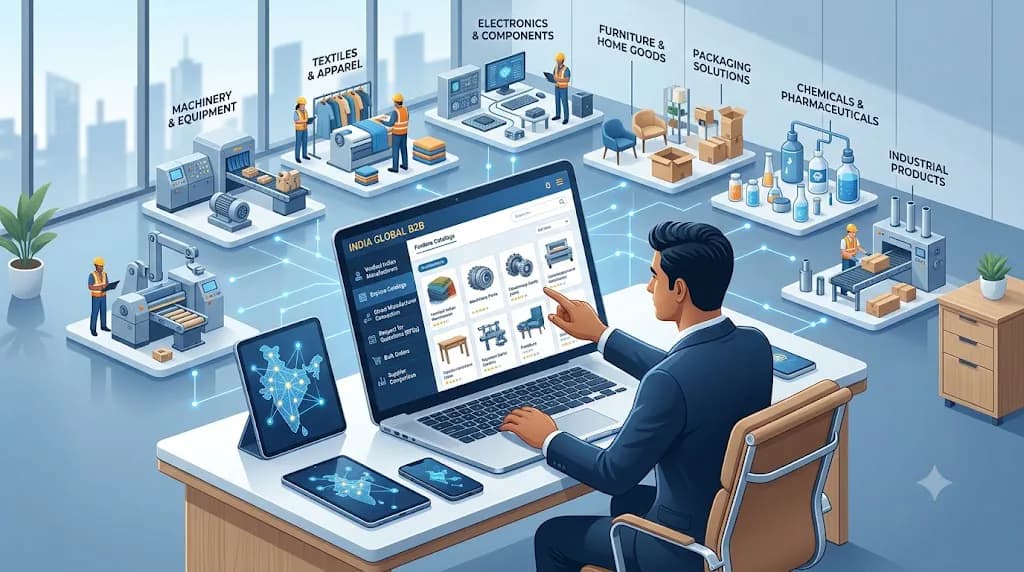
This is where digital B2B platforms are becoming increasingly relevant. They help businesses explore a broader range of manufacturers, suppliers and potential commercial partners without limiting their search to major cities. Through online business profiles, product information, digital networking and industry-focused discovery, companies can investigate opportunities in locations they might not otherwise consider.
For manufacturers in smaller cities, digital platforms also create opportunities to present their products and capabilities to a wider business audience. Instead of relying entirely on local contacts, regional advertising or physical sales visits, they can develop an online presence that supports wider business discovery.
Platforms such as BONC Network provide a digital environment where businesses can present their offerings, explore business connections and improve their visibility within the B2B ecosystem.
Understanding how these platforms work can help buyers, distributors, wholesalers, manufacturers and entrepreneurs develop more flexible sourcing strategies and identify new opportunities across India's manufacturing landscape.
Understanding India's Manufacturing Opportunities Beyond Major Cities
Manufacturing in India is geographically diverse. Production activities are distributed across metropolitan areas, established industrial corridors, smaller cities, district-level industrial estates and specialised regional clusters.
Different locations may develop expertise in particular products because of local resources, skilled workers, historical industry activity, infrastructure, supplier relationships or proximity to customers.
For example, Tiruppur in Tamil Nadu is widely associated with knitwear and textile production, Moradabad in Uttar Pradesh with metal handicrafts, Ludhiana in Punjab with hosiery and engineering-related industries, and Rajkot in Gujarat with engineering and manufacturing activities.
These examples illustrate how manufacturing capabilities can develop in specific regional markets. However, no single city specialises exclusively in one category, and buyers should evaluate individual manufacturers rather than assume that every business in a particular location offers the same capabilities.
Beyond well-known industrial centres, smaller manufacturing businesses may operate in areas serving agricultural markets, construction industries, local consumer demand and specialised commercial requirements.
These businesses can be relevant to buyers seeking particular products, production methods, order quantities or supplier relationships.
The challenge is that geographical distance and limited visibility can make such businesses difficult to discover through conventional sourcing methods.
Digital B2B platforms help address this discovery challenge by providing additional ways to explore businesses across different locations.
Why Businesses Should Look Beyond Major Manufacturing Cities
Expanding the Number of Potential Suppliers
Businesses that source products from only a few major cities may overlook manufacturers operating elsewhere. This can restrict their understanding of the market and limit the number of suppliers available for comparison.
Exploring regional manufacturing networks introduces buyers to a wider range of potential partners.
A furniture distributor, for example, might traditionally purchase products through suppliers in a major metropolitan market. By exploring manufacturers in other industrial locations, the distributor may discover businesses offering different product designs, production capabilities or customisation options.
Similarly, a machinery buyer may find specialised component manufacturers outside the locations it usually considers.
A broader supplier search does not automatically produce better commercial outcomes, but it increases the number of options a business can investigate.
Identifying Specialised Manufacturing Capabilities
Not every manufacturer aims to produce a wide range of products. Some businesses concentrate on specific components, materials, production techniques or product categories.
These specialised capabilities may be difficult to identify through general online searches, particularly when a manufacturer has a limited digital presence.
B2B platforms can help buyers discover businesses by exploring product categories, descriptions and company profiles.
For example, a business looking for customised metal racks may benefit from finding manufacturers that specifically describe their metal fabrication, finishing and customisation capabilities.
The same approach applies to packaging materials, industrial equipment, electrical components, textile products and other specialised requirements.
The important step is to move beyond searching only for a product name and investigate the capabilities needed to manufacture it.
Exploring Alternative Sourcing Options
Dependence on a small number of suppliers can expose businesses to operational risks. Production delays, capacity limitations, price changes and transportation disruptions may affect the ability to meet customer requirements.
Exploring manufacturers in different regions can help businesses investigate alternative sourcing options.
A company might retain its existing supplier while evaluating additional manufacturers for selected products. This approach can support contingency planning and provide useful comparisons of pricing, lead times, production capacity and service quality.
Regional sourcing should be evaluated carefully. A manufacturer in another city may offer an attractive product but have higher transportation costs or longer delivery times.
The objective is not simply to replace metropolitan suppliers. It is to build a broader understanding of available manufacturing options.
How B2B Platforms Improve Manufacturer Discovery
Digital Business Profiles
A digital business profile can provide an initial overview of a manufacturer's activities.
Depending on the platform and information supplied, a profile may include the business name, product categories, descriptions, location, contact information and other commercial details.
These details help buyers identify businesses that may be relevant to their requirements.
For example, a procurement manager looking for industrial furniture can use business profiles to explore manufacturers that list metal racks, storage systems, workstations or related products.
Profiles can also help smaller manufacturers explain what they produce and which industries they serve.
However, a profile should be treated as an initial screening resource rather than definitive proof of a manufacturer's quality, production capacity or reliability. Buyers should independently verify important information before entering into a commercial agreement.
Product and Category-Based Search
Traditional sourcing often begins with a location. A buyer may visit a particular industrial area because it is already familiar with the businesses operating there.
Digital B2B discovery allows buyers to begin with a product requirement instead.
A business can identify a category, investigate companies offering related products and then compare their locations and capabilities.
This product-first approach can reveal manufacturers in locations that were not part of the original sourcing plan.
For example, a company seeking packaging products might initially focus on suppliers in its nearest large city. A broader digital search could reveal other manufacturers producing corrugated boxes, protective packaging, labels or customised packaging solutions.
The buyer can then assess whether those businesses meet its requirements.
Category-based discovery is especially useful when the buyer knows what it needs but has limited knowledge of the manufacturers serving that market.
Faster Initial Market Research
Identifying suppliers traditionally requires a combination of directories, referrals, trade publications, exhibitions, telephone calls and physical visits.
These methods remain useful, particularly when buyers need to inspect production facilities or develop personal relationships. However, they can require substantial time during the initial research stage.
B2B platforms can help businesses conduct preliminary research before committing resources to direct engagement.
A buyer can review several business profiles, shortlist relevant manufacturers and prepare targeted questions about product specifications, minimum order quantities, pricing and delivery.
This creates a more organised starting point for supplier evaluation.
Digital discovery does not eliminate the need for detailed due diligence. Instead, it helps businesses focus their time on manufacturers that appear relevant to their needs.
Connecting With Businesses Outside Existing Networks
Established business relationships are valuable, but they can also limit discovery when companies rely exclusively on their existing contacts.
A manufacturer in a smaller industrial town may have suitable production capabilities without having a direct relationship with a particular buyer.
Digital business networking can create another route for these businesses to become discoverable.
Platforms such as BONC Network offer businesses an online environment to present their offerings and explore potential B2B connections.
For manufacturers, this can provide an additional way to introduce their products to businesses beyond their immediate geographical markets. For buyers, it can support the exploration of companies outside their existing supplier networks.
The value of these connections depends on the relevance of the businesses involved, the accuracy of their information and the quality of subsequent communication.
The Role of Digital B2B Platforms in Regional Manufacturing Growth
Increasing Visibility for Smaller Manufacturers
Smaller manufacturers may have strong production capabilities but limited resources for extensive marketing.
Maintaining a large sales team, participating in multiple exhibitions and visiting customers across India can be expensive. These activities may be particularly challenging for businesses with limited marketing budgets.
A digital B2B presence provides another way to communicate business information.
Manufacturers can use suitable platforms to present their products, describe their capabilities and make their businesses easier for prospective buyers to discover.
A well-prepared profile should explain what the company manufactures, which product categories it serves and what differentiates its offering. Relevant photographs, clear descriptions and accurate contact details can make the information more useful.
Digital visibility does not guarantee inquiries or sales. However, it can support a broader business discovery strategy when combined with responsive communication, product quality and reliable operations.
Supporting Business Expansion Across Geographic Boundaries
A regional manufacturer may initially serve customers in nearby districts or states. As production capacity and commercial ambitions develop, the business may wish to explore additional markets.
Digital B2B platforms can help manufacturers introduce their products to a wider audience without requiring every initial interaction to involve a physical visit.
For example, a manufacturer of industrial storage equipment could present its products online and explore potential connections with distributors, warehouse operators, retailers and procurement teams in other regions.
Interested buyers can then discuss specifications, prices, production capacity and delivery requirements.
For manufacturers, this creates an additional channel for business development. For buyers, it introduces more opportunities to evaluate regional suppliers.
Actual expansion still depends on factors such as product competitiveness, logistics, compliance, available capacity and the manufacturer's ability to serve customers in new markets.
Encouraging More Inclusive Business Participation
Manufacturing opportunities can be difficult to access when business discovery depends heavily on personal networks or geographical proximity.
Digital platforms can reduce some of these barriers by making business information available online.
A small manufacturer with a limited physical sales presence may be able to present its products to prospective buyers in other locations. Similarly, a startup or distributor can investigate manufacturers without relying entirely on established industry contacts.
This can broaden participation in business networking, although differences in digital skills, internet access, marketing resources and information quality still influence the benefits companies receive.
For regional manufacturers, investing in accurate digital information and professional communication can help make online business discovery more effective.
Important Manufacturing Regions and Their Commercial Potential
India's manufacturing ecosystem includes a variety of regional clusters. Each offers different capabilities, and buyers should evaluate opportunities according to their product requirements rather than assume that a particular location is suitable for every sourcing need.
Textile and Garment Manufacturing
Textile and garment production is distributed across several Indian regions.
Tiruppur is associated with knitwear, Surat with textiles and synthetic fabrics, and Ludhiana with hosiery and related textile products.
Manufacturers in these and other locations may serve retailers, wholesalers, garment brands, distributors and businesses seeking customised textile products.
A buyer exploring this sector should assess fabric specifications, production capacity, finishing quality, order quantities, sampling arrangements and delivery schedules.
Digital B2B platforms can help identify businesses operating in relevant categories and provide a starting point for further evaluation.
Engineering and Industrial Components
Engineering manufacturing includes a broad range of products, such as machine components, metal parts, fasteners, industrial tools, pumps and equipment.
Rajkot, Coimbatore, Ludhiana and other industrial centres have established manufacturing activities across different engineering categories.
Smaller industrial businesses may specialise in individual components or particular manufacturing processes.
For procurement teams, discovering these capabilities can be important when sourcing replacement parts, developing new products or investigating alternative component suppliers.
Buyers should compare technical specifications, material grades, manufacturing tolerances, testing arrangements and quality-control procedures before selecting a supplier.
Furniture and Metal Fabrication
Furniture manufacturing and metal fabrication are also spread across multiple regions.
Businesses may produce office furniture, commercial storage systems, metal racks, industrial workstations, shelving and customised furniture.
A retailer, warehouse operator or office supplier can use digital discovery to investigate manufacturers offering suitable designs and production capabilities.
Relevant evaluation criteria include material quality, load capacity where applicable, surface finishing, dimensions, packaging, assembly requirements and transportation arrangements.
A manufacturer located outside a major metropolitan market may be worth considering when its capabilities and overall commercial terms meet the buyer's needs.
Packaging and Printing
Packaging manufacturers serve industries ranging from food and consumer goods to pharmaceuticals, electronics and industrial products.
Depending on the supplier, available products may include corrugated boxes, labels, printed packaging, protective materials and customised packaging solutions.
Businesses searching for packaging suppliers should assess material strength, print quality, product compatibility, regulatory requirements where applicable and the supplier's ability to maintain consistent specifications.
Digital B2B platforms can help buyers explore manufacturers by product category and identify businesses for further discussions.
Agricultural and Rural-Industry Equipment
Agriculture and related industries create demand for equipment, components, storage products, tools and processing machinery.
Manufacturers serving these markets may operate in smaller cities or industrial locations closer to agricultural customers and supply chains.
For distributors and businesses serving agricultural markets, exploring regional manufacturers can reveal products suited to particular operating conditions or customer requirements.
Buyers should carefully assess product performance, maintenance needs, spare-parts availability, safety requirements and after-sales support.
These considerations are especially important when products are used in demanding working environments.
How Buyers Can Use B2B Platforms to Identify the Right Manufacturers
Define the Product Requirement Clearly
A successful manufacturer search begins with a clear understanding of the product required.
Businesses should identify the product category, intended application, technical specifications, quality standards, expected quantity and delivery timeline.
Where possible, they should also establish a realistic target price and determine whether the product requires customisation.
For example, searching for a metal rack becomes more effective when the buyer specifies dimensions, load requirements, material preferences, finishing and intended use.
A clear requirement makes it easier to identify relevant manufacturers and compare their capabilities.
Search Across Multiple Locations
Businesses should avoid restricting their search to familiar metropolitan markets unless location is a strict operational requirement.
Instead, they can explore manufacturers across several regions and compare their suitability.
The search should consider not only the distance from the buyer but also production capabilities, transportation arrangements, service requirements and total cost.
A supplier farther away may be commercially suitable for certain products, while a nearby supplier may be preferable for urgent orders or frequent deliveries.
The right choice depends on the individual sourcing situation.
Review Business Profiles Carefully
After identifying potential suppliers, buyers should review the available business information.
Important details include the products offered, company location, manufacturing specialisation, contact information and descriptions of production capabilities.
Where available, buyers can also examine product photographs, catalogues, certifications and other relevant documentation.
Inconsistencies, missing information or vague product descriptions should prompt further questions.
A professional digital profile helps establish an initial understanding, but it should not replace independent verification.
Contact Shortlisted Manufacturers
Once a shortlist has been prepared, buyers should contact relevant manufacturers directly.
Initial discussions can cover product availability, specifications, minimum order quantities, pricing, payment terms, production lead times and shipping arrangements.
For customised products, buyers should explain the requirements in writing and request samples, drawings or technical documentation when appropriate.
Clear communication helps both parties determine whether the opportunity is commercially and operationally suitable.
It also reduces the risk of misunderstandings caused by incomplete specifications.
Compare Total Cost Rather Than Unit Price Alone
A manufacturer offering a lower quoted price may not necessarily provide the best overall value.
Buyers should consider the full cost of sourcing, including transportation, packaging, taxes where applicable, inspection, payment terms, storage and potential rework.
Lead times and supply reliability can also affect commercial outcomes.
For example, a supplier offering a slightly higher unit price may be more suitable if it provides consistent quality, dependable delivery and lower overall handling costs.
Digital platforms help businesses identify options, but final purchasing decisions require a broader commercial assessment.
Verify Quality and Production Capacity
Before placing a significant order, buyers should establish whether the manufacturer can meet the required specifications and production volume.
Depending on the product, verification may involve samples, factory visits, independent inspections, testing reports, certifications or reference checks.
Businesses should confirm that any claimed certification is relevant, valid and applicable to the product or facility concerned.
For large or recurring orders, it may be appropriate to begin with a smaller trial order before expanding the relationship.
These precautions are important whether the supplier operates in a major city or a smaller manufacturing centre.
How Manufacturers in Smaller Cities Can Benefit From B2B Platforms
Presenting Products to a Wider Business Audience
Regional manufacturers often understand their products and production processes well but may have limited opportunities to communicate those strengths to distant buyers.
An online B2B profile can help present product information in a structured format.
Manufacturers should describe their products accurately, use clear images and explain relevant capabilities such as customisation, available sizes, materials or industry applications.
They should also ensure that contact details remain current and that inquiries receive timely responses.
This information helps prospective buyers determine whether the manufacturer is relevant to their requirements.
Building a More Professional Digital Presence
Digital business discovery works best when information is complete and consistent.
Manufacturers can improve their profiles by using clear product names, accurate descriptions, relevant keywords and organised categories.
Instead of writing a broad description such as "all types of industrial products," a business should identify the products it actually manufactures.
For example, a company producing industrial shelving could describe the types of shelving, materials, available configurations and applications it supports.
Accurate details help attract more relevant inquiries and reduce confusion during initial discussions.
Exploring New Customer Segments
A manufacturer that traditionally supplies one type of customer may discover opportunities in related markets.
For example, a metal fabrication business serving local retailers may also have capabilities relevant to warehouses, commercial kitchens, offices or industrial facilities.
Exploring new segments requires more than simply publishing a profile. Manufacturers should assess whether their products meet the technical, quality, pricing and delivery expectations of the new market.
Digital B2B platforms can help businesses investigate these possibilities and begin conversations with potential commercial partners.
Developing Long-Term Business Relationships
Successful manufacturing relationships require consistent quality, clear communication and dependable fulfilment.
Digital platforms can support the discovery stage, but long-term business depends on how effectively both parties work together after the initial connection.
Manufacturers should communicate realistic delivery schedules, provide accurate quotations and clarify specifications before accepting orders.
They should also maintain professional records of orders, product changes and customer requirements.
These practices help establish a stronger foundation for repeat business and long-term partnerships.
The Role of BONC Network in Digital B2B Discovery
BONC Network is a business networking platform that provides businesses with a digital environment to present their offerings and explore potential commercial connections.
For companies interested in manufacturing opportunities beyond major cities, digital business networking can be one part of a wider supplier-discovery strategy.
Buyers exploring regional manufacturers can use relevant business information as a starting point for identifying companies that may match their product requirements. Manufacturers and suppliers can use their digital presence to communicate what they offer and make their businesses easier for prospective commercial partners to discover.
BONC Network also provides opportunities for businesses to promote products, branding, events, expos and trade shows through its platform offerings, according to the services available to them.
For manufacturing businesses, this can be relevant when they want to communicate their capabilities, increase awareness of their offerings or explore broader B2B networking opportunities.
However, the effectiveness of any platform depends on factors such as profile quality, category relevance, business activity and the suitability of the connections established. Buyers should independently verify manufacturers, while suppliers should ensure their product information is accurate and their operations can support the business they pursue.
Businesses can explore the platform through the official website, BONC Network, and assess whether its available features suit their networking and promotional objectives.
Challenges Businesses Should Consider When Exploring Regional Manufacturers
Incomplete or Outdated Business Information
Not every manufacturer maintains a comprehensive digital profile.
Some businesses may provide limited product information, outdated contact details or descriptions that do not explain their capabilities clearly.
Buyers should treat incomplete information as a reason to ask additional questions rather than assume that the supplier is unsuitable or reliable.
Direct communication can help clarify product availability, manufacturing capacity and business requirements.
Differences in Quality Standards
Manufacturers may differ in their production processes, materials, inspection procedures and ability to maintain consistent quality.
A business should define its quality requirements before comparing suppliers.
Where necessary, it should request samples, documentation or independent inspection.
These steps help ensure that a promising online profile translates into a supplier capable of meeting the required standards.
Logistics and Delivery Limitations
A manufacturer's location can influence transportation cost, delivery schedules and the complexity of order fulfilment.
Some products are bulky, fragile, perishable or subject to special handling requirements.
Before choosing a regional supplier, buyers should calculate the expected logistics cost and confirm whether the manufacturer can package and dispatch products appropriately.
For recurring orders, businesses should also discuss delivery frequency, shipment tracking and procedures for handling damaged goods or delays.
Communication and Commercial Understanding
Business relationships can face difficulties when specifications, payment terms or delivery expectations are not clearly documented.
Buyers should communicate requirements in writing and confirm the commercial terms before placing an order.
Manufacturers should provide clear quotations and explain any limitations that could affect fulfilment.
Written agreements and documented specifications can help reduce misunderstandings.
Supplier Verification and Business Risk
A digital listing does not automatically establish a company's legal status, financial stability, production capacity or trustworthiness.
Businesses should perform appropriate due diligence before transferring significant funds or committing to large orders.
Depending on the transaction, checks may include business registration details, tax information, references, facility inspections and sample evaluations.
Buyers should also use suitable contractual safeguards and payment arrangements.
These precautions are essential for building reliable supplier relationships across all regions.
How B2B Platforms Can Support More Resilient Sourcing Strategies
Building a Diverse Supplier Network
A resilient sourcing strategy does not depend entirely on a single supplier or location.
Businesses can explore manufacturers across different regions and identify alternative suppliers for important products.
This approach may help them prepare for unexpected capacity constraints, delivery problems or changes in commercial conditions.
However, maintaining multiple suppliers requires careful coordination. Businesses should establish clear product specifications and quality expectations so that alternatives can meet their requirements.
Supporting Better Market Comparisons
Exploring manufacturers in multiple locations can help buyers understand differences in pricing, production capabilities, minimum order quantities and delivery terms.
These comparisons can reveal whether existing sourcing arrangements remain competitive or whether alternative suppliers deserve further investigation.
B2B platforms can make the initial discovery process more accessible by presenting information about a wider range of businesses.
The quality of the comparison still depends on collecting accurate, comparable information from each shortlisted manufacturer.
Encouraging More Informed Purchasing Decisions
Digital discovery can help procurement teams develop a more structured purchasing process.
Instead of relying solely on referrals or familiar suppliers, buyers can combine online research with direct discussions, sample testing and commercial evaluation.
This approach can improve the quality of decision-making by making it easier to compare alternatives before committing to a supplier.
It can also help businesses identify gaps in their current sourcing network and explore manufacturers with capabilities that better match their evolving requirements.
The Future of Regional Manufacturing and Digital B2B Networking
The future of manufacturing discovery will increasingly involve a combination of digital research and direct business engagement.
Online platforms can help companies identify potential manufacturers, while product samples, technical discussions, inspections and commercial negotiations establish whether a supplier is suitable.
Better digital catalogues, searchable product categories, improved business information and more structured communication can make this process easier to manage.
Manufacturers may also benefit from using digital tools to organise their product information, respond to inquiries and maintain consistent communication with customers.
For smaller businesses, these improvements can support a more systematic approach to reaching prospective buyers beyond their immediate markets.
At the same time, successful manufacturing relationships will continue to depend on fundamentals such as product quality, competitive pricing, operational capacity, compliance and reliable delivery.
Digital platforms are best understood as tools that support discovery and communication, rather than replacements for these essential business capabilities.
As companies look for more flexible sourcing strategies, exploring manufacturers beyond major cities can become a practical part of market research and supplier development.
Conclusion
India's manufacturing opportunities are not limited to its largest metropolitan areas. Smaller cities, industrial towns and specialised regional clusters contribute to a diverse ecosystem of manufacturers and suppliers serving numerous industries.
However, discovering these businesses can be challenging when companies rely exclusively on familiar locations, established contacts or traditional sourcing methods.
B2B platforms help address this challenge by supporting digital business discovery, product-based searches, company profile exploration and connections between businesses operating in different regions. They can help buyers investigate additional suppliers and enable regional manufacturers to present their capabilities to a wider audience.
For buyers, the most effective approach combines digital discovery with clear product requirements, supplier comparisons, quality checks and careful evaluation of total sourcing costs. For manufacturers, accurate product information, professional communication and dependable operations are essential for making the most of digital visibility.
Platforms such as BONC Network can contribute to this process by providing a digital environment for B2B networking, product discovery and business promotion.
Ultimately, exploring manufacturing opportunities beyond major cities is about broadening the search, evaluating businesses on their actual capabilities and developing relationships that meet commercial requirements. By combining digital networking with practical due diligence, businesses can gain a wider view of India's manufacturing landscape and make more informed decisions about their future sourcing and growth strategies.