How Indian Businesses Can Identify Emerging Product Categories for Commercial Growth
By BONC Editorial Team • Published on 26 Oct 2026

Introduction
India's business environment is evolving as customer expectations, technology adoption, manufacturing capabilities, distribution networks, and purchasing habits continue to change. These developments create opportunities for businesses to introduce new products, expand existing product portfolios, and serve customer segments that were previously difficult to reach.
For manufacturers, wholesalers, distributors, retailers, and entrepreneurs, identifying emerging product categories can become an important part of a long-term commercial growth strategy. Businesses that recognise changing demand early may be better positioned to develop relevant products, establish supplier relationships, and build a presence in promising market segments.
However, identifying an emerging category is not simply a matter of following popular trends. A product may receive considerable attention online without generating consistent purchasing demand. Another category may grow steadily within a specialised industrial market without attracting widespread public attention.
Businesses therefore need a structured approach to product opportunity identification. This includes studying customer problems, researching market demand, analysing competitors, evaluating supplier capabilities, understanding costs, and testing products before making significant investments.
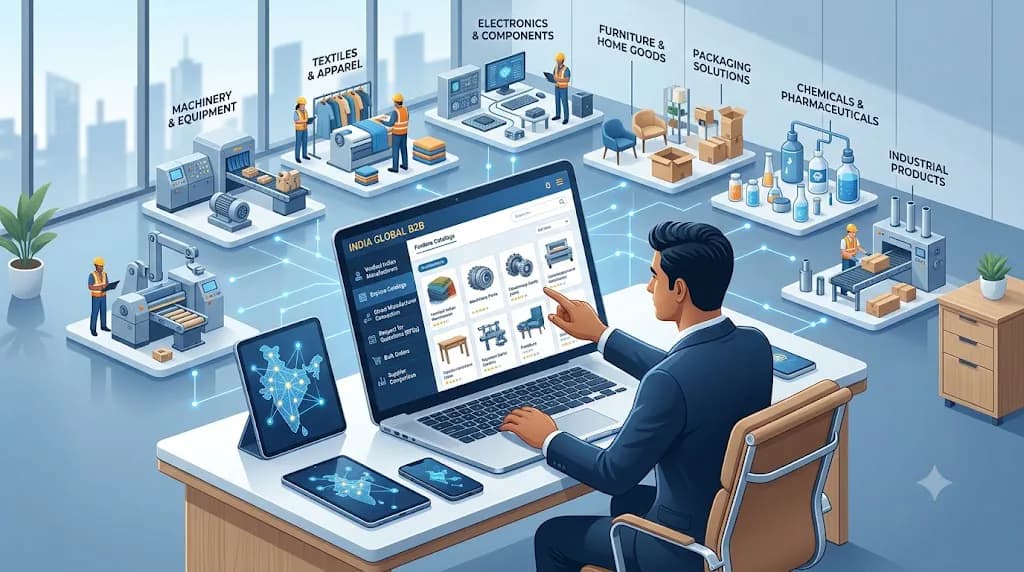
Digital tools are making this process more accessible. Search engines, business directories, industry reports, customer feedback channels, trade exhibitions, and B2B networking platforms can help companies discover products and connect with potential business partners. Platforms such as BONC Network can also be explored as part of a broader digital business discovery strategy.
This guide explains how Indian businesses can identify emerging product categories, evaluate their commercial potential, understand changing market requirements, and turn product opportunities into practical business strategies.
Understanding Emerging Product Categories
An emerging product category is a group of products gaining relevance because of changing customer needs, new technologies, industry developments, economic conditions, regulatory changes, or shifts in purchasing behaviour.
Some emerging categories introduce entirely new solutions. Others improve existing products through better materials, enhanced functionality, lower operating costs, or more convenient purchasing options.
For example, businesses may investigate opportunities involving energy-efficient equipment, specialised packaging, smart industrial components, water-saving products, accessible healthcare supplies, or products designed for changing workplace requirements.
These examples represent areas worth researching, not guaranteed growth markets. Actual demand varies by location, industry, price point, customer segment, and competitive conditions.
Emerging Does Not Always Mean Newly Invented
A product category can become commercially relevant without being completely new.
An established product may experience renewed demand because its application expands, its price becomes more accessible, or customers begin prioritising a particular feature.
For example, energy-efficient lighting has existed for years, but demand may change as businesses seek to manage electricity expenses or modernise their facilities.
Similarly, reusable packaging, specialised storage solutions, and water-efficient equipment may gain attention in particular customer segments as operational priorities change.
Businesses should therefore investigate both newly developed products and established categories experiencing changes in demand.
Distinguish Popularity From Commercial Opportunity
A product that attracts attention is not necessarily a good business opportunity.
Commercial potential depends on several factors, including the size of the addressable customer base, willingness to pay, competition, supplier availability, production costs, distribution requirements, and expected margins.
A specialised industrial component may have a relatively small customer base but provide repeat orders and clear technical requirements. A popular consumer product may attract a larger audience but face intense competition and high marketing costs.
The objective is not simply to find the most talked-about category. It is to identify products that fit the business's capabilities and offer a realistic opportunity to create customer value.
Why Identifying Emerging Product Categories Matters for Indian Businesses
Businesses that regularly evaluate new product opportunities can make more informed decisions about expansion, investment, and market positioning.
Waiting until a category becomes highly competitive may reduce differentiation. On the other hand, entering a market too early without sufficient demand can tie up working capital and create unnecessary risk.
A structured product research process helps businesses understand where opportunities may exist and whether they are ready to pursue them.
Expanding Revenue Opportunities
Adding suitable products can help a company reach new customers, increase the value of existing customer relationships, or address additional requirements within its current market.
For example, a business supplying industrial equipment might investigate related maintenance products, replacement components, safety accessories, or energy-monitoring devices.
A distributor serving retail businesses might explore complementary packaging, storage, or display products.
These opportunities are particularly relevant when new categories complement existing products, customers, or distribution channels.
Reducing Dependence on a Single Category
Businesses that depend heavily on one product category may be vulnerable to changing demand, supplier disruptions, price fluctuations, or increased competition.
Product diversification can reduce some of this dependence, provided that the new categories are carefully selected.
Diversification should not mean adding unrelated products without a clear strategy. Businesses should evaluate whether the new category shares customers, suppliers, technical capabilities, or distribution requirements with their existing operations.
Improving Competitive Positioning
Emerging product categories can create opportunities for businesses to differentiate themselves.
A company may stand out by offering a specialised product range, providing better technical information, sourcing more suitable materials, or serving a customer segment that larger competitors overlook.
The strongest differentiation often comes from solving a specific customer problem more effectively rather than simply offering a product that is currently popular.
Study Changing Customer Needs and Purchasing Behaviour
Customer demand is one of the most important starting points for identifying emerging product categories.
Businesses should investigate what customers are buying, what problems they encounter, which products they struggle to find, and what improvements they expect from suppliers.
This research can reveal opportunities that are not immediately obvious from sales figures alone.
Identify Unresolved Customer Problems
A useful way to discover product opportunities is to ask customers where existing products fall short.
They may need products that are more durable, easier to maintain, simpler to install, more compact, more energy-efficient, or better suited to local operating conditions.
For example, small manufacturers may struggle to find affordable components in the quantities they require. Retail businesses may need packaging that protects fragile products while controlling shipping costs. Commercial facilities may seek equipment that reduces maintenance interruptions.
Each problem can suggest a potential product category or product improvement.
However, customer complaints should be investigated rather than treated as proof of demand. Businesses need to determine how frequently the problem occurs, how much it costs customers, and whether they would pay for a solution.
Analyse Customer Questions and Enquiries
Sales enquiries can provide valuable information about emerging needs.
If customers repeatedly ask for a product that the business does not currently offer, the pattern may justify further research.
Businesses can classify enquiries by product type, industry, location, budget, urgency, and purchasing frequency. This makes it easier to identify recurring requests rather than reacting to isolated conversations.
Customer service records, sales discussions, distributor feedback, and product reviews can all contribute to this process.
Segment Customers Carefully
Different customer groups may have different requirements even when they purchase products within the same category.
For instance, a small workshop may prioritise affordability and availability, while a large industrial facility may require higher capacity, technical documentation, and after-sales support.
Similarly, a retail customer and a wholesale buyer may evaluate packaging products differently.
Segmenting customers helps businesses identify which product opportunities are relevant to their target market and what features or commercial terms those customers expect.
Use Market Research to Identify Emerging Opportunities
Market research helps businesses move from general observations to evidence-based product decisions.
Instead of assuming that a category is growing, companies should gather information about demand, competitors, prices, customer segments, and supply conditions.
Study Industry Reports and Market Data
Industry reports can help businesses understand broader developments in manufacturing, retail, agriculture, construction, healthcare, electronics, logistics, and other sectors.
Useful research may include production trends, import and export patterns, investment announcements, industry capacity, consumer spending, and changes in business procurement.
Businesses can consult government publications, industry associations, trade bodies, research organisations, and relevant market studies.
When using reports, check their publication dates, geographic coverage, definitions, and research methods. A global market forecast may not accurately represent demand in a particular Indian state or customer segment.
Examine Search Trends
Search engines can reveal what people are researching and how interest changes over time.
Businesses can investigate search terms related to product categories, specific applications, product problems, and alternative solutions.
For example, a supplier researching water-management products could compare interest in water-saving equipment, filtration components, storage solutions, and monitoring devices.
Search interest is a useful signal, but it is not equivalent to actual sales. Businesses should combine search data with customer enquiries, competitor research, and supplier information.
Study Marketplace and Retail Listings
Online product listings can help businesses understand which products are available, how suppliers describe them, what features they highlight, and how prices vary.
Reviewing multiple listings may reveal differences in specifications, packaging, product positioning, and customer segments.
However, visible listings do not provide a complete picture of market size or sales volume. Some products may have many listings but limited demand, while specialised B2B products may have relatively little online visibility.
Marketplaces should therefore be treated as one source of evidence rather than the only basis for choosing a category.
Explore Emerging Product Categories Across Indian Industries
India's diverse economy offers potential product opportunities across consumer markets and business-to-business supply chains.
The most relevant categories will depend on regional demand, local industry structure, purchasing power, regulation, and the capabilities of individual businesses.
Energy-Efficient and Resource-Saving Products
Businesses may investigate products designed to reduce energy consumption, improve water efficiency, or minimise operating waste.
Potential areas include efficient industrial lighting, selected energy-monitoring equipment, water-saving fixtures, insulation materials, and resource-efficient machinery components.
Commercial demand may be influenced by operating expenses, infrastructure requirements, environmental priorities, and relevant government policies.
Before entering these categories, businesses should examine technical specifications, applicable standards, installation requirements, and the customer's expected payback period.
A product that saves resources but requires substantial upfront investment may appeal to some buyers and not others.
Industrial Automation and Smart Components
Manufacturing and industrial operations may require sensors, controllers, monitoring devices, automation accessories, and specialised equipment components.
Businesses exploring this category should identify the industries they intend to serve and understand their technical requirements.
Compatibility, reliability, installation support, maintenance, and documentation can be important purchasing factors.
For companies already supplying industrial customers, related automation products may offer a practical expansion path because they can build on existing customer relationships.
Specialised Packaging Solutions
Packaging requirements are changing across food distribution, e-commerce, pharmaceuticals, industrial equipment, and consumer goods.
Potential areas for investigation include protective packaging, customised shipping boxes, reusable transport packaging, specialised inserts, and packaging designed for particular handling conditions.
Businesses should assess material availability, production costs, product protection, customer requirements, and applicable packaging rules.
The opportunity may lie not only in creating a new product but also in offering packaging with improved dimensions, more reliable protection, or more efficient storage and transport characteristics.
Healthcare and Personal Care Products
Healthcare-related supplies, personal care products, hygiene products, and specialised packaging may serve different customer segments.
However, businesses must distinguish between products with relatively straightforward commercial requirements and those subject to strict regulatory controls.
Depending on the product, relevant considerations may include licences, product registration, manufacturing standards, labelling, testing, storage, and distribution requirements.
Before entering a regulated category, companies should verify the applicable rules and the capabilities of potential manufacturing partners.
Agricultural and Water-Management Products
Agriculture-related businesses may explore irrigation components, storage equipment, selected farm tools, water-management products, and equipment for post-harvest handling.
The commercial opportunity can vary significantly by region, crop, farm size, climate, purchasing season, and access to financing.
Businesses should consult farmers, dealers, distributors, agricultural associations, and local experts to understand practical needs.
A product that performs well in one region may require modifications to suit another region's operating conditions.
Construction and Infrastructure Products
Construction, renovation, and infrastructure projects create demand for materials, fittings, electrical products, plumbing components, safety equipment, and specialised installation tools.
Businesses may investigate products that address recurring project challenges, such as durability, installation efficiency, space constraints, or maintenance requirements.
Product selection should account for project specifications, relevant standards, supply consistency, delivery schedules, and contractor preferences.
Where products are regulated or safety-critical, technical compliance must take priority over trend-based purchasing decisions.
Customised Industrial Components
Many manufacturers require components designed for specific equipment, operating conditions, or production processes.
Opportunities may exist in precision-machined parts, custom metal fabrication, plastic moulded components, replacement parts, and specialised fittings.
These categories often require technical expertise and close communication with customers.
Businesses considering them should assess production capability, design support, tooling requirements, quality controls, and the economics of small-batch versus large-scale production.
Business Supplies and Workplace Solutions
Offices, warehouses, educational institutions, commercial facilities, and small businesses require a wide range of operating supplies.
Potential product opportunities may include specialised storage systems, ergonomic accessories, workplace safety products, facility-maintenance equipment, and products designed to improve organisation.
The key is to identify a customer group with a recurring need and offer a product range that addresses it effectively.
A focused category with reliable availability may be more commercially attractive than a broad catalogue of unrelated items.
Analyse Competitors Before Entering a Product Category
A promising product category should be evaluated in the context of existing competition.
Businesses need to understand who already serves the market, what competitors offer, which customer segments they target, and where their products or services may fall short.
Identify Direct and Indirect Competitors
Direct competitors sell similar products to similar customers.
Indirect competitors solve the same customer problem through a different product, service, or approach.
For example, a company considering a specialised storage product should examine not only suppliers of similar products but also alternative storage systems that customers may already use.
Understanding both types of competition helps businesses assess the true alternatives available to buyers.
Compare Product Features and Positioning
Review product specifications, quality claims, packaging, warranty conditions, customisation options, and available technical support.
Look for differences that matter to the intended customer.
A new entrant does not always need a completely different product. It may compete by offering a more suitable specification, better availability, clearer documentation, or more convenient ordering arrangements.
Any proposed advantage should be realistic and supported by the business's capabilities.
Investigate Market Gaps
A market gap exists when a meaningful customer requirement is not adequately served by current suppliers.
Examples may include difficulty finding a particular size, a shortage of low-volume manufacturing options, inconsistent availability, or limited support for a specific application.
Businesses should verify that the gap reflects a genuine unmet need rather than an absence of demand.
Customer interviews, quotation requests, small product trials, and discussions with distributors can help distinguish between the two.
Evaluate Product Demand Before Investing
An emerging category may appear attractive but still fail to generate sufficient revenue for a particular business.
Before investing in inventory, manufacturing equipment, tooling, or marketing, companies should estimate realistic demand.
Estimate the Addressable Customer Base
Identify the types of businesses or consumers that might purchase the product.
For B2B products, this may involve estimating the number of relevant factories, distributors, contractors, retailers, institutions, or service providers in the intended market.
For consumer products, research should consider the target demographic, purchasing behaviour, competing products, and distribution channels.
The estimate should focus on customers the business can realistically reach rather than the entire national market.
Examine Purchase Frequency
Some products are purchased once and used for several years. Others require regular replenishment or replacement.
Recurring-demand products may offer more predictable sales, but they can also face strong competition and pressure on pricing.
Businesses should understand how frequently customers buy the product, whether demand is seasonal, and what factors influence repeat purchases.
Test Willingness to Pay
Interest in a product does not necessarily translate into willingness to purchase it at a commercially viable price.
Businesses can use customer interviews, sample demonstrations, quotation requests, pilot sales, or limited product launches to understand the relationship between price and demand.
Where possible, seek evidence of actual purchasing behaviour rather than relying only on hypothetical responses.
Calculate Expected Margins
Estimate the complete cost of supplying the product, including purchase or production costs, packaging, transportation, storage, marketing, taxes where applicable, and expected returns or defects.
Then compare the total cost with the realistic selling price.
A category with strong demand may still be unsuitable if margins are too low or working-capital requirements are too high.
Identify the Right Manufacturing and Supplier Partners
Once a product category appears promising, businesses need to determine whether they can source it reliably.
The availability of suitable suppliers can influence product quality, pricing, customisation, and the ability to meet customer demand.
Search for Relevant Manufacturers
Use product-specific search terms, industrial directories, business networks, trade exhibitions, and referrals to identify potential manufacturers.
For specialised products, investigate manufacturing capabilities as well as the exact product name. A manufacturer may be able to produce a required item even if it is not part of the standard catalogue.
Compare Multiple Suppliers
Where possible, obtain quotations from several suitable suppliers.
Compare specifications, minimum order quantities, production capacity, lead times, quality processes, payment terms, and additional costs.
The lowest quotation should not automatically determine the selection.
Evaluate Customisation and Product Development
Some product categories may require modifications for the Indian market or for a particular customer segment.
Businesses should confirm whether suppliers can support customised dimensions, materials, packaging, branding, or technical requirements.
For new products, sample development and testing may be necessary before commercial launch.
Establish Backup Supply Options
Depending on the category, relying on a single manufacturer may expose the business to supply interruptions.
Where practical, identify alternative suppliers and assess whether they can provide an acceptable product if the primary source becomes unavailable.
Alternative suppliers should be evaluated before an urgent need arises.
Use Digital B2B Networking for Product Discovery
Digital platforms can help businesses research product categories, explore business profiles, and identify potential suppliers beyond their existing networks.
This can be particularly useful for companies that want to expand into unfamiliar industries or investigate products manufactured in other parts of India.
Improve Product and Business Visibility
Manufacturers and suppliers can use digital business profiles to explain their products, capabilities, industries served, and commercial offerings.
Clear information makes it easier for potential buyers to assess whether a business may be relevant to their requirements.
Companies researching new product categories can use available business information to identify suppliers, compare product offerings, and prepare questions for further investigation.
Explore Potential Connections Through BONC Network
BONC Network is a B2B networking platform that businesses can explore as part of their digital business-development and product-discovery activities.
When researching emerging product categories, businesses may use digital networking to explore potential connections with manufacturers, suppliers, distributors, and other commercial participants.
For example, a distributor considering an additional industrial product category could research relevant business profiles and use the information available to identify companies worth contacting.
The next steps would include confirming product availability, discussing commercial requirements, requesting quotations, and assessing supplier suitability.
BONC Network can be one component of a broader discovery process alongside search engines, industry reports, trade exhibitions, professional networks, and supplier referrals.
Treat Digital Discovery as an Initial Research Stage
An online business profile does not independently prove a supplier's production capability, product quality, financial stability, or regulatory compliance.
Businesses should verify important information before committing funds or entering into commercial agreements.
Digital platforms can expand the range of businesses a company discovers, but careful evaluation remains essential.
Build a Practical Product Opportunity Evaluation Framework
Businesses can simplify decision-making by assessing every potential product category using the same framework.
This prevents enthusiasm about a new trend from overshadowing commercial realities.
Customer Demand
Determine whether the category solves a meaningful problem and whether enough customers are likely to purchase it.
Evidence can include recurring enquiries, actual orders, industry research, customer interviews, and relevant purchasing data.
Competitive Intensity
Evaluate the number and strength of competitors, available alternatives, pricing pressure, and opportunities for differentiation.
A crowded market is not automatically unattractive, but a new entrant needs a clear reason for customers to choose its offering.
Supply Availability
Assess whether reliable manufacturers or suppliers can provide the product at the required quality, quantity, and cost.
Consider lead times, minimum order quantities, raw material availability, and the risk of supply disruptions.
Financial Feasibility
Estimate initial investment, working capital, expected selling prices, operating expenses, and potential margins.
Account for inventory that may remain unsold and the cost of testing or introducing the product.
Operational Fit
Consider whether the business already has the skills, sales channels, customer relationships, and infrastructure needed to support the category.
A product that fits existing capabilities may be easier to introduce than one requiring entirely new technical expertise or distribution arrangements.
Regulatory and Technical Requirements
Identify relevant licences, standards, certifications, labelling rules, testing requirements, and product-liability considerations.
The exact requirements depend on the product and its intended use.
A category should not proceed to commercial launch until the business understands and can address its applicable obligations.
Test New Product Categories With a Controlled Launch
After identifying a potentially attractive category, businesses should avoid committing their entire budget before validating demand.
A controlled launch allows the company to gather evidence while limiting exposure.
Start With a Small Product Range
Instead of launching many products simultaneously, select a limited number of products that represent the most promising customer needs.
This makes it easier to monitor sales, gather feedback, and identify problems.
For B2B businesses, a small pilot may involve supplying selected customers, testing a product with a limited group of distributors, or fulfilling a few carefully chosen orders.
Collect Real Customer Feedback
Ask buyers about product performance, usability, quality, packaging, delivery, and price.
For industrial products, technical feedback may be especially important. A product that performs well in a demonstration may still require adjustments before it can be used reliably in actual operating conditions.
Document feedback and distinguish between isolated preferences and recurring problems.
Measure Commercial Performance
Track enquiries, conversion rates, average order values, repeat purchases, product returns, gross margins, and inventory movement where relevant.
These indicators can help determine whether demand is sufficient and whether the product can be supplied profitably.
Decide Whether to Expand, Improve, or Stop
If the product performs well, the business can investigate broader distribution, additional suppliers, or a larger product range.
If customers show interest but identify specific problems, the business may need to improve the product or revise its pricing.
If demand remains weak or the economics are unattractive, stopping the trial may be better than continuing to invest.
A controlled launch turns product expansion into a learning process rather than a speculative commitment.
Common Mistakes When Identifying Emerging Product Categories
Even experienced businesses can make poor product decisions when research is incomplete or market enthusiasm replaces careful evaluation.
Following Trends Without Validating Demand
A category may receive considerable attention without generating enough paying customers.
Businesses should confirm the target market, willingness to pay, and expected purchasing frequency before investing.
Ignoring Existing Competition
A product may appear attractive until the business discovers established competitors with lower costs, stronger distribution, or better customer relationships.
Competitive analysis should be part of the initial research process.
Selecting Products Without Supplier Research
A category may have strong demand but limited access to suitable manufacturers or reliable inventory.
Before launching, businesses should confirm that the product can be sourced at the required quality and commercial terms.
Underestimating Working Capital
New categories can require spending on inventory, samples, packaging, marketing, and logistics before revenue is received.
Businesses should plan cash flow and avoid committing more capital than they can reasonably support.
Expanding Too Quickly
Adding many categories at once can increase operational complexity and make it difficult to understand which products perform well.
A focused expansion strategy allows businesses to learn and allocate resources more effectively.
Ignoring Compliance Requirements
Some products require specific licences, certifications, testing, or labelling.
Businesses should investigate applicable requirements before placing orders or promoting the product commercially.
A Step-by-Step Strategy for Indian Businesses
A repeatable process can help businesses identify and evaluate emerging product categories more efficiently.
Step 1: Review your existing market. Analyse current customer needs, sales enquiries, product performance, and gaps in your existing portfolio.
Step 2: Identify customer problems. Speak with customers, distributors, and industry contacts to understand recurring needs and unmet requirements.
Step 3: Research emerging categories. Explore industry reports, search trends, marketplace listings, trade publications, and relevant business networks.
Step 4: Identify target customers. Define the industries, customer groups, regions, and purchasing situations that the proposed product would serve.
Step 5: Analyse competitors. Compare available products, prices, specifications, distribution, and potential areas of differentiation.
Step 6: Research suppliers. Identify suitable manufacturers, distributors, and sourcing partners. Check production capabilities, minimum quantities, lead times, and quality processes.
Step 7: Calculate commercial feasibility. Estimate the total cost, realistic selling price, margins, working-capital needs, and potential inventory risk.
Step 8: Check regulatory requirements. Confirm which licences, standards, certifications, and documentation apply to the product.
Step 9: Conduct a pilot launch. Test a limited product range with selected customers and gather measurable feedback.
Step 10: Review performance. Compare demand, margins, customer satisfaction, supplier reliability, and operational requirements against the original expectations.
Step 11: Refine the product strategy. Improve specifications, revise the target segment, change suppliers, or adjust pricing where evidence supports doing so.
Step 12: Scale carefully. Expand the category only when the business has sufficient evidence of demand and a practical plan for sourcing, delivery, and customer support.
Conclusion
Identifying emerging product categories can help Indian businesses explore new revenue opportunities, respond to changing customer expectations, and strengthen their competitive position. However, successful product expansion requires more than following popular trends. It depends on understanding customer problems, researching market demand, evaluating competition, assessing supplier capabilities, and confirming financial feasibility.
Businesses should combine multiple sources of information, including customer feedback, industry research, search trends, marketplace observations, trade networks, and digital B2B platforms. This broader approach helps companies identify promising categories while avoiding decisions based on incomplete information.
Reliable sourcing is another important part of the process. Before launching a new product, businesses should evaluate manufacturers and suppliers, compare quotations, assess quality, and establish practical delivery arrangements. Testing products through controlled launches can then provide evidence about customer demand and commercial performance.
Digital networking can support early-stage product discovery by helping businesses explore companies, product offerings, and potential commercial connections. BONC Network is one platform businesses can consider as part of this process, alongside other research and sourcing channels.
Ultimately, the strongest product opportunities are those that solve meaningful customer problems, fit the business's capabilities, can be sourced reliably, and offer a sustainable commercial model. By combining research, supplier evaluation, customer feedback, and disciplined testing, Indian businesses can make better-informed product decisions and build a foundation for long-term commercial growth.