How Manufacturers Can Build Buyer Confidence Through Detailed Digital Product Information
By BONC Editorial Team • Published on 26 Oct 2026
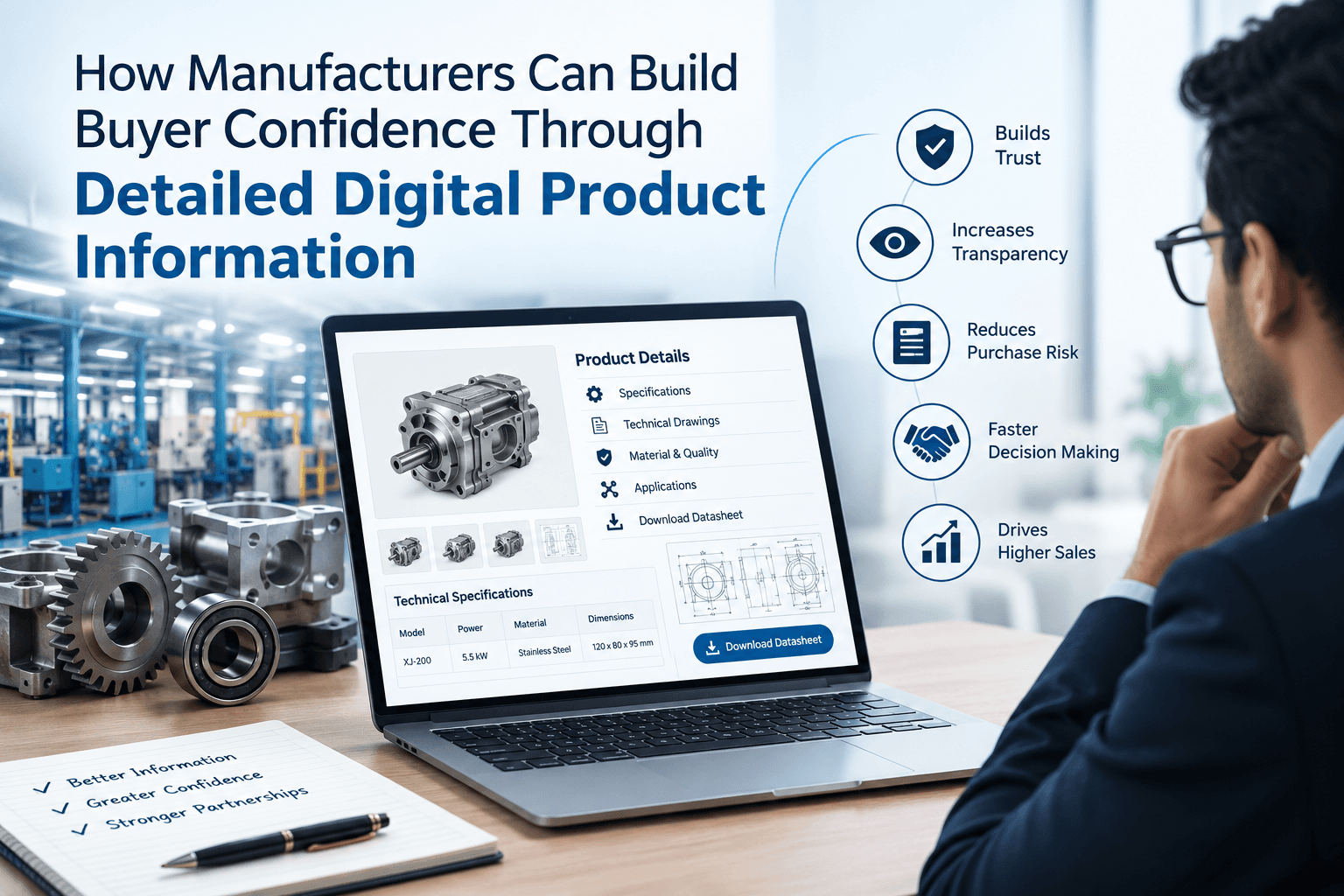
Introduction
In today's competitive business environment, manufacturers need more than high-quality products and efficient production processes to attract business buyers. They must also communicate product information clearly, accurately and professionally. As purchasing activities increasingly involve online research, digital catalogues, business directories and B2B networking platforms, the quality of a manufacturer's digital product information has become an important part of the buyer's decision-making process.
Before contacting a manufacturer, buyers often want to understand what a product does, which specifications it offers, what materials are used, whether customisation is possible and how the product fits their requirements. If these details are missing or unclear, buyers may struggle to determine whether the manufacturer is suitable for their needs.
Incomplete information can also create unnecessary communication, delay purchasing decisions and make it difficult to compare competing suppliers. On the other hand, detailed and well-organised product information can help buyers understand an offering, prepare relevant questions and make more informed decisions.
For manufacturers, this creates an opportunity to improve their digital presence by treating product information as an essential business asset rather than a simple marketing requirement.
A professional product listing should explain the product's purpose, features, specifications, applications and relevant limitations. Depending on the product category, it may also include photographs, technical documents, certifications, packaging details, available sizes and ordering information.
Digital B2B platforms such as BONC Network provide an environment where businesses can present their offerings and explore potential commercial connections. When manufacturers combine this type of digital presence with accurate product information, they can make it easier for prospective buyers to understand their products and evaluate their suitability.
This article explores how manufacturers can use detailed digital product information to strengthen buyer confidence, improve product discovery and support more effective B2B relationships.
Understanding Buyer Confidence in the Digital B2B Marketplace
Buyer confidence refers to the level of trust a potential customer develops in a product, manufacturer and purchasing opportunity.
In B2B transactions, buyers frequently make decisions that affect budgets, production schedules, inventory management and customer commitments. A product that fails to meet expectations can cause operational difficulties, financial losses or delays throughout a supply chain.
As a result, business buyers generally need more information than a simple product name or promotional statement.
A procurement manager evaluating an industrial component, for example, may need to understand its dimensions, material grade, compatibility, operating conditions and applicable quality requirements. A wholesaler evaluating consumer products may focus on packaging, available variants, minimum order quantities and supply capacity.
The information required varies by industry, but the underlying principle remains the same: buyers need sufficient relevant information to determine whether a product deserves further consideration.
Digital product information helps manufacturers communicate these details before a direct conversation begins.
It cannot guarantee that a buyer will trust a company or complete a purchase. However, it can reduce uncertainty, demonstrate professionalism and establish a stronger foundation for supplier evaluation.
Why Detailed Digital Product Information Matters for Manufacturers
It Helps Buyers Understand the Product Clearly
A product listing that contains only a name and a short description leaves many questions unanswered.
Consider a manufacturer listing an industrial pump. The product name alone does not tell the buyer about its intended application, flow capacity, operating conditions, material construction or connection requirements.
Without these details, the buyer must contact the manufacturer simply to determine whether the product is potentially relevant.
A detailed listing provides a clearer initial understanding. It helps buyers identify important characteristics and determine which questions need further discussion.
This is particularly useful when buyers are comparing several manufacturers or conducting preliminary research outside their usual supplier network.
It Reduces Uncertainty During Supplier Discovery
Businesses exploring new suppliers often face uncertainty about product quality, specifications, compatibility and commercial suitability.
Detailed product information helps address some of these questions before the buyer begins a formal evaluation.
For example, a buyer searching for metal storage racks may need to compare dimensions, construction materials, load ratings, surface finishes and customisation options.
Manufacturers that provide relevant details make the comparison process more practical.
However, information must be accurate and appropriately supported. A manufacturer should not publish a technical rating or performance claim unless it can substantiate that claim.
Clear information is valuable because it helps buyers evaluate the product realistically, not because it makes every product appear suitable for every application.
It Demonstrates Professionalism
The way a manufacturer presents its products influences how potential buyers perceive the business.
A structured digital catalogue, consistent product naming, readable specifications and clear images suggest that the company has invested effort in communicating with customers.
In contrast, poorly organised listings, contradictory specifications and vague descriptions can make it harder for buyers to understand the business.
Digital presentation is not a substitute for manufacturing capability, but it contributes to the overall purchasing experience.
Manufacturers can strengthen their professional image by ensuring that their online information reflects the same attention to detail they apply to their products and production processes.
It Supports More Relevant Business Inquiries
When product information is detailed, buyers can better determine whether the manufacturer meets their requirements.
This can help attract inquiries from businesses that understand the basic product offering and have a more specific commercial interest.
For instance, a manufacturer that clearly identifies the materials, sizes and applications of its packaging products may receive more relevant questions from distributors and businesses seeking customised packaging.
Detailed listings may also discourage unsuitable inquiries by making product limitations clear from the beginning.
The objective is not simply to maximise inquiry volume. It is to help potential customers understand the offering so that subsequent conversations are more focused and productive.
Essential Elements of Effective Digital Product Information
Clear and Specific Product Names
The product name is often the first piece of information a buyer sees.
Manufacturers should use names that accurately describe the product and distinguish it from similar offerings.
A generic title such as "Industrial Equipment" provides little useful information. A more specific title, such as "Industrial Water Pump for Commercial Water Transfer," communicates a clearer product category and intended application, provided that the description accurately reflects the product.
Where appropriate, product names can include relevant identifiers such as model numbers, material types, sizes or product variants.
Manufacturers should avoid unnecessarily long titles filled with repeated keywords. Product names should primarily help buyers identify the item quickly.
A clear naming structure also makes it easier to organise product catalogues and maintain consistency across different digital channels.
Detailed Product Descriptions
A product description should explain what the product is, what it does and how it may be used.
It should give buyers enough context to understand the product without requiring them to interpret vague marketing language.
A useful description can cover the product's purpose, construction, main characteristics, common applications and relevant options.
For example, a manufacturer of metal office furniture could explain whether its products include office desks, storage cabinets, shelving systems or workstation furniture. It could also describe available materials, finishing options and customisation possibilities where applicable.
Descriptions should remain factual and specific.
Claims such as "best quality," "number one product" or "suitable for every industry" rarely provide meaningful information unless supported by clear evidence and relevant context.
Manufacturers should focus on explaining the product's actual capabilities rather than relying on broad promotional statements.
Accurate Technical Specifications
Technical specifications are particularly important for industrial products, machinery, components and equipment.
Buyers may need precise information to determine whether a product is compatible with existing systems or suitable for a particular operating environment.
Depending on the product, specifications may include:
- Dimensions and physical measurements.
- Materials and construction details.
- Weight and packaging dimensions.
- Capacity, output or performance ratings.
- Voltage, power requirements or operating parameters.
- Model numbers and compatible components.
- Tolerances and relevant technical standards.
- Operating conditions and usage limitations.
- Available sizes, configurations or variants.
Not every product requires every specification. Manufacturers should identify which details are essential for evaluating their particular products.
Units of measurement should be consistent, and technical values should be checked before publication.
For products where incorrect specifications could create safety, compatibility or operational risks, manufacturers should provide appropriate documentation and encourage buyers to confirm suitability before use.
High-Quality Product Photographs
Images help buyers understand a product's appearance, construction and physical characteristics.
For manufacturers selling online, photographs can complement written descriptions by showing details that are difficult to communicate through text alone.
A useful product image set may include a clear front view, additional angles, close-ups of important components, available variants and packaging where relevant.
For machinery or industrial equipment, photographs may also show control panels, connection points or other features important to potential buyers.
Images should represent the actual product accurately.
Manufacturers should avoid using photographs that display features not included in the listed model or presenting a standard product as if it includes optional accessories.
Where a product is customised, the listing should distinguish between standard configurations and examples of customised work.
Accurate visuals help buyers develop realistic expectations and reduce confusion during later discussions.
Product Variants and Customisation Options
Many manufacturers produce multiple versions of the same basic product.
These variations may involve dimensions, materials, colours, finishes, capacities, packaging formats or technical configurations.
Digital product information should explain the options available and identify which features can be customised.
For example, a furniture manufacturer may offer standard metal racks in several dimensions while also accepting certain custom fabrication requests.
A packaging manufacturer may offer different box sizes, printing options and material grades.
Clearly documenting these options helps buyers determine whether the manufacturer can accommodate their requirements.
Manufacturers should also identify limitations. If customisation depends on minimum order quantities, tooling availability or additional production time, those conditions should be explained during the inquiry process.
How Transparency Strengthens Buyer Confidence
Providing Honest Product Information
Product transparency means communicating relevant information accurately and avoiding misleading claims.
Manufacturers should ensure that descriptions, specifications, images and promotional materials reflect the product being offered.
If a product has a specific operating range, material limitation or compatibility requirement, that information should not be concealed merely to make the listing appear more attractive.
Transparent communication helps buyers evaluate suitability and reduces the possibility of misunderstandings after an order is placed.
It also supports more productive commercial discussions because both parties can focus on the actual product requirements.
Explaining What Is Included in the Price
Product listings do not always need to display a fixed price, particularly when quotations depend on quantity, specifications or customisation.
However, manufacturers should make it clear what information is required to obtain a quotation.
Where relevant, they can explain whether the price depends on order volume, product configuration, packaging, delivery location or additional services.
If a listed product includes optional accessories, installation or other services, the manufacturer should distinguish those items from the standard offering.
This clarity helps buyers understand the commercial proposal and compare quotations more accurately.
Manufacturers should also communicate taxes, delivery charges, payment conditions and other applicable terms during the quotation process.
Communicating Product Limitations
A trustworthy product listing explains both capabilities and relevant limitations.
For example, a material may be suitable for certain environmental conditions but unsuitable for others. A machine may support a defined capacity range rather than unlimited production requirements.
Communicating such limitations helps buyers determine whether a product fits their intended application.
It can also prevent disputes arising from unrealistic expectations.
Manufacturers should not assume that explaining limitations will necessarily reduce business opportunities. In many situations, honest information helps establish a more credible relationship and makes it easier to identify the right customers.
Keeping Information Updated
Product information can become outdated when manufacturers change materials, dimensions, model numbers, packaging or production processes.
An old digital listing may therefore create confusion even if it was accurate when originally published.
Manufacturers should periodically review their product catalogues and update details whenever meaningful changes occur.
They should also remove discontinued products or clearly mark them as unavailable when appropriate.
A simple process for reviewing listings can help ensure that buyers receive current information.
Keeping contact details, product availability and quotation procedures updated is equally important.
Creating a Digital Product Catalogue That Supports B2B Buyers
Organise Products Into Clear Categories
Manufacturers with multiple products should organise them into logical categories.
A company producing pumps, valves and industrial fittings, for example, should avoid presenting every item under one broad category if more specific classifications are available.
Clear categories help buyers navigate the catalogue and locate relevant products more efficiently.
They can also improve discoverability when buyers search by product type.
Manufacturers should select categories that accurately reflect their offerings rather than choosing unrelated categories simply to attract additional traffic.
The category structure should remain understandable as the product range grows.
Use a Consistent Product Information Template
A consistent template helps manufacturers maintain quality across their catalogues.
Each product entry should include the relevant fields, such as product name, description, specifications, features, applications, images and available variants.
Some fields may vary by category, but the basic structure should remain consistent wherever possible.
This makes product information easier to compare and reduces the chance that important details will be omitted.
A standard template can also simplify internal review when several employees are responsible for publishing or updating listings.
Make Technical Documents Accessible
Certain products require more detailed documentation than a short listing can provide.
Industrial machinery, electrical equipment, specialised components and products used in regulated environments may require technical datasheets, instruction manuals, drawings, test reports or relevant certificates.
Where appropriate, manufacturers should make these documents available to prospective buyers through suitable channels.
Documents should be clearly named, current and associated with the correct product model.
If a certification applies only to a particular facility, product range or configuration, the manufacturer should not imply that it covers every offering.
Providing accurate supporting documents allows buyers to conduct a more thorough evaluation before proceeding with a purchase.
Make Product Information Easy to Read on Different Devices
Business buyers may review product information on desktop computers, tablets or smartphones.
Manufacturers should therefore use readable formatting, clear headings, concise paragraphs and well-organised specification tables where supported.
Images should be clear enough to inspect important details without making the page unnecessarily difficult to navigate.
Product information should not depend entirely on text embedded within images because such information may be difficult to read, search or update.
A well-structured catalogue helps buyers locate the information they need without unnecessary effort.
The Role of Search-Friendly Product Information in B2B Discovery
Use Relevant Product Keywords Naturally
Buyers often search online using specific product names, technical terms, materials, applications and model identifiers.
Manufacturers can improve the discoverability of their products by including the terms that accurately describe their offerings.
For example, a manufacturer producing stainless steel commercial kitchen tables may use that phrase in the product title and description if it reflects the actual product.
Related terms can appear naturally in the content when they help explain materials, applications or product variants.
Keyword usage should never replace clear product communication. Repeating the same phrase excessively can make descriptions difficult to read and may reduce their usefulness.
The priority should be to create information that genuinely helps buyers understand the product.
Write Descriptions Around Buyer Questions
An effective product description anticipates the questions a prospective customer is likely to ask.
These may include:
- What is the product used for?
- Which materials are used in its construction?
- What sizes or variants are available?
- What technical specifications should be considered?
- Which industries or applications may be suitable?
- Can the product be customised?
- What information is required to request a quotation?
The exact questions will depend on the product category.
Manufacturers can use common sales inquiries to identify missing information and improve future listings.
This approach supports both product discovery and the buyer's evaluation process.
Maintain Consistent Information Across Digital Channels
Manufacturers may publish product information on their websites, B2B platforms, online catalogues and other business channels.
If the information differs across these locations, buyers may become uncertain about the correct specifications or availability.
Businesses should maintain a reliable source of product information and use it when updating their digital listings.
Product names, model numbers, technical details and contact information should remain consistent wherever practical.
When a product changes, the manufacturer should review all relevant listings rather than updating only one channel.
Consistency helps reduce confusion and supports a more professional digital presence.
How Digital B2B Platforms Help Manufacturers Present Product Information
Digital B2B platforms can provide a structured environment for manufacturers to introduce their products and make their businesses discoverable to prospective commercial partners.
Instead of relying exclusively on individual sales conversations, manufacturers can use business profiles and product listings to communicate basic information before an inquiry occurs.
For buyers, this creates another way to explore product categories and identify businesses that may be relevant to their requirements.
The usefulness of these platforms depends on the quality of the information published, the platform's available features and the relevance of the businesses using it.
Improving Product Visibility
A manufacturer may have suitable products but limited reach outside its established customer base.
Publishing accurate product information on appropriate digital channels can create additional opportunities for prospective buyers to discover the business.
A well-organised profile helps explain the manufacturer's product range, while individual listings provide more detailed information about specific offerings.
Manufacturers should focus on accurate categorisation and clear descriptions rather than publishing large numbers of incomplete listings.
Quality and relevance are more useful than simply increasing the number of product entries.
Supporting Initial Buyer Evaluation
Digital listings can help buyers conduct preliminary research before contacting manufacturers.
For example, a wholesaler searching for metal furniture can review product information, identify relevant categories and prepare questions about available designs, materials and order quantities.
This can make initial conversations more focused.
However, buyers still need to confirm important details directly with the manufacturer, particularly when specifications, prices or availability may change.
The platform supports discovery; the manufacturer remains responsible for providing accurate information and fulfilling the agreed requirements.
Connecting Product Information With Business Networking
Product information becomes more commercially useful when it helps businesses identify relevant potential partners.
A detailed listing can help a buyer recognise that a manufacturer may have the capabilities required for a particular project.
It can also help manufacturers explain their offerings to distributors, wholesalers, procurement teams and other businesses.
BONC Network provides a digital environment for B2B networking where businesses can present their offerings and explore potential commercial connections.
Manufacturers can consider using their digital presence on platforms such as BONC Network as one part of a broader strategy that includes product information, direct communication and business development.
The platform should not be treated as a guarantee of inquiries or sales. The value of any digital channel depends on the relevance of the audience, the accuracy of the information and the manufacturer's ability to respond to business requirements.
Businesses can explore the platform through the official website, BONC Network, to assess its available features and suitability for their B2B networking objectives.
Common Product Information Mistakes Manufacturers Should Avoid
Publishing Vague Descriptions
Descriptions such as "premium quality product," "best industrial solution" or "available at the best price" do not explain what the product actually offers.
Manufacturers should replace broad statements with specific details about product characteristics, materials, applications and available options.
Where a performance or quality claim is important, it should be supported by appropriate evidence.
Using Incorrect or Inconsistent Specifications
Incorrect dimensions, model numbers or technical values can lead buyers to reject a suitable product or select an unsuitable one.
Manufacturers should verify specifications before publication and establish a process for updating them when changes occur.
Technical information should be reviewed by someone familiar with the product rather than copied from an unrelated listing.
Using Images That Do Not Match the Product
Images should accurately represent the listed model and its included features.
Manufacturers should clearly identify optional accessories, illustrative photographs and customised examples where necessary.
If the product is available in several configurations, each version should be presented in a way that helps buyers understand the differences.
Making Unsupported Claims
Statements such as "100% guaranteed performance," "the best manufacturer in India" or "suitable for all applications" can create unrealistic expectations if they are not properly substantiated.
Manufacturers should avoid unsupported claims about durability, certifications, market position or product performance.
Accurate information helps buyers make informed decisions and protects the credibility of the business.
Ignoring Buyer Inquiries
A detailed product listing may encourage a buyer to contact the manufacturer, but the interaction can become unproductive if inquiries go unanswered.
Manufacturers should establish a practical process for monitoring inquiries and responding within a reasonable timeframe.
Responses should address the buyer's actual questions and identify any additional information needed to prepare a quotation.
Even when a product is unavailable or unsuitable, a clear response helps maintain professional communication.
How Manufacturers Can Measure the Effectiveness of Product Information
Improving product listings is an ongoing process. Manufacturers should assess whether their digital information helps attract relevant buyers and supports more productive conversations.
Monitor Product Views and Inquiries
Where analytics are available, manufacturers can review product views, profile visits and incoming inquiries.
These indicators may help identify which products receive attention and which listings require improvement.
However, views alone do not establish commercial success. A product may receive many visits but few relevant inquiries if its description is unclear or its audience is poorly matched.
Manufacturers should therefore evaluate both activity and inquiry quality.
Track Common Buyer Questions
Repeated questions can reveal gaps in product information.
If buyers frequently ask about dimensions, materials, available sizes or minimum order quantities, manufacturers should consider whether those details belong in the listing.
Reducing avoidable questions can make the inquiry process more efficient.
At the same time, detailed technical or commercial discussions will still be necessary for many B2B transactions.
Review Conversion Through the Sales Process
Manufacturers can examine how inquiries progress from initial contact to quotation, sample request, negotiation and purchase.
If many inquiries fail because the product does not meet basic requirements, the listing may need clearer specifications.
If buyers understand the product but do not proceed because of price, delivery or order quantity, the issue may lie elsewhere in the commercial offer.
This distinction helps manufacturers avoid treating every sales challenge as a content problem.
Collect Feedback From Existing Buyers
Existing customers can provide valuable insight into which information helped them evaluate the product and which details were difficult to find.
Manufacturers can ask buyers whether the catalogue accurately represented the product, whether technical documents were useful and whether any important questions remained unanswered.
This feedback can guide future improvements and help the company make product information more practical for its target audience.
Building a Long-Term Digital Product Information Strategy
Manufacturers should treat digital product information as an ongoing business responsibility rather than a one-time publishing task.
As product ranges expand, technical specifications change and new customer segments emerge, product information must evolve accordingly.
A sustainable approach begins with a central record of approved product details. This record can help employees maintain consistency across catalogues, sales materials and digital platforms.
The business should assign responsibility for reviewing product information and establish a schedule for checking important details.
Products with frequent design changes or complex technical requirements may need more frequent reviews than stable, standardised items.
Manufacturers should also make it easy for sales and technical teams to share feedback. If buyers repeatedly request missing details, the relevant information can be added to the product listing after verification.
Digital content should be reviewed not only for search visibility but also for accuracy, clarity and commercial usefulness.
The strongest strategy combines clear product descriptions, reliable technical specifications, accurate images, responsive communication and regular updates.
Conclusion
Detailed digital product information has become an important part of how manufacturers communicate with business buyers. In a competitive B2B environment, buyers need more than a product name or a promotional claim. They need clear descriptions, accurate specifications, relevant photographs and practical information that helps them determine whether an offering meets their requirements.
Manufacturers can strengthen buyer confidence by presenting their products transparently, explaining available options, documenting technical details and keeping digital catalogues updated. Search-friendly descriptions and consistent business profiles can also support product discovery and help buyers identify relevant suppliers.
Digital B2B platforms provide additional opportunities for manufacturers to present their offerings and explore potential commercial relationships. Platforms such as BONC Network can form part of this strategy by supporting digital business visibility and B2B networking.
However, digital visibility alone does not establish trust. Manufacturers must support their online information with reliable products, realistic claims, professional communication and consistent fulfilment. Buyers should also verify important specifications, documentation and supplier capabilities before making significant purchasing decisions.
Ultimately, detailed digital product information works best when it reflects the manufacturer's real capabilities and answers the questions buyers need to resolve. By making product information accurate, accessible and useful, manufacturers can create a stronger foundation for buyer confidence, more focused business discussions and long-term B2B relationships.