The global and domestic economic landscapes are currently being shaped by a complex interplay of energy shocks, aggressive monetary tightening, and evolving artificial intelligence (AI) investments. According to the latest insights from the BONC Network, businesses must navigate significant volatility driven by geopolitical tensions in the Middle East, fluctuating currency values, and shifting central bank policies.
1. Top Global Business Developments & Energy Watch
Geopolitical conflicts have directly impacted global energy markets. The ongoing conflict and shipping disruptions near the Strait of Hormuz—highlighted by multiple commercial vessel attacks—have triggered a major energy shock.
Oil Prices: Brent crude settled at $109.55 for December delivery, hovering near a five-month high and well above pre-conflict levels of around $70.
Sanctions and Strategic Reserves: To help cap soaring prices, the US temporarily eased key sanctions and tariffs on Russia to allow global diesel distribution, while France announced plans to release up to 100 million barrels of crude and diesel reserves over four months.
Central Bank Tightening: Global monetary policy remains restrictive. The US Federal Reserve raised rates to 3.75–4.00%, and the European Central Bank (ECB) lifted its deposit rate to 2.50%, officially signaling that the era of aggressive rate cuts has ended.
2. Global Technology and Financial Markets
Financial markets are experiencing heightened volatility, balancing AI-driven growth optimism against fiscal pressures.
AI and Tech Sector: Despite a temporary tech sell-off driven by investor skepticism over massive AI capital expenditures, indices like the Nasdaq quickly rebounded by 1.1%. Major tech developments, such as Anthropic preparing for a historic IPO, continue to dictate market-level risk.
Macro Indicators: US Consumer Price Index (CPI) inflation rose to 3.7% in September, driven heavily by a 34.2% year-on-year surge in gasoline prices. Meanwhile, the International Monetary Fund (IMF) projects global economic growth at 3.1% for 2026 and 3.4% for 2027, accompanied by an anticipated global inflation rate of 4.7% in 2026.
3. India Economic Update and Market Movements
Domestically, the Indian economy is balancing robust corporate activity against inflationary pressures and currency fluctuations.
Market Performance: Indian equity benchmarks saw a downturn, with the Sensex falling 876 points (1.17%) to 73,852.90 and the Nifty dropping 1.11% to 22,888.95. While private banks faced downward pressure, Public Sector Undertaking (PSU) banks surged 2.5% on the back of strong earnings.
IT and Corporate Earnings: TCS reported strong Q2 revenues of $7.64 billion (up 2.8% YoY in constant currency), with annualized AI revenue crossing $3.1 billion (representing over 10% of total revenue). Infosys is slated to report amidst broader industry challenges concerning discretionary spending and AI-led pricing pressures.
Inflation and Monetary Policy: India's CPI inflation climbed to 5.54% in September (with food inflation touching 7.74%), prompting the Reserve Bank of India (RBI) to raise its repo rate by 25 basis points to 5.50% and shift toward a stance of "calibrated tightening". Despite these pressures, the IMF revised India's full-year growth forecast upward to 7.0%.
Currency Interventions: The Indian Rupee slid to an intra-period low of 96.78 against the US dollar before recovering to 94.92 following aggressive interventions by the RBI, which deployed an estimated $75–80 billion through dollar sales and swap windows.
4. Capital Markets and Upcoming IPO Boom
India's primary market is witnessing historic momentum, highlighted by major public offerings.
Jio Platforms IPO: Jio Platforms launched its massive ₹30,213 crore issue (priced between ₹1,065 and ₹1,119 per share), marking India's largest-ever IPO and surpassing Hyundai India's previous record.
Broader IPO Activity: Total capital raised via IPOs in 2026 has reached ₹1.1 lakh crore, with approximately 12 firms—including Zetwerk and Awaida Electro—planning October offerings.
5. Outlook and Strategic Recommendations
According to the BONC Network market outlook, investors and enterprises should prepare for distinct sectoral winners and headwinds:
Sectors Likely to Grow: PSU banks, capital-market intermediaries (brokers and asset management companies riding the IPO boom), energy security and storage, defense, electronics manufacturing, and export-oriented IT/AI services.
Sectors Facing Challenges: Oil marketing companies, airlines, paints, chemicals, food-heavy FMCG, rural-dependent retail, and rate-sensitive sectors like real estate and autos.
Key Watchpoints: Businesses should closely monitor upcoming corporate earnings, central bank decisions (Fed and ECB meetings), trajectory of the Rupee near the 97 mark, Brent crude fluctuations around $100, and ongoing developments regarding US-India trade policies.
The BONC Network advises enterprises to adopt practical risk-management steps—such as hedging currency exposures, stress-testing operations against $100 crude scenarios, and locking in financing ahead of further potential rate hikes.
Strategic Analysis & Recommendations
1. Macroeconomic & Geopolitical Impact Analysis
Energy Vulnerability: The Strait of High-stakes disruption near Hormuz has locked Brent crude near $109.55/barrel. For import-heavy economies like India, this introduces persistent inflationary pressures, widening fiscal deficits, and severe cost pushbacks on manufacturing and logistics.
Monetary Tightening Constraints: With the US Federal Reserve targeting 3.75%–4.00% and the RBI shifting to "calibrated tightening" with a repo rate hike to 5.50%, liquidity is tightening globally. Capital is aggressively migrating toward the US dollar, placing unprecedented pressure on emerging-market currencies like the Indian Rupee (which tested near the 96.78 level before RBI stabilization).
2. Sectoral Winners & Vulnerabilities (The BONC Network Outlook)
Sector Category with Market Trajectory followed by Underlying Driver / Risk
PSU Banks & Capital Markets (🟢 Growth) - Strong asset quality, robust earnings, and high liquidity riding the wave of India's historic IPO boom (e.g., Jio Platforms' ₹30,213 crore issue).
Energy Security, Defense & Electronics (🟢 Growth) - Backed by active domestic demand, strategic state investments, and extensive private sector capital allocation.
Export IT & AI Services (🟢 Growth) - Benefiting from a favorable currency exchange rate (Rupee near 95–96), though real-time pricing pressure and discretionary spending slowdowns require cautious selectivity.
Oil Marketing, Aviation, Paints & Chemicals (🔴 Challenge) - Highly vulnerable to elevated crude oil costs ($100+ Brent) and currency depreciation overheads.
Rate-Sensitive Sectors (Real Estate, Autos, FMCG) (🔴 Challenge) - Pressured by high borrowing costs, rising mortgage rates (7.40%), and rural consumer price inflation exceeding 6%.
3. Recommended Action Plan for Businesses
To safeguard profit margins and capitalize on emerging opportunities in this volatile cycle, enterprises within the BONC Network ecosystem should execute the following steps:
Hedge Currency and Commodity Exposure Immediately
Action: Lock in forward covers for foreign exchange liabilities to mitigate the risk of further rupee fluctuations against the US dollar.
Deadline/Next Step: Instruct your finance team by the end of the week to review upcoming import-export payment cycles against a projected $100 crude baseline.
Stress-Test Working Capital at $100+ Crude
Action: Run financial simulations assuming logistics and raw material costs remain elevated through Q4.
Deadline/Next Step: Identify operational redundancies and optimize supply chain routes within the next 14 days.
Secure Financing Ahead of Further Rate Hikes
Action: With HSBC and other major institutions forecasting additional rate hikes (potentially another bump by December), corporate borrowers should lock in long-term credit lines immediately.
Deadline/Next Step: Negotiate fixed-rate credit facilities with banking partners before upcoming central bank decisions on October 28–29.
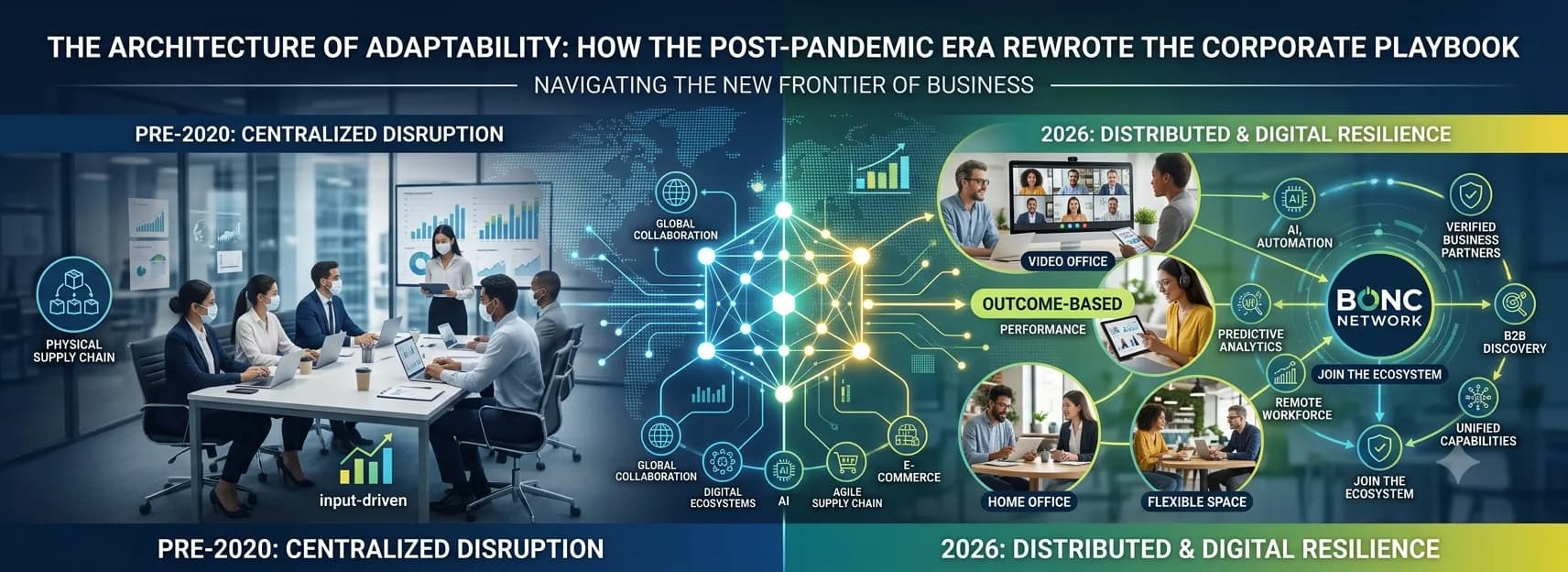
Leverage Digital B2B Ecosystems for Supply Chain Resiliency
Action: Diversify domestic supplier and vendor networks to counter localized inflation and input shortages.
Deadline/Next Step: Actively utilize platforms like the BONC Network to source alternative domestic channel partners, digital vendors, and verified distributors to compress procurement turnaround times.