Businesses Are Strengthening Their Supply Chains Through Local Buying From Nearby Manufacturers and Suppliers
Published on: 26 Aug 2026
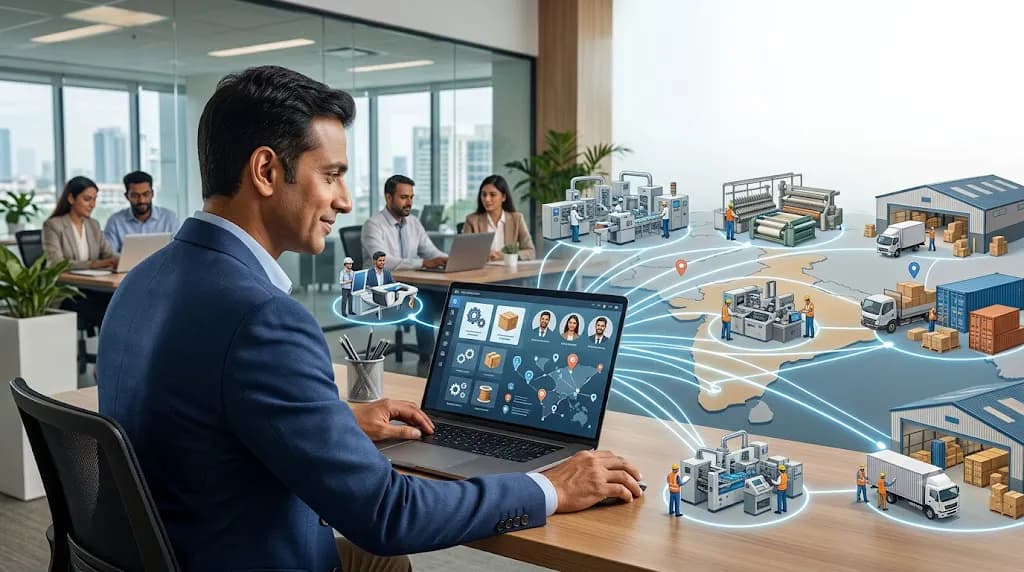
Businesses Are Strengthening Their Supply Chains Through Local Buying From Nearby Manufacturers and Suppliers
Introduction
Modern businesses are under constant pressure to source products efficiently, control costs, maintain quality, and respond quickly to changing market demands. While global sourcing has opened access to suppliers across countries, many businesses are also recognizing the strategic value of local buying from nearby manufacturers and suppliers.
Local buying is not simply about purchasing products from businesses located nearby. In the B2B environment, it can become an important part of supply chain strategy.
When businesses source from manufacturers and suppliers within their region, they may benefit from easier communication, faster coordination, shorter delivery distances, better understanding of local market conditions, and stronger professional relationships.
At the same time, local sourcing can create opportunities for manufacturers, MSMEs, wholesalers, distributors, and other businesses to become part of regional supply networks.
Digital technology is making this process even more accessible.
In the past, discovering a suitable local supplier often depended on personal contacts, referrals, trade associations, exhibitions, or physical market visits. Today, businesses can use digital B2B platforms to search for companies, explore products, compare potential suppliers, and initiate business conversations.
This is where BONC Network becomes relevant.
BONC Network is a B2B networking platform designed to help businesses discover companies, showcase products and services, and develop business connections within a digital ecosystem.
The combination of local buying and digital supplier discovery can help businesses build supply networks that are not only more connected but also potentially more responsive.
What Is Local Buying in the B2B Context?
Local buying refers to sourcing products, materials, equipment, and services from businesses operating within a nearby geographical area or domestic market.
For consumers, local buying may mean purchasing from a neighborhood store.
For businesses, the concept is much broader.
A company may source from:
- Local manufacturers
- Regional suppliers
- Nearby wholesalers
- Local distributors
- Domestic service providers
- Regional logistics companies
- Local contractors
- MSMEs
For example, a furniture retailer may source products from a manufacturer in the same state.
A construction company may purchase building materials from regional suppliers.
A manufacturing company may source components from nearby industrial units.
A restaurant chain may work with local food suppliers.
In each case, local buying creates a direct connection between businesses within the same regional ecosystem.
Why Businesses Are Rethinking Their Supply Chains
Supply chains have become increasingly complex.
Businesses have to manage:
- Procurement
- Transportation
- Inventory
- Delivery schedules
- Supplier relationships
- Quality control
- Market fluctuations
- Customer expectations
When a supplier is located very far away, communication and logistics can sometimes become more complicated.
Local sourcing can provide an alternative for certain categories of products and services.
This does not mean businesses should eliminate global suppliers.
Instead, companies can create a balanced sourcing strategy.
They may source some products internationally while sourcing other products locally.
This approach can help create greater flexibility.
1. Local Buying Can Improve Supplier Accessibility
One of the simplest advantages of nearby suppliers is accessibility.
When a supplier operates within the same city, region, or country, businesses may find it easier to:
- Communicate
- Arrange meetings
- Discuss requirements
- Inspect products
- Coordinate deliveries
- Resolve issues
Physical distance can sometimes create additional complexity.
Local suppliers can reduce that barrier for certain types of business relationships.
For products that require regular communication or customization, having a supplier nearby can be especially useful.
2. Local Suppliers Can Support Faster Procurement
Time is an important factor in modern business.
A company may suddenly need additional inventory because of increased demand.
A manufacturer may need a component urgently.
A retailer may need products before a seasonal sales period.
A contractor may require materials for a project.
In such situations, nearby suppliers may offer logistical advantages compared with suppliers located much farther away.
Delivery time depends on many factors, including product availability, transportation, supplier capacity, and location.
However, local sourcing can potentially simplify the logistics involved.
3. Local Buying Can Strengthen Regional Supply Chains
A supply chain is more than a relationship between a buyer and a seller.
It is a network.
For example:
Manufacturer → Distributor → Wholesaler → Retailer → Customer
Each participant depends on others.
When more businesses within a region participate in the same ecosystem, stronger local supply networks can develop.
A manufacturer may purchase components locally.
The finished products may be distributed by regional distributors.
Retailers may then sell those products to local customers.
This creates an interconnected commercial cycle.
4. Local Manufacturers Can Offer Market-Specific Knowledge
A nearby manufacturer may have a better understanding of local market requirements.
For example, they may understand:
- Regional customer preferences
- Local industry requirements
- Seasonal demand
- Transportation conditions
- Local regulations
- Common product specifications
This knowledge can be valuable when a business requires customized products or services.
Local suppliers can sometimes provide a level of market familiarity that distant suppliers may not have.
5. Digital Platforms Are Changing Local Supplier Discovery
One of the biggest changes in B2B procurement is the move from offline supplier discovery to digital discovery.
Previously, businesses often relied on:
- Personal contacts
- Referrals
- Trade fairs
- Business directories
- Local markets
These methods still have value.
But digital B2B platforms can provide another channel.
A buyer can search for a particular product or category and discover businesses operating in relevant markets.
This makes supplier discovery more convenient.
A company looking for industrial equipment, furniture, packaging products, electrical components, or other B2B products can begin its research online.
6. BONC Network Can Support Local Business Discovery
BONC Network provides a digital B2B environment where businesses can showcase their company information, products, and services.
For manufacturers and suppliers, this type of platform can help improve business visibility.
For buyers, it can provide another channel for discovering businesses and products.
The platform's business-oriented ecosystem can support connections between different types of companies, including manufacturers, suppliers, distributors, wholesalers, and buyers.
This is particularly relevant to local buying because businesses can use digital discovery to identify potential partners before starting a commercial conversation.
A digital B2B platform does not replace proper supplier evaluation.
Instead, it can make the initial discovery stage more efficient.
7. Local Buying Can Help MSMEs Find Business Opportunities
India has a large and diverse MSME ecosystem.
Many small and medium-sized businesses have specialized capabilities but limited visibility outside their traditional networks.
A local B2B ecosystem can help bridge this gap.
For example, a small manufacturer producing industrial components may have excellent production capabilities but struggle to reach larger buyers.
A digital B2B platform can provide an additional channel through which potential customers may discover the company.
This can help local businesses participate in larger supply chains.
8. Businesses Can Discover Alternative Suppliers
Depending on only one supplier can create risk.
If the supplier experiences:
- Production delays
- Capacity problems
- Transportation issues
- Inventory shortages
- Unexpected price changes
the buyer may face difficulties.
Maintaining relationships with multiple potential suppliers can create greater flexibility.
Local supplier discovery can help businesses identify alternative options within their market.
A company may develop a primary supplier relationship while maintaining secondary suppliers for specific requirements.
This can contribute to supply chain resilience.
9. Local Procurement Can Improve Communication
Communication plays a major role in B2B procurement.
Buyers and suppliers may need to discuss:
- Product specifications
- Quantity
- Pricing
- Delivery
- Customization
- Quality requirements
- Packaging
- Payment terms
When both businesses operate within a similar geographical and business environment, communication can sometimes become easier.
Local suppliers may also be more accessible for meetings, product demonstrations, and site visits.
10. Local Sourcing Can Support Customization
Not every business needs standardized products.
Some buyers require customized solutions.
Examples include:
- Custom machinery
- Customized packaging
- Special furniture
- Industry-specific components
- Custom fabrication
- Private-label products
Customization often requires communication between buyer and supplier.
Having a supplier within a reasonable geographical distance can make meetings and product discussions more convenient.
This can help businesses develop solutions that match their specific requirements.
11. Local Buying Can Create Stronger Business Relationships
B2B relationships are often long-term.
A company may work with the same supplier for:
- Several months
- Multiple projects
- Multiple product categories
- Several years
Local supplier relationships can develop through regular interaction.
Businesses can meet face-to-face, understand each other's operations, and develop stronger professional relationships.
Digital platforms can support the discovery stage, while real-world communication can help develop the relationship.
This combination creates a powerful model.
Digital Discovery + Local Connection + Long-Term Relationship
12. Local Suppliers Can Help Businesses Respond to Market Changes
Markets change quickly.
Demand may increase unexpectedly.
Customers may change their preferences.
A company may introduce a new product.
A business may open a new location.
During such changes, suppliers need to respond quickly.
Nearby suppliers may sometimes offer greater flexibility because of shorter communication and logistics cycles.
Again, this depends on the supplier's capacity and capabilities.
However, geographical proximity can be a useful factor when evaluating sourcing options.
13. Local Buying Can Support Sustainable Business Practices
Transportation is an important part of supply chain management.
Sourcing products from nearby suppliers may reduce transportation distances for certain purchases.
This can potentially help businesses reduce logistical complexity and support more efficient delivery planning.
However, sustainability depends on many factors, including:
- Transportation method
- Product type
- Production process
- Packaging
- Order volume
- Supplier efficiency
Therefore, local sourcing should not automatically be considered sustainable in every situation.
Businesses should evaluate the complete supply chain.
14. Supplier Discovery Should Be Based on More Than Location
Location is important, but it should not be the only consideration.
A business should evaluate suppliers based on:
- Product quality
- Production capacity
- Pricing
- Delivery capability
- Industry experience
- Certifications where relevant
- Customer service
- Communication
- Reliability
A nearby supplier is useful only if it can meet the buyer's actual requirements.
Therefore, businesses should combine local discovery with proper supplier evaluation.
15. Building a Local Supplier Evaluation Process
Businesses can create a simple supplier evaluation process.
Step 1 — Identify the Requirement
Clearly define the product or service required.
Step 2 — Search for Relevant Suppliers
Use B2B platforms, industry networks, directories, referrals, and other channels.
Step 3 — Shortlist Businesses
Compare suppliers based on capabilities and relevance.
Step 4 — Verify Information
Check company details, product information, credentials, references, and other relevant information.
Step 5 — Request Quotations
Compare commercial terms.
Step 6 — Discuss Requirements
Communicate directly with potential suppliers.
Step 7 — Evaluate Samples
For applicable products, request samples before placing larger orders.
Step 8 — Build the Relationship
Once a suitable supplier is identified, develop a professional long-term relationship.
16. Local Buying Can Help Reduce Procurement Complexity
Procurement involves multiple steps.
A company may need to:
- Identify suppliers
- Request quotations
- Compare options
- Negotiate
- Place orders
- Coordinate delivery
- Manage inventory
Digital B2B platforms can simplify the initial discovery stage by bringing businesses and product information into one searchable environment.
This can reduce the time required to identify potential suppliers.
The procurement team can then focus more attention on supplier evaluation and commercial negotiations.
17. Product Visibility Is Important for Suppliers
Local suppliers also need to make themselves discoverable.
A supplier should clearly communicate:
- Product categories
- Product specifications
- Applications
- Business location
- Industries served
- Manufacturing capabilities
- Delivery areas
For example, instead of simply describing itself as a "manufacturer," a business can provide more specific information about what it manufactures.
This makes it easier for buyers to determine relevance.
18. Why Product Listings Matter in B2B Buying
B2B buyers often begin with a specific product requirement.
They may search for:
Industrial pumps
Office furniture
Packaging materials
Electrical components
Construction equipment
Textile products
If a supplier has detailed product information available online, buyers can understand the offering before contacting the company.
This can make the discovery process more efficient.
A platform such as BONC Network can provide businesses with a digital environment for showcasing their products and business offerings.
19. Local Buying Can Help Develop Regional Business Clusters
When businesses in the same region work together, specialized business clusters can develop.
For example, one region may become known for:
- Textiles
- Furniture
- Engineering
- Automotive components
- Food processing
- Handicrafts
- Chemicals
These clusters can create opportunities for businesses to collaborate.
Manufacturers can find suppliers.
Suppliers can find buyers.
Distributors can find products.
Service providers can support multiple companies.
Digital B2B networking can strengthen these connections.
20. Local Buying and Business Growth
Local buying can contribute to business growth in several ways.
A business can:
- Discover new suppliers
- Reduce dependency on a single vendor
- Build regional partnerships
- Find new products
- Improve procurement flexibility
- Explore new markets
At the same time, suppliers can:
- Reach more buyers
- Increase product visibility
- Find distributors
- Build new relationships
- Expand their customer base
This creates a two-sided growth opportunity.
21. Local Buying Does Not Mean Avoiding Global Suppliers
It is important to maintain a balanced perspective.
Global suppliers can provide access to:
- Specialized technology
- Large-scale manufacturing
- Unique products
- Competitive pricing
- International expertise
Local suppliers can provide other advantages.
Therefore, businesses should choose suppliers based on their actual requirements.
The most effective strategy may be a combination of local, regional, national, and international sourcing.
The goal should be supply chain flexibility, not simply geographic preference.
22. The Role of B2B Networking in Local Procurement
Networking remains important even in a digital environment.
A B2B platform can help initiate a connection.
But relationships develop through communication and trust.
Businesses can use digital platforms to identify:
- Potential suppliers
- Buyers
- Distributors
- Manufacturers
- Service providers
They can then begin discussions and determine whether there is a genuine business fit.
This makes B2B networking an important part of modern procurement.
23. How BONC Network Fits Into the Local Buying Ecosystem
BONC Network brings business discovery and networking into a digital B2B environment.
Businesses can create visibility for their company and products while exploring other businesses.
For local manufacturers and suppliers, this can provide another way to reach potential buyers.
For buyers, it can provide another source for supplier discovery.
The larger objective is to create a connected business ecosystem where companies can find relevant opportunities.
For businesses interested in strengthening local procurement, a digital B2B platform can become one part of a broader supplier discovery strategy.
24. Practical Strategies for Businesses Using Local Buying
Companies looking to strengthen their local supply chains can follow several practical strategies.
Map Your Local Supplier Ecosystem
Identify manufacturers and suppliers operating within your region.
Create a Supplier Database
Maintain information about potential vendors.
Use Digital B2B Platforms
Expand supplier discovery beyond personal contacts.
Compare Multiple Suppliers
Avoid making decisions based on only one option.
Evaluate Quality
Do not compromise on product standards.
Build Long-Term Relationships
Reliable suppliers can become strategic partners.
Maintain Backup Suppliers
Alternative suppliers can improve resilience.
Review Supplier Performance
Track quality, delivery, pricing, and communication.
25. The Future of Local Buying in India
Local buying is likely to become increasingly connected with digital technology.
Businesses are becoming more comfortable with online research and digital procurement.
At the same time, local manufacturers and MSMEs are increasing their digital presence.
This creates an opportunity for digital B2B ecosystems to connect both sides.
The future may involve businesses discovering suppliers through digital platforms and then developing physical, long-term relationships.
This creates a hybrid procurement model:
Digital Discovery → Supplier Evaluation → Local Communication → Commercial Partnership
Such a model can combine the convenience of technology with the trust of real business relationships.
Conclusion
Businesses are increasingly recognizing that a strong supply chain does not necessarily have to depend entirely on distant suppliers.
Local buying from nearby manufacturers and suppliers can provide valuable opportunities for faster communication, easier coordination, supplier accessibility, regional partnerships, and stronger business relationships.
At the same time, local sourcing should not be treated as a replacement for every global or national supplier. Businesses should evaluate suppliers based on quality, price, capacity, reliability, delivery, and overall business requirements.
What is changing most significantly is the way businesses discover these suppliers.
Digital B2B platforms are making supplier discovery more accessible.
Instead of depending exclusively on referrals or physical networks, businesses can search for products, companies, manufacturers, distributors, and service providers through digital channels.
This is where BONC Network can become a useful part of the modern B2B ecosystem.
By providing a digital environment for business discovery, product showcasing, and professional networking, BONC Network can help businesses explore potential connections while giving manufacturers and suppliers another channel to improve their visibility.
For local businesses, the opportunity is significant.
A manufacturer operating in one city can potentially reach buyers in another.
A supplier can discover new business partners.
A distributor can connect with manufacturers.
A buyer can explore multiple sourcing options.
And a regional business ecosystem can become more digitally connected.
The future of B2B procurement is therefore not simply about choosing between local and global sourcing.
It is about creating flexible, connected, and reliable supply networks.
Local buying can become one important part of that strategy.
When combined with digital supplier discovery, professional networking, and platforms such as BONC Network, businesses can move toward a more connected approach to procurement and growth.
Local suppliers provide the capability. Digital B2B platforms provide the visibility. Strong business relationships turn those connections into long-term opportunities.