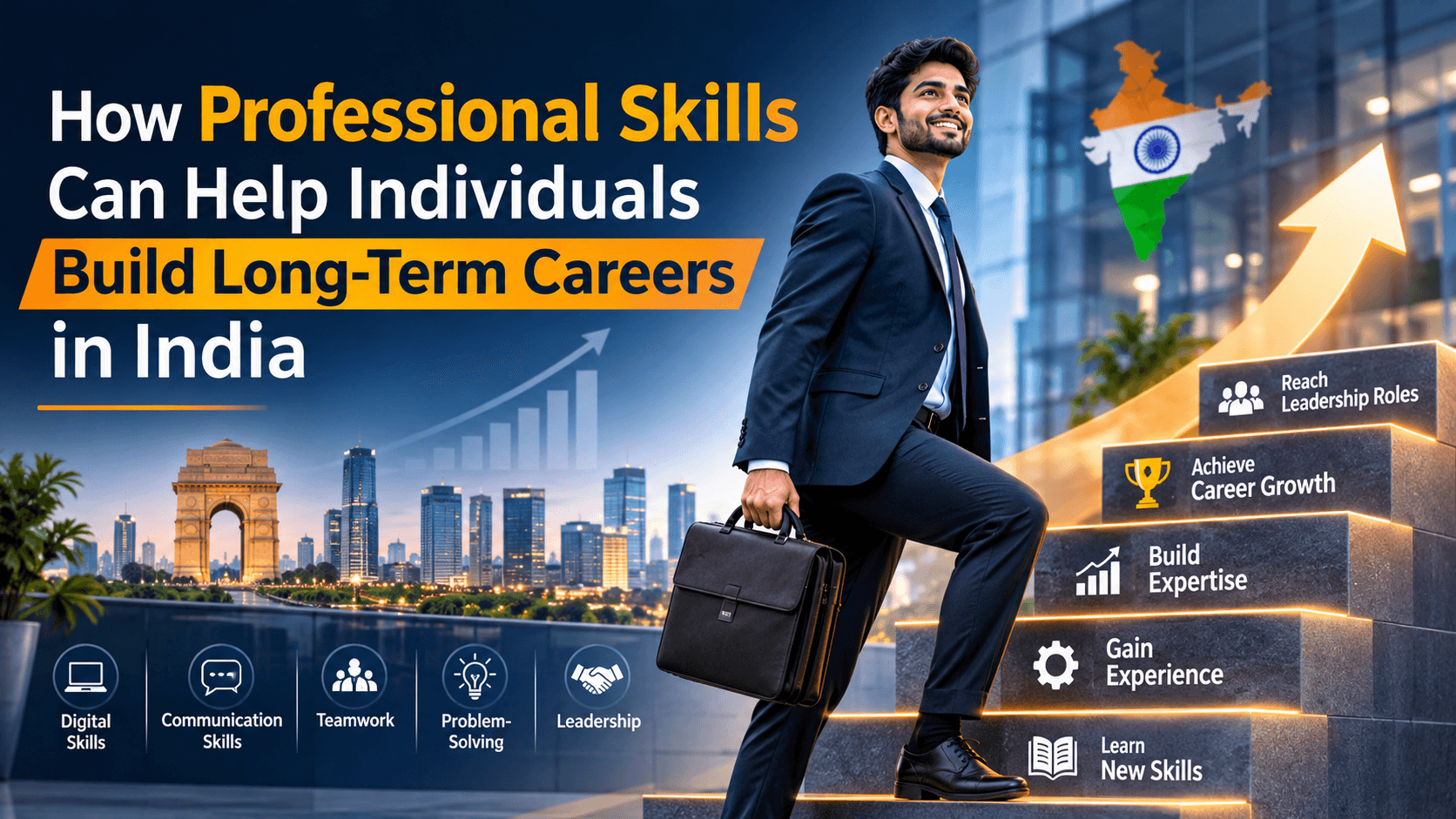
How Job Seekers Can Identify Career Opportunities Across Different Indian Industries
By BONC Editorial Team • Published on 04 Nov 2026

Introduction
Choosing the right career is one of the most important decisions in a person's professional life. For job seekers in India, this decision can become challenging because the country's employment market includes a wide range of industries, job roles, business sectors, and professional opportunities. From information technology and manufacturing to healthcare, education, finance, logistics, retail, hospitality, and digital services, every industry offers different career paths and requires different combinations of skills and qualifications.
Many candidates begin their job search by looking for vacancies that match their educational background. However, limiting the search to one familiar industry may prevent them from discovering other suitable opportunities. A graduate with a business degree, for example, may explore careers in sales, marketing, human resources, banking, operations, customer service, or business development. Similarly, an engineering graduate may find opportunities in manufacturing, infrastructure, energy, automotive, technology, and technical services.
Identifying career opportunities across different Indian industries requires more than searching for the latest job vacancies. Job seekers need to understand industry requirements, examine their strengths, research employer expectations, evaluate emerging business trends, and identify the skills needed for specific roles.
Digital platforms have also made this process more accessible. Candidates can explore job listings, company profiles, industry information, professional networks, and recruitment updates through online channels. These resources help job seekers understand where opportunities exist and how to prepare for them.
Whether someone is a fresher, an experienced professional, a career changer, or a person returning to employment after a break, understanding India's diverse employment market can help them make better career decisions.
This article explains how job seekers can identify career opportunities across different Indian industries, evaluate suitable career paths, develop relevant skills, and use digital resources to discover employment opportunities.
Understanding India's Diverse Employment Landscape
India has a broad employment ecosystem that includes traditional industries, modern service sectors, manufacturing businesses, emerging technology companies, and small and medium-sized enterprises.
Each industry contributes to employment in a different way. Some sectors require specialised technical knowledge, while others focus on communication, management, customer service, creativity, or operational capabilities.
For example, the manufacturing sector employs engineers, machine operators, production supervisors, quality inspectors, maintenance technicians, and supply-chain professionals. The healthcare sector requires doctors, nurses, laboratory technicians, pharmacists, healthcare administrators, and support staff.
The information technology sector offers opportunities in software development, data analysis, cybersecurity, technical support, cloud computing, and IT project management. Meanwhile, the retail and hospitality industries require sales executives, store managers, customer service professionals, chefs, hotel staff, and operations coordinators.
Understanding these differences helps job seekers avoid treating the employment market as a single category.
Candidates should explore industries according to their qualifications, interests, capabilities, preferred work environment, and long-term professional goals.
It is also important to understand that career opportunities differ across locations. Some cities have strong manufacturing and industrial activity, while others have larger concentrations of technology companies, financial institutions, educational organisations, or healthcare facilities.
A wider understanding of the employment landscape can help candidates identify opportunities beyond the industries and locations with which they are already familiar.
Identify Personal Skills, Interests, and Career Preferences
Before exploring different industries, job seekers should understand their own professional strengths and interests.
A vacancy may offer an attractive salary or job title, but it may not be suitable if its responsibilities do not match the candidate's abilities or preferred working environment.
Career planning should begin with an honest assessment of education, skills, experience, interests, and professional expectations.
Evaluate Educational Qualifications
Educational qualifications can provide an initial direction for career exploration.
A commerce graduate may consider accounting, banking, taxation, finance, business operations, or sales. An engineering graduate may explore technical services, manufacturing, infrastructure, product development, or information technology.
Candidates should not assume that their degree limits them to a single industry. Many roles accept candidates from different academic backgrounds, especially when they possess relevant practical skills and experience.
For example, graduates from different disciplines may enter human resources, business development, customer support, digital marketing, administration, and operations after developing the necessary capabilities.
The important step is to identify how existing education can be applied to different professional roles.
Understand Personal Strengths
Job seekers should identify the skills they already possess and understand how those skills may be useful across industries.
Strong communication skills can support careers in sales, marketing, customer service, recruitment, and public relations. Analytical abilities may be useful in finance, research, data analysis, business operations, and quality management.
Technical knowledge may support engineering, IT, manufacturing, and specialised services.
Candidates should also evaluate practical strengths such as problem-solving, teamwork, leadership, organisation, creativity, and adaptability.
A clear understanding of these capabilities makes it easier to shortlist relevant career paths.
Consider Preferred Working Environments
Different industries offer different work environments.
Some jobs involve office-based responsibilities, while others require factory work, field visits, customer interaction, travel, or remote collaboration.
Candidates should consider whether they prefer structured office environments, practical technical work, people-focused responsibilities, creative assignments, or operational roles.
Understanding these preferences can help job seekers identify opportunities that are more likely to suit their expectations.
Research Major Indian Industries and Their Career Opportunities
One of the most effective ways to identify career opportunities is to research industries individually.
Instead of searching only for a specific job title, candidates should understand what each sector does, what kinds of businesses operate within it, and which professional roles are commonly required.
Information Technology and Software Development
The information technology sector offers opportunities in software development, application testing, technical support, database administration, networking, cybersecurity, cloud computing, and data-related roles.
Candidates with qualifications in computer science, information technology, mathematics, engineering, or related disciplines may find several possible entry points.
However, educational qualifications alone may not be sufficient for every role. Employers often look for practical knowledge, programming ability, technical certifications, project experience, and problem-solving skills.
Candidates interested in this industry should review job descriptions and identify the technologies and tools frequently requested by employers.
Freshers can build practical experience through academic projects, internships, technical assignments, and personal portfolios.
Experienced professionals may explore specialised positions or leadership opportunities depending on their technical background.
Manufacturing and Engineering
Manufacturing is an important part of India's industrial ecosystem. Businesses produce machinery, electrical equipment, automotive components, textiles, chemicals, consumer goods, furniture, packaging materials, industrial tools, and many other products.
This sector offers career opportunities for engineers, production professionals, quality inspectors, machine operators, maintenance technicians, industrial designers, warehouse staff, and supply-chain specialists.
Job seekers should understand the difference between production, quality control, maintenance, design, procurement, and plant operations.
Each function requires a different combination of technical and professional skills.
For example, a production supervisor may need knowledge of manufacturing processes, workforce coordination, and production planning. A quality inspector may need measurement skills, inspection methods, and an understanding of product specifications.
Candidates can research manufacturing companies, industrial clusters, and product categories to discover relevant employment opportunities.
Healthcare and Pharmaceuticals
Healthcare includes hospitals, clinics, diagnostic centres, pharmaceutical companies, medical equipment manufacturers, research organisations, and healthcare technology businesses.
Career options include medical professionals, nurses, pharmacists, laboratory technicians, medical representatives, healthcare administrators, quality professionals, and research assistants.
The required qualifications vary significantly by position. Clinical roles generally require specific recognised education and professional registration where applicable, while administrative and business roles may accept candidates from management, commerce, or other relevant backgrounds.
The pharmaceutical sector also offers opportunities in production, quality assurance, quality control, regulatory affairs, packaging, sales, and distribution.
Candidates should carefully review qualification requirements and applicable professional regulations before applying.
Banking, Finance, and Insurance
The financial services industry includes banks, insurance companies, investment businesses, accounting firms, financial technology organisations, and other institutions.
Potential roles include accounts executives, financial analysts, banking associates, loan officers, insurance advisors, auditors, compliance professionals, and customer relationship executives.
Candidates with backgrounds in commerce, finance, economics, mathematics, business administration, and related disciplines may explore these opportunities.
The industry often values numerical ability, analytical thinking, accuracy, communication, customer service, and knowledge of financial processes.
Some roles may require professional qualifications, regulatory examinations, or specialised certifications.
Job seekers should distinguish between customer-facing positions, financial analysis roles, accounting responsibilities, and compliance-related work because their skill requirements can be very different.
Education and Training
The education sector provides employment in schools, colleges, universities, coaching institutions, online learning companies, vocational training centres, and educational technology organisations.
Opportunities may include teachers, lecturers, academic coordinators, counsellors, trainers, curriculum developers, education administrators, and learning-content professionals.
Teaching positions generally have specific qualification and eligibility requirements, depending on the institution and level of education.
The sector also includes non-teaching opportunities. Candidates with communication, technology, administration, marketing, and content development skills may explore roles in educational organisations.
The growth of digital learning has also created opportunities in online tutoring, educational content creation, learning platform support, and instructional design.
Retail and E-commerce
Retail businesses connect products with consumers through physical stores, online marketplaces, distribution networks, and direct sales channels.
Career opportunities include store executives, sales associates, inventory coordinators, merchandising professionals, customer support executives, category managers, warehouse staff, and e-commerce operations specialists.
The industry requires people who understand customer behaviour, product information, sales processes, inventory management, and service quality.
Candidates interested in e-commerce may also explore product listing, online merchandising, digital marketing, order management, and marketplace operations.
Retail can offer entry-level opportunities as well as professional career paths in management, supply-chain coordination, and business development.
Logistics and Supply Chain Management
Logistics connects manufacturers, distributors, retailers, and customers through transportation, warehousing, inventory management, and delivery operations.
Career opportunities include logistics coordinators, warehouse supervisors, procurement executives, supply-chain analysts, fleet managers, inventory planners, and operations professionals.
Candidates interested in this sector should understand how products move from suppliers to customers and how businesses manage stock, transportation, documentation, and delivery schedules.
Analytical ability, communication, coordination, and familiarity with inventory or enterprise software can be useful.
As businesses operate across wider geographic markets, supply-chain and logistics capabilities remain important for commercial activity.
Hospitality and Tourism
The hospitality and tourism sector includes hotels, restaurants, resorts, travel companies, event management businesses, and tourism service providers.
Possible career paths include hotel operations, front office management, food and beverage services, chefs, travel consultants, event coordinators, customer relations, and hospitality administration.
The industry often requires strong communication, service orientation, teamwork, problem-solving, and the ability to work flexible schedules.
Candidates with hospitality education may have a direct route into specialised roles, while others may enter through customer service, administration, sales, or operations positions.
Understanding the working conditions and customer-facing nature of many hospitality roles is important before applying.
Media, Marketing, and Creative Industries
Media and marketing organisations help businesses communicate with customers, build brand awareness, and promote products and services.
Career opportunities include content writers, graphic designers, video editors, social media executives, SEO professionals, advertising specialists, public relations executives, and marketing managers.
Candidates interested in this sector should develop a portfolio that demonstrates their practical abilities.
For example, a graphic designer can present design samples, while a content writer can prepare writing examples and a digital marketing candidate can demonstrate campaign or analytical knowledge.
Employers may value creativity, communication, research, digital tools, and an understanding of audience behaviour.
Construction, Infrastructure, and Real Estate
Construction and infrastructure projects require professionals across engineering, architecture, project management, site operations, safety, procurement, and administration.
Career opportunities include civil engineers, site supervisors, project coordinators, quantity surveyors, safety officers, architects, and construction managers.
Real estate businesses may also recruit sales professionals, property consultants, customer relationship executives, marketing specialists, and facility managers.
Candidates should examine the technical and regulatory requirements associated with their preferred roles.
Some positions require fieldwork, project-site experience, or specialised professional qualifications.
Explore Emerging Industries and New Career Paths
Job seekers should not limit their research to well-established sectors. Business models and technology continue to create new types of work, and emerging areas may offer career paths that did not exist in the same form several years ago.
However, candidates should distinguish between genuine industry demand and temporary online trends.
Renewable Energy and Sustainability
The renewable energy ecosystem includes solar power, wind energy, energy storage, electric mobility, environmental consulting, and energy-efficiency services.
Career opportunities may include electrical engineers, project coordinators, installation technicians, energy analysts, maintenance professionals, and environmental specialists.
Candidates interested in this field should research technical requirements, safety practices, and relevant training programmes.
Artificial Intelligence and Data-Related Roles
Artificial intelligence and data technologies are influencing multiple industries.
Potential roles include data analysts, machine learning engineers, AI developers, automation specialists, data engineers, and AI product professionals.
Some positions require advanced technical expertise, while others focus on business analysis, process management, data operations, and the practical application of digital tools.
Candidates should identify the level of technical knowledge required rather than assuming every AI-related role needs the same qualifications.
Electric Mobility and Automotive Technology
The automotive ecosystem includes vehicle manufacturing, components, battery technology, charging infrastructure, vehicle software, testing, and after-sales services.
These areas can create opportunities for mechanical, electrical, electronics, software, and production professionals.
Candidates should explore how traditional automotive roles are changing and which additional technical capabilities may be useful.
Digital Commerce and Online Business Services
The expansion of digital commerce has increased the importance of online sales, digital marketing, product information management, customer support, payment operations, and platform management.
Job seekers can explore positions in e-commerce operations, online advertising, marketplace management, product cataloguing, customer experience, and business development.
This field may be suitable for candidates from commerce, marketing, management, communication, and technology backgrounds.
Understand Industry-Wise Skills and Qualification Requirements
After identifying possible industries, job seekers should examine the skills and qualifications associated with each sector.
A candidate should not assume that the same resume or skill set will be equally suitable for every industry.
For example, manufacturing roles may require technical understanding and operational discipline, while marketing roles may require communication, creativity, and digital platform knowledge.
A finance position may require numerical accuracy and knowledge of accounting practices, whereas a healthcare role may require specialised clinical education or regulated professional credentials.
Compare Job Descriptions
Job descriptions provide practical information about what employers expect.
Candidates should review multiple vacancies for similar positions and identify recurring requirements.
These may include educational qualifications, years of experience, software knowledge, communication abilities, certifications, and specific technical skills.
If several employers request the same capability, it may be worth prioritising that skill during professional development.
Identify Skill Gaps
Once job requirements are understood, candidates can compare them with their existing abilities.
A skill gap is the difference between what a candidate currently knows and what a target role requires.
For example, a graduate applying for data-related positions may need to develop spreadsheet skills, data visualisation, statistics, or relevant programming knowledge.
A candidate interested in digital marketing may need practical experience in SEO, analytics, content planning, and advertising platforms.
Identifying these gaps helps job seekers create a realistic learning plan.
Consider Certifications and Practical Training
Certifications and training programmes can support career preparation when they are relevant to the target role.
Candidates should evaluate the course content, recognition, practical learning opportunities, and cost before enrolling.
A certificate alone does not guarantee employment. Employers may also assess practical knowledge, project work, communication, and problem-solving ability.
The best preparation combines learning with opportunities to demonstrate skills.
Research Companies Before Applying for Jobs
Identifying a suitable industry is only the first step. Job seekers should also research individual employers to understand their business activities, products, services, work culture, and recruitment requirements.
Two companies operating in the same industry may offer very different job responsibilities and career environments.
Understand the Company's Business Activities
Candidates should learn what the company produces, sells, or provides.
A manufacturing business may specialise in industrial machinery, electrical components, textiles, packaging, or consumer products. A service organisation may operate in finance, consulting, education, technology, or logistics.
Understanding the company's activities helps candidates connect their skills with its business requirements.
It can also help them prepare more relevant answers during interviews.
Review Company Websites and Professional Information
Official company websites can provide information about business operations, locations, products, leadership, career pages, and recruitment contact details.
Candidates can also review professional profiles and credible business directories to understand an organisation's background.
When researching an employer, they should look for consistent information and avoid relying on a single unverified source.
Examine Job Responsibilities Carefully
Candidates should not apply based only on a job title.
A business development executive role may focus on lead generation, customer relationships, sales targets, or strategic partnerships depending on the employer.
Similarly, an operations executive position may involve inventory, documentation, logistics, administration, or production coordination.
Understanding the actual responsibilities helps candidates assess whether the role matches their expectations.
Use Digital Platforms to Discover Opportunities Across Industries
Digital platforms have changed how candidates explore employment opportunities in India.
Job portals, professional networking websites, company career pages, online recruitment communities, and industry directories allow job seekers to access information that may otherwise be difficult to find.
Search for Jobs Using Industry-Specific Keywords
Candidates should use search terms that reflect both the industry and the role they want to explore.
For example, someone interested in manufacturing can search for production executive, quality inspector, maintenance technician, or manufacturing engineer.
A candidate interested in finance may search for accounts executive, banking associate, financial analyst, or audit assistant.
Using different but relevant job titles can help identify vacancies that may not appear in a broad search.
Explore Company Career Pages
Many organisations publish vacancies directly on their websites.
Company career pages can provide information about current openings, eligibility conditions, application procedures, and recruitment updates.
Candidates should check these pages when they have identified employers they would like to work for.
Use Professional Networking Platforms
Professional networking platforms allow candidates to build connections with industry professionals, recruiters, and organisations.
These networks can help job seekers understand industry developments, discover vacancies, participate in professional discussions, and learn about different career paths.
Candidates should maintain a professional profile and communicate respectfully when contacting recruiters or employees.
Explore Digital Business Networking Environments
Digital business networking platforms can help people understand the organisations operating across different industries.
BONC Network is a B2B digital networking platform that supports business discovery through company profiles, product-related information, and potential commercial connections.
For job seekers, exploring the wider business ecosystem can provide useful context about manufacturers, suppliers, service providers, and other organisations. Understanding what businesses do can help candidates identify industries they may want to work in and research potential employers.
However, candidates should distinguish between business networking and dedicated recruitment services. They should use appropriate job portals or official company career channels to identify vacancies and confirm application details directly with employers.
Combining business research with digital job searches can provide a broader understanding of the employment market.
Identify Career Opportunities in Different Indian Cities and Regions
Career opportunities are not distributed equally across every city or state. Different locations have different industry concentrations, infrastructure, business activities, and workforce requirements.
Job seekers should consider both the industry and the geographic location when planning their careers.
Explore Metropolitan Employment Centres
Major metropolitan cities often have large concentrations of businesses across technology, finance, consulting, healthcare, media, retail, and professional services.
Candidates may find a wider range of specialised roles in these locations, although competition and living expenses may also be higher.
Job seekers should compare the salary offered with accommodation, transportation, relocation, and other costs before accepting employment.
Research Industrial Clusters
Many Indian regions have specialised industrial areas where businesses operate in manufacturing, engineering, textiles, chemicals, automotive components, pharmaceuticals, and other sectors.
Candidates interested in industrial employment can research the companies and product categories operating in these locations.
This may help them identify opportunities that are not widely visible through general job searches.
Consider Opportunities in Smaller Cities
Smaller cities and emerging business centres can also provide employment opportunities in manufacturing, retail, education, healthcare, logistics, local services, and administration.
Candidates who prefer to remain close to their families may find it useful to explore local businesses and regional employers.
They should not assume that meaningful career opportunities exist only in major metropolitan cities.
Evaluate Relocation and Remote Work Options
Some candidates may be willing to move for a suitable role, while others may prefer local or remote employment.
Before accepting a position in another city, candidates should consider relocation costs, housing, travel, working hours, and long-term career benefits.
For remote positions, they should verify whether the employer accepts applicants from their location and understand any attendance or availability requirements.
How Freshers Can Explore Career Opportunities Across Industries
Freshers often have limited work experience, but they can still explore multiple industries by connecting their education with practical skills and entry-level opportunities.
The first step is to understand which roles accept candidates with limited experience.
Search for Entry-Level Jobs
Freshers can explore trainee programmes, graduate positions, junior executive roles, apprenticeships, and internships.
They should review eligibility conditions carefully and identify roles that provide practical exposure.
Some employers may require a particular degree, while others may focus on communication, computer knowledge, problem-solving, and willingness to learn.
Build a Practical Portfolio
A portfolio can demonstrate a candidate's capabilities even when professional experience is limited.
A marketing candidate may include sample campaigns, content projects, or research work. A designer may present creative projects, while a technology graduate may showcase software assignments or applications.
A portfolio should contain genuine work and clearly explain the candidate's contribution.
Use Internships to Explore Different Fields
Internships can help freshers understand professional responsibilities before choosing a long-term career direction.
A candidate with a business background may explore sales, marketing, operations, and human resources through different internships.
This experience can help identify personal strengths and preferred work environments.
Prepare for Interviews
Candidates should research the employer, understand the job description, and prepare examples that demonstrate their skills.
Freshers can discuss academic projects, internships, teamwork, volunteering, and practical training.
They should also be prepared to explain why they are interested in the industry and how they intend to contribute.
How Experienced Professionals Can Identify New Career Opportunities
Experienced professionals may want to change industries, move into leadership positions, specialise in a particular area, or explore better employment conditions.
Their previous experience can provide transferable skills that are useful beyond their current sector.
Identify Transferable Skills
Transferable skills are abilities that can be applied across different roles and industries.
Project management, communication, customer relationships, budgeting, team coordination, problem-solving, and process improvement are examples.
A sales professional may move into business development or account management. An operations professional may explore supply-chain management, project coordination, or business operations.
Candidates should identify which parts of their experience are relevant to the new industry.
Understand New Industry Expectations
Moving into a different sector may require additional knowledge or technical training.
An experienced finance professional entering a technology company may need to understand industry-specific business models and software systems.
Similarly, a manufacturing professional moving into supply-chain management may need to strengthen knowledge of procurement, logistics, and inventory planning.
Researching job descriptions can help identify these requirements.
Present Experience in a Relevant Way
Candidates should adjust their resumes to highlight achievements and responsibilities that match the target role.
For example, someone moving from retail operations to supply-chain management can emphasise inventory control, vendor coordination, order management, and process improvement.
The objective is to show how previous experience can contribute to the new position without overstating expertise.
Evaluate Career Growth, Salary, and Job Stability
Choosing an industry should involve more than identifying available vacancies.
Candidates should consider whether a career path offers suitable professional development, compensation, working conditions, and long-term opportunities.
Compare Salary Expectations
Salary ranges can vary according to location, industry, qualifications, experience, company size, and job responsibilities.
Candidates should research compensation using multiple sources and compare similar positions rather than relying on a single advertised figure.
They should also understand the difference between gross salary, take-home pay, variable compensation, incentives, and employment benefits.
Examine Career Progression
Some industries offer clearly defined career paths, while others provide opportunities through specialised skills, project experience, or business growth.
Candidates should examine whether a role can lead to senior responsibilities, specialised positions, management opportunities, or professional certifications.
They should also consider whether the employer provides training and opportunities to develop new capabilities.
Understand Industry Changes
Industries can be influenced by technology, customer demand, regulations, economic conditions, competition, and investment.
Job seekers should follow credible industry news and employment trends to understand how these factors may affect workforce requirements.
No industry guarantees permanent job stability. Candidates can improve their career readiness by developing adaptable skills and maintaining awareness of changing professional expectations.
Common Mistakes Job Seekers Should Avoid
Exploring multiple industries can create opportunities, but an unstructured approach may waste time and create confusion.
One common mistake is applying to every available vacancy without considering whether the candidate meets the basic requirements.
Another is selecting a career only because a particular industry is popular. An industry may be growing, but that does not automatically mean every job role within it will match an individual's interests or qualifications.
Candidates should also avoid assuming that a degree alone is sufficient for every position. Many employers expect practical skills, relevant experience, communication ability, and role-specific knowledge.
Ignoring company research is another frequent problem. Job seekers should understand the employer's business activities and confirm that the vacancy is genuine before sharing personal information.
Some candidates also overlook the importance of updating their resumes and professional profiles. Outdated information can create confusion and reduce the relevance of an application.
Finally, job seekers should be careful of recruitment scams. They should be suspicious of offers that promise guaranteed employment in exchange for payment, demand unnecessary financial details, or use unofficial communication channels without verifiable company information.
A focused and informed approach is more useful than sending a large number of unrelated applications.
Building a Practical Career Exploration Plan
A structured career exploration plan can help job seekers move from general interest to actual employment opportunities.
The process should begin with a personal assessment. Candidates should record their education, experience, skills, interests, and preferred working conditions.
Next, they should shortlist industries that match their background or offer realistic opportunities for skill development.
For each selected industry, candidates can research common job roles, employer requirements, salary information, geographic locations, and career progression.
They should then compare their current capabilities with the skills required by target positions.
Any important gaps can be addressed through relevant training, certifications, practical projects, internships, or work experience.
Once prepared, candidates can create a targeted resume, maintain an updated professional profile, and begin applying through suitable recruitment channels.
It is useful to maintain an application tracker containing company names, job titles, application dates, recruiter details, and follow-up information.
Candidates should review their progress periodically. If they receive few responses, they can reassess their resume, search criteria, qualifications, or target roles.
Career exploration is an ongoing process. A person's interests and professional priorities may change as they gain experience and learn more about different industries.
Conclusion
Identifying career opportunities across different Indian industries requires research, self-assessment, and a clear understanding of the employment market. India's diverse business ecosystem offers opportunities in information technology, manufacturing, healthcare, finance, education, retail, logistics, hospitality, infrastructure, renewable energy, digital commerce, and many other sectors.
Job seekers can make better career decisions by understanding their qualifications, identifying transferable skills, researching industry requirements, and examining the responsibilities associated with different job roles.
Digital platforms have made this process more accessible by helping candidates discover vacancies, research employers, compare opportunities, and connect with professional communities. Job portals, company career pages, professional networks, and digital business discovery platforms can all contribute to a broader understanding of the employment landscape.
Platforms such as BONC Network provide a business networking environment where users can explore organisations, company profiles, and product-related information. This can help job seekers understand the businesses operating across different industries and identify organisations they may want to research further. Actual vacancies and application procedures should always be confirmed through the employer's official recruitment channels.
Freshers can use internships, entry-level roles, and practical projects to build experience, while experienced professionals can explore transferable skills and new career directions.
Ultimately, finding the right career is not about applying for the maximum number of jobs. It is about identifying opportunities that match personal strengths, professional interests, qualifications, and long-term goals. By researching different industries and using digital resources strategically, job seekers can explore India's employment market with greater clarity and prepare themselves for meaningful professional growth.