How Product Promotion Platforms Help Businesses Reach More Buyers
Published on: 05 Sep 2026
How Product Promotion Platforms Help Businesses Reach More Buyers
In a competitive B2B marketplace, having a strong product is only the beginning. Manufacturers, suppliers, distributors, wholesalers and service providers also need to make sure that potential buyers can discover their products at the right time. A product may have excellent quality and competitive pricing, but without sufficient visibility, it can remain hidden among thousands of competing products.
This is where a product promotion platform can become an important part of a modern B2B marketing strategy.
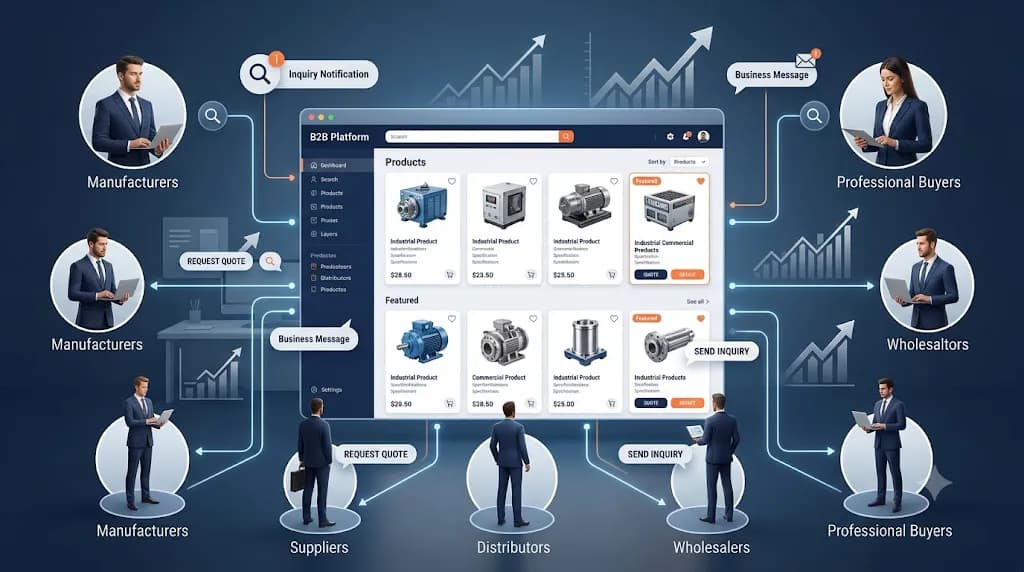
Product promotion platforms provide businesses with digital opportunities to showcase their products, improve product visibility, reach potential buyers, promote new launches and support lead-generation activities. Instead of depending entirely on traditional sales channels, businesses can use digital platforms to present their offerings to a broader business audience.
The concept is particularly relevant for small and medium-sized businesses. Many growing companies have strong products but limited marketing resources. A dedicated digital promotion environment can help them communicate their product offerings more effectively and create opportunities to connect with businesses beyond their existing network.
However, product promotion is not simply about making a product visible. Effective promotion involves understanding the target audience, presenting useful product information, selecting the right promotional opportunities and creating a consistent digital presence.
When these elements work together, product promotion can support a broader journey:
Product Visibility → Product Discovery → Buyer Interest → Inquiry → Business Conversation → Potential Opportunity
This article explores how product promotion platforms can help businesses reach more buyers and how companies can use them as part of a comprehensive B2B growth strategy.
What Is a Product Promotion Platform?
A product promotion platform is a digital environment where businesses can showcase and promote their products to potential customers, buyers, distributors or business partners.
Unlike a basic product catalog, a promotion-focused platform can provide additional opportunities to increase visibility around selected products.
Businesses may use such platforms to promote:
- New products
- Existing products
- Featured products
- Product categories
- Business services
- Special offerings
- Industrial solutions
- Product launches
- Company capabilities
The objective is to make products easier to discover and provide businesses with additional digital visibility.
For B2B companies, this can be especially useful because buyers often need to research products and suppliers before beginning a conversation.
A strong product promotion presence can help businesses become part of that discovery process.
Why Product Visibility Matters in B2B Markets
Imagine a manufacturer has a large product catalog but only a small portion of its products receive digital exposure.
Potential buyers may know the company but remain unaware of several products that could meet their requirements.
This creates a visibility gap.
Product visibility is therefore different from general company visibility.
A company can have a recognizable brand while individual products remain difficult to discover.
For example, an industrial supplier may offer:
- Pumps
- Motors
- Controllers
- Valves
- Industrial components
If the company promotes only its brand name, buyers searching specifically for a particular product may not immediately discover the relevant offering.
A product promotion strategy can bring individual products forward.
This makes product discovery an important component of B2B marketing.
How Product Promotion Platforms Help Businesses Reach More Buyers
There are several ways in which product promotion platforms can support buyer reach.
1. They Increase Product Discoverability
One of the biggest benefits of online product promotion is improved discoverability.
A business does not have to wait for a buyer to already know its name.
A potential customer may discover the company through a specific product, category or business requirement.
For example, a buyer looking for commercial furniture may discover a furniture manufacturer through a promoted chair or storage product.
Similarly, an industrial buyer may discover a supplier through a specific machine or component.
This creates an important shift:
Company-first discovery becomes Product-first discovery.
That can open additional pathways for businesses to reach potential customers.
2. They Help Businesses Promote Specific Products
Not every product in a company's catalog has the same business priority.
A company may want to push:
- A newly launched product
- A high-demand product
- An innovative product
- A product entering a new market
- A product available for distribution
- A product with improved specifications
A product promotion platform can allow businesses to focus additional attention on selected offerings.
This is more strategic than simply promoting the entire company.
Instead of saying, "Here is everything we sell," the business can communicate:
"Here is the product we want the market to notice right now."
3. They Support New Product Launches
New products often face a simple challenge: potential buyers do not know they exist.
A company may spend months developing a new product, but the launch cannot create demand if the target market is unaware of it.
Digital product promotion can help businesses create initial visibility.
A product launch campaign can include:
- Product introduction
- Key features
- Specifications
- Applications
- Product benefits
- Target industries
- Images or videos
- Business information
- Inquiry options
By presenting this information digitally, businesses can make it easier for potential buyers to understand the product.
4. They Expand Buyer Reach
Traditional business networks can be valuable, but they may be limited by geography and existing relationships.
A digital B2B product promotion platform can provide opportunities to reach businesses outside an existing network.
A regional manufacturer, for example, may want to find buyers in other states.
A distributor may want to discover new suppliers.
A wholesaler may want to reach new business customers.
A product promotion platform can become another channel through which these businesses can present their offerings.
Digital visibility does not guarantee a sale, but it can increase the number of opportunities for relevant buyers to discover a business.
Product Promotion Is More Than Advertising
It is important to understand the difference between advertising and product promotion.
Advertising is generally focused on gaining attention.
Product promotion combines visibility with product communication.
A successful product promotion campaign should help the buyer understand:
- What the product is
- What it does
- Who needs it
- Where it can be used
- What features it offers
- Why it may be relevant
- How to contact the supplier
This makes product promotion more informative.
For B2B buyers, this is particularly important because purchasing decisions can involve research and evaluation.
The Importance of Detailed Product Information
A product promotion campaign cannot compensate for poor product information.
If buyers click on a product but find an incomplete description, unclear specifications or insufficient business details, their interest may decline.
Businesses should therefore create informative product listings.
A strong listing can include:
Product Name
Use a clear and specific product name.
Category
Place the product in the most relevant category.
Description
Explain what the product does and where it can be used.
Key Features
Highlight the most important characteristics.
Specifications
Provide technical details where relevant.
Applications
Explain industries and use cases.
Business Information
Provide information about the company supplying the product.
Inquiry Option
Make it easy for interested buyers to initiate communication.
The better the information, the easier it becomes for buyers to evaluate relevance.
Product Promotion and B2B Lead Generation
One of the major goals of product promotion is to create business opportunities.
A buyer who discovers a product may eventually become:
- A customer
- A distributor
- A reseller
- A sourcing partner
- An importer
- An OEM partner
- A long-term business connection
This makes product promotion relevant to B2B lead generation.
However, businesses should focus on relevant leads rather than simply maximizing inquiry volume.
A good lead is one that aligns with the business's:
- Product category
- Target industry
- Geographic market
- Order requirements
- Pricing structure
- Supply capabilities
The goal should therefore be quality buyer discovery, not just quantity.
How to Promote Products to B2B Buyers
Businesses can use several strategies to improve their product promotion efforts.
Understand Buyer Intent
Before promoting a product, understand why someone would need it.
For example, a manufacturer selling packaging machinery may target businesses looking to improve packaging operations.
A commercial furniture supplier may target offices, hotels, institutions and dealers.
A technology supplier may target businesses looking for specific IT solutions.
Understanding the buyer's requirement allows businesses to create more relevant messaging.
Use Industry-Specific Messaging
Generic marketing messages may not always work effectively in B2B markets.
Different industries have different priorities.
A construction company may care about durability and project suitability.
A manufacturing company may focus on performance and technical specifications.
A distributor may focus on pricing, availability and supply consistency.
Product promotion should therefore communicate information relevant to the intended audience.
Highlight Applications
Applications help buyers understand where a product fits into their operations.
For example:
Industrial Product: Manufacturing, processing, automation
Commercial Furniture: Offices, hotels, institutions
Packaging Product: Food processing, retail, logistics
IT Solution: Business operations, communication, data management
Applications make product promotion more practical and buyer-focused.
Featured Product Promotion Can Improve Focus
Businesses often have dozens or hundreds of products.
Promoting every product equally may dilute marketing focus.
Featured product promotion allows businesses to select products that deserve additional attention.
This could be based on:
- Business priorities
- Market demand
- Product launches
- Seasonal requirements
- New markets
- Strategic product categories
For example, if a company wants to enter a new market with a particular product, it can focus promotional activity around that offering.
This creates a more concentrated marketing approach.
Product Promotion and Business Branding
Product promotion should not exist separately from branding.
A buyer may initially discover a product but then investigate the company behind it.
This means the company profile also matters.
Businesses should maintain consistency across:
- Company name
- Logo
- Business description
- Product information
- Contact details
- Visual presentation
- Brand messaging
Strong brand visibility can support product visibility.
When buyers repeatedly see a company's products and business identity together, the company can become easier to recognize.
How Business Networking Supports Product Promotion
B2B purchasing is often relationship-driven.
Businesses need suppliers, distributors, manufacturers, service providers and strategic partners.
This makes business networking an important part of digital growth.
A business networking platform can complement product promotion by helping businesses discover other companies and potentially initiate business conversations.
For example:
Product Promotion → Buyer Discovery → Business Profile → Networking → Inquiry
This creates a more complete B2B journey than product advertising alone.
BONC Network is an example of a B2B ecosystem where businesses can showcase their business and products while discovering and connecting with other businesses. Businesses can also use promotional opportunities around product visibility, advertising, branding and business-related events as part of a broader digital promotion strategy.
Product Promotion for Manufacturers
Manufacturers often face a challenge that is different from retailers.
Their target audience may be:
- Distributors
- Wholesalers
- OEMs
- Importers
- Industrial buyers
- Institutional buyers
- Project companies
Therefore, manufacturers need to communicate not only what they sell, but also their production capabilities.
Useful information can include:
- Manufacturing category
- Product range
- Production capabilities
- Applications
- Quality standards
- Packaging
- Supply capacity
- Location
- Distribution opportunities
A product promotion platform can help manufacturers communicate these capabilities digitally.
Product Promotion for Distributors and Wholesalers
Distributors and wholesalers can also benefit from product visibility.
Their objective may be to attract:
- Retailers
- Dealers
- Institutional customers
- Resellers
- Commercial buyers
Promoting individual products can help them communicate their available portfolio.
For distributors with multiple brands and product categories, structured product promotion can also make the catalog easier for potential buyers to explore.
Product Promotion for Small Businesses
Small businesses often have limited marketing budgets compared with larger companies.
This makes digital visibility particularly important.
A smaller company may not have the resources for large advertising campaigns, but it can still invest in:
- Strong product listings
- Digital branding
- Targeted product promotion
- Business networking
- Content marketing
- Online visibility
The objective is not necessarily to compete with large companies on advertising volume.
Instead, small businesses can compete through relevance, specialization and clear product communication.
Local Businesses Can Use Product Promotion to Expand
Many businesses begin by serving local customers.
However, digital product promotion can help them become discoverable outside their immediate market.
A local manufacturer can showcase its products to regional buyers.
A city-based distributor can find customers in nearby markets.
A specialized supplier can reach businesses looking for its particular product category.
This creates a possible growth path:
Local Business → Regional Visibility → National Discovery → New Business Opportunities
For growing businesses, digital product promotion can therefore support market expansion.
Product Promotion and Trade Show Marketing
Trade shows and expos remain important for many B2B industries.
Businesses often use these events to demonstrate products, meet buyers and develop partnerships.
However, event participation needs promotion.
A business can use digital product promotion before an event to introduce products that will be showcased.
For example:
Before the Event: Promote the company and featured products.
During the Event: Highlight demonstrations, new launches and participation.
After the Event: Continue promoting products and maintaining connections.
This creates a stronger connection between product promotion and trade show marketing.
Promote Products Around Business Events
Business events can create additional opportunities for product visibility.
Events may include:
- Trade shows
- Expos
- Exhibitions
- Conferences
- Industry meets
- Business networking events
Businesses can promote both the event and the products associated with it.
For example, an industrial equipment company participating in an exhibition could promote a newly launched machine that visitors can see at the event.
This creates multiple points of interaction.
Digital Product Promotion Can Support Market Expansion
Entering a new market can be challenging.
Businesses need to establish awareness, identify potential buyers and communicate credibility.
Digital promotion can become part of the market-entry strategy.
Before entering a new market, businesses can:
- Research the target audience.
- Identify relevant product categories.
- Create localized messaging where necessary.
- Promote priority products.
- Build business visibility.
- Develop buyer connections.
- Follow up with relevant inquiries.
The strategy should be adapted to the specific market rather than simply duplicating an existing campaign.
Build a Product Promotion Funnel
A structured funnel can make digital promotion easier to manage.
Awareness
Make potential buyers aware of the product.
Discovery
Provide information that helps them understand the offering.
Interest
Highlight features, applications and business benefits.
Inquiry
Provide a clear way to initiate communication.
Evaluation
Answer questions and provide additional information.
Relationship
Build communication and trust.
Opportunity
Move relevant prospects toward a potential business transaction.
This demonstrates that product promotion is not only about visibility. It is about supporting the buyer journey.
Content Marketing Can Strengthen Product Promotion
Content can support product promotion by educating potential buyers.
Businesses can create:
- Product guides
- Comparison articles
- Application guides
- Industry articles
- Product updates
- Buyer FAQs
- Case studies
- Technical content
- Product launch announcements
For example, instead of only promoting an industrial pump, a business could publish content about selecting the right pump for a particular application.
The article educates the buyer while the product becomes part of the solution.
This creates a more natural form of marketing.
Use Visual Content Effectively
Visual content can make products easier to understand.
Depending on the product, businesses can use:
- Product photographs
- Diagrams
- Videos
- Infographics
- Demonstrations
- Technical illustrations
For industrial products, technical visuals can help explain functionality.
For furniture and lifestyle products, high-quality photographs may be more important.
The visual format should match the product and buyer requirement.
Measure Product Promotion Performance
Businesses should monitor their promotional activity.
Potential metrics include:
- Product views
- Product engagement
- Profile visits
- Buyer inquiries
- Qualified leads
- New connections
- Website visits
- Event registrations
- Repeat interactions
The correct metric depends on the campaign objective.
For example, a product awareness campaign may focus on visibility.
A lead-generation campaign may focus on qualified inquiries.
An event campaign may focus on registrations and engagement.
Measurement allows businesses to understand what is working and improve future campaigns.
Common Product Promotion Mistakes to Avoid
1. Promoting Without a Clear Goal
Every campaign should have an objective.
2. Using Poor Product Descriptions
Incomplete information can make products difficult to evaluate.
3. Targeting Everyone
A product is rarely relevant to every business.
Identify the right audience.
4. Promoting Too Many Products
Prioritize products based on business goals.
5. Ignoring Branding
Product visibility should support overall company visibility.
6. Not Following Up
Relevant inquiries require professional follow-up.
7. Expecting Instant Results
B2B purchasing can involve multiple stages.
Digital promotion should be viewed as part of a longer-term growth strategy.
How to Build an Effective Product Promotion Strategy
Businesses can use the following framework.
Step 1: Select Your Priority Products
Identify which products require additional visibility.
Step 2: Define Your Target Buyers
Understand industries, business types, locations and buyer requirements.
Step 3: Improve Product Information
Create detailed descriptions, features, specifications and applications.
Step 4: Strengthen Your Business Profile
Make the company easy to understand and evaluate.
Step 5: Select Promotional Channels
Choose relevant digital and B2B promotion platforms.
Step 6: Launch the Campaign
Promote selected products with clear messaging.
Step 7: Support With Content
Create useful educational content around the product.
Step 8: Encourage Business Interaction
Make it easy for potential buyers to ask questions or send inquiries.
Step 9: Follow Up
Respond to relevant inquiries professionally.
Step 10: Analyze and Optimize
Review performance and improve future campaigns.
Recharge-Based Product Promotion Models
Some B2B platforms provide businesses with recharge-based promotional models where companies can access different promotional benefits according to their requirements.
These promotional benefits may include activities such as:
- Product advertising
- Featured product promotion
- Business branding
- Product pushing
- Event promotion
- Expo promotion
- Trade show visibility
- Digital business promotion
The value of such a model depends on how strategically a business uses the available promotional benefits.
For example, a company launching a new product may prioritize featured product promotion.
A business preparing for a trade exhibition may prioritize event or expo promotion.
A company entering a new market may focus more heavily on business visibility and branding.
The important point is to align promotional activity with a specific business objective.
The Role of B2B Platforms in Modern Product Discovery
B2B platforms are becoming increasingly relevant to the way businesses discover suppliers, products and potential partners.
Instead of relying exclusively on personal networks, companies can use digital environments to research multiple businesses and product categories.
This creates opportunities for both buyers and sellers.
Buyers can potentially discover more suppliers.
Suppliers can potentially reach more buyers.
Manufacturers can showcase their product range.
Distributors can promote their available products.
Service providers can communicate their capabilities.
This makes product discovery an important part of the broader B2B digital ecosystem.
The Future of Product Promotion
The future of B2B product promotion will likely become increasingly digital, personalized and data-driven.
Buyers will continue to expect businesses to provide useful product information online.
Companies will need to make their products easier to discover, compare and understand.
Technology can also improve how buyers are matched with relevant suppliers and products.
AI-driven search, recommendation systems and personalized discovery may make digital product promotion more targeted over time.
For businesses, this means that simply having an online presence may not be enough.
They need an active digital product strategy.
That strategy should include:
- Product visibility
- Product information
- Digital advertising
- Business networking
- Content marketing
- Branding
- Lead generation
- Event promotion
- Continuous optimization
Final Conclusion
In today's competitive B2B environment, businesses cannot depend only on having quality products. They also need to ensure that their products are visible, discoverable and easy for potential buyers to understand.
A product promotion platform can provide businesses with an additional digital channel to showcase products, increase visibility, support new product launches, reach new audiences and create potential business opportunities.
The biggest advantage of product promotion is that it shifts attention from simply promoting a company to actively promoting the products that buyers may actually be searching for.
When businesses combine product promotion with strong product information, targeted digital advertising, business networking, branding and lead generation, they can create a more complete B2B marketing strategy.
The process can be simple:
Promote the Product → Reach the Right Audience → Create Discovery → Generate Interest → Encourage Inquiries → Build Relationships
For manufacturers, distributors, wholesalers, suppliers and growing businesses, this approach can support both local and wider market visibility.
Platforms such as BONC Network can also become part of this digital strategy by providing businesses with opportunities to showcase products, connect with other businesses and explore promotional activities such as advertising, branding, product promotion and event visibility.
However, businesses should remember that promotion is not a substitute for product quality, customer service or professional sales processes. Digital visibility creates opportunities, but businesses still need to respond effectively, communicate clearly and build trust.
Ultimately, the objective of B2B product promotion should not simply be to get more views. It should be to get the right products in front of the right business audiences.
When the right buyer discovers the right product at the right time, a simple product view can become an inquiry, an inquiry can become a conversation, and a conversation can develop into a valuable long-term business relationship.
That is why product promotion platforms are becoming an increasingly useful part of modern B2B marketing, product discovery and business growth strategies.