Introduction
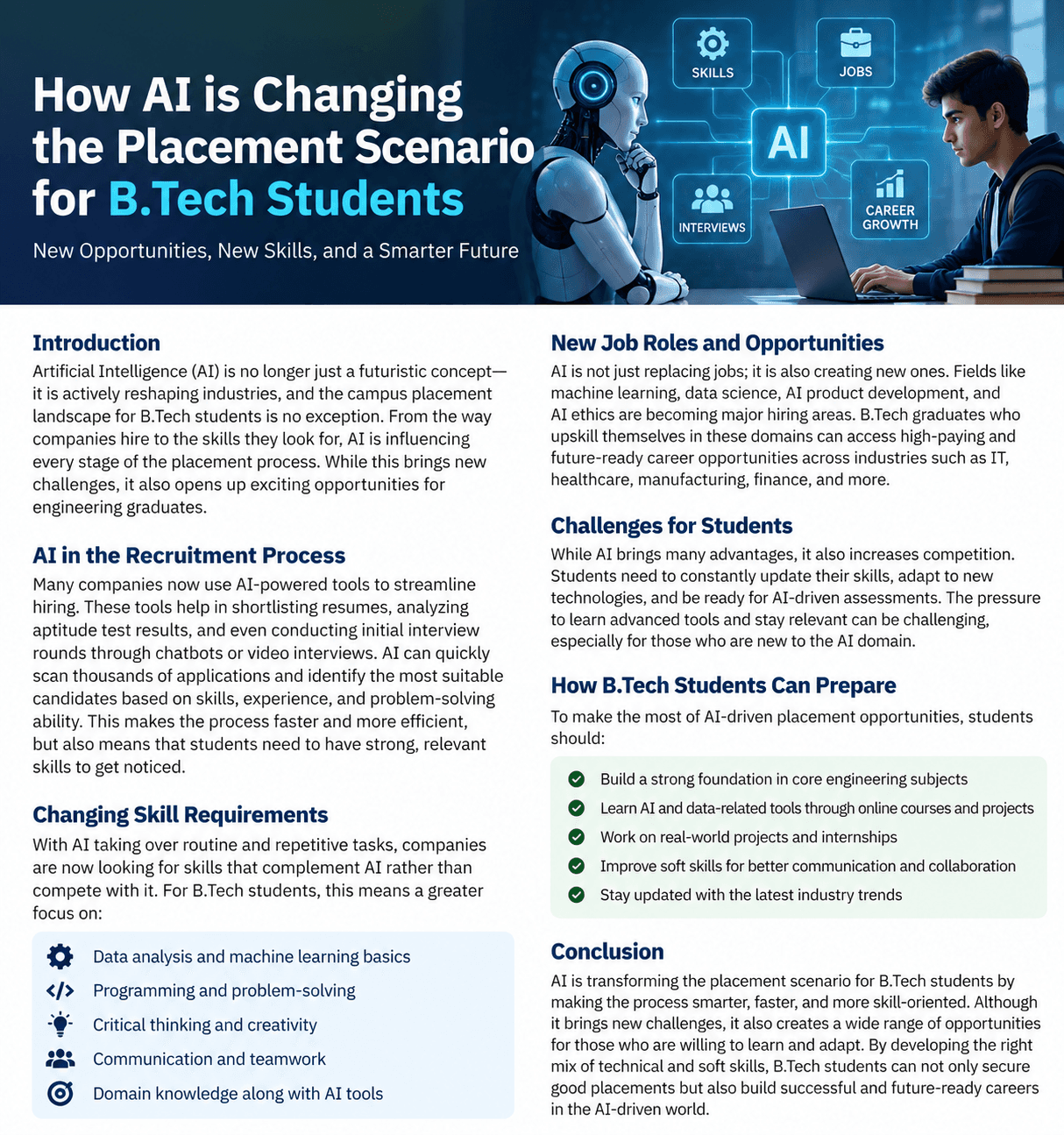
Artificial Intelligence (AI) is rapidly transforming the world of technology, education, and employment. From automating everyday tasks to developing advanced software solutions, AI has become an important part of modern industries. One area experiencing significant change is campus recruitment, especially for Bachelor of Technology (B.Tech) students.
In recent years, companies have started looking beyond traditional academic qualifications and focusing more on practical skills, problem-solving abilities, adaptability, and knowledge of emerging technologies. As a result, AI is influencing how companies hire engineering graduates and what they expect from freshers.
For B.Tech students, AI brings both exciting opportunities and new challenges. Understanding these changes is essential for building a successful career in the technology-driven job market.
1. How AI Is Changing the Placement Process
Artificial Intelligence is transforming the traditional campus placement process. Many organisations are using AI-powered recruitment tools to make hiring faster and more efficient.
Some common applications include:
AI-based resume screening: Companies use AI tools to analyse resumes and shortlist candidates based on relevant skills, qualifications, and experience.
Automated assessments: AI-powered platforms help conduct coding tests, aptitude assessments, and technical evaluations.
AI-based interviews: Some recruitment platforms use AI to assist with interview scheduling, candidate assessment, and initial screening.
Skill matching: AI helps recruiters identify candidates whose technical abilities match specific job requirements.
These technologies are making recruitment more data-driven and efficient. However, candidates must still demonstrate genuine technical knowledge, communication skills, and problem-solving abilities.
2. Increasing Demand for AI-Related Skills
One of the biggest changes in B.Tech placements is the growing demand for knowledge of emerging technologies.
Companies are increasingly looking for graduates who understand areas such as:
Artificial Intelligence and Machine Learning
Data Science and Data Analytics
Python and Java Programming
Cloud Computing
Cybersecurity
Internet of Things (IoT)
Generative AI and Prompt Engineering
Although these skills are particularly valuable in technology-related roles, students from different engineering branches can also benefit from understanding how AI applies to their respective fields.
For example, mechanical engineering students can explore AI-based automation, while electronics students can learn about intelligent embedded systems and robotics.
3. Will AI Reduce Job Opportunities for B.Tech Students?
One of the biggest concerns among engineering students is whether AI will replace human jobs.
The reality is more complex. AI can automate repetitive tasks, assist with software development, and improve productivity. This may reduce demand for certain routine tasks and change the responsibilities associated with some entry-level positions.
However, AI is also creating new career opportunities in fields such as:
Machine Learning Engineering
AI Development
Data Engineering
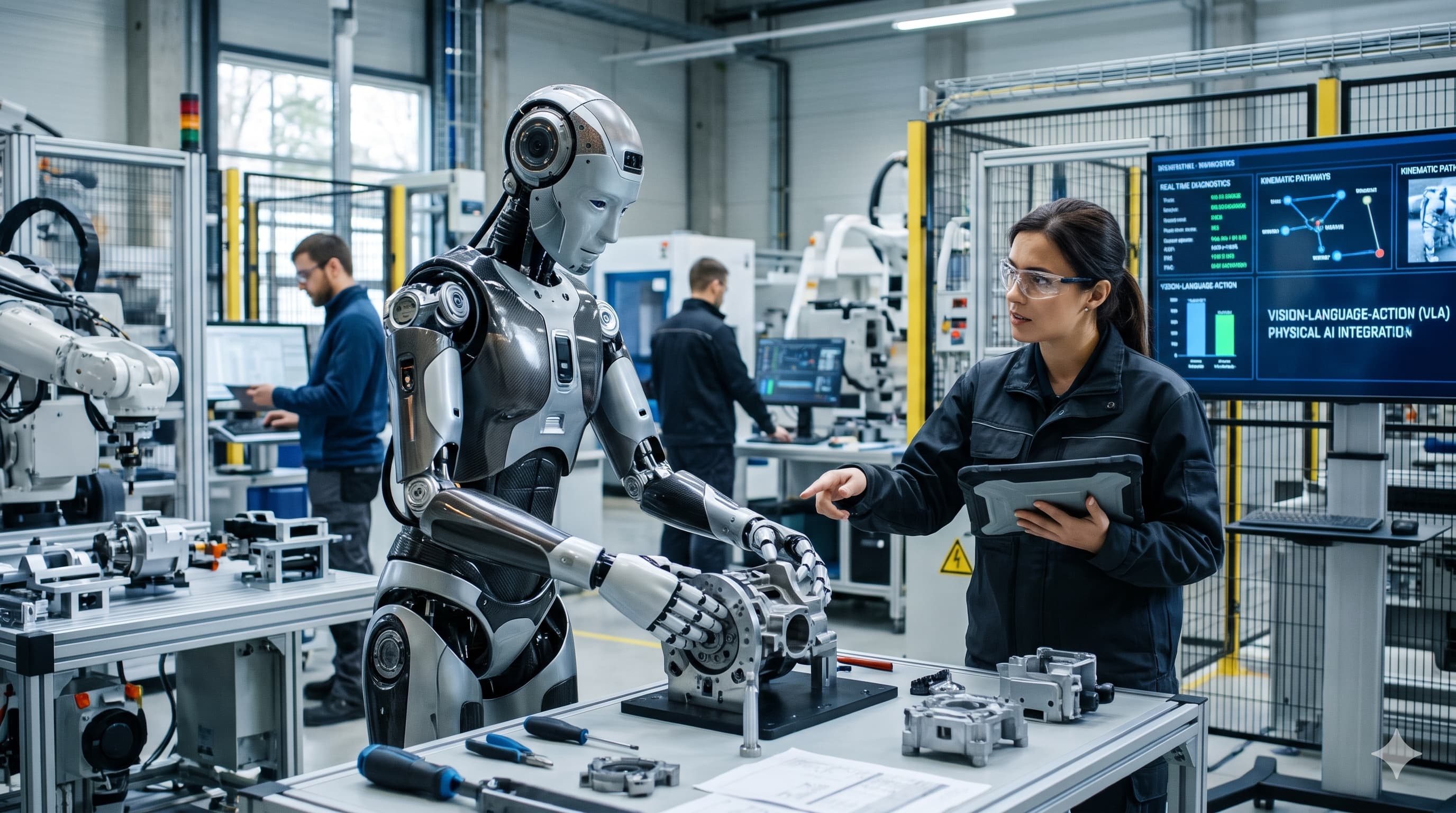
Robotics and Automation
AI Research and Development
Cloud and AI Infrastructure
AI Security and Governance
Rather than completely replacing engineers, AI is changing the nature of engineering work. Professionals who can use AI effectively while applying their own technical knowledge are likely to have an advantage.
4. How B.Tech Students Can Prepare for AI-Driven Placements
To remain competitive, engineering students should start preparing for the changing recruitment environment from their first or second year.
Here are some important steps:
1. Build Strong Programming Fundamentals
Learn programming languages such as Python, Java, or C++. Focus on understanding logic, data structures, algorithms, and problem-solving rather than simply memorising code.
2. Learn AI and Machine Learning Basics
Understand fundamental concepts of AI, machine learning, data analysis, and generative AI. Online courses and practical tutorials can help students get started.
3. Work on Real-World Projects
Build projects that solve practical problems. Examples include AI-powered chatbots, smart attendance systems, recommendation systems, and data analysis applications.
4. Develop Communication Skills
Technical knowledge alone is not enough. Good communication, teamwork, presentation skills, and confidence play an important role during placement interviews.
5. Build a Strong Portfolio
Maintain a professional LinkedIn profile and a GitHub account showcasing your projects, coding skills, internships, and certifications.
6. Use AI Tools Responsibly
Learn to use AI tools for research, debugging, learning, and productivity. However, avoid depending entirely on AI-generated answers. Companies value candidates who understand the concepts behind their work.
5. The Importance of Human Skills in the Age of AI
Even as AI becomes more advanced, human skills remain essential in the workplace.
Companies continue to value creativity, leadership, critical thinking, decision-making, adaptability, and emotional intelligence.
AI can generate suggestions and analyse large amounts of information, but humans are responsible for evaluating results, understanding real-world situations, making ethical decisions, and solving complex problems.
Therefore, B.Tech students should develop both technical expertise and interpersonal skills to become well-rounded professionals.
6. What Does the Future of B.Tech Placements Look Like?
The future of engineering placements will increasingly focus on skills, practical knowledge, and the ability to adapt to technological changes.
Employers may place greater importance on project experience, internships, technical portfolios, problem-solving abilities, and familiarity with AI-powered tools.
Students who combine strong engineering fundamentals with knowledge of AI and other emerging technologies can explore opportunities across software development, manufacturing, healthcare, finance, automation, and many other industries.
The traditional approach of depending only on academic marks and theoretical knowledge may no longer be sufficient. Continuous learning and practical experience will become increasingly important.
Conclusion
Artificial Intelligence is not simply changing the way companies work; it is also reshaping the future of B.Tech placements. While automation may affect certain traditional job roles, AI is creating new career opportunities and increasing the demand for technology-driven skills.
For engineering students, the best approach is not to fear AI but to understand it, learn how to use it, and develop skills that complement it.
Students who focus on programming, practical projects, communication, critical thinking, and continuous learning will be better prepared to face the changing placement landscape.
The future belongs not to those who compete against Artificial Intelligence, but to those who learn to work intelligently with it.