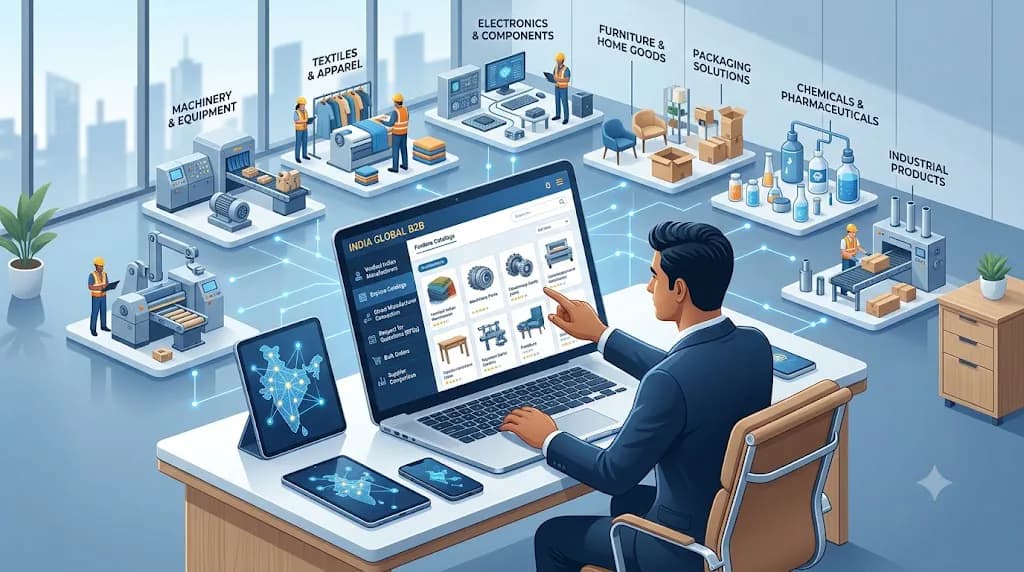
Building a Reliable Vendor Network Through Digital B2B Business Platforms
By BONC Editorial Team • Published on 09 Oct 2026

Introduction
Every successful business depends on reliable vendors. Whether a company manufactures products, operates a retail business, distributes goods, or provides professional services, vendors help ensure that essential products, materials, equipment, and services are available when required. However, finding the right vendors and building dependable business relationships can be challenging, especially when a company wants to expand beyond its existing supplier contacts or enter new markets.
Traditional vendor sourcing often depends on personal references, local business contacts, telephone calls, trade fairs, and physical visits. Although these methods remain useful, they may restrict the number of vendors a business can discover and make the comparison process time-consuming. Businesses may also struggle to identify suitable alternatives when an existing vendor cannot meet changing requirements.
Digital B2B business platforms offer another way to approach this challenge. They help businesses explore company profiles, discover products and services, identify potential suppliers, and initiate business conversations beyond their immediate geographical areas. With a structured digital approach, companies can improve vendor discovery while maintaining the verification and evaluation processes necessary for reliable partnerships.
For Indian businesses, digital vendor discovery can be particularly useful because the country has a diverse commercial environment involving manufacturers, wholesalers, distributors, service providers, and specialized suppliers across different regions. Businesses can explore potential vendors outside their local markets, compare available options, and develop relationships that support their operational and growth objectives.
Platforms such as BONC Network provide a digital B2B networking environment where businesses can improve the visibility of their offerings and explore potential business connections. However, discovering a vendor online is only the first step. Businesses must still evaluate product quality, pricing, capacity, documentation, communication, and delivery performance before entering into significant commercial arrangements.
Building a reliable vendor network through digital B2B business platforms requires a combination of technology, market research, careful evaluation, and long-term relationship management. When these elements work together, businesses can create a more flexible sourcing process and a stronger foundation for sustainable growth.
Understanding a Reliable Vendor Network
A vendor network is the collection of businesses and service providers that an organization works with to obtain the products, materials, equipment, and services required for its operations. Depending on the industry, this network may include manufacturers, wholesalers, distributors, raw-material suppliers, packaging companies, logistics providers, maintenance businesses, and professional service providers.
A reliable vendor network is not simply a large list of business contacts. It consists of vendors that can meet defined requirements, communicate effectively, maintain appropriate quality standards, and fulfil agreed commercial commitments.
For example, a manufacturing company may require dependable sources for raw materials, machine components, packaging, and maintenance services. A retailer may need wholesalers that provide consistent inventory and competitive prices. A construction company may require suppliers of building materials that can deliver according to project schedules.
Each business has different purchasing priorities, which means vendor reliability must be assessed according to the nature of the requirement.
Why Vendor Reliability Matters
Vendor performance can directly affect a company's costs, customer satisfaction, production schedules, and ability to fulfil orders. Delayed supplies may interrupt production, inconsistent quality may increase rejection rates, and poor communication may create confusion during purchasing.
A dependable vendor network helps businesses manage these challenges by providing access to suitable suppliers and alternative sourcing options.
Important benefits include:
- Consistent product availability: Suitable vendors can help businesses maintain access to essential products and materials.
- Better purchasing decisions: Comparing multiple vendors allows businesses to evaluate prices, specifications, and commercial terms.
- Improved operational planning: Reliable delivery schedules make it easier to coordinate inventory, production, and distribution.
- Reduced sourcing dependency: Qualified alternatives can help limit the risks associated with relying on a single vendor.
- Stronger business relationships: Clear communication and dependable performance support long-term collaboration.
- Greater market flexibility: A broader network can help businesses respond to changing demand and explore new product categories.
The goal is to create a vendor network that supports business requirements today while remaining adaptable as those requirements evolve.
Why Traditional Vendor Discovery Can Be Challenging
Traditional vendor sourcing has supported business procurement for decades. Referrals, local market visits, exhibitions, and direct communication continue to be valuable methods for identifying suppliers. However, these approaches can become difficult to manage when businesses need to explore a large number of vendors across different markets.
Limited Access to Potential Vendors
Businesses that depend mainly on existing contacts may repeatedly approach the same suppliers. This can reduce their exposure to new manufacturers, distributors, and specialized service providers.
A company operating in one city, for example, may be unaware of vendors in another region that offer suitable products or manufacturing capabilities. Without broader research, the company may overlook alternatives that could better match its requirements.
Time-Consuming Research
Finding vendors manually often involves searching multiple directories, making telephone calls, collecting quotations, arranging meetings, and maintaining separate records.
When procurement teams handle several product categories, this process can consume significant time. It may also become difficult to remember which vendors were contacted, what they offered, and whether their quotations are still valid.
Difficulty Comparing Different Vendors
Vendor information is not always presented in a consistent format. One supplier may provide detailed specifications and pricing, while another may share only a product catalogue or a general quotation.
Without a structured comparison process, businesses may struggle to evaluate vendors objectively. Digital tools can help organize the initial research, but companies still need consistent evaluation criteria to make sound purchasing decisions.
Dependence on a Small Number of Suppliers
Working with a limited number of vendors can make purchasing simpler initially, but it may create vulnerabilities when demand increases or supply conditions change.
If an important vendor experiences production delays, inventory shortages, or transportation problems, the buyer may have few alternatives. Developing a broader network of qualified vendors can help businesses prepare for such situations.
How Digital B2B Business Platforms Improve Vendor Discovery
Digital B2B business platforms create additional opportunities for companies to discover and connect with other businesses. Instead of depending exclusively on local contacts, companies can research vendors through online business profiles, product listings, category pages, and digital communication channels.
Discover Vendors Beyond Local Markets
Digital vendor discovery allows businesses to explore potential suppliers outside their immediate locations. This is useful when a local market has limited product availability, when specialized capabilities are required, or when a company wants to compare vendors from different regions.
For example, a furniture retailer may explore manufacturers in multiple furniture-producing markets, while an industrial company may research suppliers of specialized components from different manufacturing centres.
Geographical reach does not automatically guarantee better results. Buyers must still assess transportation costs, lead times, minimum order quantities, and delivery coverage. Nevertheless, digital discovery can make it easier to identify alternatives worth evaluating.
Explore Multiple Product Categories
Many businesses purchase products from several categories. A manufacturer may need electrical components, tools, packaging materials, and maintenance services, while a retail business may require different product lines and distribution partners.
Digital business platforms can help users explore relevant categories and identify companies offering related products or services. This can make vendor research more organized, especially when purchasing requirements extend beyond a single product category.
Review Business Profiles and Product Information
Online business profiles can provide an initial understanding of a vendor's offerings, location, business category, and contact information. Product listings may also help buyers understand available specifications and identify products that match their requirements.
The usefulness of this information depends on its accuracy and completeness. Buyers should request clarification whenever essential details are missing and independently verify claims that affect purchasing decisions.
Initiate Business Conversations More Efficiently
Once a potential vendor has been identified, digital communication can help businesses ask about availability, product specifications, order quantities, delivery arrangements, and quotations.
A clear initial inquiry can reduce unnecessary back-and-forth communication. Buyers should explain their requirements accurately so that vendors can respond with relevant information.
The Role of BONC Network in Digital Business Discovery
BONC Network is a B2B networking platform that businesses can consider as part of their digital vendor-discovery strategy. It provides a business-focused environment for discovering companies, exploring product-related information, and developing potential commercial connections.
For businesses seeking to build a reliable vendor network, digital networking can complement traditional sourcing methods by creating another channel through which suppliers and buyers may discover one another.
Improving Business Visibility
Manufacturers, wholesalers, distributors, and service providers can use digital business platforms to present their offerings to a wider business audience. Clear business information and well-organized product details can help potential buyers understand what a company provides.
Buyers, in turn, can explore available business information and identify vendors that may be relevant to their purchasing requirements.
Supporting Broader Business Connections
A company that depends only on local contacts may have limited visibility into vendors operating elsewhere. Digital B2B networking can help broaden the initial search and create opportunities for businesses to begin conversations with potential suppliers.
BONC Network can be included in a wider vendor-discovery process alongside business directories, referrals, trade shows, industry associations, and direct market research.
Making Digital Discovery Part of a Larger Strategy
Businesses should not treat any online platform as a substitute for vendor due diligence. A profile or product listing can help identify a potential supplier, but it does not independently establish the vendor's financial stability, production capacity, product quality, or reliability.
The most effective approach is to use platforms such as BONC Network to support discovery and then evaluate shortlisted vendors through appropriate documentation checks, sample testing, commercial discussions, and performance reviews.
Define Your Vendor Requirements Before Starting the Search
Digital discovery becomes more effective when businesses know exactly what they need. Without clearly defined requirements, companies may collect many contacts that do not match their purchasing needs.
Identify Products and Services
Prepare a list of products, materials, equipment, and services your business purchases regularly. Separate critical requirements from occasional purchases and identify categories where additional vendor options would be beneficial.
For example, a manufacturing business may need steel components, electrical parts, packaging, and industrial tools. A retailer may require finished products, wholesale inventory, and branded packaging.
This classification helps teams organize their search and prioritize the most important vendor categories.
Establish Technical and Commercial Specifications
Document product specifications, expected quantities, quality standards, packaging requirements, and delivery timelines.
Commercial requirements should include the target budget, expected order frequency, minimum acceptable delivery conditions, and any applicable documentation or certification requirements.
Clear specifications help vendors provide relevant quotations and make it easier for buyers to compare different offers.
Decide Which Markets to Explore
Businesses should identify the regions or cities they want to research based on product availability, supplier capabilities, logistics, customer demand, and expansion plans.
The closest vendor is not always the most suitable, and a vendor in another state may offer capabilities that are unavailable locally. However, transportation expenses and delivery schedules must be considered before making a final decision.
Build a Structured Process for Finding Reliable Vendors Online
A structured search process helps businesses move from a broad list of potential vendors to a smaller group of qualified candidates.
Search by Product, Category, and Business Type
Begin with specific search terms related to the required product or service. Where possible, include technical specifications, material types, intended applications, or relevant industry terms.
It can also be useful to search separately for manufacturers, wholesalers, distributors, and service providers. Different vendor types may offer different advantages in pricing, order quantities, customization, and availability.
Create a Vendor Shortlist
Record the details of potential vendors in a central document or vendor management system. Useful fields include business name, location, product category, contact information, available documentation, initial quotation, and follow-up status.
A shortlist prevents teams from repeatedly researching the same businesses and provides a clear starting point for evaluation.
Contact Vendors With Specific Questions
A useful initial inquiry should explain the product required, expected quantity, specifications, delivery location, and desired delivery timeframe.
Businesses can also ask about minimum order quantities, sample availability, payment terms, production lead times, and whether the vendor can support recurring purchases.
The more clearly a buyer communicates, the easier it becomes to assess whether a vendor is suitable.
Compare Responses Consistently
Use the same basic questions for every shortlisted vendor. This helps reduce the influence of incomplete information or subjective impressions.
Where a vendor's response is unclear, request clarification rather than assuming that the business can meet the requirement.
Verify Vendors Before Entering Into Business Relationships
Vendor verification is one of the most important stages of building a reliable network. Digital discovery can expand the list of candidates, but businesses must determine which candidates are appropriate for their transactions.
Confirm Business Identity and Documentation
Check the vendor's legal business name, business address, contact details, and relevant registrations. Depending on the transaction, GST registration, applicable licences, industry certifications, or other documentation may be necessary.
Verification requirements should reflect the value and risk of the purchase. Businesses sourcing regulated products or safety-critical components may require more extensive checks than those purchasing standard, low-risk supplies.
Assess Product Quality
Request product samples, technical documents, test reports, or demonstrations where appropriate. For large or recurring orders, a trial order or independent inspection may help establish whether the vendor can meet the required standards.
Define acceptable quality levels before placing an order. This may include material specifications, dimensions, performance criteria, packaging, and acceptable defect rates.
Evaluate Production and Supply Capacity
A vendor may offer a suitable product but lack the capacity to fulfil the required quantity. Ask about current inventory, production schedules, order capacity, lead times, and the ability to manage urgent or recurring requirements.
For critical purchases, businesses should also understand how the vendor responds to unexpected disruptions and whether alternative production or delivery arrangements are available.
Review Business Reputation and References
Where appropriate, request references from previous customers or review documented performance from past transactions. Businesses can also consider the vendor's history of fulfilling orders, resolving complaints, and communicating about delays.
No single reference or online review should determine the entire decision. Reputation information should be assessed alongside documentation, samples, commercial terms, and direct discussions.
Compare Vendors Using Total Cost and Overall Value
The lowest quotation does not always represent the best purchasing decision. A lower product price may be offset by transportation charges, inconsistent quality, expensive returns, or delays that affect the buyer's operations.
Consider the Total Cost of Procurement
Depending on the product and transaction, total purchasing cost may include:
- Product price and applicable taxes.
- Freight, handling, and packaging charges.
- Storage and inventory expenses.
- Quality inspection and testing costs.
- Defect-related wastage and replacement expenses.
- Payment terms and working-capital requirements.
- Costs associated with delayed delivery or production interruptions.
Comparing these factors provides a more realistic view of the value offered by each vendor.
Evaluate Reliability Alongside Pricing
Businesses should assess whether a vendor consistently meets quality standards, responds to inquiries, provides accurate information, and fulfils delivery commitments.
A slightly higher-priced vendor may be more suitable if its performance reduces costly disruptions. The correct balance depends on the product, business model, and operational priorities.
Use a Vendor Evaluation Scorecard
A simple scorecard can make vendor selection more objective.
Evaluation factorWhat to check
Quality
Product specifications, sample results, and defect levels
Pricing
Total cost and price stability
Delivery
Lead time and on-time performance
Capacity
Ability to meet required quantities
Documentation
Relevant registrations and certifications
Communication
Response time and clarity
Flexibility
Ability to accommodate changing requirements
Support
Complaint handling, warranty, and replacements
Businesses can assign different weights to these factors based on their needs. For example, quality and compliance may carry greater importance when purchasing industrial components, while availability and replenishment speed may be especially important for retail inventory.
Develop Long-Term Vendor Relationships
Finding a suitable vendor is only the beginning. Long-term relationships become valuable when both parties understand their responsibilities, communicate consistently, and work toward dependable commercial outcomes.
Maintain Clear Communication
Share accurate product specifications, order quantities, delivery schedules, and packaging requirements. Confirm important details in writing and maintain records of quotations, purchase orders, and agreed changes.
Clear communication reduces the likelihood of incorrect orders, misunderstandings, and avoidable delays.
Establish Transparent Commercial Terms
Before placing substantial orders, clarify pricing, payment schedules, freight responsibilities, cancellation terms, return policies, warranty coverage, and dispute-resolution procedures.
Written agreements are particularly important for recurring, high-value, customized, or operationally critical purchases.
Follow Agreed Payment Practices
Reliable payment practices help strengthen trust between buyers and vendors. Businesses should negotiate terms that match their cash flow and honour their commitments.
If a payment issue or commercial disagreement arises, early communication can help the parties explore practical solutions before the problem affects the relationship.
Provide Constructive Feedback
Share specific feedback about product quality, packaging, communication, and delivery performance. This allows vendors to understand expectations and improve where necessary.
Businesses should also listen to vendors when they explain material shortages, capacity constraints, or changes that could affect fulfilment.
Review Vendor Performance Regularly
A vendor that performs well for small orders may not be able to handle substantially higher volumes. Regular reviews help businesses determine whether to expand the relationship, request improvements, or qualify alternative suppliers.
Long-term relationships should be based on demonstrated performance and mutual business value rather than familiarity alone.
Use Vendor Diversification to Reduce Business Risk
A reliable vendor network should provide flexibility when business conditions change. Depending too heavily on one supplier can expose a company to disruptions caused by inventory shortages, transport problems, production issues, or unexpected changes in commercial terms.
Identify Critical Supply Categories
Determine which products or services could significantly affect operations if they became unavailable. These may include essential raw materials, key components, packaging, or specialized maintenance services.
Prioritize these categories when developing alternative vendor relationships.
Qualify Backup Vendors
Identify additional vendors that can supply the same or compatible products and evaluate them before an urgent need arises.
A backup supplier should meet the necessary technical and quality requirements and be capable of delivering within an acceptable timeframe. A name in a directory is not a practical backup unless its suitability has been established.
Avoid Unnecessary Supplier Fragmentation
Diversification does not mean spreading every purchase across as many vendors as possible. Managing too many suppliers can increase administrative work, complicate quality control, and reduce purchasing efficiency.
Businesses should maintain a balanced network with enough qualified alternatives to manage risk while preserving effective working relationships with their primary vendors.
Adapt Digital Vendor Sourcing to Different Industries
The most effective vendor network depends on the products and services a business needs. Different industries should use digital discovery and verification processes that reflect their operating requirements.
Manufacturing and Industrial Businesses
Manufacturers may need raw materials, machine parts, electrical components, tools, packaging, and technical services. Their evaluation process should emphasize technical specifications, quality consistency, production capacity, and supply continuity.
For critical components, businesses should confirm that alternative vendors can meet the same technical requirements before switching suppliers.
Retail and E-Commerce Businesses
Retailers and online sellers often require finished products, wholesalers, distributors, packaging suppliers, and inventory replenishment partners.
Their vendor strategy should account for product variety, availability, seasonal demand, delivery speed, return policies, and changing customer preferences.
Construction and Infrastructure Businesses
Construction companies may source building materials, electrical equipment, plumbing products, tools, and specialist services. Vendor evaluation should consider project schedules, delivery locations, product compliance, and the consequences of supply delays.
Relevant certifications and quality documentation should be checked where required by the project or applicable standards.
Hospitality and Food-Service Businesses
Hotels, restaurants, and caterers may require food ingredients, kitchen equipment, furniture, linens, cleaning supplies, and maintenance services.
For relevant categories, businesses should pay particular attention to freshness, hygiene, storage requirements, delivery frequency, and product consistency.
Small and Medium-Sized Enterprises
MSMEs may not have large procurement teams or extensive networks across different regions. Digital B2B platforms can provide an additional channel for researching vendors and initiating business conversations.
A small business can begin by identifying its most important sourcing gaps, exploring suitable vendor categories, and building a shortlist of candidates. It can then expand gradually as purchasing volumes and operational needs increase.
Measure the Performance of Your Vendor Network
A vendor network should be reviewed according to its contribution to purchasing efficiency, operational stability, and business objectives. Simply adding more vendors does not necessarily improve results.
Track Relevant Performance Indicators
Businesses may monitor:
- On-time delivery rates.
- Product rejection and defect rates.
- Average procurement lead times.
- Total purchasing cost.
- Vendor response times.
- Number of qualified alternatives for critical categories.
- Frequency of supply interruptions.
- Percentage of vendors meeting agreed standards.
- Dependence on individual suppliers for essential products.
The most useful indicators depend on the company's requirements. A business should choose measures that reveal whether its vendor network is becoming more dependable and cost-effective.
Maintain Organized Vendor Records
Store quotations, purchase orders, documentation, communication records, and delivery performance in a consistent system. Organized information makes it easier to compare vendors and identify recurring issues.
As the network grows, businesses may benefit from a dedicated vendor management system or procurement software that supports their workflow.
Improve the Network Using Performance Data
Use performance reviews to identify vendors that require improvement, categories with insufficient alternatives, and markets where additional research may be beneficial.
The purpose of monitoring is not to replace vendors constantly. It is to make informed decisions about where to strengthen relationships, improve processes, and develop new sourcing options.
Common Mistakes to Avoid When Building a Digital Vendor Network
Digital platforms can broaden vendor discovery, but businesses should avoid treating online research as a complete sourcing strategy.
Relying Only on Online Listings
An online profile may provide useful business information, but it does not automatically confirm reliability, quality, or capacity. Verify important details and evaluate vendors before making significant commitments.
Selecting Vendors Based Only on Price
Low quotations can hide additional costs or reflect differences in quality, specifications, and service. Compare offers on a like-for-like basis and consider the total cost of procurement.
Sending Vague Business Inquiries
Messages that do not explain product requirements, quantities, or delivery expectations often lead to incomplete quotations. Specific inquiries make it easier to determine whether a vendor is suitable.
Ignoring Logistics and Location
A vendor may offer competitive prices but be unable to deliver efficiently to the required destination. Compare transportation, lead times, handling, and total landed cost before deciding.
Failing to Keep Records
Without organized records, businesses may lose track of vendor contacts, quotations, certifications, and previous performance. Maintaining accurate information improves continuity and reduces repeated work.
Expanding Too Quickly
Attempting to onboard a large number of vendors at once can make verification and performance monitoring difficult. A phased approach allows businesses to test the process, learn from results, and expand with better control.
The Future of Vendor Discovery Through Digital B2B Platforms
Digital business networking is creating new ways for companies to discover commercial partners and explore potential sourcing opportunities. As more businesses maintain online profiles and product information, digital channels can become a useful part of vendor research.
Greater Visibility for Businesses
Manufacturers, suppliers, wholesalers, and service providers can make their offerings easier to discover by maintaining accurate company details, relevant product categories, specifications, and current contact information.
This helps potential buyers understand the business's capabilities before initiating a conversation.
More Organized Vendor Research
Businesses can combine digital discovery with structured requirements, evaluation scorecards, and centralized vendor records. This creates a more consistent process from initial search through qualification and ongoing performance review.
Combining Technology With Human Judgment
Digital platforms can improve access to information, but reliable business relationships still depend on product quality, clear communication, commercial transparency, and consistent fulfilment.
Businesses should use technology to widen discovery and organize research while relying on appropriate verification and real performance to determine which vendors deserve long-term partnerships.
Conclusion
Building a reliable vendor network through digital B2B business platforms is an important strategy for companies seeking better sourcing options, stronger business relationships, and greater operational flexibility. Digital discovery allows businesses to explore potential vendors beyond their existing contacts, research different product categories, and initiate conversations with manufacturers, wholesalers, distributors, and service providers.
However, a successful vendor network requires more than online visibility. Businesses must define their purchasing requirements, verify vendor information, compare total procurement costs, assess product quality, and confirm that suppliers can meet delivery and capacity expectations.
Platforms such as BONC Network can support this process by providing another channel for digital business discovery and potential B2B connections. When combined with direct communication, market research, industry networking, and structured vendor evaluation, digital platforms can help companies develop a more organized approach to sourcing.
Long-term success also depends on maintaining reliable vendor relationships, keeping accurate records, monitoring performance, and qualifying alternative sources for critical requirements. Businesses should expand their networks gradually, using real purchasing experience and performance data to guide their decisions.
Ultimately, a reliable vendor network is built through consistent evaluation, transparent communication, and mutual business value. By combining digital discovery with careful decision-making, businesses can create a stronger sourcing foundation, respond more effectively to changing market requirements, and support sustainable growth in India's competitive B2B environment.