How Businesses Can Discover New Product Opportunities Through India's Manufacturing Ecosystem
By BONC Editorial Team • Published on 17 Oct 2026

How Businesses Can Discover New Product Opportunities Through India's Manufacturing Ecosystem
Introduction
Discovering new product opportunities is an important part of business growth. Retailers, distributors, wholesalers, e-commerce sellers, importers, and established brands regularly look for products that can meet changing customer needs, improve their existing offerings, and open new revenue opportunities. However, finding the right product requires more than following popular trends. Businesses must understand market demand, identify suitable manufacturing capabilities, evaluate suppliers, and determine whether a product can be sourced and sold profitably.
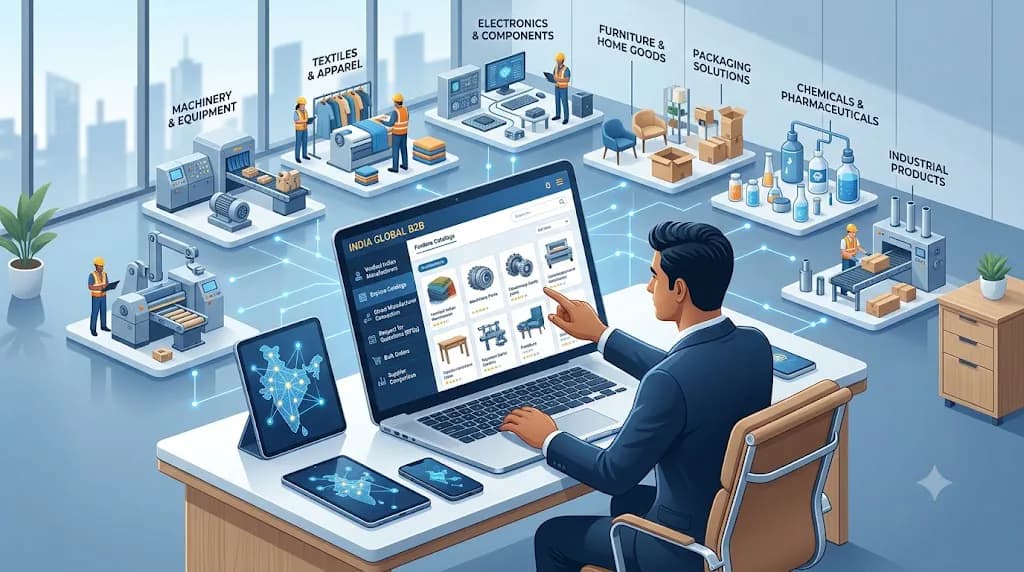
India offers a diverse manufacturing ecosystem that businesses can explore for these purposes. The country has manufacturers, small and medium-sized enterprises, industrial suppliers, specialised production units, component manufacturers, and businesses serving a wide range of product categories. These include textiles, engineering goods, electronics, furniture, packaging, automotive components, consumer products, chemicals, and many other industries.
This diversity creates opportunities for businesses to discover products that may complement their existing catalogues or serve new customer segments. A retailer may find a specialised product from a domestic manufacturer, a distributor may identify a new product category, and a brand may explore private-label manufacturing to develop a differentiated offering.
At the same time, discovering a product does not automatically make it a viable business opportunity. Companies must assess demand, production costs, quality requirements, competition, logistics, and applicable regulations before committing resources.
Digital business directories, trade exhibitions, industry networks, and B2B networking platforms can make the discovery process more accessible. Platforms such as BONC Network provide an additional environment in which businesses can explore potential business connections and product-related opportunities.
This article explains how businesses can use India's manufacturing ecosystem to discover new products, assess market potential, connect with manufacturers, and build a practical strategy for sustainable product expansion.
Understanding India's Manufacturing Ecosystem
India's manufacturing ecosystem consists of businesses and organisations involved in producing goods, supplying materials, developing components, assembling products, and supporting industrial operations. It includes large manufacturing companies, small and medium-sized enterprises, specialised workshops, contract manufacturers, component suppliers, and related service providers.
These businesses operate across different regions and product categories. Some specialise in large-scale production, while others focus on customised products, limited production runs, or niche manufacturing requirements.
For businesses looking for new products, this variety offers several starting points.
A retailer can explore manufacturers producing products for a specific customer segment. A distributor can investigate industrial components that complement its existing range. A consumer brand can identify manufacturers that offer private-label production, while an engineering company can look for specialised parts required by its customers.
The manufacturing ecosystem also includes businesses that may not sell directly to end consumers but produce components used in other products. These suppliers can create opportunities for companies involved in assembly, product development, maintenance, and industrial distribution.
Understanding this structure helps businesses search more strategically. Instead of looking only for finished products, they can investigate manufacturing processes, materials, components, and complementary product categories.
The goal is to identify where manufacturing capabilities overlap with customer demand and business objectives.
Why New Product Discovery Matters for Business Growth
Businesses often need to expand their product portfolios to remain relevant in changing markets. Customer preferences evolve, new applications emerge, and competitors introduce alternative products. Relying on a limited range can make it difficult for a company to respond to these changes.
Product discovery helps businesses identify opportunities to improve their existing offerings or enter adjacent markets.
For example, a retailer selling home improvement products may explore complementary storage solutions, lighting products, or specialised hardware. An industrial distributor may investigate components that existing customers frequently request. A business selling packaging materials may consider products designed for particular industries or packaging requirements.
New product discovery can support several business objectives.
Portfolio diversification: Businesses can reduce dependence on a narrow range of products by exploring complementary categories.
Customer retention: Offering relevant additional products may help businesses meet more of their existing customers' requirements.
Market expansion: New products can create opportunities to serve different industries, customer segments, or geographic markets.
Product differentiation: Customisation, specialised materials, or distinctive product features may help a business stand out from competitors.
Supply chain improvement: Finding alternative manufacturers or domestic sourcing options can provide additional purchasing choices.
However, expansion should be based on evidence rather than assumptions. Businesses need to investigate whether customers actually require the product and whether the company can source, market, and support it effectively.
Start With Customer Needs and Market Demand
One of the most effective ways to discover new product opportunities is to begin with customer needs rather than browsing random product catalogues.
Businesses already serving customers often have useful information about purchasing behaviour, frequently requested items, recurring complaints, and unmet requirements. These signals can reveal product categories worth investigating.
For example, a distributor may notice that customers regularly ask for accessories related to its main products. A retailer may find that buyers want more sizes, materials, or variations of an existing item. A manufacturer may discover that customers need a component with improved durability or a different specification.
Businesses can investigate these opportunities through:
- Customer conversations and feedback.
- Sales and order history.
- Frequently requested but unavailable products.
- Customer complaints about existing alternatives.
- Industry-specific purchasing patterns.
- Product searches and enquiries.
- Competitor product ranges and market positioning.
It is important to distinguish genuine demand from occasional interest. A few enquiries may justify further research, but they do not necessarily establish a sustainable market.
Companies should estimate the likely customer base, expected purchase frequency, acceptable price range, and competitive alternatives before moving to supplier discovery.
By starting with a clearly defined customer problem, businesses can search India's manufacturing ecosystem for products that have a practical commercial purpose.
Explore Different Product Categories Across Indian Industries
India's manufacturing diversity allows businesses to explore opportunities across established and emerging product categories. The most suitable categories depend on the company's existing customers, resources, technical knowledge, and distribution capabilities.
Textiles and Apparel
Textile and apparel businesses can investigate garments, fabrics, home furnishings, technical textiles, accessories, and specialised textile products.
Opportunities may exist in particular materials, customised designs, uniform manufacturing, private-label collections, and products serving specific industries.
Businesses should assess fabric quality, sizing consistency, production capacity, minimum order quantities, and seasonal demand before selecting a product.
Engineering and Industrial Components
Manufacturers of industrial goods produce components, machinery parts, tools, equipment, fittings, and other products used in industrial operations.
These categories may be relevant to engineering distributors, maintenance suppliers, machinery businesses, and companies serving factories.
Buyers should carefully assess technical specifications, compatibility, material standards, product performance, and quality documentation.
Furniture and Home Products
Furniture and home product manufacturers may offer storage solutions, metal furniture, wooden products, interior accessories, commercial furniture, and customised items.
Businesses can investigate opportunities by identifying customer requirements that are not adequately met by their current product ranges.
Transport costs, packaging, product dimensions, finishing, durability, and installation requirements may affect the commercial suitability of these products.
Packaging and Related Materials
Packaging manufacturers produce cartons, protective packaging, containers, labels, flexible packaging, and other materials used across industries.
Businesses serving food, retail, e-commerce, manufacturing, or logistics customers may find opportunities in specialised packaging formats or materials.
Product suitability, strength, printing, material composition, and applicable regulations should be evaluated carefully.
Electrical and Electronic Products
Electrical and electronic manufacturing includes components, control systems, power-related products, accessories, and specialised equipment.
This category may provide opportunities for businesses serving industrial customers, infrastructure projects, retailers, and equipment distributors.
However, buyers should assess compatibility, safety requirements, technical support, certification needs, and after-sales arrangements before sourcing these products.
These examples illustrate the breadth of the manufacturing ecosystem. The best opportunity is not necessarily the category with the most products; it is the one that aligns with identifiable demand and the business's ability to compete.
Discover Niche Products and Specialised Manufacturing Capabilities
Some product opportunities exist in specialised categories that receive less attention than mainstream consumer products. These may include custom components, industry-specific tools, specialised packaging, replacement parts, technical materials, and products designed for particular operational requirements.
Niche products can be attractive when businesses understand a specific customer problem and can identify suitable manufacturing partners. However, a specialised product may also have a smaller customer base, longer development requirements, or more complex quality standards.
Businesses should begin by defining the product's intended application and required specifications. They can then search for manufacturers based on relevant production processes, materials, or technical expertise.
For example, a business looking for a specialised metal component may need to investigate manufacturers offering precision machining, fabrication, casting, or related services. A company exploring a custom consumer product may need a manufacturer with appropriate moulding, finishing, assembly, or packaging capabilities.
Searching by manufacturing process can reveal potential partners even when their standard product listings do not match the exact product name.
Before investing in niche product development, businesses should assess customer demand, prototype costs, tooling requirements, production feasibility, and the possibility of repeat orders.
A focused niche strategy can help businesses identify opportunities beyond crowded product categories, provided the market and manufacturing requirements are understood.
Use Digital Platforms for Product Discovery
Digital tools have changed how businesses research manufacturers and discover new products. Companies no longer need to rely entirely on local markets, existing supplier contacts, or physical exhibitions to begin exploring potential product categories.
Online business directories, manufacturer websites, digital marketplaces, and B2B networking platforms can help buyers review company information, identify product offerings, and initiate discussions with potential suppliers.
For example, a wholesaler exploring an additional product category can research manufacturers operating in that sector, compare their presented offerings, and ask about availability, customisation, minimum order quantities, and commercial terms.
BONC Network is a B2B Business Networking Platform that businesses can consider as part of their digital product discovery process. It offers a digital environment in which businesses can present their offerings and explore potential commercial connections.
Businesses can use BONC Network alongside manufacturer websites, industry directories, referrals, and trade events to broaden their search for product-related opportunities. Initial connections can help buyers learn more about a supplier's product range, business activities, and potential suitability.
For manufacturers, digital business networking can also provide an additional channel for presenting products to potential buyers beyond their existing contacts.
However, a product listing or business profile should be treated as a starting point rather than proof of product quality, manufacturing capacity, or supplier reliability. Businesses should independently verify relevant details, request samples where appropriate, and compare commercial terms before making substantial commitments.
Digital platforms are most useful when they form part of a structured sourcing and evaluation process.
Connect Directly With Manufacturers and Suppliers
After identifying a potential product category, businesses need to find suppliers capable of meeting their requirements. Direct communication with manufacturers can help buyers understand product availability, production capabilities, customisation options, and order conditions.
Before contacting manufacturers, businesses should prepare a short product brief. It should explain the intended use, required specifications, expected quantity, target customer, quality expectations, and preferred delivery timeline.
This information allows manufacturers to assess whether they can supply the product and provide a meaningful quotation.
During initial discussions, buyers should ask about:
- Whether the company manufactures the product directly.
- Available product models and specifications.
- Customisation and private-label options.
- Minimum order quantities.
- Production capacity and lead times.
- Sample availability and inspection procedures.
- Pricing structure and payment conditions.
- Packaging, shipping, and after-sales support.
Businesses should also distinguish between manufacturers, distributors, wholesalers, and traders. Each may offer different benefits depending on the order size and the level of service required.
Direct sourcing may provide greater access to technical information and production discussions, while intermediaries may offer smaller quantities, local inventory, or consolidated purchasing.
The best sourcing arrangement depends on the product, business model, and overall procurement cost.
Evaluate Whether a Product Opportunity Is Commercially Viable
Discovering an interesting product is only the beginning. Before introducing it to the market, businesses must determine whether the product can generate sufficient commercial value.
A product may attract attention but still be unsuitable because of high manufacturing costs, weak demand, intense competition, complex logistics, or difficult regulatory requirements.
A practical evaluation should consider several factors.
Market demand: Is there a clearly identifiable group of customers who need the product?
Competition: How many alternative products are available, and how do they compare on price, quality, and features?
Total cost: What are the purchase price, transport expenses, packaging, storage, marketing, and other relevant costs?
Expected margin: Can the business price the product competitively while maintaining an acceptable margin?
Order requirements: Are the manufacturer's minimum order quantities manageable for the business?
Quality and compliance: Does the product meet applicable technical, safety, labelling, and regulatory requirements?
Repeat purchasing: Is the product likely to generate recurring demand or mostly one-time sales?
Businesses should avoid making decisions based entirely on supplier claims or competitor activity. Customer interviews, sample testing, market research, and small-scale trials can provide stronger evidence.
A structured evaluation reduces the risk of investing heavily in products that do not match actual market needs.
Analyse Product Costs and Potential Profitability
Financial evaluation is an essential part of product discovery. Businesses need to understand the total cost of bringing a product to customers rather than relying solely on the manufacturer's quoted price.
Depending on the product, the cost calculation may include manufacturing or purchase costs, freight, insurance, packaging, taxes, storage, inspection, returns, marketing, and distribution expenses.
For customised products, additional charges may include design work, tooling, sample development, or specialised testing.
For example, a product sourced at a low unit price may become less attractive if it requires expensive packaging or long-distance transport. A slightly more expensive alternative may provide better overall value through lower defect rates, smaller minimum orders, or more convenient delivery.
Businesses should prepare realistic financial estimates that include expected selling prices, anticipated sales volume, and the costs of acquiring and serving customers.
They should also account for working capital. Buying a large quantity may reduce the unit price but tie up funds that the business needs for other operations.
Where demand is uncertain, a small trial order may be more appropriate than immediately purchasing large quantities.
Assess Manufacturing Quality and Supplier Reliability
Product discovery should never be separated from quality and supplier evaluation. A product may appear commercially promising, but unreliable supply or inconsistent quality can damage customer relationships.
Businesses should evaluate potential suppliers based on their relevant manufacturing experience, production capacity, quality-control procedures, communication, and delivery performance.
Where appropriate, buyers can request samples, inspect facilities, review product documentation, and obtain references. Technical products may require testing or confirmation that relevant standards and certifications apply.
Companies should also clarify whether production is completed in-house or outsourced. This information can help buyers understand how manufacturing is managed and who is responsible for quality issues.
Important commercial conditions should be documented before an order is confirmed. These include approved specifications, pricing, payment terms, delivery schedules, inspection procedures, and how defective goods will be handled.
Supplier reliability should be assessed through evidence rather than assumed from an online presence.
A well-chosen manufacturer can help businesses maintain product consistency, fulfil customer orders, and develop new products with fewer avoidable disruptions.
Explore Private-Label and Custom Manufacturing Opportunities
Businesses do not always need to select a product exactly as it appears in a manufacturer's catalogue. Depending on the manufacturer's capabilities, they may be able to explore private-label production, customised specifications, packaging changes, or product variations.
Private-label manufacturing allows a business to sell products under its own brand, subject to agreed production arrangements and applicable requirements. Custom manufacturing may involve changes to materials, dimensions, design, performance, or packaging.
These approaches can help businesses develop a more distinctive product offering. For example, a retailer may explore customised packaging for its target customers, while an industrial supplier may need components designed for a specific application.
However, customisation can introduce additional costs and complexity. Businesses should clarify minimum order quantities, development expenses, prototype approval, production timelines, quality standards, and design ownership.
They should also determine whether the proposed product has enough demand to justify the additional investment.
Testing prototypes and gathering customer feedback before full-scale production can help businesses identify improvements and avoid unnecessary manufacturing expenses.
Use Customer Feedback to Identify Complementary Products
Existing customers can be a valuable source of information about new product opportunities. Their purchasing patterns and unmet needs may reveal products that complement a company's current offerings.
For example, a distributor may discover that customers who buy one category of equipment also need accessories, maintenance items, replacement parts, or related tools. A retailer may identify demand for additional sizes, designs, or product variations.
Businesses can collect this information through sales conversations, customer surveys, after-sales discussions, enquiry records, and product feedback.
The next step is to investigate whether these requests represent a broader opportunity. A product requested by one customer may be highly specialised, while repeated requests across multiple customers may indicate a more scalable opportunity.
Companies should compare customer feedback with available manufacturing capabilities. If a suitable manufacturer can supply the product at a reasonable cost and quality level, the business may be able to expand its portfolio without entering an entirely unrelated market.
This approach can also improve customer retention because the business is responding to demonstrated needs rather than relying only on assumptions about market trends.
Monitor Industry Trends Without Following Every Trend
Industry developments can help businesses identify emerging product opportunities, but trend-based decisions require careful evaluation.
Changes in technology, consumer preferences, production methods, materials, regulations, and business operations can create demand for new products or improved alternatives.
Manufacturers may introduce new materials or product variations, while businesses in particular sectors may seek equipment or components that improve efficiency, durability, or convenience.
Businesses can monitor relevant trade publications, industry exhibitions, manufacturer announcements, market reports, customer enquiries, and competitor offerings.
However, a product becoming popular in one market does not guarantee that it will succeed in another. Local demand, pricing, purchasing power, competition, logistics, and regulatory conditions can vary significantly.
Companies should identify trends relevant to their target customers and test the underlying demand before making substantial investments.
A practical strategy combines trend monitoring with customer research, supplier discussions, and financial analysis.
Build a Diversified Network of Manufacturers and Suppliers
Businesses that maintain relationships with several relevant manufacturers may have more flexibility when exploring new products.
A diversified supplier network can help buyers compare product options, discover alternative materials, assess different manufacturing processes, and reduce dependence on a single supplier.
For example, a company considering a new product category may consult manufacturers with different production capabilities to understand possible designs, costs, and minimum order quantities.
However, maintaining too many supplier relationships without a clear purpose can increase administrative work and make quality control more difficult.
Businesses should focus on building a practical network of suppliers that align with their product strategy. Key suppliers may support regular orders, while alternative manufacturers can provide backup options or specialised capabilities.
Digital business directories, industry associations, professional referrals, trade exhibitions, and B2B networking platforms can help companies identify potential partners.
As the network develops, businesses should maintain accurate records of supplier capabilities, product categories, quotations, certifications, and previous performance.
A structured supplier network can become a valuable resource for ongoing product discovery and sourcing decisions.
Test New Products Before Scaling Up
A disciplined product launch process helps businesses limit risk when exploring new opportunities.
Instead of committing immediately to large production quantities, companies can begin with samples, prototypes, limited purchases, or controlled market tests, depending on the product and applicable requirements.
The purpose is to gather evidence about customer interest, product quality, pricing, delivery performance, and potential operational challenges.
Businesses can use a trial to assess whether customers understand the product's value, whether the selling price is realistic, and whether the manufacturer can meet the agreed requirements.
Feedback from the trial should inform the next decision. The business may proceed with larger orders, adjust the product specifications, negotiate different terms, or decide that the opportunity is not suitable.
For products involving safety, technical performance, or regulatory requirements, testing and compliance checks should be completed before the product is offered commercially.
A measured approach allows businesses to learn from real-world results before investing heavily in inventory, marketing, or manufacturing arrangements.
Common Mistakes to Avoid During Product Discovery
Businesses can lose time and money when product discovery is driven by assumptions rather than structured research.
Common mistakes include:
- Selecting products only because they appear popular online.
- Ignoring customer demand and competitive alternatives.
- Choosing a manufacturer based only on the lowest quotation.
- Overlooking minimum order quantities and storage costs.
- Assuming that an online product listing guarantees quality.
- Failing to request samples for products that require evaluation.
- Ignoring delivery, after-sales support, and supplier capacity.
- Investing in customisation before validating demand.
- Expanding into too many unrelated product categories at once.
These mistakes can be reduced by defining a clear target market, assessing product economics, checking supplier capabilities, and testing demand before scaling.
Businesses should also document the reasons behind product selection decisions. Over time, these records can help identify which categories perform well and which sourcing methods are most effective.
A repeatable discovery process is more valuable than searching for new products without a clear commercial objective.
Conclusion
India's manufacturing ecosystem offers businesses a wide range of opportunities to discover new products, explore specialised categories, connect with manufacturers, and expand their product portfolios. However, successful product discovery requires more than browsing catalogues or following market trends.
Businesses should begin with customer needs, research relevant product categories, identify suitable manufacturing capabilities, compare suppliers, evaluate total costs, and verify product quality. Customer feedback, industry research, digital tools, and small-scale trials can provide useful evidence before larger investments are made.
Digital B2B networking platforms such as BONC Network can serve as an additional channel for discovering businesses and exploring product-related opportunities. When combined with manufacturer websites, trade exhibitions, professional networks, and independent supplier checks, digital discovery can help businesses broaden their sourcing options.
Ultimately, the strongest product opportunities emerge when genuine customer demand meets reliable manufacturing capabilities and a sustainable commercial model. By following a structured discovery process, businesses can make better sourcing decisions, introduce relevant products, and build a stronger foundation for long-term growth.