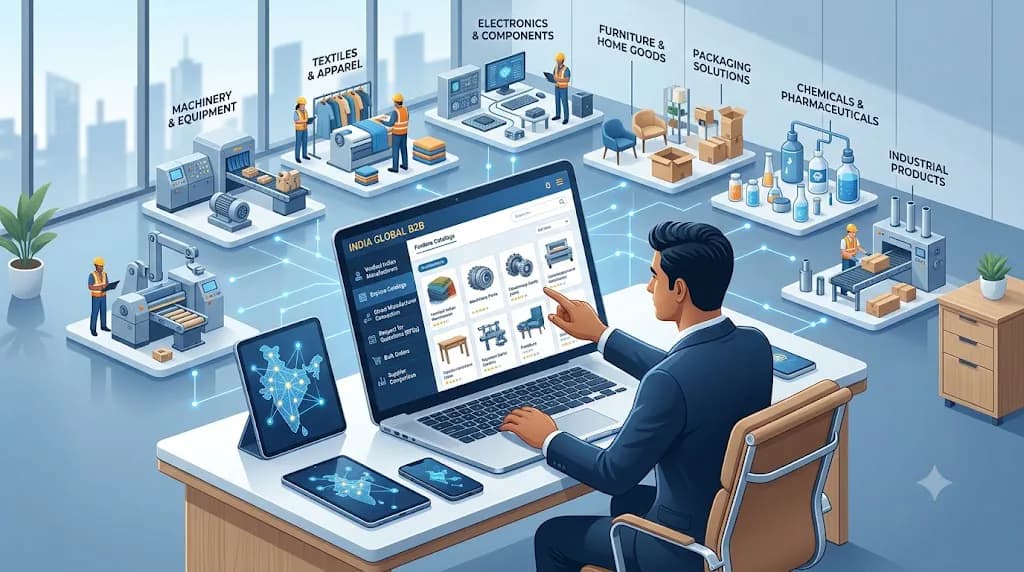
How Businesses Can Discover Specialized Manufacturers for Niche Product Requirements
By BONC Editorial Team • Published on 17 Oct 2026

Introduction
Businesses do not always need standard products manufactured in large quantities. Many companies require products with specific dimensions, unique materials, specialised technical features, customised packaging, industry-specific components, or designs created for a particular customer group. These requirements are common across industries such as industrial machinery, healthcare, electronics, furniture, textiles, packaging, automotive components, construction, personal care, and consumer goods.
Finding a manufacturer for these requirements can be more challenging than sourcing a standard product. A general supplier may offer a similar item but lack the machinery, expertise, materials, or production flexibility needed to meet the exact specification. In such situations, businesses must identify manufacturers that specialise in the relevant product category or have the capability to develop customised solutions.
The process involves more than searching for a company name. Buyers need to understand their product requirements, identify suitable manufacturing regions and industries, compare production capabilities, evaluate quality standards, and establish reliable communication with potential manufacturing partners.
Digital discovery has made this process more accessible. Business directories, industry networks, professional associations, trade exhibitions, and B2B networking platforms allow companies to explore manufacturers beyond their existing contacts. Platforms such as BONC Network can serve as a starting point for businesses looking to improve their digital visibility and discover potential business connections across product categories.
This guide explains how businesses can find specialised manufacturers for niche product requirements, evaluate their suitability, reduce sourcing risks, and develop productive long-term manufacturing relationships.
1. Understanding Niche Product Requirements
A niche product serves a specific market, solves a specialised problem, or meets requirements that standard products cannot fully address. Such products may be designed for a particular industry, application, customer segment, operating environment, or technical specification.
For example, a business may need corrosion-resistant industrial fasteners, compact electronic enclosures, custom-sized furniture, biodegradable packaging, specialised textile materials, or components compatible with an existing machine. Although related products may be available in the market, the exact combination of specifications may require a specialised manufacturer.
Niche product requirements generally fall into several categories.
Custom Design and Dimensions
Some businesses require products with specific shapes, sizes, dimensions, or configurations. These requirements may arise because of limited installation space, customer preferences, specialised applications, or compatibility with existing equipment.
Manufacturers offering custom design, machining, fabrication, moulding, or product development services may be suitable for such projects.
Specialised Materials
Product performance often depends on the material used. A company might require heat-resistant plastics, food-contact materials, corrosion-resistant metals, specialised fabrics, or materials suitable for particular industrial conditions.
The right manufacturer must understand the material's properties, sourcing requirements, processing methods, and applicable quality standards.
Technical and Functional Requirements
Some products must meet precise performance expectations. These can include electrical ratings, load capacity, temperature tolerance, chemical resistance, precision tolerances, durability, or compatibility with other components.
In these cases, manufacturing capability and technical expertise are as important as price.
Low-Volume or Specialised Production
A business testing a new market may not need thousands of units immediately. It may require prototypes, samples, or a small initial production batch.
Not every manufacturer accepts low-volume orders, so buyers should identify suppliers whose production model matches their expected order quantities.
Industry-Specific Compliance
Products used in healthcare, food processing, electrical systems, construction, and other regulated industries may need to meet specific safety, testing, documentation, or certification requirements.
Businesses should identify these requirements before searching for manufacturers. This helps eliminate suppliers that cannot meet the necessary conditions.
A clear understanding of the niche requirement creates a stronger foundation for manufacturer discovery and prevents time being spent on unsuitable suppliers.
2. Define Product Specifications Before Searching
One of the most effective ways to discover the right specialised manufacturer is to prepare a clear product brief before beginning the search.
Manufacturers need sufficient information to determine whether they can produce the requested item. Vague enquiries such as asking for a customised industrial component or a unique consumer product may not provide enough detail for a meaningful response.
A product brief should include the following information:
- Product name and intended application
- Required dimensions, drawings, or design references
- Material composition and finish
- Technical or performance specifications
- Expected product quality and applicable standards
- Initial order quantity and estimated recurring demand
- Packaging and labelling requirements
- Target cost range, where available
- Prototype, sampling, and production timelines
- Delivery location and preferred shipping arrangements
For complex products, buyers can also provide CAD drawings, technical documents, photographs, sample references, or product performance data.
However, confidential designs and proprietary information should be shared carefully. Businesses may consider a suitable confidentiality agreement before disclosing sensitive intellectual property.
Separate Essential Requirements From Preferences
Not every specification has the same importance. A useful approach is to divide requirements into two groups.
Mandatory requirements include factors such as dimensions, safety standards, material properties, or compatibility specifications that cannot be compromised.
Preferred requirements include optional features such as a particular finish, packaging style, or additional design element that may be negotiable.
This distinction helps manufacturers suggest practical alternatives without compromising essential product performance.
A detailed product brief also improves the quality of quotations because different manufacturers can respond to the same set of requirements.
3. Identify Manufacturers With the Right Specialisation
A company manufacturing products within the same broad category may not necessarily possess the capabilities required for a niche project. Businesses should therefore investigate the manufacturer's specific area of expertise.
For example, a general metalworking company may manufacture standard brackets and frames, while another may specialise in precision CNC machining, sheet metal fabrication, pressure vessels, or components for a particular industry.
Similarly, a textile manufacturer may focus on standard garments, while another may specialise in technical fabrics, industrial textiles, protective clothing, or customised textile development.
Search by Manufacturing Process
Searching by the manufacturing process can reveal suppliers that are difficult to identify through product names alone.
Relevant processes may include:
- CNC machining and precision engineering
- Injection moulding and plastic fabrication
- Die casting and metal casting
- Sheet metal fabrication
- Industrial sewing and technical textiles
- Electronics assembly and PCB manufacturing
- Extrusion and specialised material processing
- Custom packaging and mould development
- Surface finishing, coating, and heat treatment
The best process depends on the product's design, material, performance requirements, and production volume.
Search by Application and Industry
Manufacturers frequently describe their capabilities according to the industries they serve. Searching by application can help businesses find suppliers with relevant experience.
For instance, a company seeking a specialised pump component may investigate manufacturers serving water treatment, chemical processing, agriculture, or industrial equipment sectors. A buyer looking for insulated packaging may explore manufacturers serving pharmaceuticals, food distribution, or temperature-sensitive logistics.
Industry experience does not automatically guarantee suitability, but it provides a useful starting point for further evaluation.
Look for Evidence of Relevant Experience
When reviewing a potential manufacturer, examine product catalogues, technical descriptions, case studies, sample projects, production equipment, and information about its quality processes.
Ask whether the manufacturer has completed similar projects and whether it can share non-confidential examples.
The goal is to establish whether the manufacturer has the practical capability to meet the requirement, rather than relying only on general claims.
4. Explore Digital Platforms for Manufacturer Discovery
Digital platforms have changed how businesses search for manufacturers and potential sourcing partners. Instead of depending entirely on referrals or physical visits, buyers can begin their research online and build a shortlist before contacting suppliers.
Digital discovery can be especially useful for niche requirements because a specialised manufacturer may operate in a different city, state, or industrial region from the buyer.
Business Directories and Manufacturer Listings
Online business directories allow users to search by product category, industry, location, or business activity. They can help buyers identify companies that might otherwise remain outside their existing network.
When using a directory, review the available company information carefully. Look for a clear business description, product range, manufacturing capabilities, location, contact details, and relevant technical information.
A listing is a discovery resource, not proof of manufacturing quality. Buyers must still conduct independent checks.
B2B Networking Platforms
A B2B networking platform can support the process of discovering businesses and exploring potential commercial relationships.
BONC Network is one option businesses can explore when looking to improve their digital business presence and discover potential connections within the broader B2B ecosystem. Manufacturers and other businesses can use a digital platform to present relevant business information and make it easier for prospective partners to understand their offerings.
For buyers, such platforms can contribute to the initial research stage by helping them explore business profiles and identify companies worth contacting. The next steps should include technical discussions, sample evaluation, commercial negotiation, and supplier verification.
Search Engines and Industry-Specific Websites
Search engines remain useful for discovering specialised manufacturers. More precise searches usually produce more relevant results than broad terms.
Instead of searching only for “plastic manufacturer,” a buyer might search for “custom injection moulding manufacturer for small electronic enclosures” or “food-grade flexible packaging manufacturer for low-volume orders.”
Businesses can also explore industry association websites, industrial cluster directories, trade fair exhibitor lists, engineering networks, and specialist manufacturing portals.
Professional and Business Networks
Professional networks can help buyers identify manufacturers through industry discussions, recommendations, and company profiles.
These networks may be particularly useful for finding suppliers of uncommon components or services that are not widely advertised.
However, recommendations should be treated as leads rather than final proof of suitability. Each manufacturer should be assessed against the buyer's own technical and commercial requirements.
5. Use Precise Search Terms to Improve Discovery
The quality of a manufacturer search often depends on the keywords used. Broad searches may return distributors, retailers, wholesalers, or manufacturers whose capabilities do not match the requirement.
A more effective search combines several relevant details.
Combine Product, Process, and Application
A useful search structure is:
Product or component + manufacturing process + intended application + location or order requirement
Examples include:
- Custom aluminium housing CNC machining manufacturer India
- Low-volume silicone moulding manufacturer for industrial components
- Specialised textile manufacturer for protective workwear
- Custom corrugated packaging manufacturer for fragile products
- Precision metal component manufacturer for agricultural machinery
- Private label manufacturer for specialised personal care products
Not every search needs all these elements. Add the details that most clearly distinguish the requirement.
Use Alternative Industry Terms
Different manufacturers may use different terminology for similar capabilities. A buyer searching for a custom enclosure might also investigate terms such as housing, casing, cabinet, or protective shell, depending on the product.
Likewise, businesses looking for a specialised packaging solution may need to search by material, packaging format, barrier properties, or intended use.
Creating a list of alternative terms can reveal companies that do not use the buyer's preferred wording.
Search for Capability Rather Than Only Product Names
Some manufacturers may be capable of producing a niche product even if that exact item does not appear in their catalogue.
For example, a precision machining company may be able to manufacture a new component from a technical drawing, while a plastic moulding company may be able to develop a customised part after reviewing the design.
This is why capability-based searches are valuable for products that require development or adaptation.
6. Explore Manufacturing Hubs and Regional Clusters in India
India has manufacturing activity across a wide range of industries and regions. Certain cities and industrial clusters have developed strong specialisations in areas such as engineering, textiles, chemicals, electronics, automotive components, pharmaceuticals, and consumer goods.
Exploring relevant manufacturing hubs can help buyers identify suppliers with experience in the required process or product category.
However, businesses should avoid assuming that every manufacturer in a particular region offers the same capabilities. Regional specialisation is a starting point for research, not a substitute for supplier evaluation.
Why Industrial Clusters Matter
Manufacturing clusters can bring together component suppliers, raw material providers, tooling specialists, logistics services, testing facilities, and related technical expertise.
This concentration may make it easier for businesses to source complementary services and identify alternative suppliers.
For a complex product, the best sourcing solution may involve more than one manufacturer. One company may provide moulding, another may handle finishing, and a third may perform assembly or packaging.
Consider the Total Sourcing Cost
Choosing a manufacturer based only on its location or quoted unit price can be misleading. Businesses should consider freight charges, packaging, tooling, inspection, travel, lead times, taxes, and coordination costs where applicable.
A distant supplier with a lower unit price may not always be more economical than a suitable regional manufacturer.
Conversely, a specialised manufacturer outside the buyer's immediate region may offer technical capabilities that are difficult to find locally.
The right decision depends on the total cost, quality, capacity, and delivery requirements.
7. Evaluate Manufacturing Capabilities Before Shortlisting
After identifying potential manufacturers, businesses should compare their actual capabilities against the product brief.
A professional website or attractive business profile can help establish initial credibility, but it cannot independently confirm production capacity or technical suitability.
Machinery and Equipment
Ask which machines, tools, production lines, and testing equipment the manufacturer uses. The relevance of the equipment depends on the product and the required production process.
For a precision component, buyers may need information about machining tolerances and measurement equipment. For a moulded product, tooling capability and mould maintenance may be important.
Engineering and Product Development Support
Some niche requirements need design refinement before production can begin. In these cases, engineering support can be a valuable advantage.
Ask whether the manufacturer can review technical drawings, suggest material alternatives, create prototypes, modify tooling, or support design-for-manufacturing improvements.
Any changes to the approved design should be documented and authorised by the buyer.
Production Capacity and Flexibility
The manufacturer should be able to accommodate the expected order volume and production schedule.
A supplier may be excellent at prototype development but lack the capacity for mass production. Another may be designed for large orders and have limited flexibility for small batches.
Ask about current capacity, minimum order quantities, lead times, seasonal constraints, and the process for scaling production.
Quality Management
Businesses should understand how the manufacturer controls quality throughout production.
Relevant questions may cover incoming material inspections, in-process checks, final inspection, calibration, traceability, defect management, and corrective actions.
For regulated or safety-critical products, confirm which certifications, testing records, or other documents are necessary for the intended market.
Certification claims should be verified with the relevant issuing body or documentation where appropriate.
8. Request Samples, Prototypes, and Technical Validation
For many specialised products, reviewing a sample is one of the most useful ways to assess whether a manufacturer can meet the requirement.
A sample allows the buyer to examine dimensions, finish, functionality, materials, fit, durability, and other product characteristics before committing to a larger order.
Start With a Prototype When Necessary
If the product is new or highly customised, a prototype can help identify design problems before full-scale production.
The prototype stage may reveal issues involving material selection, assembly, usability, production complexity, or manufacturing cost.
Businesses should agree on prototype costs, ownership of tooling, development timelines, revision limits, and approval criteria before the work begins.
Establish Acceptance Criteria
Sample approval should be based on measurable requirements wherever possible.
For example, acceptance criteria may include specified dimensions, weight, material composition, surface finish, load capacity, electrical performance, packaging quality, or applicable test results.
Documenting these requirements helps prevent disagreements about whether the final production batch matches the approved sample.
Understand Sample Limitations
A successful prototype does not automatically prove that a manufacturer can maintain consistent quality at scale.
Buyers should also ask how the approved product will be reproduced, how production variations will be controlled, and what inspection procedures will apply to subsequent batches.
For important or high-risk products, consider independent testing or third-party inspection.
9. Compare Quotations Beyond the Unit Price
Price is an important factor, but the lowest quotation may not represent the best overall value. Specialised manufacturing often includes costs related to design work, tooling, setup, material sourcing, testing, and quality control.
A detailed quotation should clearly explain what is included and what may incur additional charges.
Understand the Cost Structure
Depending on the project, the quotation may include:
- Unit manufacturing cost
- Raw materials and component costs
- Tooling, mould, or setup charges
- Prototype and development fees
- Packaging and labelling
- Testing and inspection
- Shipping and delivery
- Applicable taxes and payment terms
Some costs are one-time expenses, while others recur with every order. Separating them helps buyers compare different proposals fairly.
Review Minimum Order Quantities
A manufacturer may require a minimum order because of tooling, material purchasing, machine setup, or production efficiency.
If the business needs a small initial quantity, discuss whether a pilot batch, phased production, or a revised specification could make the project feasible.
However, do not assume that every manufacturer will accept lower quantities or that smaller orders will have the same unit price.
Compare Lead Times and Payment Terms
Delivery schedules should include the time required for design approval, sample development, tooling, material procurement, production, inspection, and dispatch.
Payment terms should also be reviewed carefully, particularly for first-time supplier relationships.
Written quotations and clearly documented commercial terms reduce the risk of misunderstandings during production.
10. Verify Manufacturer Credibility and Reduce Sourcing Risks
Finding a manufacturer with the right technical capabilities is only part of the process. Businesses must also establish whether the company is a suitable and reliable commercial partner.
Supplier verification is especially important when the buyer and manufacturer have not worked together before.
Confirm Business Identity
Check the company's registered business details where applicable, operating address, contact information, and relevant tax or registration records.
Depending on the transaction, businesses may also review references, financial information, ownership details, and the supplier's history of operating in the relevant industry.
Request Relevant References
Ask whether the manufacturer can provide references from customers with comparable requirements, subject to confidentiality restrictions.
When available, references can help clarify the supplier's communication quality, delivery performance, responsiveness, and ability to resolve production issues.
Visit the Facility or Arrange an Independent Inspection
A site visit can help buyers understand production processes, equipment, working conditions, inventory management, and quality controls.
If an in-person visit is impractical, consider a live video walkthrough or a qualified third-party inspection service. Remote checks are useful but may not provide the same level of assurance as a thorough on-site assessment.
Use Written Agreements
Document the product specifications, approved samples, order quantity, price, delivery dates, inspection conditions, payment schedule, defect handling, and warranty or replacement terms where applicable.
For custom products, clarify who owns the designs, tooling, moulds, technical drawings, and other intellectual property.
Appropriate contracts and clear documentation help both parties understand their responsibilities.
11. Understand Intellectual Property and Confidentiality
Niche product development may involve unique designs, technical drawings, formulas, software, manufacturing methods, or other commercially sensitive information.
Businesses should consider how this information will be shared and protected during the sourcing process.
Share Information in Stages
During the initial discovery stage, buyers can provide enough information to establish general suitability without immediately disclosing every proprietary detail.
More sensitive documents can be shared when the manufacturer has been shortlisted and suitable confidentiality arrangements are in place.
Define Ownership of Custom Development
A manufacturer may charge for engineering, tooling, mould creation, or prototype development. The buyer should understand whether these charges transfer any ownership rights or merely cover the service.
If the product is based on the buyer's original design, the contract should clarify permitted uses, ownership, confidentiality, and restrictions on reproducing or selling the design to other parties.
Legal advice may be appropriate for high-value or technically sensitive projects.
Consider Intellectual Property Protection Across Markets
Businesses sourcing internationally should recognise that intellectual property rights and enforcement mechanisms vary by jurisdiction.
Before sharing valuable proprietary information, review the relevant legal protections and choose contractual safeguards suited to the markets involved.
Clear expectations at the start can prevent avoidable disputes later.
12. Build Relationships With Manufacturers, Not Just Suppliers
For a niche product, the manufacturer may need to understand the buyer's business model, target customers, quality expectations, and future product plans.
A productive manufacturing relationship therefore requires ongoing communication rather than a single purchase transaction.
Communicate Product Changes Clearly
Design revisions, material substitutions, packaging updates, and changes in order volume should be communicated in writing.
Both parties should work from the same approved version of the specification to avoid manufacturing errors.
Establish a Review Process
Businesses can schedule regular discussions about production progress, quality issues, lead times, and upcoming demand.
For recurring orders, performance reviews can help identify opportunities to improve cost efficiency, reduce defects, and streamline logistics.
Maintain Backup Options
Relying entirely on one manufacturer can create risk if production is interrupted, capacity becomes unavailable, or commercial conditions change.
Where practical, identify alternative suppliers or develop contingency arrangements for critical components.
A backup manufacturer may require separate qualification and sample approval before it can be used, so this preparation should happen before an emergency occurs.
Treat Collaboration as a Long-Term Advantage
Manufacturers who understand the product may be able to recommend material improvements, more efficient production methods, or design changes that reduce manufacturing complexity.
Such improvements should be evaluated carefully and approved against the product's technical requirements.
A strong partnership can support consistency, product development, and more predictable sourcing over time.
13. How BONC Network Can Support Digital Manufacturer Discovery
Discovering specialised manufacturers can be difficult when businesses depend only on existing contacts or a narrow set of suppliers. Digital business networking provides another channel for researching companies and identifying potential commercial connections.
BONC Network operates as a B2B networking platform where businesses can establish a digital presence and present information about their offerings. For manufacturers, a well-maintained business profile can help communicate product categories, services, and areas of expertise to prospective business partners.
For buyers, exploring business information on digital platforms can support the early stages of supplier discovery. It may help them identify companies to investigate, compare business offerings, and begin conversations about niche requirements.
Improve Visibility for Specialised Capabilities
Manufacturers can make their profiles more useful by describing their actual capabilities rather than relying only on broad industry labels.
For example, a manufacturer could explain its relevant production processes, material expertise, product applications, customisation options, and industries served.
Clear descriptions help prospective buyers understand whether a business may be relevant to their requirements.
Support Early-Stage Business Connections
A business looking for a specialised component can use digital discovery to build an initial list of potential manufacturers. It can then contact suitable businesses to discuss drawings, sample requirements, production capacity, and commercial terms.
BONC Network can be considered as one part of this broader discovery approach, alongside specialist directories, trade exhibitions, industry associations, referrals, and direct research.
Combine Digital Discovery With Independent Verification
A digital profile does not automatically establish a manufacturer's quality, certification status, reliability, or production capacity.
Businesses should use the information available as a starting point and continue with technical assessment, reference checks, sample testing, written quotations, and appropriate supplier verification.
The strongest sourcing strategy combines digital reach with disciplined evaluation.
14. Common Mistakes to Avoid When Searching for Niche Manufacturers
Businesses can lose time and money when they begin sourcing without a clear process. Avoiding common mistakes can make manufacturer discovery more efficient.
Relying on Broad Search Terms
A general search may produce a large number of irrelevant companies. Use product-specific, process-specific, and application-specific keywords to improve relevance.
Assuming a Distributor Is a Manufacturer
Some businesses sell products manufactured by other companies. This may be appropriate for standard items, but buyers requiring custom development should confirm whether the supplier manufactures the product directly or coordinates production through another party.
Selecting a Supplier Based Only on Price
A low quotation may exclude tooling, testing, packaging, or other essential costs. Compare the complete cost and the manufacturer's ability to meet the specification.
Ignoring Minimum Order Quantities
A manufacturer may not be equipped for small batches. Discuss quantity requirements early to avoid spending time on suppliers whose production model is unsuitable.
Skipping Sample Evaluation
Moving directly to bulk production without sufficient testing can expose the business to quality problems, product incompatibility, and expensive rework.
Failing to Document Agreements
Verbal promises may lead to misunderstandings about specifications, delivery dates, or payment terms. Keep important requirements and approvals in writing.
Depending on a Single Discovery Channel
No single platform or directory is likely to contain every specialised manufacturer. Combine online research with trade networks, industry events, referrals, and direct outreach.
15. A Practical Step-by-Step Manufacturer Discovery Strategy
A structured approach makes it easier to move from a product idea to a qualified manufacturing partner.
Step 1: Define the requirement. Prepare a product brief covering specifications, materials, applications, quality expectations, quantities, and delivery needs.
Step 2: Identify the manufacturing process. Determine whether the product requires machining, moulding, fabrication, assembly, textile processing, or another specialised capability.
Step 3: Develop search keywords. Combine product terms with processes, applications, materials, and relevant geographic terms.
Step 4: Research multiple channels. Explore business directories, B2B networking platforms such as BONC Network, industry associations, trade fair exhibitor lists, and professional referrals.
Step 5: Create a shortlist. Compare potential manufacturers based on their relevant capabilities, experience, location, production flexibility, and available documentation.
Step 6: Send a consistent enquiry. Share the same essential specifications with each shortlisted manufacturer so their responses can be compared fairly.
Step 7: Verify suitability. Check business details, technical capabilities, production capacity, quality processes, references, and necessary certifications.
Step 8: Evaluate samples or prototypes. Agree on acceptance criteria and test the product before approving bulk production.
Step 9: Compare complete quotations. Review tooling, unit costs, minimum quantities, delivery schedules, payment terms, inspection, and other applicable expenses.
Step 10: Finalise the agreement. Document specifications, responsibilities, confidentiality, intellectual property, payment terms, quality requirements, and delivery conditions.
Step 11: Start with a controlled order where appropriate. A pilot batch can help evaluate production consistency and communication before the relationship expands.
Step 12: Review performance continuously. Track quality, delivery reliability, cost, responsiveness, and corrective actions to determine whether the partnership remains suitable.
This process does not eliminate every sourcing risk, but it gives businesses a repeatable method for finding and evaluating manufacturers.
16. Measuring the Success of a Niche Manufacturing Search
The success of manufacturer discovery should not be measured only by the number of companies found or quotations received. A large list of suppliers has limited value if none can meet the product requirements.
Businesses can assess their sourcing process through several practical indicators.
Technical Fit
Measure how many shortlisted manufacturers can meet the mandatory product specifications, material requirements, and applicable standards.
Sample Approval Rate
Track the proportion of evaluated samples that meet the agreed acceptance criteria. A low rate may indicate that the product brief needs improvement or that the search criteria are too broad.
Total Cost and Value
Compare complete sourcing costs, including development, tooling, production, inspection, and logistics. Consider quality and performance alongside price.
Lead Time and Delivery Performance
Record quoted and actual timelines for sampling, production, and delivery. This information helps determine whether the manufacturer can support business commitments.
Communication and Problem Resolution
Evaluate how promptly manufacturers respond, how clearly they explain technical limitations, and how effectively they address quality issues.
Long-Term Reliability
For repeat orders, review defect rates, consistency, cost stability, and the ability to accommodate changing demand.
Tracking these indicators allows businesses to refine their supplier-selection process and make better-informed sourcing decisions.
Conclusion
Discovering specialised manufacturers for niche product requirements requires a clear understanding of the product, targeted research, technical evaluation, and careful commercial planning. Businesses must look beyond broad product categories to identify manufacturers with the right processes, materials, equipment, engineering expertise, and production flexibility.
A well-defined product brief is the first step. From there, companies can use precise search terms, explore manufacturing clusters, investigate digital business directories and B2B networking platforms, and develop a shortlist of potential partners. Sample testing, capability checks, supplier verification, and complete quotation comparisons help determine which manufacturers are genuinely suitable.
Digital platforms can make it easier to discover businesses beyond existing networks. BONC Network can be part of this process by helping businesses explore digital business profiles and potential connections. However, digital discovery should always be combined with independent checks, technical validation, and clearly documented agreements.
Ultimately, the right manufacturing partner is not necessarily the one offering the lowest price or the largest production capacity. It is the one whose capabilities, quality processes, communication, commercial terms, and long-term reliability align with the product's actual requirements. By following a structured sourcing strategy, businesses can improve their chances of finding suitable niche product manufacturers and building partnerships that support sustainable growth.