How Digital Supplier Discovery Is Changing Procurement for Indian Businesses
By BONC Editorial Team • Published on 06 Oct 2026
Introduction
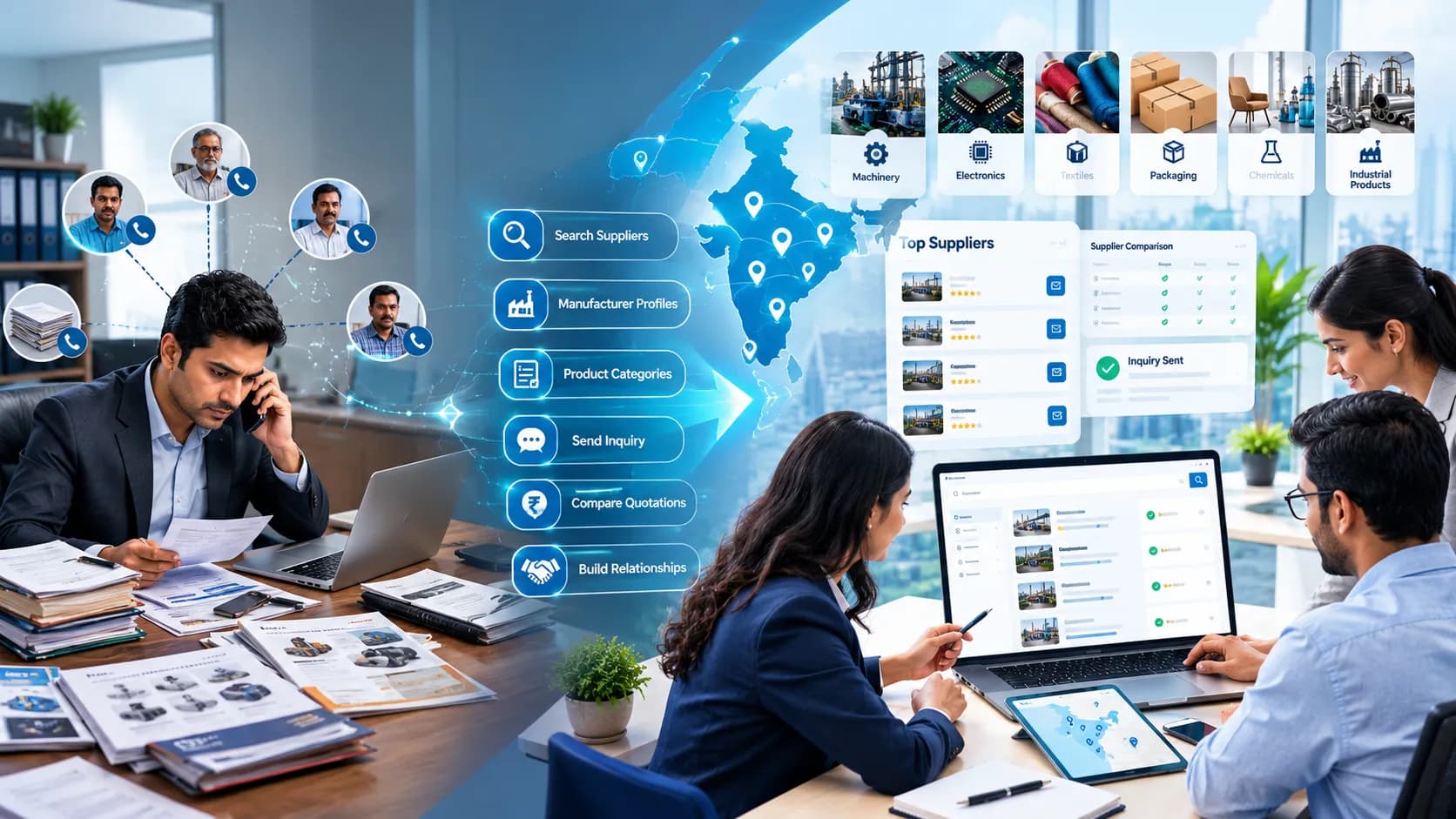
Procurement has always been an important function for businesses, but the way companies discover and evaluate suppliers is changing rapidly. Traditionally, Indian businesses often depended on personal references, existing supplier relationships, local markets, trade exhibitions, distributors and industry contacts to identify potential vendors.
These methods remain useful, particularly for businesses that rely heavily on established relationships. However, they can sometimes limit supplier discovery to a relatively small network. A business may have access to reliable suppliers in its local market while remaining unaware of manufacturers and vendors operating in other cities, states or specialized industrial clusters.
Digital supplier discovery is changing this process.
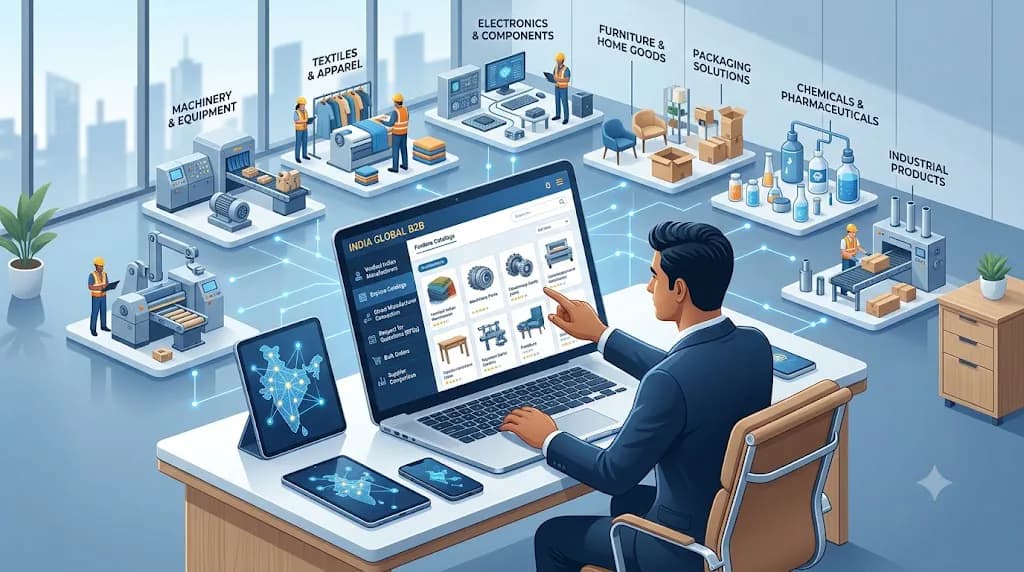
Today, businesses can use digital B2B platforms to search for products, explore supplier profiles, identify manufacturers, compare potential vendors and initiate business inquiries without relying entirely on traditional sourcing channels. This creates a broader and more accessible environment for procurement research.
For Indian businesses, this shift is particularly important because the country's supplier and manufacturing ecosystem is spread across a wide range of industries and regions. A buyer looking for machinery, packaging, textiles, chemicals, furniture, electrical products, industrial components or consumer goods may have potential suppliers in multiple parts of the country.
Digital supplier discovery does not eliminate the need for due diligence or relationship building. Instead, it improves the initial stages of procurement by making supplier research more organized, searchable and geographically flexible.
Understanding Digital Supplier Discovery
Digital supplier discovery refers to the process of finding potential suppliers, manufacturers and vendors through online platforms and digital business networks.
Instead of depending only on personal contacts, procurement teams can search for businesses based on products, categories, industries, locations and specific requirements.
A digital supplier discovery process may include:
- Searching for required products
- Exploring supplier profiles
- Reviewing product information
- Identifying manufacturers
- Comparing potential suppliers
- Sending business inquiries
- Requesting quotations
- Discussing product requirements
- Building supplier relationships
The biggest difference is accessibility.
A buyer does not necessarily need to know a supplier's name before beginning the search. The buyer can start with a product or requirement and discover potential businesses from there.
This changes procurement from a relationship-limited process into a broader discovery process.
Why Traditional Supplier Discovery Can Be Limiting
Traditional supplier discovery often depends on who a business already knows.
For example, a procurement manager may ask existing business contacts for supplier recommendations. Another business may visit an industry exhibition to meet vendors. A small company may depend on suppliers available within its city because it has limited resources for wider research.
These approaches can work, but they may create certain limitations.
A business may miss:
- New manufacturers
- Alternative suppliers
- Specialized vendors
- Suppliers in other states
- Emerging businesses
- New product categories
- Competitive sourcing opportunities
The issue is not that traditional sourcing is ineffective. The challenge is that the supplier discovery pool can remain limited when businesses depend on only a few channels.
Digital platforms add another layer to the sourcing process by making a larger business ecosystem searchable.
The Shift From Local Search to Wider Supplier Discovery
Geography has historically played an important role in supplier selection.
Businesses often preferred suppliers located nearby because transportation was easier, communication could be faster and physical visits were more convenient.
While location continues to matter, digital discovery has reduced one major limitation: not knowing which suppliers exist outside the immediate market.
A business in Delhi can digitally discover a supplier in Maharashtra. A buyer in Karnataka can explore manufacturers in Gujarat. A company in West Bengal can search for vendors in Tamil Nadu.
The discovery process can happen before the buyer evaluates whether the supplier's location is commercially practical.
This creates a two-stage approach:
Digital discovery first, practical evaluation second.
Businesses can identify a wider pool of suppliers and then consider logistics, delivery time, transportation costs and other location-related factors.
Product-Based Search Is Changing Procurement
One of the most useful aspects of digital supplier discovery is product-based searching.
Traditional supplier research often begins with company names or recommendations. Digital platforms can allow businesses to start with what they actually need.
For example, a buyer may search for:
- Industrial pumps
- Packaging machinery
- Electrical components
- Metal furniture
- Pharmaceutical products
- Textiles
- Food processing equipment
- Packaging materials
- Construction products
The buyer can then explore businesses associated with those products or categories.
This makes supplier discovery more closely connected to actual procurement requirements.
Instead of asking, "Which companies do we know?", the process becomes, "Which businesses can potentially fulfill this requirement?"
Digital Supplier Profiles Improve Initial Research
Supplier profiles can provide useful information before a buyer starts a direct conversation.
A digital business profile may contain information about:
- Company name
- Business type
- Product categories
- Products offered
- Location
- Manufacturing activity
- Industry
- Business description
- Contact or inquiry options
This can help procurement teams conduct preliminary research more efficiently.
For example, if a company needs a particular industrial component, the buyer can review several supplier profiles and eliminate businesses that do not appear to match the requirement.
This does not replace detailed supplier verification. It simply makes the first stage of research more organized.
Digital Procurement Makes Supplier Comparison Easier
Procurement decisions often require comparison.
A business may need to evaluate several suppliers based on product specifications, pricing, capacity, delivery timelines and commercial terms.
Digital supplier discovery makes it easier to create an initial supplier shortlist.
Businesses can compare potential vendors based on criteria such as:
- Product suitability
- Manufacturing capabilities
- Location
- Product range
- Minimum order quantity
- Lead time
- Quality information
- Customization
- Communication
- Pricing
The exact criteria depend on the product and industry.
The important change is that businesses can identify multiple options before beginning detailed negotiations.
From Supplier Search to Supplier Networking
Modern procurement is not only about finding supplier information. It is also about building business relationships.
This is where digital B2B networking becomes important.
A Business Networking Platform can combine supplier discovery with communication and business connections.
A buyer can move through a process such as:
Search → Discover → Evaluate → Inquire → Communicate → Compare → Build Relationship
This creates a more connected procurement experience.
Instead of treating supplier discovery as a one-time search, businesses can use digital networks to continuously discover manufacturers, suppliers and potential business partners.
How Digital Platforms Help Indian MSMEs
Small and medium-sized businesses often have limited procurement teams.
A large company may have dedicated sourcing professionals, supplier databases and established procurement systems. An MSME may have one or two people handling purchasing along with several other responsibilities.
For such businesses, digital supplier discovery can provide practical advantages.
MSMEs can use digital platforms to:
- Find new suppliers
- Explore manufacturers outside their city
- Compare product options
- Discover alternative vendors
- Research new product categories
- Connect with potential suppliers
- Expand their business network
This can make supplier research more accessible to businesses that do not have extensive procurement resources.
Building a More Diversified Supplier Network
Supplier diversification is another area where digital discovery can make a difference.
Depending entirely on one supplier can create risks. If that supplier faces production delays, raw material shortages, capacity problems or other disruptions, the buyer may struggle to maintain business continuity.
A diversified supplier network can provide alternative options.
Digital supplier discovery allows businesses to continuously identify potential suppliers rather than searching for alternatives only when a crisis occurs.
For example, a business can maintain:
- Primary suppliers
- Secondary suppliers
- Specialized suppliers
- Backup suppliers
- Suppliers for new product categories
The purpose is not to work with every supplier discovered online. It is to create a broader pool of potential partners that can be evaluated when needed.
Requirement-Based Supplier Discovery
Digital procurement becomes more effective when businesses clearly define their requirements.
A vague request such as "We need industrial equipment" may produce a wide range of irrelevant suppliers.
A more detailed requirement could include:
- Product type
- Technical specifications
- Quantity
- Application
- Quality requirements
- Delivery location
- Expected timeline
- Customization requirements
- Packaging requirements
The clearer the requirement, the easier it becomes to identify suitable suppliers.
Requirement-based discovery can also improve conversations because suppliers receive enough information to understand what the buyer actually needs.
The Growing Role of RFQs in Digital Procurement
Requests for Quotation, or RFQs, are another important part of structured procurement.
An RFQ allows a buyer to communicate a specific purchasing requirement and request commercial information from potential suppliers.
For example, a buyer may specify:
- Product
- Quantity
- Specifications
- Delivery location
- Required delivery date
- Other purchasing conditions
Suppliers can then determine whether they are capable of fulfilling the requirement and provide an appropriate response.
Digital platforms can make this process more accessible by connecting buyer requirements with relevant businesses.
This shifts procurement from simple product browsing toward requirement-driven sourcing.
Evaluating Supplier Quality in a Digital Environment
Digital discovery makes it easier to find suppliers, but it does not automatically determine whether a supplier is reliable.
Businesses still need to evaluate potential vendors carefully.
Supplier evaluation may include:
Business Information
Buyers can review available company information and understand the supplier's business category and activities.
Product Information
Product specifications, applications and available variants should be compared with the actual requirement.
Manufacturing Capability
Businesses should determine whether the supplier has the capacity and capabilities required for the expected order volume.
Quality
Where appropriate, buyers can request samples, certifications, test reports or other relevant quality information.
Communication
Response time and clarity of communication can provide useful early indicators of how a supplier manages business inquiries.
Digital discovery should therefore be viewed as the beginning of supplier evaluation rather than the final step.
Why Price Should Not Be the Only Procurement Factor
Digital supplier discovery can expose buyers to multiple price options. However, choosing the lowest price does not always produce the best procurement outcome.
A lower quoted price may be offset by:
- Poor quality
- Higher rejection rates
- Longer delivery times
- Higher transportation costs
- Inconsistent production
- Weak communication
- Limited capacity
Businesses should evaluate total value rather than only unit price.
A supplier offering slightly higher pricing may provide better consistency, quality and delivery performance, making the overall sourcing relationship more valuable.
How Digital Discovery Supports Supplier Diversification
Supplier diversification is becoming increasingly important for businesses operating in competitive markets.
Businesses can use digital platforms to continuously monitor their sourcing ecosystem.
They can discover:
- New manufacturers
- Alternative suppliers
- Specialized vendors
- New product categories
- Suppliers from different regions
This creates a more flexible procurement strategy.
For example, if a business normally sources from one manufacturing region, digital discovery can help it identify alternative suppliers elsewhere. This can be useful when transportation conditions, production capacity or regional supply conditions change.
The Role of BONC Network in Digital Supplier Discovery
BONC Network is a B2B networking platform designed to connect businesses, products and business opportunities within a digital ecosystem.
For Indian businesses, platforms such as BONC Network can provide an additional channel for discovering suppliers and manufacturers beyond existing business contacts.
Businesses can explore company profiles, product categories and potential business connections and initiate inquiries with suppliers that appear relevant to their requirements.
The platform can also provide manufacturers and suppliers with digital visibility among potential business buyers.
The broader value of digital B2B networking is that supplier discovery and business communication can happen within a connected environment.
However, buyers should still conduct appropriate due diligence before entering into major commercial transactions.
Digital Supplier Discovery and Faster Procurement Research
Traditional supplier research can involve multiple steps:
- Asking for references
- Calling businesses
- Searching through separate sources
- Collecting company information
- Contacting suppliers individually
- Comparing responses
Digital platforms can bring several parts of the initial research process into one environment.
This can potentially reduce the time required to build an initial supplier shortlist.
The time saved can then be used for more important procurement activities such as:
- Supplier evaluation
- Negotiation
- Quality assessment
- Commercial analysis
- Relationship development
The objective is not simply to make procurement faster. It is to make the early discovery stage more efficient so procurement teams can spend more time on higher-value decisions.
How Digital Procurement Supports New Product Development
Supplier discovery is not limited to existing products.
Businesses developing new products may need to identify manufacturers capable of producing new components, materials or finished products.
Digital platforms can help companies explore manufacturing capabilities before finalizing a product strategy.
For example, a startup developing a consumer product may need to identify manufacturers that can support:
- Prototype production
- Small batches
- Customization
- Packaging
- Large-scale manufacturing
Early supplier discovery can help businesses understand whether their product concept is commercially practical.
Supporting Businesses Entering New Markets
Market expansion often creates new procurement requirements.
A company entering a new region may need new suppliers, distributors, manufacturers or logistics partners.
Digital B2B networking can support initial market research by helping businesses identify companies operating in relevant product categories.
This is especially useful for businesses that are expanding beyond their traditional geographic market.
Instead of building an entirely new network from zero, businesses can use digital platforms to begin identifying potential partners.
Digital Supplier Discovery for Startups
Startups often face the challenge of finding reliable suppliers without having years of industry relationships.
Digital platforms can provide a starting point.
A startup can search for manufacturers based on its product idea, explore potential businesses and begin conversations before committing to a long-term supplier.
However, startups should pay particular attention to:
- MOQ
- Production capacity
- Product quality
- Payment terms
- Lead times
- Customization
- Scalability
The ideal supplier for a startup may not be the same as the ideal supplier for a large established company.
How Businesses Can Build a Structured Digital Sourcing Process
A digital sourcing process can be organized into several stages.
Define the Requirement
Clearly document what product or service is needed.
Discover Suppliers
Search digital B2B platforms and business directories for relevant companies.
Build a Shortlist
Select suppliers that appear relevant based on product and business information.
Compare Options
Evaluate suppliers based on quality, capability, pricing, MOQ, location and delivery.
Start Communication
Send requirement-based inquiries and request additional information.
Verify Suppliers
Conduct appropriate business and product verification.
Test the Relationship
Where appropriate, begin with samples or controlled initial orders.
Build Long-Term Relationships
Monitor performance and develop relationships with suppliers that consistently meet requirements.
This structured process combines the convenience of digital discovery with the discipline of professional procurement.
Common Mistakes in Digital Supplier Discovery
Digital tools can improve procurement, but businesses can still make mistakes.
Common issues include:
- Choosing suppliers only based on search rankings
- Selecting the lowest quotation
- Not comparing multiple vendors
- Assuming an online profile guarantees reliability
- Ignoring MOQ
- Not checking production capacity
- Failing to request samples where appropriate
- Not discussing delivery requirements
- Depending on one supplier
- Skipping due diligence
Digital supplier discovery should improve research, not replace business judgment.
How Procurement Teams Can Get Better Results
Businesses can improve digital supplier discovery by creating a consistent sourcing process.
Procurement teams can:
- Use specific search terms
- Search by product category
- Explore multiple supplier profiles
- Maintain a supplier shortlist
- Record supplier information
- Track communication
- Compare quotations systematically
- Monitor supplier performance
- Maintain alternative sourcing options
Maintaining an organized supplier database can also make future procurement faster.
When a new requirement appears, businesses can first check their existing network before beginning a completely new search.
The Future of Digital Supplier Discovery in India
Digital procurement is likely to become increasingly integrated into everyday business operations.
As businesses become more comfortable researching products and suppliers online, supplier discovery can move further away from purely relationship-based sourcing toward a combination of digital discovery and relationship management.
Artificial intelligence, better search capabilities, structured product information and digital communication may further improve how businesses identify relevant suppliers.
However, the fundamentals of procurement will remain important.
Businesses will still need to evaluate:
- Quality
- Reliability
- Capacity
- Pricing
- Delivery
- Communication
- Commercial suitability
Technology can improve discovery and efficiency, but long-term procurement success will continue to depend on strong business relationships and informed decision-making.
Building a Future-Ready Supplier Network
A future-ready supplier network should be broader, organized and adaptable.
Businesses can prepare by continuously identifying potential suppliers instead of waiting until an urgent sourcing problem appears.
They can also maintain information about:
- Product categories
- Supplier capabilities
- Locations
- Pricing history
- MOQ
- Lead times
- Quality performance
- Communication
- Previous orders
This information can help businesses make faster decisions when market conditions change.
A strong digital supplier network can therefore become more than a procurement resource. It can become a strategic business asset.
Conclusion
Digital supplier discovery is changing how Indian businesses approach procurement by making supplier research more accessible, searchable and geographically flexible. Instead of depending entirely on existing contacts, businesses can explore manufacturers, suppliers and vendors across different regions and industries.
The biggest advantage is not simply the ability to find more suppliers. It is the ability to create a more structured discovery process. Businesses can begin with a product requirement, identify potential vendors, compare options, communicate digitally and then conduct appropriate verification before entering into a commercial relationship.
For MSMEs and growing businesses, this can be particularly valuable because digital platforms can help expand supplier networks without requiring extensive traditional sourcing resources.
Platforms such as BONC Network can support this transition by creating a digital B2B environment where businesses can discover products, companies and potential business connections. Such platforms can complement traditional procurement methods while helping businesses expand their digital supplier networks.
Ultimately, digital supplier discovery should be viewed as one part of a broader procurement strategy. The most effective approach combines digital discovery with product evaluation, supplier verification, cost analysis, quality management and long-term relationship building.
As India's business ecosystem continues to become more digitally connected, companies that build organized and diversified supplier networks can be better positioned to respond to changing market requirements, discover new sourcing opportunities and develop stronger procurement strategies for long-term growth.