How Digital Supplier Discovery Is Changing Procurement for Indian Businesses
By BONC Editorial Team • Published on 09 Oct 2026

How Digital Supplier Discovery Is Changing Procurement for Indian Businesses
Introduction
Procurement plays an important role in the growth and stability of every business. Whether a company manufactures industrial equipment, sells consumer products, distributes raw materials, operates a retail business, or provides professional services, it needs reliable suppliers to maintain its operations. The quality of supplier relationships can influence product quality, purchasing costs, delivery schedules, inventory management, and customer satisfaction.
For many years, Indian businesses depended heavily on traditional methods of supplier discovery. Business owners and purchasing managers often relied on personal contacts, local markets, trade references, industry exhibitions, telephone calls, and recommendations from other businesses. These methods continue to be useful, especially for building personal relationships, but they can make it difficult to discover new suppliers outside an established network.
Digital technology is changing this process. Businesses can now explore online supplier directories, manufacturer profiles, product catalogues, B2B marketplaces, and business networking platforms to identify potential partners. Instead of depending entirely on local contacts, buyers can investigate suppliers across different cities, states, and industrial regions.
This change is particularly relevant in India, where businesses operate across diverse markets and industries. A retailer in one state may need products from a manufacturer in another, while a small manufacturer may want to identify new distributors, wholesalers, or raw-material suppliers. Digital supplier discovery can make these connections easier to initiate, although proper verification and commercial evaluation remain essential.
Digital procurement is not simply about replacing telephone calls with online searches. It involves improving the entire process of identifying, evaluating, communicating with, and managing suppliers. When implemented thoughtfully, digital tools can help businesses make better-informed purchasing decisions and develop more resilient supplier networks.
This article explores how digital supplier discovery is transforming procurement for Indian businesses, the benefits it offers, the challenges companies should consider, and the practical steps they can take to build stronger supplier relationships.
Understanding Digital Supplier Discovery
Digital supplier discovery is the process of identifying potential manufacturers, wholesalers, distributors, service providers, and other business suppliers through digital channels.
These channels may include B2B marketplaces, business directories, supplier websites, professional networking platforms, online trade portals, digital product catalogues, and industry-specific discovery tools.
The objective is to help businesses find suppliers that match their purchasing requirements, location preferences, quality expectations, production capacity, and commercial needs.
For example, a furniture manufacturer looking for metal components may use an online B2B platform to explore businesses dealing in metal fittings, fasteners, steel products, and industrial accessories. The buyer can review available business information, compare product offerings, and contact relevant suppliers to request quotations or additional details.
Similarly, a wholesaler searching for a new product category can discover manufacturers beyond the local market. A supplier, meanwhile, can use digital business platforms to improve its visibility and reach potential buyers who might otherwise never discover its products.
Digital supplier discovery therefore creates opportunities for both sides of a business transaction. Buyers can explore more sourcing options, while suppliers can make their products and business capabilities easier to find.
Why Traditional Supplier Discovery Is Becoming Less Sufficient
Traditional supplier discovery remains valuable, but businesses increasingly need methods that support broader market access and faster information gathering.
Dependence on Personal Networks
Many businesses initially find suppliers through recommendations from friends, colleagues, existing vendors, or industry contacts. These recommendations can be helpful because they come from people with relevant experience.
However, personal networks have limitations. A business may repeatedly purchase from the same suppliers simply because it does not know about suitable alternatives. New manufacturers, specialised vendors, and suppliers in other regions may remain outside its existing network.
Digital discovery can help businesses identify additional options and expand their sourcing choices.
Limited Geographical Reach
Traditional sourcing often begins in nearby commercial markets. Buyers may visit local wholesale areas, industrial clusters, or manufacturing units to identify vendors.
Although this approach supports direct inspection and relationship building, it can require considerable time and travel when buyers need suppliers from distant locations.
Online discovery tools make it easier to explore supplier options in multiple Indian states without travelling to every location during the initial research stage.
Time-Consuming Information Collection
When businesses search for suppliers manually, they may need to contact several companies individually to obtain basic information about products, specifications, availability, or business capabilities.
Digital business profiles and product catalogues can help buyers collect preliminary information in one place. Buyers can then focus their direct communication on suppliers that appear relevant to their requirements.
Difficulty Discovering New Suppliers
Established supplier relationships are important, but relying on a limited number of vendors may expose businesses to operational risks. A supplier could experience production delays, stock shortages, price changes, or transportation problems.
Regular digital supplier discovery can help procurement teams identify alternative sources before an urgent requirement arises.
The Growing Role of Digital Procurement in India
Digital procurement uses technology to support activities such as supplier identification, quotation collection, vendor evaluation, purchasing coordination, order tracking, documentation, and supplier relationship management.
Not every business requires a fully automated procurement system. A small trading company may begin with online supplier research and digital communication, while a large manufacturer may integrate supplier discovery with procurement software, inventory systems, and approval workflows.
The appropriate level of digitalisation depends on the organisation's size, industry, purchasing frequency, and operational complexity.
Greater Access to India's Diverse Supplier Base
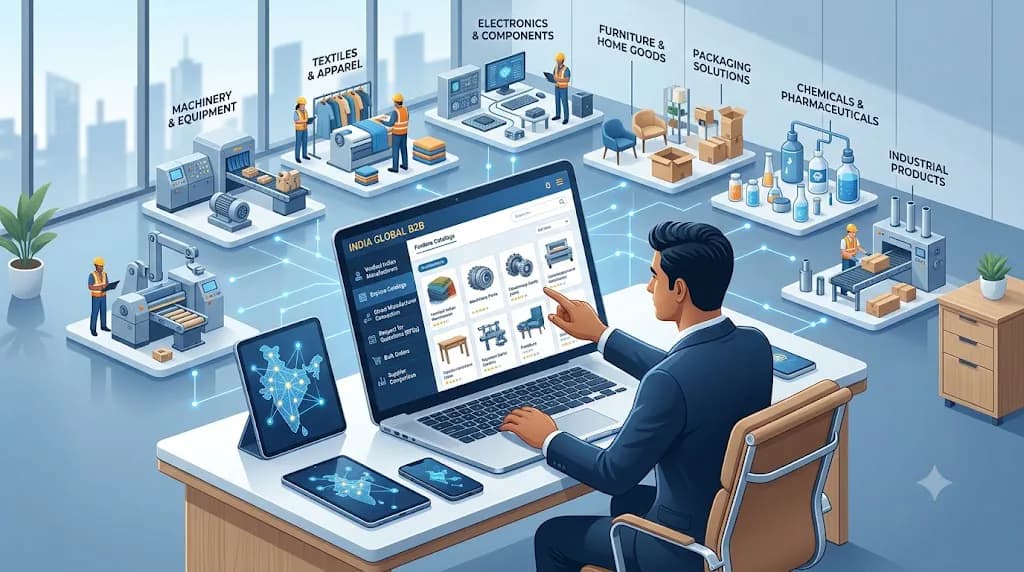
India has businesses operating across manufacturing, textiles, pharmaceuticals, food processing, electronics, construction materials, industrial machinery, packaging, furniture, chemicals, and many other sectors.
A company searching only within its immediate area may miss suppliers with better product suitability or specialised capabilities in other regions.
Digital supplier discovery can help businesses explore this wider commercial landscape. Buyers can search by product type, category, business activity, location, or supplier specialisation, depending on the tools available.
This broader reach is particularly useful for businesses looking to expand their distribution networks, diversify raw-material sourcing, or identify specialised manufacturing partners.
Supporting MSMEs and Growing Businesses
Micro, small, and medium enterprises often operate with limited procurement teams and budgets. They may not have dedicated sourcing departments or extensive industry networks.
Digital discovery tools can help smaller businesses explore suppliers and business opportunities without depending exclusively on expensive sourcing trips or personal introductions.
For example, a small packaging business may discover raw-material vendors in other states, compare product options, and contact potential partners online. A local retailer may identify wholesalers offering products that are unavailable through its existing network.
The effectiveness of these tools still depends on the accuracy of supplier information and the buyer's evaluation process, but they can widen access to potential business relationships.
How Digital Supplier Discovery Is Changing the Procurement Process
Digital discovery can influence several stages of procurement, from identifying a requirement to establishing a long-term supplier relationship.
Moving from Manual Searching to Structured Discovery
In a traditional process, buyers may search through contact lists, business cards, market directories, and scattered websites. This information can be difficult to organise, particularly when a purchasing requirement involves multiple product categories.
Digital platforms can bring business profiles, product information, categories, and contact options together. This makes initial research more structured.
A procurement professional can create a shortlist of potential suppliers, record relevant details, and prioritise businesses that appear to match the requirement.
The result is not necessarily an immediate purchase. Rather, it is a more organised starting point for commercial evaluation.
Making Supplier Comparison Easier
Price is an important factor in procurement, but it should not be the only consideration. Businesses also need to assess quality, product specifications, minimum order quantities, production capacity, delivery schedules, payment terms, after-sales support, and consistency.
Digital research can help buyers gather information from multiple suppliers before making a decision.
For instance, a buyer sourcing industrial components may compare material specifications, available sizes, estimated delivery timelines, and supplier capabilities. This comparison can reveal that the lowest-priced option is not always the most suitable choice.
The final decision should consider the total cost of procurement, including freight, packaging, inspection, taxes where applicable, and the potential cost of delays or defects.
Improving Initial Communication
Digital platforms can make it easier to initiate contact with suppliers through enquiry forms, email, telephone, messaging tools, or other available communication channels.
Buyers can describe their requirements, ask about availability, request quotations, and clarify specifications without first arranging an in-person meeting.
Clear communication is especially important when a purchase involves customised products or technical requirements.
Businesses should share precise information about quantity, dimensions, material, quality standards, delivery location, and expected timelines. Better-defined enquiries help suppliers provide more relevant responses and reduce misunderstandings.
Expanding Supplier Shortlists
Digital discovery allows procurement teams to consider suppliers beyond their usual contacts. This is useful when entering new markets, launching products, increasing production, or responding to changing demand.
A broader shortlist may improve the chances of finding suitable capabilities, alternative products, and competitive commercial terms.
However, more options do not automatically mean better results. Buyers should use clear selection criteria rather than contacting every supplier they find.
Creating a Foundation for Long-Term Partnerships
Supplier discovery should not end when a company finds a product or receives a quotation. The goal is to identify business partners capable of supporting future requirements.
Digital tools can help buyers maintain supplier information and revisit potential vendors when needs change. Following initial contact, businesses can build relationships through product sampling, trial orders, performance reviews, and regular communication.
Trust still develops through actual business interactions, reliable delivery, consistent quality, and fair commercial practices.
The Importance of B2B Platforms in Supplier Discovery
Business-to-business platforms have become useful digital channels for connecting companies with manufacturers, wholesalers, distributors, service providers, and potential customers.
Depending on their features, these platforms may offer business listings, product catalogues, category-based search, enquiry options, supplier information, and networking opportunities.
Their value lies in helping businesses discover relevant connections and begin commercial conversations.
Business Profiles and Product Visibility
A detailed business profile helps potential buyers understand what a supplier offers. Useful information can include the company's business activity, product categories, location, manufacturing or distribution capabilities, and available contact details.
Product listings can further explain specifications, materials, applications, and other relevant characteristics.
Suppliers should keep these details accurate and updated. Outdated information can create confusion, waste buyers' time, and weaken confidence in the business.
Category-Based Supplier Search
Business categories help buyers narrow their search to relevant industries and product types. A company searching for electrical equipment, packaging materials, furniture, machinery, or textile products can begin with the appropriate category instead of browsing unrelated businesses.
More specific product descriptions and keywords can make listings easier to discover.
Buyers should still confirm whether a supplier provides the exact product or service required. A category match alone does not establish product suitability or supplier reliability.
Building Connections Beyond Transactions
A B2B networking platform can support business discovery beyond a single purchase. Buyers may identify new suppliers, while suppliers can discover potential distributors, retailers, manufacturers, and other commercial partners.
This wider networking perspective can be useful for businesses seeking to expand their market presence or develop new commercial relationships.
BONC Network is one example of a business networking platform that businesses can explore for business discovery, product visibility, and connections with other businesses. Its relevance to a particular procurement requirement depends on the available listings, platform features, and suitability of the businesses discovered.
Companies should assess any platform based on the usefulness of its information, the relevance of its business network, available communication features, and alignment with their sourcing objectives.
How Digital Supplier Discovery Helps Reduce Procurement Costs
Procurement costs extend beyond the amount paid for a product. They also include the time and resources required to find suppliers, evaluate offers, coordinate deliveries, and resolve problems.
Digital discovery can support cost management in several ways.
Reducing Preliminary Research Effort
Online supplier profiles and catalogues can help buyers identify relevant businesses before making direct enquiries. This can reduce the effort spent contacting vendors that do not offer the required products or capabilities.
More focused research also allows procurement staff to devote additional attention to evaluating shortlisted suppliers.
Supporting More Informed Price Negotiations
When buyers obtain comparable quotations from multiple suitable suppliers, they may gain a better understanding of available commercial terms.
However, quotations should be compared on a like-for-like basis. Differences in product quality, order quantity, freight, taxes, warranties, payment terms, and delivery conditions can make apparently similar offers difficult to compare.
A structured quotation comparison helps businesses negotiate based on clear requirements rather than price alone.
Identifying Alternative Supply Sources
A business that depends on a single supplier may face limited flexibility when prices increase or products become unavailable.
Digital discovery can help procurement teams identify potential alternatives in advance. This may support continuity planning and reduce the pressure to accept unfavourable terms during an urgent shortage.
Alternative suppliers should be evaluated before they are needed, especially when product quality, safety, or technical consistency is important.
Avoiding Costly Procurement Mistakes
Insufficient supplier research can lead to incorrect specifications, unsuitable products, missed delivery commitments, and unexpected expenses.
Digital research can help buyers collect preliminary information and prepare better questions. Nevertheless, online information should be verified before substantial orders are placed.
Where appropriate, businesses should request samples, conduct quality checks, review documents, and confirm contractual terms.
Supplier Verification and Risk Management in Digital Procurement
One of the biggest misconceptions about online sourcing is that a supplier listed on a platform is automatically trustworthy. Digital visibility makes discovery easier, but it does not eliminate procurement risk.
Businesses need a consistent supplier verification process.
Check Business Identity and Contact Details
Buyers should verify the supplier's legal or trading name, business address, contact information, and relevant registration details where applicable.
For Indian businesses, the type of verification required will depend on the transaction, supplier category, and legal or regulatory requirements.
For larger purchases, buyers may need to review relevant tax registrations, licences, certifications, or other documents. Any document should be checked for relevance, validity, and authenticity rather than accepted at face value.
Evaluate Product Quality and Specifications
A supplier may offer a relevant product category but still be unable to meet a buyer's technical requirements.
Buyers should request detailed specifications, samples, product photographs, test reports, or quality certifications where appropriate.
For regulated or safety-critical products, businesses should follow the applicable industry and legal requirements instead of relying solely on general supplier descriptions.
Understand Production and Delivery Capacity
A supplier that can fulfil a small order may not necessarily be able to support larger or recurring demand.
Procurement teams should ask about available inventory, production capacity, lead times, packaging, dispatch procedures, and contingency arrangements.
This is particularly important when sourcing components or raw materials required for continuous manufacturing.
Use Appropriate Payment Safeguards
Before transferring substantial funds, buyers should verify payment instructions and confirm the terms of the transaction.
They should be cautious of unexplained changes in bank details, unusually attractive offers, pressure to make immediate payments, or reluctance to provide basic business information.
Written quotations, purchase orders, clear specifications, agreed delivery terms, and appropriate contractual safeguards can reduce misunderstandings.
Begin With a Suitable Trial Order
When the value or risk of a purchase is significant, a trial order can help evaluate the supplier's actual performance.
A trial allows the buyer to assess product quality, packaging, communication, delivery reliability, and responsiveness to problems before committing to larger volumes.
The trial should be proportionate to the business risk and should not replace necessary verification.
Digital Supplier Discovery Across Different Indian Industries
The benefits and requirements of digital supplier discovery vary by industry. A useful sourcing strategy reflects the specific needs of the business.
Manufacturing and Industrial Businesses
Manufacturers often depend on raw materials, machine parts, electrical components, tools, industrial consumables, and specialised services.
A production delay caused by a missing component can affect several stages of operations. Digital discovery helps manufacturers explore alternative suppliers and identify vendors with relevant product capabilities.
Technical specifications, tolerances, material grades, certifications, and production capacity should remain central to the selection process.
Retailers and Wholesalers
Retailers and wholesalers need suppliers who can provide suitable products, consistent availability, competitive terms, and dependable replenishment.
Digital discovery can help them explore new product categories, compare wholesale offers, and find suppliers beyond their existing markets.
Before purchasing, businesses should assess minimum order quantities, margins, return policies, delivery schedules, and the likelihood of repeat availability.
Construction and Infrastructure
Construction businesses may source cement, steel, electrical fittings, plumbing products, hardware, safety equipment, and finishing materials.
Supplier reliability is important because shortages can disrupt project schedules and increase labour or transportation costs.
Digital supplier research can help procurement teams identify potential vendors in project locations and nearby industrial markets. Buyers should confirm material quality, required standards, delivery capacity, and site-specific logistics.
Pharmaceuticals and Healthcare-Related Businesses
Businesses operating in pharmaceutical and healthcare supply chains must consider applicable licensing, product quality, traceability, storage, and regulatory requirements.
Digital discovery may help identify potential manufacturers or distributors, but it must not replace compliance checks and formal supplier qualification.
The level of due diligence should reflect the product category, regulatory obligations, and consequences of a supply failure.
Food Processing and Packaging
Food processors may need ingredients, processing equipment, packaging materials, labels, containers, and transportation services.
Supplier evaluation may include quality consistency, shelf-life requirements, hygiene practices, traceability, packaging suitability, and delivery schedules.
Digital discovery can broaden the range of suppliers considered, while inspections and relevant documentation help establish whether a supplier meets operational requirements.
The Role of Accurate Digital Product Listings
Supplier discovery depends partly on the quality of information businesses publish online. Even a capable manufacturer can be overlooked if its listings are incomplete, outdated, or difficult to understand.
Write Clear Product Descriptions
Product descriptions should explain what the item is, what it is used for, and which characteristics distinguish it from similar products.
Where relevant, include material, dimensions, model numbers, capacity, applications, compatible components, and available variants.
Avoid vague descriptions that provide little information to prospective buyers.
Select Relevant Categories and Keywords
Categories and keywords help search tools and buyers understand the business's offerings.
A supplier selling industrial pumps, for example, should use accurate product categories and specific terms related to the pump types it actually supplies.
Using unrelated popular keywords may attract irrelevant enquiries and reduce the quality of leads.
Use Useful Images and Supporting Information
Clear product images can help buyers understand appearance, packaging, design, and visible features. Where necessary, businesses can provide technical drawings, specification sheets, catalogues, or product documentation.
Images should represent the actual product accurately. Important characteristics should not be concealed by misleading presentation.
Keep Business Information Updated
Suppliers should review their business profiles periodically to update contact information, product availability, categories, and other relevant details.
Accurate information supports better buyer experiences and helps reduce unnecessary communication.
Challenges Businesses May Face With Digital Supplier Discovery
Digital supplier discovery offers useful opportunities, but it also introduces practical challenges that businesses should manage.
Information Overload
Large numbers of listings can make it difficult to identify the most suitable suppliers.
Businesses can address this by defining clear selection criteria, using specific search terms, narrowing the shortlist by relevant categories, and documenting evaluation results.
The goal is not to find the largest possible number of suppliers. It is to identify a manageable group of suitable candidates.
Incomplete or Outdated Listings
Some online profiles may contain limited product details or information that no longer reflects current business operations.
Buyers should confirm important facts directly with suppliers and avoid making substantial purchasing decisions based only on an online listing.
Suppliers, meanwhile, should maintain accurate profiles to improve discoverability and credibility.
Difficulty Comparing Different Offers
Suppliers may quote different specifications, order quantities, delivery terms, and payment conditions. This can make comparisons misleading.
Procurement teams should prepare a standard enquiry format and request quotations against the same set of requirements.
A comparison sheet can record unit price, minimum quantity, freight, delivery timeline, quality requirements, payment terms, and warranty conditions.
Digital Fraud and Misrepresentation
Online communication can make it easier to reach new suppliers, but it can also expose buyers to fake identities, misleading claims, or fraudulent payment requests.
Businesses should verify supplier details, use trusted communication channels, confirm payment instructions independently, and establish written terms before committing funds.
No digital profile or platform presence should be treated as a complete guarantee of trustworthiness.
Limited Digital Skills and Internal Resources
Some small businesses may have limited experience with online sourcing tools or structured vendor management.
They can begin with a simple process: define requirements, identify potential suppliers, record contact details, request quotations, verify shortlisted vendors, and review supplier performance.
As purchasing activity grows, the business can introduce more formal procurement software or approval procedures.
A Practical Framework for Better Digital Supplier Discovery
Indian businesses can improve their supplier discovery process by following a repeatable approach.
Define the Requirement Before Searching
Specify the product or service, required quantity, technical details, quality expectations, delivery location, budget range, and timeline.
A clear requirement helps reduce irrelevant results and makes supplier responses easier to compare.
Search Across Relevant Digital Channels
Use appropriate B2B platforms, supplier directories, manufacturer websites, industry associations, and other relevant sources.
Different channels may reveal different suppliers. The objective is to identify businesses with credible evidence of relevant capabilities rather than relying on a single search result.
Create a Shortlist
Select suppliers that appear to match the product, location, capacity, and commercial requirements.
Record key information in a spreadsheet or procurement system. This creates a reference point for further evaluation and future sourcing needs.
Request Comparable Quotations
Send the same core requirements to shortlisted suppliers. Ask them to confirm specifications, pricing, minimum quantities, delivery times, payment conditions, and any additional charges.
Clarify unclear information before comparing offers.
Conduct Due Diligence
Verify the supplier's business identity and review relevant documents, references, samples, certifications, or facilities as appropriate.
The level of due diligence should be proportionate to the purchase value, risk, and product category.
Evaluate Total Procurement Value
Consider price alongside quality, delivery reliability, service, flexibility, logistics, and the cost of potential disruption.
A supplier with a slightly higher quoted price may provide better overall value if it consistently meets specifications and delivery commitments.
Place an Appropriate Initial Order
Where practical, begin with an order that allows the business to evaluate the supplier's performance without creating excessive exposure.
Agree on specifications, acceptance criteria, delivery terms, and the process for resolving discrepancies.
Review Performance and Maintain Relationships
After delivery, assess product quality, timeliness, communication, documentation, and problem resolution.
Keep useful supplier information updated and maintain contact with suitable vendors. This makes future procurement more organised and helps businesses build a dependable sourcing network.
Measuring the Success of Digital Supplier Discovery
Businesses should evaluate digital supplier discovery based on measurable procurement outcomes rather than the number of searches or supplier profiles viewed.
Useful indicators include:
Supplier discovery time: How long it takes to identify and shortlist suitable suppliers.
Qualified supplier ratio: The proportion of discovered suppliers that meet the business's basic requirements.
Quotation response rate: The proportion of relevant enquiries that receive usable responses.
Supplier qualification time: The time required to complete verification and evaluation.
Total procurement cost: The overall cost of purchasing, including relevant logistics, inspection, and operational expenses.
On-time delivery rate: The proportion of orders delivered within agreed timelines.
Quality acceptance rate: The proportion of received goods that meet the agreed specifications.
Supplier concentration: The degree to which the business depends on a small number of vendors for critical requirements.
Repeat-order performance: Whether qualified suppliers continue to meet quality, delivery, and service expectations over time.
Tracking these measures can help procurement teams identify weaknesses, improve supplier selection, and determine whether digital discovery is creating practical value.
How Businesses Can Build a Stronger Digital Supplier Network
Supplier discovery becomes more valuable when businesses treat it as an ongoing activity rather than a task performed only when a shortage occurs.
Companies should periodically review existing suppliers, investigate alternative sourcing options, and update their supplier records.
They can maintain separate lists for approved suppliers, potential vendors, backup suppliers, and suppliers that require further evaluation. This makes it easier to respond when demand changes or a current supplier cannot fulfil an order.
Businesses should also maintain clear communication with existing vendors. Digital discovery should complement good supplier relationships rather than replace them.
A balanced supplier network can combine established partners with carefully evaluated alternatives. This approach may improve sourcing flexibility while preserving the benefits of long-term collaboration.
For growing companies, business networking platforms can provide another route to discovering relevant manufacturers, distributors, service providers, and commercial contacts. Platforms such as BONC Network may support this discovery process by helping businesses explore listings and connect with other businesses, subject to the platform's available features and the relevance of its network.
The key is to connect digital discovery with a consistent procurement process that prioritises verification, quality, transparency, and long-term business value.
The Future of Digital Supplier Discovery in India
Digital supplier discovery is likely to become increasingly connected with broader procurement and supply-chain technologies.
Search tools may become better at matching buyers with suppliers based on product specifications, industry requirements, location, capacity, and other relevant criteria. Artificial intelligence may help classify product information, summarise supplier profiles, organise enquiries, and identify potential matches.
Data integration may also allow businesses to connect supplier records with inventory planning, purchasing workflows, and order management systems.
These developments could reduce repetitive administrative work and help procurement teams focus on evaluation and relationship management.
However, technology cannot independently guarantee supplier reliability, product quality, ethical conduct, or contractual performance. Businesses will continue to need human judgement, appropriate verification, clear agreements, and ongoing monitoring.
The future of procurement will therefore depend on combining digital efficiency with responsible commercial decision-making.
Conclusion
Digital supplier discovery is changing procurement for Indian businesses by expanding access to potential suppliers, simplifying preliminary research, improving information gathering, and creating new opportunities for B2B connections. Businesses are no longer limited to the suppliers they already know or the markets they can visit physically. They can use digital directories, manufacturer websites, online catalogues, and B2B networking platforms to explore a broader range of sourcing options.
These benefits are particularly relevant for MSMEs, manufacturers, wholesalers, retailers, and businesses looking to enter new markets or diversify their supplier networks. Digital tools can help them organise supplier research, request comparable quotations, discover alternative sources, and initiate commercial conversations more efficiently.
Nevertheless, successful procurement requires more than online discovery. Buyers must verify supplier information, assess product quality, compare total costs, understand delivery capabilities, and establish clear commercial terms. Accurate product listings and transparent communication are equally important for suppliers who want to attract relevant business enquiries.
Platforms such as BONC Network can form part of a broader digital business discovery strategy by helping companies explore business listings and potential commercial connections. Their usefulness depends on the available information, the relevance of the network, and how carefully businesses evaluate the suppliers they find.
Ultimately, digital supplier discovery is most effective when it becomes a regular part of procurement planning. By combining technology with verification, structured evaluation, performance measurement, and relationship building, Indian businesses can develop a more flexible and dependable supplier network. This approach can support better purchasing decisions, stronger business partnerships, and sustainable growth in an increasingly connected marketplace.