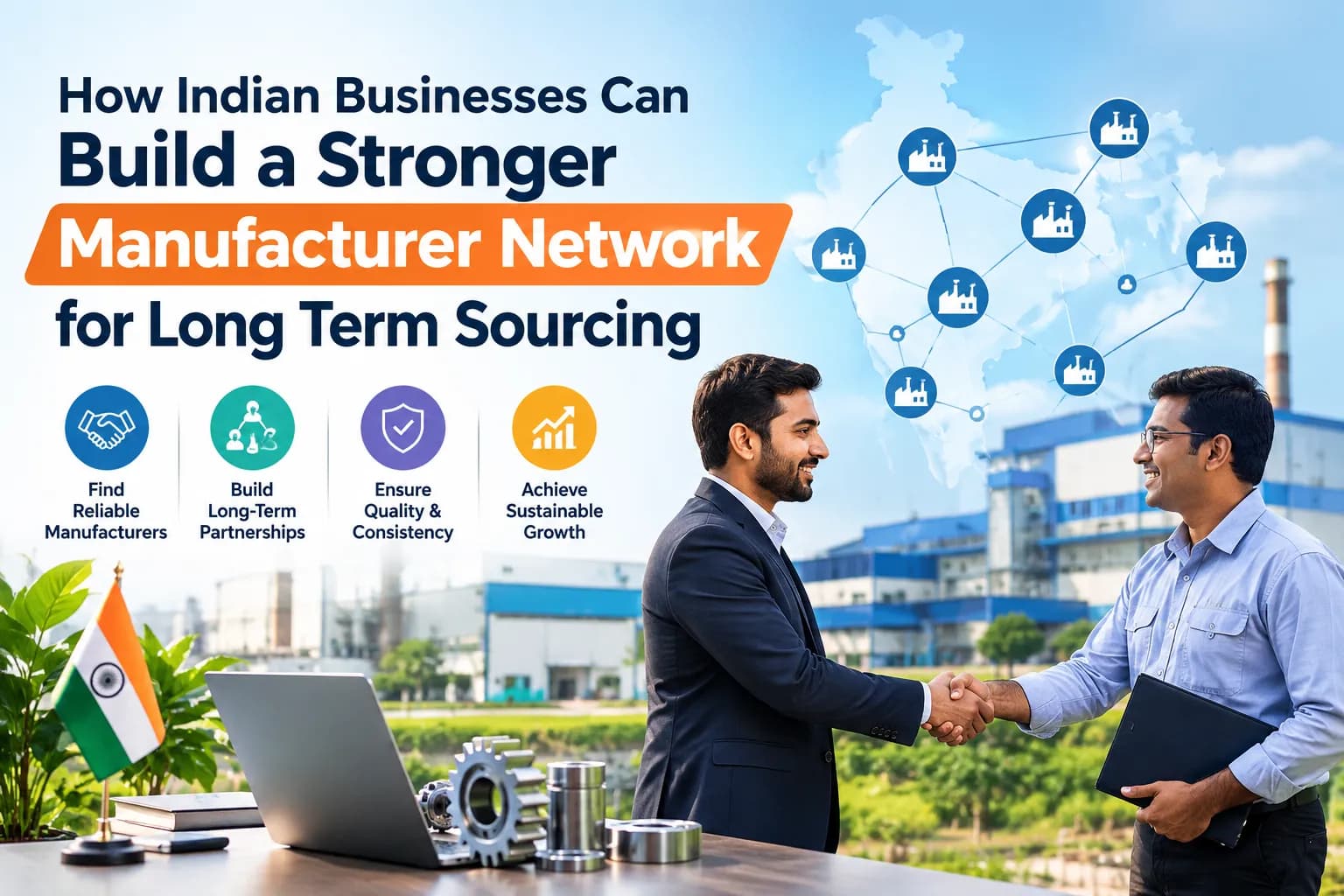
How Indian Businesses Can Build a Stronger Manufacturer Network for Long Term Sourcing
By BONC Editorial Team • Published on 06 Oct 2026
Introduction
For many Indian businesses, sourcing is more than simply finding a supplier who can provide a product at the right price. A reliable sourcing network can influence product quality, production continuity, delivery schedules, operating costs and the ability to respond to changing market demand.
Businesses that depend heavily on a single manufacturer may face challenges when demand increases, production capacity becomes limited, raw material prices change or unexpected delays affect deliveries. Building a stronger manufacturer network can provide businesses with more sourcing options and help them develop relationships with manufacturing partners that understand their requirements.
India has a diverse manufacturing ecosystem covering industries such as textiles, pharmaceuticals, chemicals, food processing, electronics, automotive components, furniture, packaging, machinery, electrical equipment and many other sectors. This diversity creates opportunities for businesses to discover manufacturers beyond their existing local networks.
However, finding manufacturers is only the beginning. A strong manufacturer network requires structured discovery, evaluation, communication, relationship management and long-term planning.
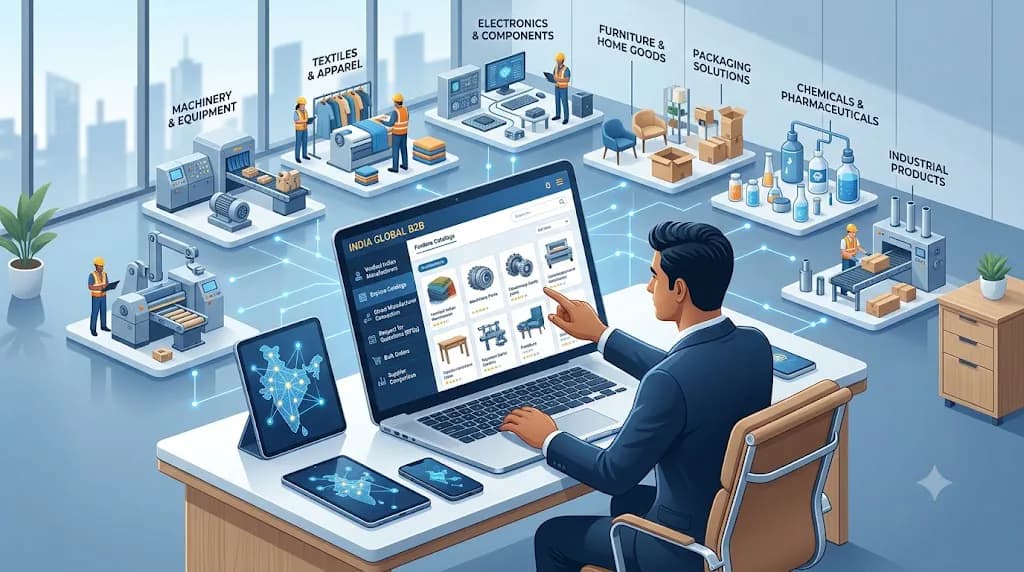
Digital B2B platforms are also changing how businesses discover manufacturing companies. Instead of relying only on personal references, trade events or local contacts, businesses can use digital business networks to explore manufacturers, products and potential sourcing relationships across different parts of India.
Understanding the Importance of a Manufacturer Network
A manufacturer network is a group of manufacturing businesses that a company can evaluate, work with or maintain relationships with for current and future sourcing requirements.
The network does not necessarily mean that a business places orders with every manufacturer in its network. Instead, it provides access to multiple potential manufacturing partners based on different product categories, capacities and business requirements.
A strong manufacturer network can help businesses:
- Explore multiple sourcing options
- Reduce dependence on one manufacturer
- Discover new products and capabilities
- Respond to increasing demand
- Compare manufacturing options
- Find specialized production partners
- Improve sourcing flexibility
- Enter new product categories
- Develop long-term B2B relationships
For growing businesses, this network can become an important part of procurement and supply-chain strategy.
Why Long Term Sourcing Requires More Than Price Comparison
Price is an important consideration when selecting a manufacturer, but long-term sourcing decisions usually require a broader evaluation.
A manufacturer offering the lowest initial price may not always provide the best long-term value if there are problems with quality, delivery consistency, communication or production capacity.
Businesses should consider the complete sourcing relationship.
Important factors may include:
- Product quality
- Manufacturing capacity
- Production consistency
- Delivery performance
- Technical capabilities
- Communication
- Minimum order requirements
- Customization capabilities
- Quality control
- Commercial terms
- Scalability
Long-term sourcing works best when both businesses understand each other's expectations and can consistently meet agreed requirements.
Start by Defining Your Sourcing Requirements
Before building a manufacturer network, businesses should clearly understand what they need from manufacturing partners.
Different products require different sourcing approaches. A company buying standard finished products may have different requirements from a company looking for customized components or contract manufacturing.
Businesses can begin by documenting:
- Product categories
- Technical specifications
- Required quantities
- Quality standards
- Target markets
- Expected order frequency
- Packaging requirements
- Delivery locations
- Customization requirements
- Expected production capacity
Clear requirements make manufacturer discovery more focused.
For example, a business looking for industrial components should identify the technical specifications and expected application before searching for manufacturers. This allows the buyer to focus on manufacturers with relevant capabilities instead of contacting businesses that only offer similar products.
Explore Manufacturers Beyond Your Local Market
One of the common limitations in traditional sourcing is geographical dependence.
Businesses often prefer manufacturers located nearby because communication, logistics and physical visits may be easier. However, limiting sourcing exclusively to one city or region can reduce the number of potential manufacturing partners available.
Digital B2B networking makes it easier to explore manufacturers across India.
A business in Delhi can discover manufacturers in Gujarat, Maharashtra, Karnataka, Tamil Nadu, West Bengal or other manufacturing regions. Similarly, a company in one industrial cluster can explore suppliers in another region if a particular manufacturing capability is available there.
Broader discovery does not mean that every distant supplier will be practical. Transportation, lead time and logistics still need to be evaluated. However, expanding the search can help businesses discover capabilities that may not exist within their immediate market.
Use Digital B2B Platforms for Manufacturer Discovery
Digital B2B platforms have become an important channel for business discovery and sourcing research.
A Business Networking Platform can provide a digital environment where buyers can discover manufacturers, explore products and initiate business conversations.
Businesses can use digital platforms to:
- Search for manufacturers
- Explore product categories
- Review business profiles
- Discover new manufacturing companies
- Compare potential suppliers
- Send inquiries
- Discuss requirements
- Build business connections
This can reduce the initial effort involved in identifying potential manufacturers.
However, digital discovery should be treated as the beginning of the sourcing process. Businesses still need to evaluate manufacturers carefully before entering into major commercial relationships.
Build a Manufacturer Shortlist
Instead of selecting the first manufacturer found, businesses can create a shortlist of potential manufacturing partners.
The shortlist can include manufacturers that appear suitable based on:
- Product compatibility
- Manufacturing capabilities
- Location
- Production capacity
- Industry experience
- Product range
- Quality information
- Communication
- Commercial suitability
A shortlist makes comparison easier.
Businesses can then categorize manufacturers based on their strengths. One manufacturer may be particularly suitable for large-volume production, while another may be better suited for customized or smaller batches.
This approach allows the manufacturer network to become more useful over time.
Evaluate Manufacturing Capabilities
Manufacturing capability is one of the most important factors in long-term sourcing.
A manufacturer should have the appropriate equipment, processes, workforce and production capacity to meet the buyer's requirements.
Businesses may need to understand:
- What products the manufacturer produces
- What production technologies it uses
- What volumes it can handle
- Whether customization is possible
- What quality-control systems are used
- Whether production can scale with demand
Capacity is particularly important for businesses expecting growth.
A manufacturer may be able to handle current order volumes but struggle when demand increases. Discussing scalability early can help businesses avoid sourcing disruptions later.
Evaluate Product Quality and Consistency
Quality should be evaluated not only at the product level but also across repeated orders.
A manufacturer may provide a good initial sample, but long-term sourcing requires consistency.
Businesses can establish appropriate quality expectations through:
- Product specifications
- Samples
- Quality standards
- Inspection processes
- Testing requirements
- Packaging standards
- Acceptance criteria
The exact evaluation process depends on the product category.
For technical, industrial or regulated products, buyers may need additional documentation, testing or certifications.
Clear quality expectations can reduce misunderstandings and help both parties understand what is required before production begins.
Compare Manufacturers Based on Total Value
A manufacturer should not be evaluated only on the quoted product price.
Businesses can consider the overall cost and value associated with sourcing from a particular manufacturer.
Additional factors may include:
- Transportation
- Packaging
- Lead time
- Minimum order quantity
- Payment conditions
- Customization charges
- Quality-related costs
- Returns or replacements
- Communication and support
For example, a manufacturer located farther away may offer a lower product price but have higher transportation costs or longer delivery times.
A complete evaluation helps businesses understand the practical cost of a sourcing relationship rather than focusing on one number.
Develop Relationships With Multiple Manufacturers
A stronger manufacturer network does not necessarily mean continuously changing suppliers.
Instead, businesses can maintain relationships with several manufacturers and use them according to their capabilities and requirements.
For example, a company may have:
- A primary manufacturer for regular orders
- A secondary manufacturer for additional capacity
- A specialized manufacturer for customized products
- An alternative manufacturer for emergency sourcing
- A manufacturer for a different product category
This structure can provide greater sourcing flexibility.
It can also reduce the operational impact if one manufacturing partner experiences temporary capacity or delivery problems.
Avoid Overdependence on a Single Manufacturer
Single-source dependency can create risks.
If a business receives most of its products from one manufacturer, an unexpected production interruption can affect the entire operation.
Possible disruptions may result from:
- Machinery problems
- Raw material shortages
- Labor issues
- Transportation challenges
- Production delays
- Sudden demand increases
- Changes in commercial terms
A diversified manufacturer network can provide alternative options.
However, diversification should be strategic. Businesses should maintain suitable backup manufacturers rather than adding suppliers without evaluating their capabilities.
Build Long Term Manufacturer Relationships
Finding manufacturers is only one part of sourcing. Long-term relationships require continuous communication and professional collaboration.
Businesses can strengthen manufacturer relationships by:
- Communicating requirements clearly
- Sharing demand forecasts when possible
- Providing timely feedback
- Maintaining agreed payment practices
- Discussing problems openly
- Planning production schedules
- Reviewing performance regularly
Manufacturers also benefit from predictable and professional buyer relationships.
When both parties understand expectations, the relationship can become more stable and productive.
Use Requirement-Based Inquiries
Requirement-based inquiries can make manufacturer discovery more efficient.
Instead of sending a generic message such as “Send your price,” buyers can provide relevant details about what they actually need.
A useful inquiry may include:
- Product name
- Required specifications
- Quantity
- Delivery location
- Expected timeline
- Customization requirements
- Packaging requirements
This allows manufacturers to provide more relevant responses.
Digital B2B platforms can support this type of communication by helping buyers connect with businesses based on product and sourcing requirements.
How BONC Network Can Support Manufacturer Networking
BONC Network is a B2B networking platform designed to bring businesses, products and business opportunities into a connected digital ecosystem.
For Indian businesses looking to strengthen their manufacturer network, a platform such as BONC Network can provide a starting point for discovering companies and products beyond existing business contacts.
Businesses can explore relevant product categories, review business information and initiate inquiries with potential manufacturing partners.
For manufacturers, digital visibility can provide an opportunity to present their products and capabilities to buyers who may be looking for new sourcing relationships.
This type of digital networking can complement traditional sourcing methods such as referrals, trade exhibitions, direct sales and industry relationships.
The objective should be to create relevant business connections rather than simply collect a large number of contacts.
Maintain a Structured Manufacturer Database
As the manufacturer network grows, businesses should organize supplier information.
A structured internal database can include:
- Manufacturer name
- Product categories
- Location
- Contact details
- Manufacturing capabilities
- Product specifications
- Minimum order quantity
- Pricing information
- Lead time
- Quality information
- Previous order performance
- Communication notes
Keeping this information updated can make future sourcing faster.
When a new requirement arises, the procurement team can review existing manufacturer relationships before starting the entire search process again.
Monitor Manufacturer Performance
Long-term sourcing should include regular performance evaluation.
Businesses can monitor manufacturers based on:
- Product quality
- Delivery reliability
- Order accuracy
- Response time
- Production consistency
- Problem resolution
- Commercial reliability
Performance monitoring can help identify strong manufacturing partners and areas that need improvement.
It can also help businesses decide which manufacturers should remain part of their core sourcing network.
Build a Flexible Manufacturer Network for Growth
A manufacturer network should evolve as the business grows.
A company may initially require small quantities from a few suppliers. As demand increases, it may need manufacturers with greater production capacity, faster delivery or specialized capabilities.
Similarly, entering new markets may create new product requirements.
Businesses should therefore regularly review their manufacturer network and identify gaps.
Questions worth asking include:
- Do we have enough manufacturing capacity?
- Are we dependent on one supplier?
- Do we have backup manufacturers?
- Can our current manufacturers support future growth?
- Do we have access to specialized manufacturing capabilities?
- Can we source products from different regions?
This type of review can make the sourcing network more resilient.
Manufacturer Networking for MSMEs and Startups
Small businesses and startups may find it difficult to develop large supplier networks because they often have limited procurement teams and fewer established industry relationships.
Digital B2B platforms can provide another channel for discovering manufacturers.
For MSMEs, a broader manufacturer network can support:
- Product development
- Competitive sourcing
- New product launches
- Alternative supplier discovery
- Market expansion
- Customized manufacturing
- Business networking
Startups can also use manufacturer research to understand the feasibility of new product ideas before committing to large-scale production.
A digital-first discovery process can help them identify potential manufacturing partners at an earlier stage.
Common Challenges in Building a Manufacturer Network
Building a strong network does not happen instantly. Businesses may face several challenges during the process.
One challenge is information quality. Not every online business profile provides all the information a buyer needs.
Another challenge is supplier comparison. Different manufacturers may provide information in different formats, making direct comparison difficult.
Geographical distance can also create logistical considerations.
Businesses may additionally face challenges related to:
- Product quality
- Pricing differences
- Minimum order quantities
- Communication gaps
- Capacity limitations
- Delivery schedules
- Customization requirements
The solution is not to avoid digital supplier discovery but to combine it with structured evaluation and verification.
Mistakes Businesses Should Avoid
Businesses can weaken their sourcing strategy by making decisions too quickly.
Some common mistakes include:
- Selecting manufacturers only because of low pricing
- Depending on one manufacturer
- Not checking manufacturing capabilities
- Ignoring product specifications
- Failing to compare multiple options
- Not discussing capacity requirements
- Not evaluating delivery performance
- Maintaining outdated supplier information
- Not developing long-term communication
A stronger approach focuses on suitability, reliability and long-term business value.
The Future of Manufacturer Networking in India
India's manufacturing ecosystem continues to become more connected through digital technologies. Businesses increasingly use online platforms to research products, identify suppliers and initiate B2B conversations.
Digital manufacturer discovery can reduce geographical limitations and give buyers access to a broader range of businesses.
The future of sourcing is likely to combine digital discovery with deeper supplier evaluation, data-driven procurement and long-term relationship management.
For businesses, this means a manufacturer network may increasingly become a strategic asset rather than simply a list of suppliers.
Companies that invest in supplier discovery, relationship building and network diversification can be better prepared to respond to changes in demand and market conditions.
Conclusion
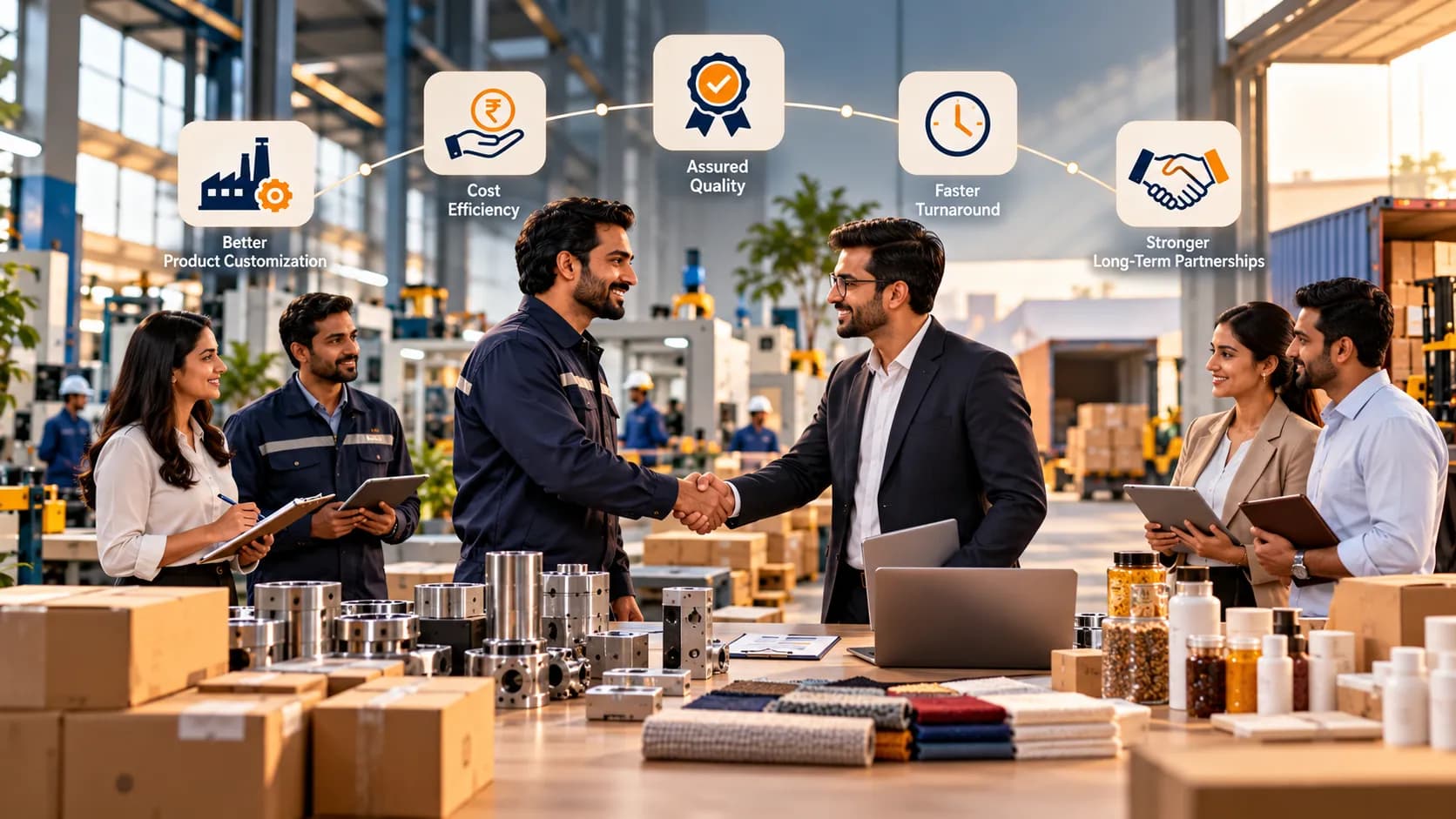
Building a stronger manufacturer network is an important step for Indian businesses looking to develop reliable long-term sourcing strategies. The goal should not simply be to find as many manufacturers as possible, but to identify and maintain relationships with manufacturers that can consistently meet business requirements.
Businesses can begin by clearly defining their sourcing needs, exploring manufacturers across different markets, using digital B2B platforms, comparing multiple potential partners and evaluating manufacturing capabilities.
Long-term success also depends on communication, quality management, performance monitoring and supplier diversification. Maintaining multiple suitable manufacturing relationships can reduce dependency on a single source and provide greater flexibility when business requirements change.
Digital Business Networking Platforms such as BONC Network can support this process by helping businesses discover manufacturers, explore products and initiate potential B2B connections. When combined with proper due diligence and relationship management, digital networking can become a valuable part of a modern sourcing strategy.
For Indian businesses, building a manufacturer network should be viewed as an ongoing process. As the company grows, its sourcing requirements will change, new manufacturing capabilities will emerge and new business opportunities will develop. A well-managed manufacturer network can help businesses respond to these changes while creating a stronger foundation for sustainable and long-term sourcing.