How Indian Manufacturers Can Respond to Changing Buyer Expectations in the Digital Marketplace
By BONC Editorial Team • Published on 17 Oct 2026
Introduction
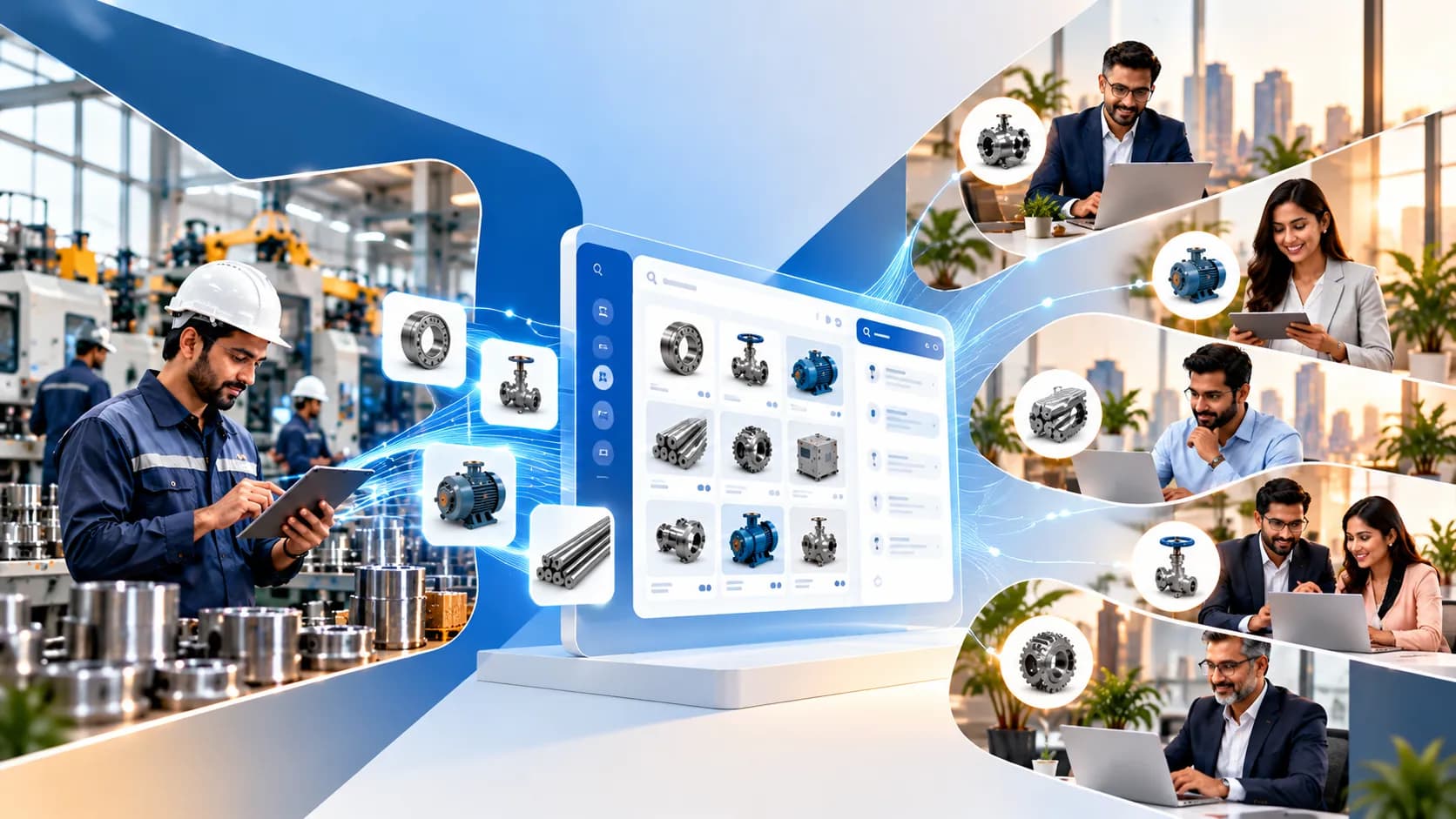
The Indian manufacturing industry is undergoing significant changes as businesses increasingly adopt digital technologies to discover products, compare suppliers, evaluate manufacturers, and make purchasing decisions. Buyers who once depended primarily on physical markets, trade exhibitions, sales representatives, and personal referrals can now explore manufacturing companies through websites, online directories, digital marketplaces, and B2B networking platforms.
This shift has changed how manufacturers need to present their products, communicate their capabilities, and build trust with potential buyers. Businesses purchasing industrial equipment, textiles, packaging materials, electrical components, furniture, machinery, or other manufactured goods increasingly expect accessible product information, timely communication, transparent commercial terms, and reliable delivery commitments.
For Indian manufacturers, these changing expectations create both opportunities and challenges. Companies that establish a strong digital presence can improve their visibility beyond traditional markets and explore business connections across different regions. At the same time, manufacturers must recognise that simply creating an online profile is not enough. Buyers need useful information, dependable communication, relevant product specifications, and confidence that a supplier can fulfil their requirements.
Digital marketplaces have become an important part of this changing business environment. They can help manufacturers present their offerings and connect with potential customers, while buyers gain additional channels for researching suppliers.
Platforms such as BONC Network, a B2B Business Networking Platform, represent one way businesses can explore digital business connections and product-related opportunities.
This article explores how Indian manufacturers can respond to modern buyer expectations, improve their digital presence, strengthen supplier relationships, and build a more adaptable business strategy for the evolving digital marketplace.
Understanding the Changing Expectations of B2B Buyers
Modern B2B buyers often begin their purchasing journey with online research. Before contacting a manufacturer, they may investigate product specifications, compare available suppliers, review company information, and identify whether a business appears suitable for their requirements.
This means the buying process frequently begins before a manufacturer receives an enquiry.
Buyers increasingly expect manufacturers to provide clear product information, relevant technical details, accessible contact channels, and realistic information about availability and delivery. They also value suppliers who understand their requirements and respond with practical solutions rather than generic sales messages.
For example, a distributor searching for electrical components may want to know the available models, technical specifications, minimum order quantities, and delivery options. A furniture retailer may be interested in material choices, customisation, production capacity, and packaging arrangements.
These expectations vary across industries, but several common priorities influence modern B2B purchasing decisions:
- Easy access to relevant product and company information.
- Clear specifications and consistent product descriptions.
- Timely and professional responses to enquiries.
- Transparent pricing and purchasing conditions.
- Reliable production schedules and delivery commitments.
- Evidence of business credibility and quality standards.
- Flexibility to discuss customised requirements.
- Ongoing support after a purchase.
Manufacturers that understand these priorities can improve the buying experience and make it easier for suitable customers to evaluate their offerings.
Why the Digital Marketplace Matters for Indian Manufacturers
A digital marketplace gives businesses an additional environment in which to present products, discover potential commercial partners, and initiate business discussions.
Traditionally, manufacturers often depended on regional distributors, established customer relationships, sales teams, and trade events to introduce their products to new buyers. These methods remain valuable, but they may limit visibility when businesses want to explore unfamiliar industries or geographic markets.
Digital channels can extend this reach by making business information accessible to potential buyers beyond a manufacturer's immediate network.
For example, a manufacturer based in one Indian state may be able to present its industrial products to distributors, wholesalers, or business customers operating in other states. Buyers can begin researching the company without initially travelling to its factory or attending a trade exhibition.
However, digital marketplaces should not be viewed as automatic sales generators. Results depend on product relevance, profile quality, competition, communication, pricing, fulfilment capabilities, and the manufacturer's overall business strategy.
The strongest approach combines digital visibility with dependable operations, professional sales practices, and continued relationship building.
Build a Complete and Professional Digital Business Profile
A digital business profile is often one of the first sources of information a potential buyer encounters. If the profile is incomplete, outdated, or difficult to understand, buyers may struggle to determine whether the manufacturer is suitable.
Indian manufacturers should treat their online business profiles as important business assets rather than simple company listings.
A professional profile should clearly communicate the company's identity, manufacturing capabilities, product categories, target industries, and business contact information.
Present Accurate Company Information
Manufacturers should provide their business name, location, contact details, company overview, and relevant operational information. Where appropriate, they can also describe their manufacturing experience, production facilities, quality systems, and areas of specialisation.
Information should be accurate and updated whenever important business details change.
Explain Manufacturing Capabilities
Buyers may need to understand whether a company manufactures products directly, assembles components, offers contract manufacturing, or distributes products sourced from other businesses.
Manufacturers should clearly describe their actual capabilities to avoid misunderstandings. Where relevant, they can mention production processes, customisation options, equipment categories, and the industries they serve.
Use Clear Product Categories
Products should be organised into relevant categories so that buyers can find the required information more easily.
A manufacturer offering several product lines should avoid placing unrelated products under vague descriptions. Clear categorisation improves navigation and helps communicate the company's expertise.
A well-maintained profile creates a more professional first impression and gives buyers a useful starting point for further discussions.
Provide Detailed and Accurate Product Information
Product information is central to the digital buying experience. Buyers need enough detail to determine whether a product meets their technical, commercial, and operational requirements.
Manufacturers should avoid relying exclusively on product names or short promotional descriptions. Product pages and listings should include relevant specifications, dimensions, materials, applications, available variants, packaging information, and other details appropriate to the product category.
For industrial products, useful information may include operating conditions, capacity, compatibility, tolerances, and technical documentation. For consumer goods, it may include materials, sizes, colours, packaging, and intended uses.
Accurate product information offers several advantages. It helps buyers screen unsuitable options early, reduces repetitive enquiries, and allows sales teams to focus on more relevant discussions.
Manufacturers should also distinguish between standard products and customised offerings. If specifications vary according to the buyer's requirements, that should be explained clearly.
Where technical drawings, catalogues, certificates, or instruction documents are relevant, manufacturers can provide appropriate materials through suitable channels.
The objective is to help buyers make informed decisions without having to request every basic detail individually.
Improve Product Visibility Through Digital Marketing and SEO
Having an online presence does not automatically ensure that potential buyers will discover a manufacturer's products. Businesses must make their digital information relevant to the search terms and questions buyers use when researching suppliers.
Search engine optimisation, or SEO, helps manufacturers organise their websites and product content so that search engines can better understand and potentially display relevant pages.
Manufacturers should research keywords related to their products, manufacturing processes, applications, and target markets.
For example, a company producing packaging machinery may create useful content around packaging equipment specifications, industrial packaging applications, maintenance considerations, and production requirements. A textile manufacturer might publish information about fabric types, material properties, bulk sourcing, and industry applications.
Effective digital marketing can include:
- Optimising product pages with relevant search terms.
- Creating informative product catalogues and technical resources.
- Publishing articles that answer buyer questions.
- Maintaining consistent business information across relevant platforms.
- Using suitable product images and diagrams.
- Sharing product updates and manufacturing capabilities.
- Tracking website engagement and relevant enquiries.
SEO content should provide genuine value instead of repeating keywords excessively. Buyers are more likely to benefit from clear, informative material than from generic promotional statements.
Manufacturers can also use relevant B2B platforms to supplement their websites and explore additional discovery opportunities.
Respond Quickly and Professionally to Buyer Enquiries
When buyers contact a manufacturer, the quality of the response can influence whether the conversation progresses.
A delayed, incomplete, or confusing reply may make it difficult for a buyer to assess the supplier. In competitive markets, customers may contact multiple manufacturers simultaneously and prioritise those that provide useful information promptly.
Manufacturers should establish a clear process for receiving, assigning, and responding to enquiries. Even businesses with small sales teams can improve communication by using shared inboxes, enquiry tracking sheets, customer relationship management software, or other suitable tools.
A useful first response should acknowledge the enquiry, clarify the requirement where necessary, and explain the next steps.
For example, if a buyer requests a quotation for customised components, the manufacturer may need drawings, material details, quantity, delivery location, and expected timelines before preparing an accurate offer.
Instead of sending an immediate generic price, the sales team should identify the missing information and ask focused questions.
Manufacturers should also provide realistic response and delivery timelines. If a quotation requires technical review, the buyer should be informed rather than left without an update.
Professional communication demonstrates organisation and helps create confidence during the early stages of a business relationship.
Make Pricing and Commercial Terms More Transparent
Price remains an important factor in B2B purchasing, but buyers do not always select the supplier offering the lowest quotation. They also consider quality, consistency, delivery reliability, payment conditions, and the overall cost of procurement.
Manufacturers can respond to modern expectations by providing clear quotations and explaining the factors that influence pricing.
A quotation should identify the product, specification, quantity, unit price, applicable taxes, packaging, transportation arrangements, payment terms, quotation validity, and estimated delivery schedule where relevant.
For customised products, manufacturers should clarify any design, tooling, sampling, or development charges.
This transparency helps buyers compare offers more accurately and reduces the risk of disputes after an order is confirmed.
Manufacturers should also communicate minimum order quantities and any price variations associated with different order volumes. If the final cost depends on specifications that have not yet been confirmed, this should be explained.
Transparent commercial terms do not require every manufacturer to publish fixed prices publicly. In many B2B industries, quotations depend on quantity, materials, production complexity, and delivery requirements. The important point is to explain these variables clearly and consistently.
Focus on Product Quality and Consistency
Digital visibility may introduce a manufacturer to new buyers, but long-term business relationships depend on the manufacturer's ability to deliver what has been promised.
Buyers expect products to match the agreed specifications and remain consistent across repeat orders. This is particularly important for businesses that use purchased components in their own production or sell products under their own brand.
Manufacturers should establish quality-control procedures suited to their products and industries. These may include incoming material checks, in-process inspections, final product testing, packaging checks, and documentation of defects.
For relevant product categories, companies may also need appropriate certifications, test reports, or compliance documentation.
Manufacturers should avoid making unsupported claims about quality or certifications. Any statements about standards, testing, or compliance should be accurate and supported by appropriate evidence.
When a quality issue occurs, a clear corrective-action process helps identify the cause, communicate with the buyer, and reduce the chance of recurrence.
Consistent quality strengthens a manufacturer's reputation and supports repeat purchasing. It also helps digital marketing efforts translate into durable business relationships rather than one-time enquiries.
Offer Customisation and Flexible Manufacturing Solutions
Many buyers look for manufacturers that can adapt products to specific operational needs. These requirements may involve dimensions, materials, finishes, packaging, labelling, branding, or specialised technical features.
Customisation can help manufacturers serve more specialised markets and differentiate their offerings from standard catalogue products.
However, manufacturers should assess customisation requests carefully before accepting them. They need to consider technical feasibility, tooling requirements, production capacity, development costs, minimum order quantities, and delivery timelines.
For example, a buyer may request a component made from a particular material or a packaging solution designed for a specific product. The manufacturer should explain whether the requested design can be produced and whether alternatives could achieve a similar result.
Clear approval procedures are important. Drawings, prototypes, samples, specifications, and final revisions should be documented before mass production begins.
Manufacturers should also agree on design ownership, confidentiality, and the permitted use of buyer-provided information when these matters are relevant.
Flexible manufacturing works best when both parties understand the commercial and technical implications before committing to production.
Strengthen Delivery Reliability and Order Communication
Buyers often evaluate manufacturers on more than product quality and pricing. They also need confidence that orders will arrive when required.
Late deliveries can affect a buyer's inventory, production schedules, customer commitments, and working capital. Manufacturers should therefore provide realistic lead times and maintain clear communication throughout the order process.
Production planning, raw material availability, workforce scheduling, equipment maintenance, and transport arrangements can all influence delivery performance.
Manufacturers should avoid promising timelines that cannot be supported by actual production capacity. If a delay becomes likely, informing the buyer early allows both parties to discuss alternatives.
Businesses can improve order communication by providing confirmations, production updates where appropriate, dispatch information, and documentation related to delivery.
Manufacturers serving customers across different Indian states should also consider transportation time, packaging requirements, freight arrangements, and the handling needs of their products.
Reliable fulfilment builds confidence and can become a meaningful competitive advantage, particularly when buyers need repeat supplies or work with strict production schedules.
Use Digital B2B Networking to Discover New Buyers
Traditional business development methods remain valuable, but manufacturers can broaden their approach by exploring digital B2B networking opportunities.
Online business networking environments can help companies present their offerings, discover other businesses, and initiate conversations that may lead to commercial opportunities.
For Indian manufacturers, this can be useful when exploring new geographic markets, finding distributors, identifying potential business customers, or presenting specialised products to companies outside their existing network.
BONC Network is a B2B Business Networking Platform that manufacturers can consider as one part of their digital business development strategy. It provides a setting for businesses to present their offerings and explore potential business connections.
Manufacturers can use digital networking alongside their own websites, industry directories, trade exhibitions, referrals, and sales outreach. The aim is to create more opportunities for relevant businesses to discover each other and begin discussions.
To make this approach more effective, manufacturers should maintain accurate company information, use clear product descriptions, communicate their actual capabilities, and respond professionally to enquiries.
They should also evaluate the commercial relevance of the connections they make rather than measuring success only by the number of views or contacts.
A digital connection does not guarantee a sale. Buyers still need to assess product suitability, pricing, supplier credibility, quality, and delivery commitments before making purchasing decisions.
Build Trust Through Evidence and Consistent Business Practices
Trust is particularly important in digital B2B commerce because buyers may initially have limited direct experience with a manufacturer.
A professional profile can create awareness, but buyers often need further evidence before committing to a supplier. Manufacturers should make relevant information accessible and be prepared to answer reasonable questions about their business and products.
Depending on the industry, useful evidence may include company registration details, applicable licences, product test reports, quality certifications, factory information, references, and documented manufacturing capabilities.
Manufacturers should ensure that any information shared is accurate, current, and relevant to the product being offered.
They can also build trust through consistent communication, realistic quotations, clear contracts, sample approvals, and dependable order fulfilment.
Customer testimonials and case studies may be useful when they are genuine and shared with appropriate permission. Manufacturers should not exaggerate customer relationships or publish unsupported performance claims.
Trust is developed through repeated business behaviour. Meeting commitments, addressing problems honestly, and providing appropriate support are more valuable than relying only on promotional language.
Understand Buyer Data and Use It to Improve Business Decisions
Digital channels can provide manufacturers with useful information about buyer interests and business engagement. Depending on the platform and available analytics, companies may be able to observe which products attract attention, which pages generate enquiries, and which campaigns produce relevant responses.
This information can help manufacturers identify potential gaps in their product presentation and marketing strategy.
For example, repeated enquiries about a product's material specifications may indicate that the product page needs more detailed technical information. Enquiries from a new industry may suggest an opportunity to investigate an additional market segment.
Manufacturers can also collect structured feedback from existing customers and sales teams to understand why buyers choose certain suppliers or decline quotations.
However, engagement metrics should be interpreted carefully. A high number of views does not necessarily mean strong purchase intent, and a low number of enquiries may reflect poor targeting rather than weak product demand.
Businesses should focus on practical indicators such as relevant enquiries, quotation requests, conversion rates, repeat orders, customer retention, and the reasons opportunities are won or lost.
Customer information should be handled responsibly, with appropriate attention to privacy and applicable data-protection requirements.
Develop a Customer-Centred Sales Process
Changing buyer expectations require manufacturers to think beyond simply presenting products and waiting for orders.
A customer-centred sales process begins by understanding the buyer's problem. Instead of sending the same catalogue to every prospect, sales teams should identify the customer's industry, application, required quantity, technical needs, purchasing timeline, and decision criteria.
This allows manufacturers to provide more relevant information and recommend suitable products or alternatives.
For example, an industrial buyer may value technical compatibility and after-sales support, while a distributor may prioritise product availability, margins, packaging, and dependable replenishment.
Sales teams should also maintain records of enquiries, quotations, follow-ups, customer preferences, and order history. A customer relationship management system can help manage these activities as the business grows.
Follow-ups should be useful and appropriately timed. Repeated messages without new information may frustrate buyers, while a relevant update about specifications, availability, or a revised quotation can help move a discussion forward.
A customer-centred process improves the buying experience and helps manufacturers focus their efforts on opportunities that align with their capabilities.
Invest in Digital Skills and Employee Training
Digital transformation involves people and processes as much as technology. Manufacturers may have strong production capabilities but struggle to use digital channels effectively if employees lack the necessary skills.
Sales, marketing, customer service, and technical teams should understand how to maintain product information, respond to online enquiries, prepare digital quotations, and communicate professionally.
Training can cover search engine optimisation, product catalogue management, customer relationship tools, online business networking, digital communication, and basic data analysis.
Employees should also understand the limits of the information they share. Technical specifications, pricing, production capacity, and delivery commitments must be accurate and approved by the appropriate teams.
Manufacturers do not necessarily need expensive systems at the beginning. A well-maintained product database, a clear enquiry process, professional digital profiles, and a consistent follow-up routine can provide a useful foundation.
As digital business activity expands, companies can introduce more advanced tools based on actual operational needs.
Overcome Common Challenges in Digital Marketplaces
Although digital marketplaces create new opportunities, manufacturers may face challenges when adopting them.
Competition can make it difficult to stand out, particularly when many businesses offer similar products. Incomplete product information may reduce buyer confidence, while delayed communication can cause prospects to approach alternative suppliers.
Some manufacturers may also find it difficult to allocate employees to digital marketing and enquiry management while maintaining daily production activities.
These challenges can be addressed through a practical and gradual strategy.
Manufacturers should focus on the product categories and buyer segments most relevant to their capabilities. They should improve their most important product listings first, establish a consistent response process, and monitor which channels generate useful enquiries.
Companies should avoid assuming that every digital platform will suit every business. Each channel should be evaluated according to its audience, cost, available features, and contribution to business goals.
A balanced strategy can combine digital marketplaces with direct sales, distributors, trade exhibitions, industry referrals, and existing customer relationships.
The objective is not to replace every traditional method but to build a more flexible approach to customer discovery and business development.
Measuring Success in the Digital Marketplace
Manufacturers need practical ways to assess whether their digital efforts are supporting business objectives.
Useful performance indicators include the number of relevant buyer enquiries, quotation requests, qualified opportunities, orders generated, repeat purchases, response times, and customer retention.
Companies should also evaluate the quality of opportunities. A large number of enquiries may provide limited value if most buyers require products the manufacturer does not offer or cannot supply at the requested quantity.
Cost is another important factor. Businesses should consider the resources spent on digital marketing, staff time, platform participation, content creation, and enquiry management when evaluating results.
Reviewing performance regularly can help manufacturers refine their product information, adjust their marketing messages, and focus on the most relevant buyer segments.
Results should be assessed over a suitable period because B2B purchasing decisions can involve technical evaluations, sample approvals, negotiations, and longer sales cycles.
By using measurable objectives rather than relying only on visibility metrics, manufacturers can make more informed decisions about their digital strategy.
The Future of Indian Manufacturing in a Buyer-Centred Digital Economy
The relationship between manufacturers and buyers is likely to continue evolving as digital tools become more integrated into sourcing, procurement, and business communication.
Buyers may increasingly expect accessible technical information, faster responses, clearer order updates, and more convenient ways to evaluate potential suppliers. Manufacturers that invest in accurate digital information and efficient communication processes will be better prepared to respond to these expectations.
At the same time, technology cannot replace the importance of manufacturing fundamentals. Product quality, operational efficiency, dependable delivery, technical expertise, and fair commercial practices remain central to business success.
Indian manufacturers can strengthen their position by combining production excellence with customer-focused digital practices. This includes maintaining accurate product catalogues, developing useful content, exploring relevant B2B networks, training employees, and using buyer feedback to improve operations.
Digital transformation is most effective when it supports a clear business strategy rather than becoming a collection of disconnected online activities.
Conclusion
Changing buyer expectations are reshaping how Indian manufacturers present products, communicate capabilities, and develop commercial relationships. Modern B2B buyers increasingly value accurate product information, transparent pricing, timely responses, consistent quality, flexible solutions, and reliable delivery.
To respond effectively, manufacturers should strengthen their digital business profiles, improve product visibility, provide useful technical details, establish professional enquiry-handling processes, and use customer feedback to guide decisions. They should also evaluate digital channels carefully and combine online discovery with dependable manufacturing operations.
B2B networking platforms such as BONC Network can form part of this strategy by providing another avenue for presenting business offerings and exploring potential commercial connections. However, sustainable results depend on product suitability, credible information, effective communication, and the ability to meet buyer requirements consistently.
Ultimately, the manufacturers most prepared for the digital marketplace will be those that combine traditional manufacturing strengths with modern customer expectations. By treating digital presence as an extension of product quality, service, and relationship management, Indian manufacturers can improve their market visibility, explore new opportunities, and build stronger foundations for long-term growth.