A few years ago, learning to code meant spending hours understanding syntax, debugging errors, and searching through documentation to solve even the smallest problems. Today, things look very different. AI-powered tools can generate code, explain complex concepts, suggest optimizations, and even identify bugs within seconds. This has led to one question being asked repeatedly across classrooms, workplaces, and online communities: Will AI replace software developers?
After spending time learning software development, building academic projects, and experimenting with AI tools, I have come to a different conclusion. AI is not replacing developers—it is changing how developers work. The demand for programmers who can think critically, solve problems, and build meaningful software is not disappearing. Instead, AI is becoming another tool that helps developers focus on creating better products rather than spending time on repetitive tasks.
AI Is Changing the Way We Build Software
Software development has never been just about writing code. Before a single line of code is written, developers spend time understanding user requirements, designing solutions, planning system architecture, and considering future scalability. These are areas where human judgment is essential.
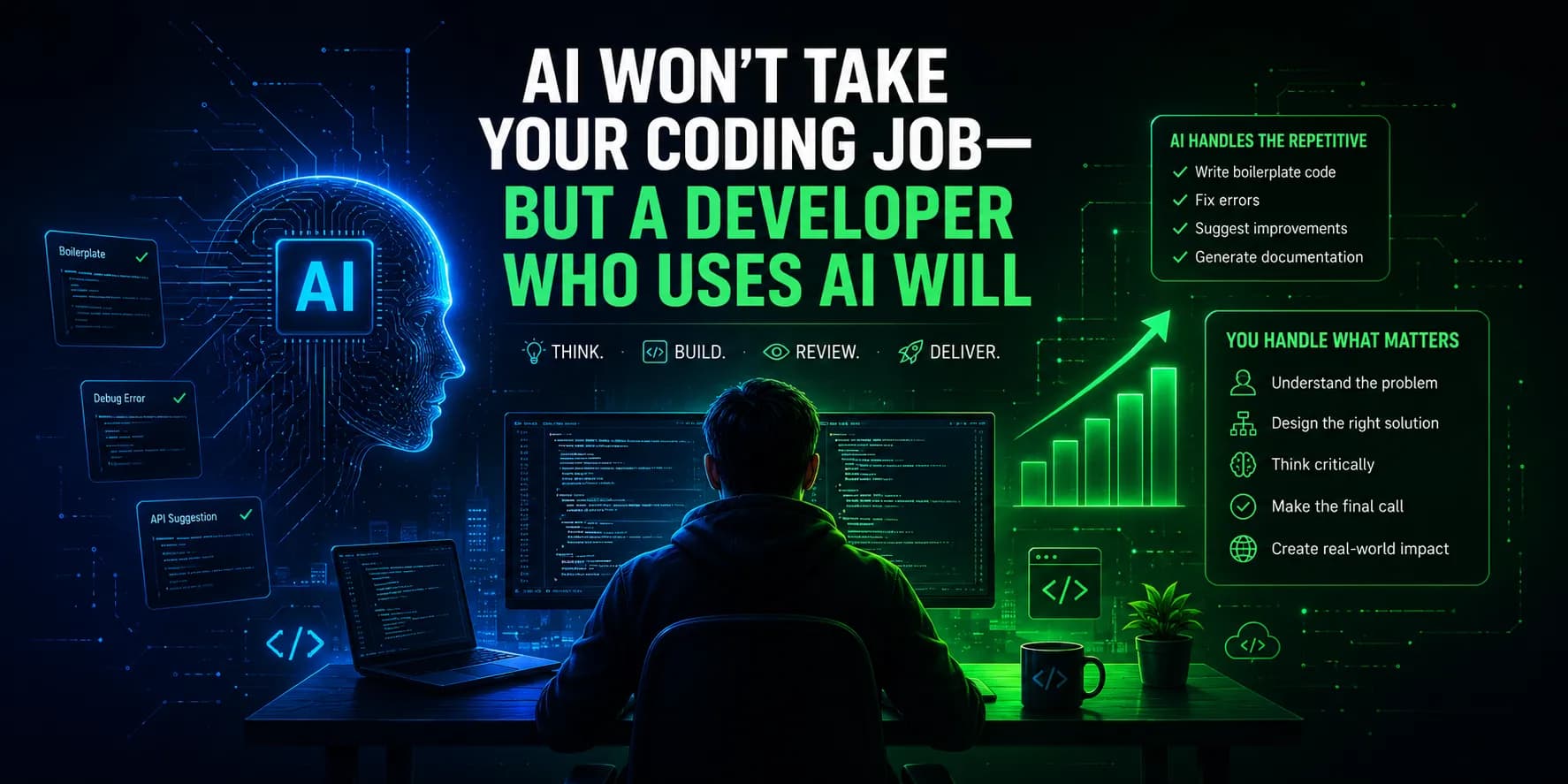
AI has become exceptionally good at supporting developers during implementation. It can suggest code snippets, generate boilerplate code, recommend improvements, and explain unfamiliar libraries. However, it still depends on the developer to provide the right direction. Without understanding the problem, AI cannot produce a reliable solution.
In many ways, AI is similar to a highly capable assistant. It can speed up execution, but it still relies on human decision-making.
Developers Are Becoming Problem Solvers, Not Just Coders
One of the biggest shifts brought by AI is the growing importance of problem-solving skills.
Earlier, technical interviews often focused heavily on writing code from scratch. While coding remains important, companies today increasingly value candidates who can understand business requirements, break down complex problems, communicate effectively, and design practical solutions.
A developer who understands system design, databases, APIs, user experience, and software architecture will always have an advantage over someone who only knows syntax.
AI can generate code, but it cannot fully understand why one business solution is better than another. That responsibility continues to belong to developers.
AI Has Increased Productivity Rather Than Eliminated Jobs
Every major technological advancement has created similar concerns.
When high-level programming languages became popular, many believed assembly programmers would become obsolete. When frameworks like Flutter, React, and Spring Boot simplified development, some predicted fewer software jobs. Instead, these technologies enabled developers to build more applications in less time, creating entirely new opportunities.
AI follows the same pattern.
Instead of replacing developers, it allows teams to deliver products faster. Companies can now experiment with more ideas, automate repetitive work, improve software quality, and reduce development time. As productivity increases, the demand for skilled professionals who can manage larger and more complex systems also grows.
History shows that technology often changes the nature of work rather than eliminating it.
AI and Mobile App Development
As someone interested in mobile application development, I find AI especially exciting.
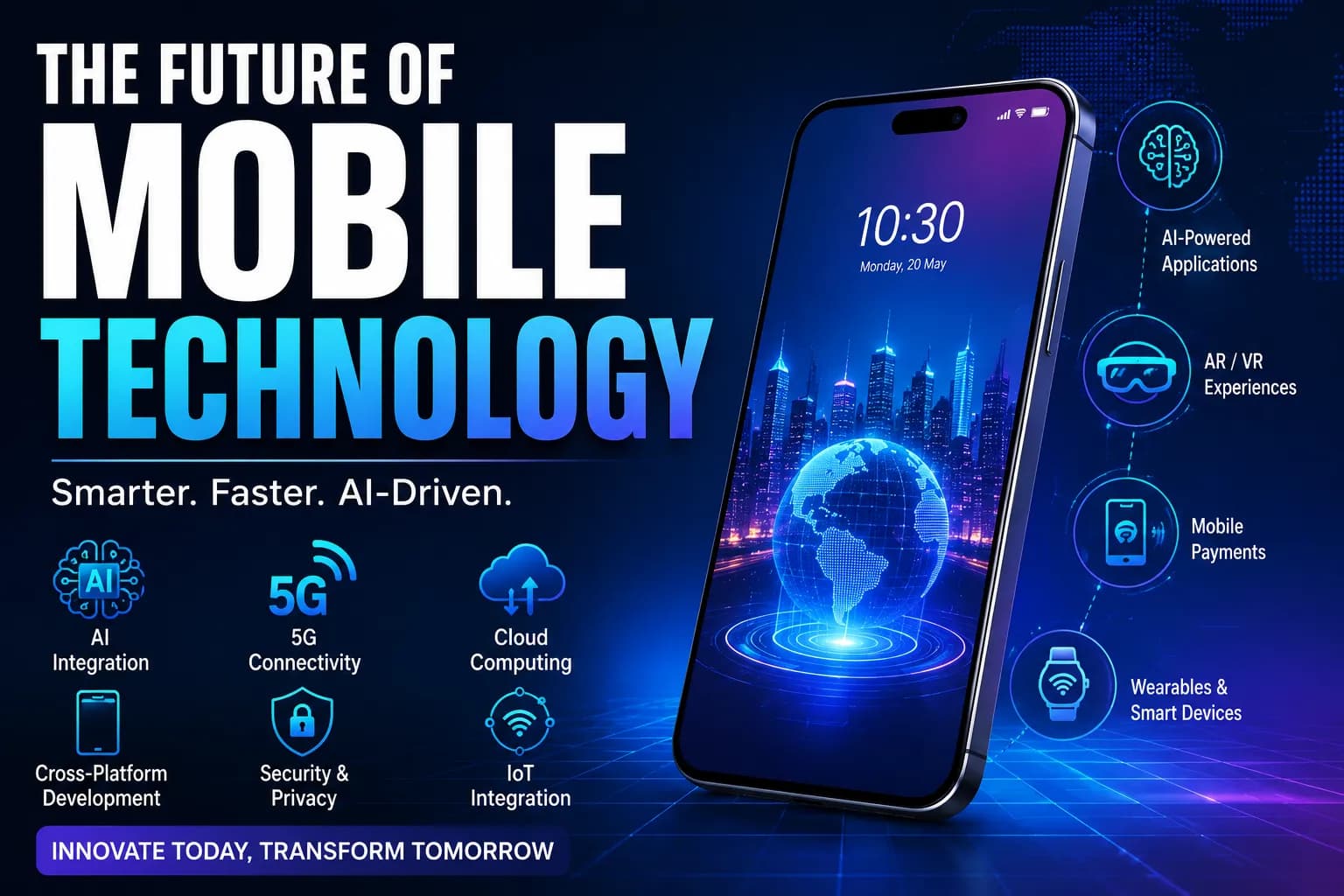
Modern mobile applications are becoming more intelligent than ever before. Features like voice assistants, image recognition, personalized recommendations, language translation, document scanning, and AI chatbots are becoming common expectations rather than premium features.
Frameworks like Flutter make it easier to build applications across multiple platforms, while AI services provide capabilities that were difficult to implement just a few years ago.
The future mobile developer will not only build attractive user interfaces but will also know how to integrate AI into everyday applications to solve real user problems.
What Students Should Learn in the AI Era
For students preparing to enter the software industry, AI should not be viewed as a shortcut. It should be viewed as a learning companion.
While AI can explain concepts and generate examples, students still need to understand programming fundamentals, data structures, algorithms, databases, networking, and software engineering principles. These concepts form the foundation that allows developers to evaluate AI-generated solutions instead of accepting them blindly.
The developers who will succeed are not those who avoid AI or depend entirely on it. They will be the ones who combine technical knowledge with AI tools to build better software more efficiently.
The Human Skills That AI Cannot Replace
Software is ultimately built for people. Understanding users, collaborating with teams, discussing ideas with clients, making design decisions, and taking responsibility for product quality all require human skills.
Creativity, communication, leadership, empathy, and critical thinking remain difficult to automate because they involve context, experience, and judgment.
A successful developer is not simply someone who writes code. It is someone who understands people, identifies problems worth solving, and delivers reliable solutions.
These qualities become even more valuable as AI continues to improve.
Looking Ahead
The conversation should no longer be about whether AI will replace developers. A better question is: How can developers use AI to become better engineers?
Every generation of technology has introduced new tools that changed how software is built. AI is simply the latest step in that journey. Developers who continue learning, adapt to new technologies, and strengthen their fundamentals will continue to find opportunities in this evolving industry.
Rather than replacing software professionals, AI is encouraging them to focus on higher-value work—designing better systems, solving meaningful problems, and creating applications that improve people's lives.
For students entering the industry today, this is not something to fear. It is an opportunity to build a career where human creativity and artificial intelligence work together instead of competing against each other.