Ayurveda Meet Modern Science: A Global Shift Toward Natural, Knowledge-Driven Wellness
Case StudyBy Vikas Garg · 19 Oct 2026
Comments
No comments yet
Be the first to share your thoughts.
More from Vikas Garg

Research
Ayurveda: The Ancient Science of Life and Its Timeless Importance for Every Family
Ayurveda and the Family — A Natural Bond The family is the first unit of society, and it is within the family that health habits are formed, passed down, and sustained. Ayurveda has always been a household science in India. Grandmothers offering turmeric milk to a child with a cold, applying coconut oil to hair, recommending fasting on certain days, or brewing ginger and tulsi tea during seasonal changes — these are all Ayurvedic practices woven seamlessly into daily family life, often without being labelled as such. Benefits of Ayurveda For Children: Ayurveda provides safe, natural approaches to building immunity from an early age. Herbal formulations like Chyawanprash , warm oils for massage ( Abhyanga ), and easily digestible foods strengthen growing bodies without the side effects often associated with pharmaceutical interventions. For Adults: The pressures of modern professional life — stress, irregular eating, sleeplessness, and sedentary habits — are among the biggest health threats today. Ayurveda offers practical tools: adaptogenic herbs like Ashwagandha for stress, Triphala for digestive health, and Brahmi for mental clarity. Practices like oil pulling, tongue scraping, and mindful eating are simple yet profoundly effective daily habits that adults can integrate without disrupting their routines. For Women: Ayurveda places special emphasis on women's health — from menstrual wellness and pregnancy care to post-natal recovery and menopause management. Herbs like Shatavari support hormonal balance and reproductive health naturally. Ayurvedic self-care rituals also nurture mental and emotional well-being, often neglected in the rush of everyday life. For the Elderly: As the body ages, maintaining mobility, cognitive health, and vitality becomes paramount.
#ayurveda#mihaana#naturalproducts
Research
Strategic Manufacturing in the Natural & Ayurvedic Sector: Third-Party vs. Job Work vs. In-House
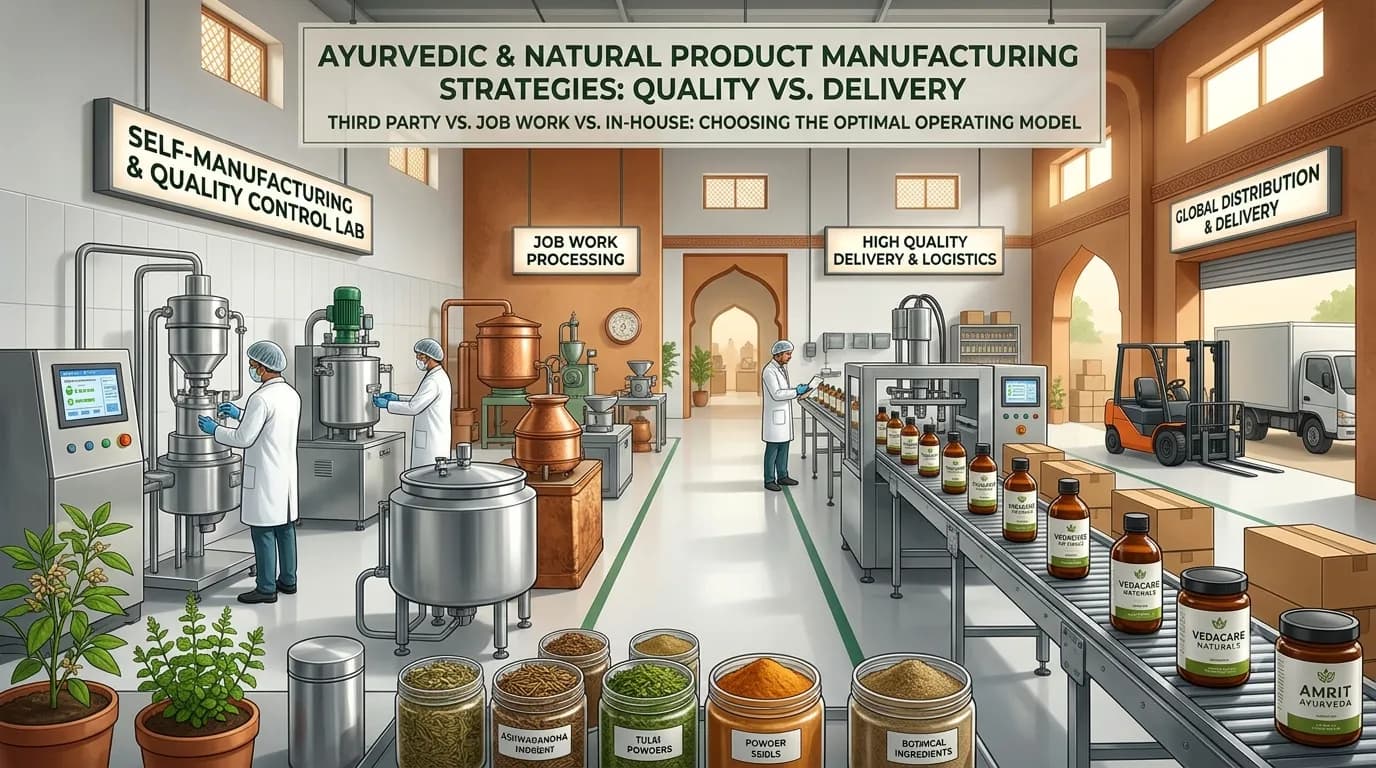
The natural wellness and Ayurvedic markets are at a defining crossroads. As modern consumers demand uncompromising purity, strict clean-label standards, and proven botanical efficacy, brand founders and executive teams face a critical operational dilemma: Which manufacturing architecture best balances product integrity, supply chain reliability, and capital efficiency? Navigating this choice requires examining three distinct operating models: Third-Party Contract Manufacturing , Job Work Processing , and In-House (Self) Manufacturing . 1. Third-Party Contract Manufacturing (The Turnkey Model) Under this model, the brand outsources the entire end-to-end production lifecycle to an established manufacturing partner. How It Works: The partner manages raw material procurement, packaging, formulation, and quality assurance under their own manufacturing licenses and GMP certifications. The Pros: Extremely low upfront capital expenditure (CapEx), rapid speed-to-market, and immediate operational scalability. The Cons: Lower control over ingredient sourcing and pricing transparency. Without rigorous oversight, vendors may substitute lower-grade extracts to protect margins. Best For: Early-stage brands, D2C startups, and agile companies testing new product categories. 2. Job Work Processing (The Hybrid Control Model) Job work represents a strategic middle ground where the brand owner retains absolute control over raw materials and primary formulations, while outsourcing physical processing, blending, and packaging. How It Works: The brand sources, audits, and supplies its own botanical extracts, essential oils, and active ingredients directly to a licensed processing facility. The Pros: Total control over ingredient quality and active standardization (crucial for Ayurveda), combined with lower capital requirements than building a dedicated plant. The Cons: Requires a complex two-step supply chain, active inventory management, and careful coordination of production line schedules. The Alignment: Ideal for premium wellness brands that refuse to compromise on raw ingredient purity but wish to avoid heavy factory overhead. 3. In-House / Self-Manufacturing (The Vertically Integrated Model) In this model, the brand owns, operates, and maintains its own dedicated manufacturing facility, cleanrooms, and analytical testing laboratories. How It Works: Total capital and technical ownership of machinery, real estate, labor, and compliance infrastructure. The Pros: Absolute control over farm-to-lab traceability, immediate batch variable adjustments, maximum intellectual property protection, and optimized gross margins at scale. The Cons: Immense capital outlay, high fixed overhead costs (OpEx), complex regulatory maintenance, and slow initial setup timelines (12 to 18 months). Best For: Well-capitalized, established enterprises with high volume, stable distribution channels, and proprietary manufacturing techniques. Key Pillars for High-Quality Ayurvedic & Natural Products When scaling premium natural formulations, three operational dimensions dictate success: Active Standardization: Natural actives (such as withanolides in Ashwagandha or curcuminoids in Turmeric) vary widely by harvest. In-house and job work models excel here because the brand can mandate specific suppliers and verify active content before processing. Batch Consistency: Variations in aroma, viscosity, and color undermine consumer trust. Owned facilities provide instant turnaround on process tweaks, whereas third-party partners require strict operational SLAs to maintain consistency. Delivery Agility: Meeting retail and D2C demand spikes requires reliable lead times. Turnkey third-party lines offer the fastest restock cycles, while self-manufacturing provides guaranteed priority over production schedules. Strategic Verdict: Which Model Fits Your Brand? Choose Third-Party if your primary goal is capital-efficient market entry, rapid prototyping, and aggressive marketing focus. (Tip: Mandate independent third-party lab testing for heavy metals and active assays before dispatch). Choose Job Work if ingredient purity and active ingredient integrity are central to your brand promise, but you want to avoid factory ownership. (Tip: Station an internal quality assurance auditor on-site during full production runs). Choose In-House if you have achieved massive scale, possess proprietary processing technology, and require complete vertical integration to protect trade secrets and long-term margins. How is your leadership team balancing manufacturing agility and quality control in your current product lineup? Let’s discuss in the comments below!
#USMarkets#FinancialNews#StockMarket