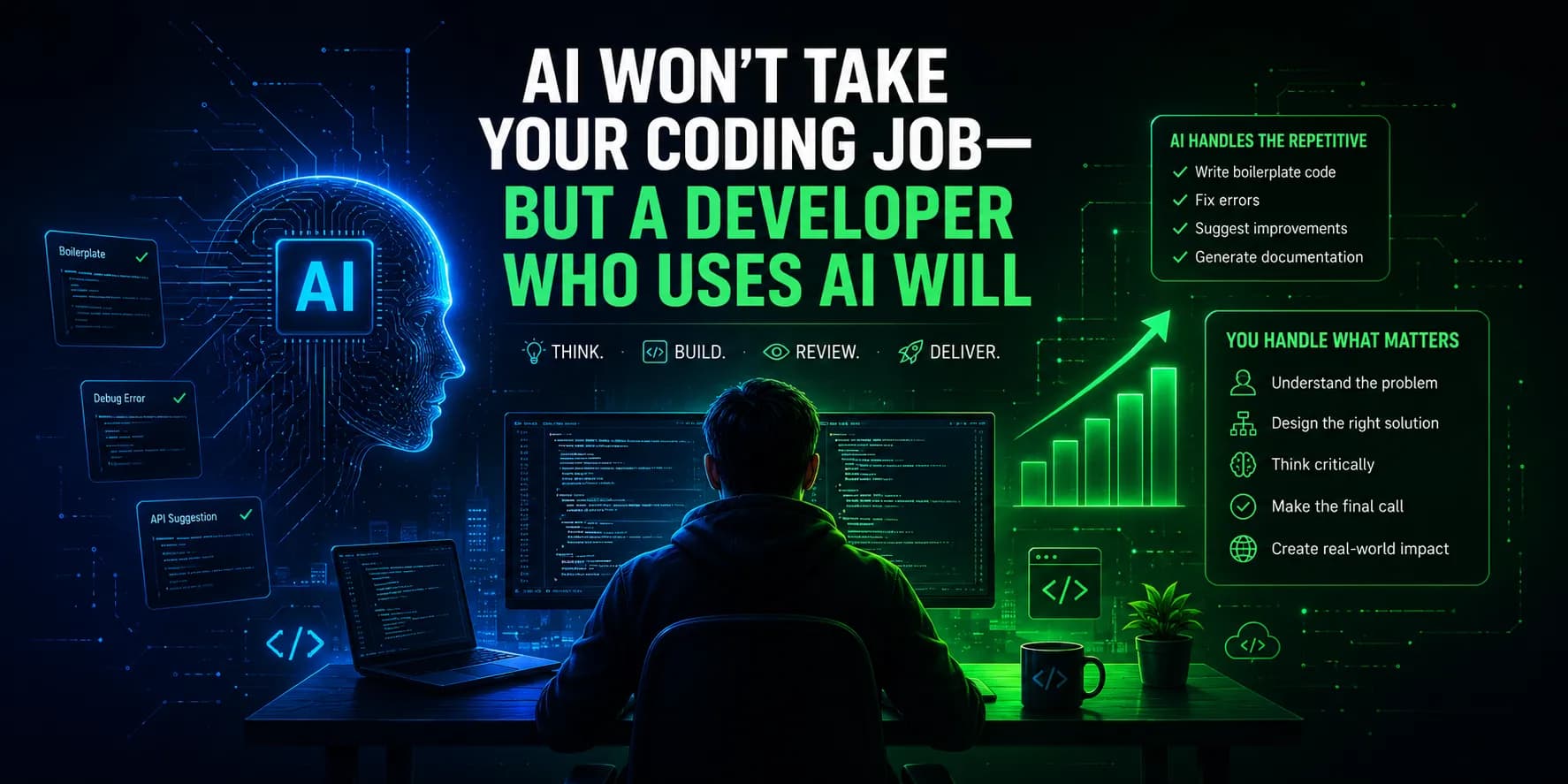
The rapid adoption of generative AI and AI-based coding platforms is changing the way software is developed. Tools such as AI coding assistants can generate boilerplate code, suggest implementations, explain errors, and help developers refactor existing code. However, this does not mean that software engineering is becoming less important. Instead, the expectations from developers are changing.
In the past, a significant amount of development time could be spent writing repetitive code. Today, a developer can use AI to generate an initial implementation of a REST API, database model, or validation layer within minutes. For example, an AI tool can generate an Express or .NET API endpoint based on a requirement. However, the developer still needs to determine whether the API follows appropriate authentication, validation, error-handling, and security practices.
This creates a shift from “How quickly can you write the code?” to “Can you understand the problem and make the right engineering decisions?”
Consider a simple e-commerce application. An AI tool may generate a function for processing an order correctly under normal conditions. But a developer must think about questions such as: What happens if the payment succeeds but the database update fails? Can the same order be processed twice? Is sensitive customer information protected? How will the system behave when thousands of users place orders simultaneously?
These are not simply coding problems. They require an understanding of system design, databases, concurrency, security, scalability, and business requirements.
AI-generated code also needs to be reviewed carefully. Developers cannot assume that code is correct simply because it compiles or passes a basic test. An implementation may contain inefficient database queries, insecure input handling, unnecessary dependencies, or edge cases that the AI did not consider.
For example, an AI assistant might generate a database query that works perfectly with a few hundred records but performs poorly when the database grows to millions of records. An experienced developer should be able to identify the potential bottleneck, examine indexing and query complexity, and improve the design.
Therefore, I believe AI-based coding platforms will increase the value of developers who can reason, review, design, test, and take responsibility for the software they build. AI can significantly reduce the time required to implement an idea, but it does not remove the need to understand that idea.
Organizations will increasingly look for engineers who can combine AI-assisted development with strong fundamentals, critical thinking, system understanding, communication, and responsible decision-making.
In my view, the future is not AI replacing developers, but developers who effectively use AI becoming more productive than developers who do not. The competitive advantage will come from knowing when to use AI, when to question its output, and when human engineering judgment must take over.