AI based coding tools are changing the process of software development. In today's world, the use of artificial intelligence allows the generation of code, analysis of errors, provision of recommendations, creation of test cases, and understanding of unfamiliar code by software engineers. As a result, software development becomes quicker and more productive. At the same time, there is a question of how AI is changing the responsibilities of software engineers.
I am sure that the role of AI will not be replacing software engineers. On the contrary, AI will transform the set of qualities required for software engineers to perform successfully.
Before, programming skills were closely related to being able to code efficiently. However, now that AI coding tools have progressed and have better capabilities, programmers can dedicate less time to coding and more to problem solving, system design, and technical decision-making.
For instance, AI can easily create a REST API in seconds. However, AI may not understand all the specifications of the program, which could lead to some serious bugs. For instance, the endpoint created by AI may work well in a demo version but lack authentication, rate limiting, and input validation, which will be visible only when it actually comes into use and is attacked or overloaded. In order to solve this issue, it takes the knowledge of the whole system and not just the piece of code created by the AI, which it cannot do.
From my perspective as a CSE student, this innovation is an opportunity rather than a threat. When developing software, I noticed that an engineer does not need only to know how to program. It is necessary to consider the user, architecture of the system, database, security, performance, testing, and the integration of other pieces. In this case, AI can help a person with most of the tasks but an engineer needs to understand how everything works as AI cannot be accountable for his decisions.
This reconfiguration will bring some expenses for engineers who use AI. Those engineers who will rely too much on AI from the very beginning of their career will miss a chance to gain real intuition that comes when a person debugs some problem or checks queries that give wrong answers. There is a huge difference between those engineers who check the generated code by AI thanks to the gained technical expertise and those who accept it without any questions due to their inability to do something else.
Another way that AI influences the future of software engineering is its contribution to the growing interdisciplinary nature of software engineering. The engineers would need to become aware of various aspects related to AI, such as the nature of models, quality of data, cloud computing, cybersecurity, responsible use of AI, along with conventional programming knowledge. The mentioned points become particularly pertinent when it comes to designing applications based on AI.
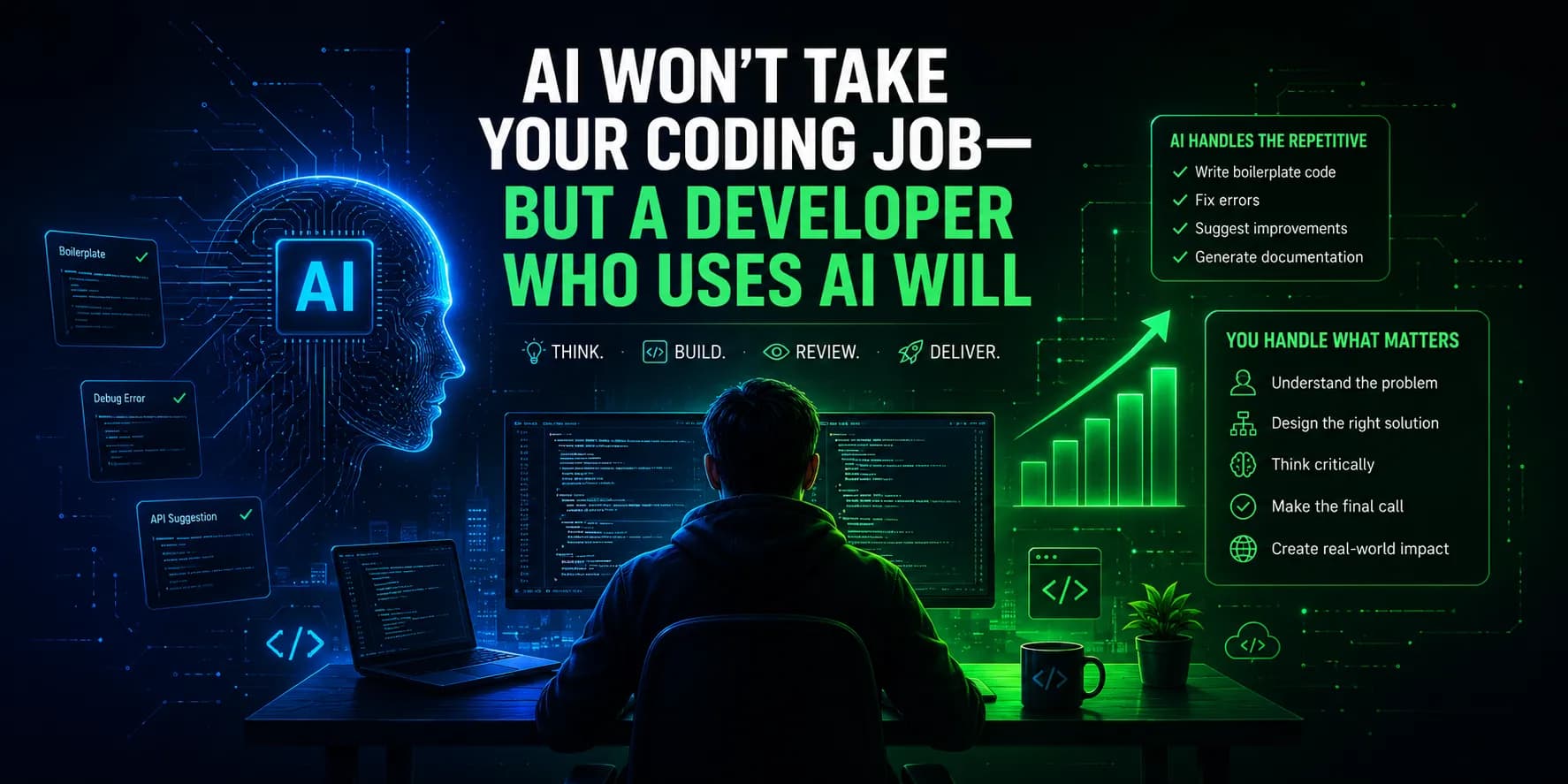
Therefore, the future is not about competition between the engineers and AI, but about responsible use of AI technologies. In other words, engineers would continue to build their strong foundation in programming, problem-solving, database management, algorithms, and system design, but applying AI in order to perform all tasks faster than manually.
Therefore, the future engineer would most likely spend less time writing manual code, but software engineering, making decisions, trade offs, and being accountable would remain just as essential as it was before. AI can write the code. But engineers would still have to make proper decisions.