BodyThe Shift from Digital to Physical AI
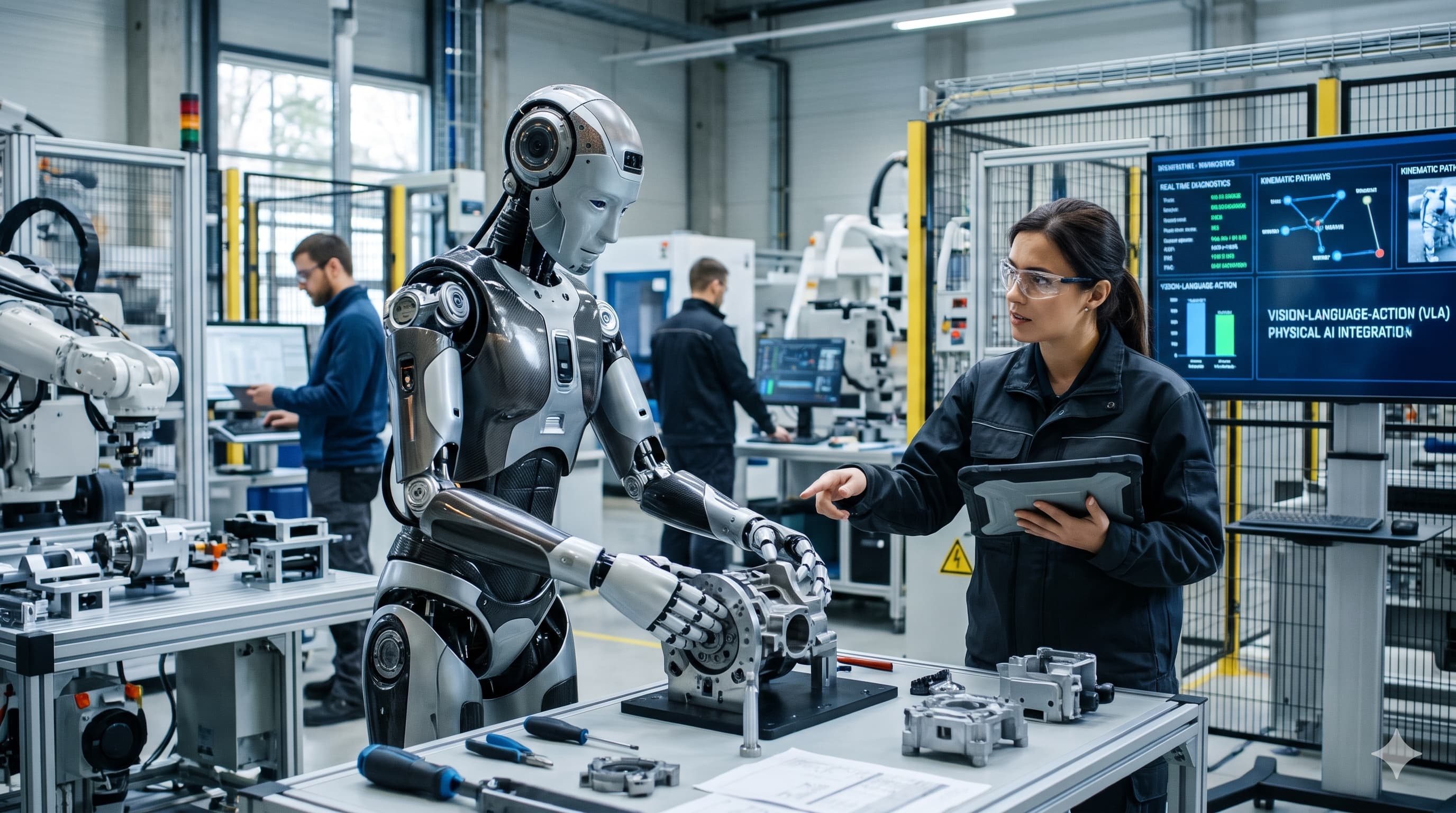
In my previous case study on the rise of humanoid robots, I predicted that AI's next major frontier would move beyond digital workflows and screens. I argued that the true revolution lies in Physical AI—embedding complex Vision-Language-Action (VLA) models into hardware to operate autonomously in our physical spaces. Amazon’s recent strategic pivot confirms exactly this trajectory. The race to bring autonomous agents into our living rooms is officially underway.
Moving Past the Astro Stumble
Amazon’s first major foray into home robotics did not land as intended. Launched in 2021, the $1,450 Astro robot was pitched as a mobile security monitor but remained invite-only, reaching just a few thousand households before its business version was shut down in 2023.
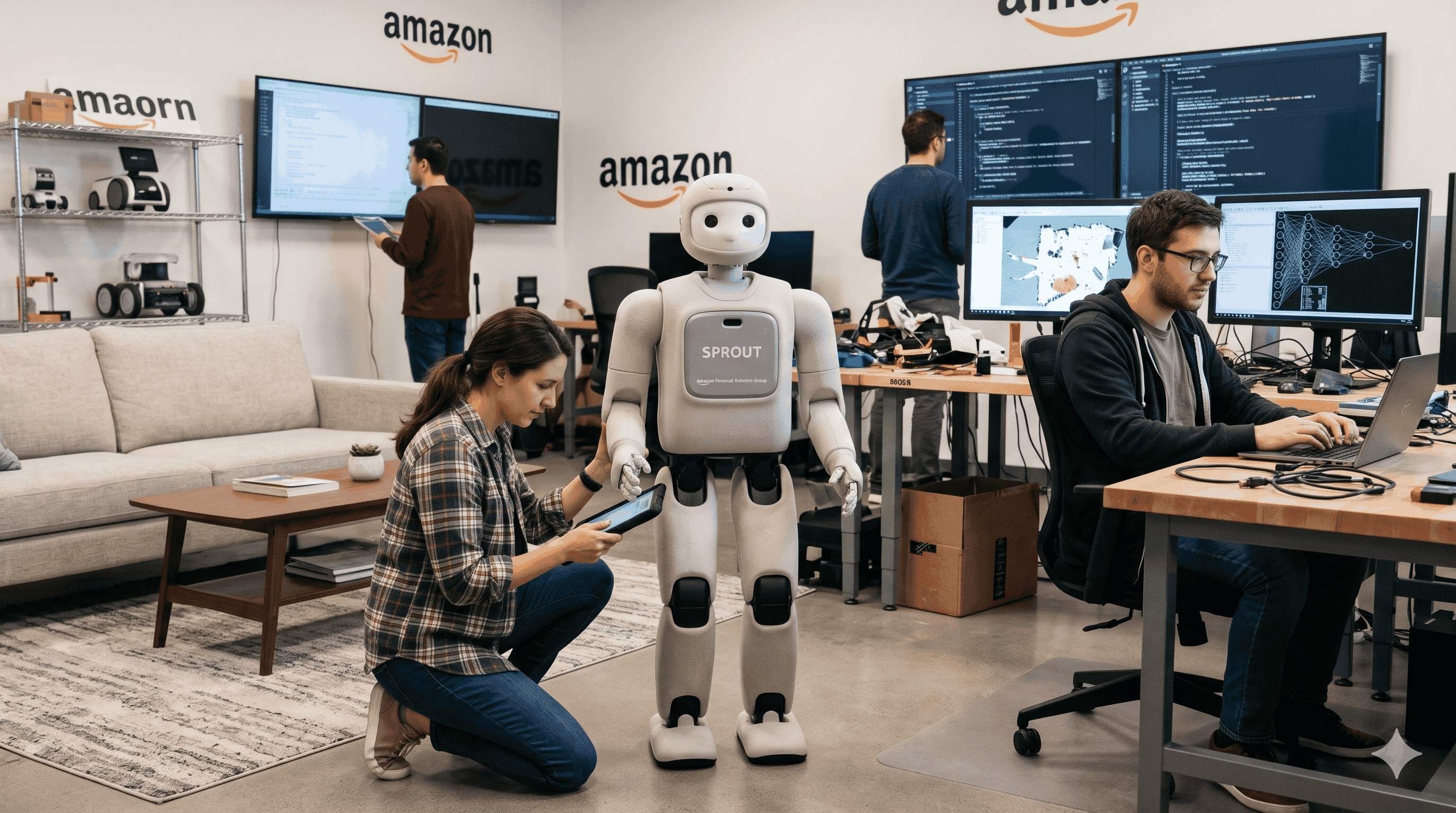
Rather than retreating, Amazon has doubled down. The company recently formed a dedicated "Personal Robotics Group" to develop a completely new, "never-before-seen" autonomous home robot. To accelerate this, Amazon acquired Fauna Robotics in March 2026, absorbing the team behind the 3.5-foot humanoid research platform known as Sprout, and brought in elite robotics talent from MIT.
The Real-World Engineering Challenge
As I learned firsthand while wiring microcontrollers and integrating face recognition for my CareBot/AURIX assistive robot prototype, the leap from a controlled lab to an unpredictable physical space is massive. The core obstacle to commercialization isn't just compute power; it is the non-standardized nature of the home environment.
Operating autonomously around family members means a robot must instantly process and adapt to dynamic variables: children running through hallways, pets sleeping on the floor, scattered toys, and variable lighting. It requires a profound shift from simple navigation to genuine spatial awareness. This is exactly why Big Tech is rapidly acquiring early-stage robotics startups—bringing top talent in-house to solve these unstructured environmental challenges.
The Next Industrial Frontier
The financial stakes justify the engineering hurdles. Barclays forecasts that the global humanoid robot market could scale to roughly $40 billion by 2035. Furthermore, venture capital is aggressively backing this shift, pouring $33.4 billion into robotics and physical AI companies in just the first half of 2026.
We are moving rapidly beyond the novelty of stationary smart speakers and limited-function rolling screens. Amazon's highly capitalized push into personal robotics proves that hardware and VLA models are finally aligning. As predicted, the next great technological platform won't just chat with us—it will walk alongside us.