The Trillion-Parameter Question: Can Brute-Force Silicon Outrun a Tech Blockade?
Will domestic silicon deliver true technological autonomy—or will infrastructure bottlenecks turn national self-reliance into a high-voltage vanity project?
Can China’s semiconductor supply chain actually achieve full self-sufficiency in high-performance computing, or are we just watching multi-patterned 7nm chips pretend to be next-gen accelerators?
How will domestic AI clusters survive the staggering environmental, thermal, and electrical reality of running sprawling, power-hungry, lower-density silicon arrays at scale—without causing regional grid blackouts?
What operational compromises do Chinese tech giants silently accept when ripping out Nvidia’s seamless CUDA software ecosystem to rebuild on unproven domestic software layers?
The Grand Pivot: Replacing Global Fab Supremacy with Domestic Hustle
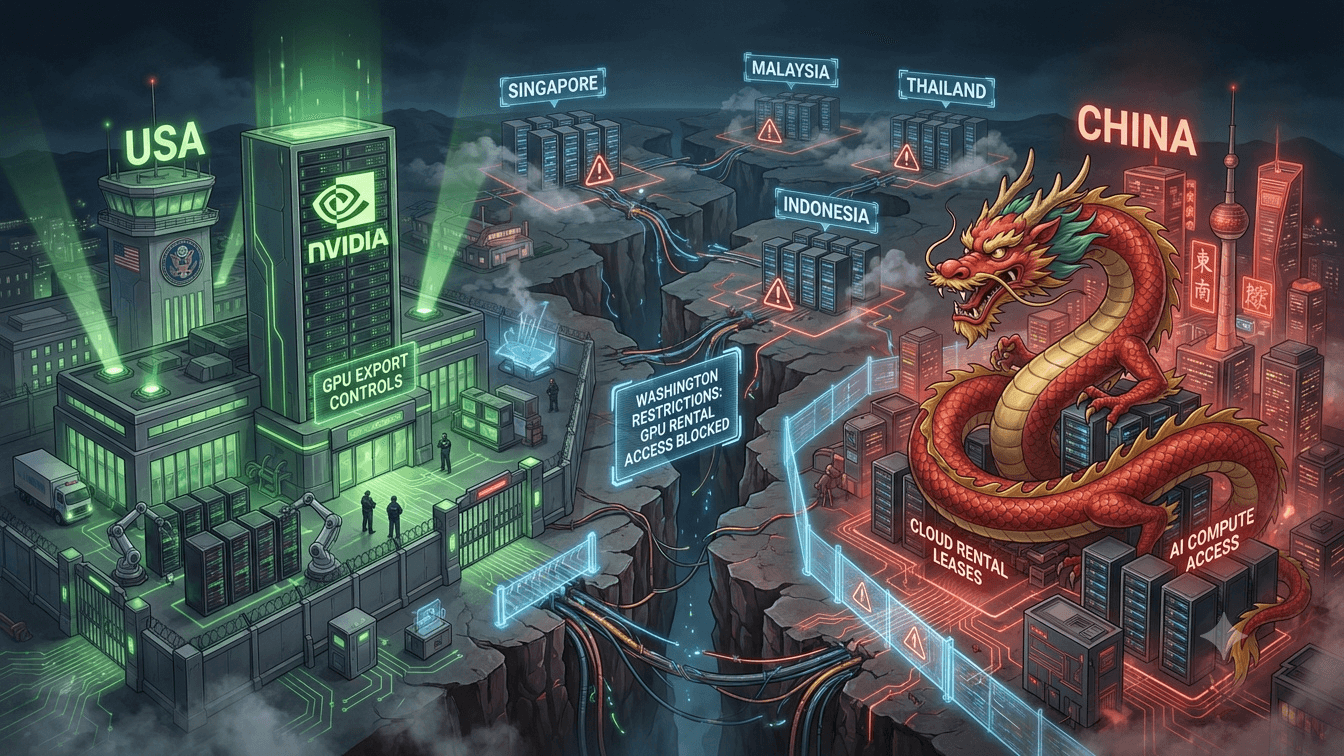
As Washington tightens export controls to shut down everything from physical GPU shipments to offshore cloud rental loopholes, Beijing is staging the ultimate structural pivot. Tech giants, state-backed telecom operators, and research labs are being urged—or rather, instructed—to abandon Western silicon entirely.
The official triumph? In the first half of 2026, shipments of domestic non-GPU accelerators (NPUs and ASICs) reportedly surpassed standard GPUs in mainland China.
Leading this sudden domestic renaissance is Huawei’s Ascend AI platform, flanked by an eager coalition of local players: Cambricon Technology, Alibaba T-Head, Baidu Kunlunxin, and Biren Technology.
The hardware is flowing, the political mandates are clear, and the data centers are packed. But beneath the celebratory headlines, the ultimate test remains: Can domestic engineering make up for missing global supply chains, or is China merely trading its Nvidia dependency for a mountain of operational debt?
The Sustainability Trap: Environmental, Electrical, and Thermal Fallout
Before evaluating silicon benchmarks, we must address the elephant in the server room: the staggering physics of running brute-forced silicon at scale.
Energy Intensity and Power-Grid Strain: Because domestic foundries cannot print transistors with the sub-3nm density of TSMC, domestic chips require significantly larger die surface areas and higher voltage to achieve target processing speeds. Data centers hosting Ascend clusters consume an estimated 40% to 60% more electricity per TFLOP generated compared to Western equivalents. Scaling these clusters to train trillion-parameter models exponentially inflates grid loads, putting regional carbon-neutrality targets at risk and triggering severe industrial energy draws across Western China's data-center hubs.
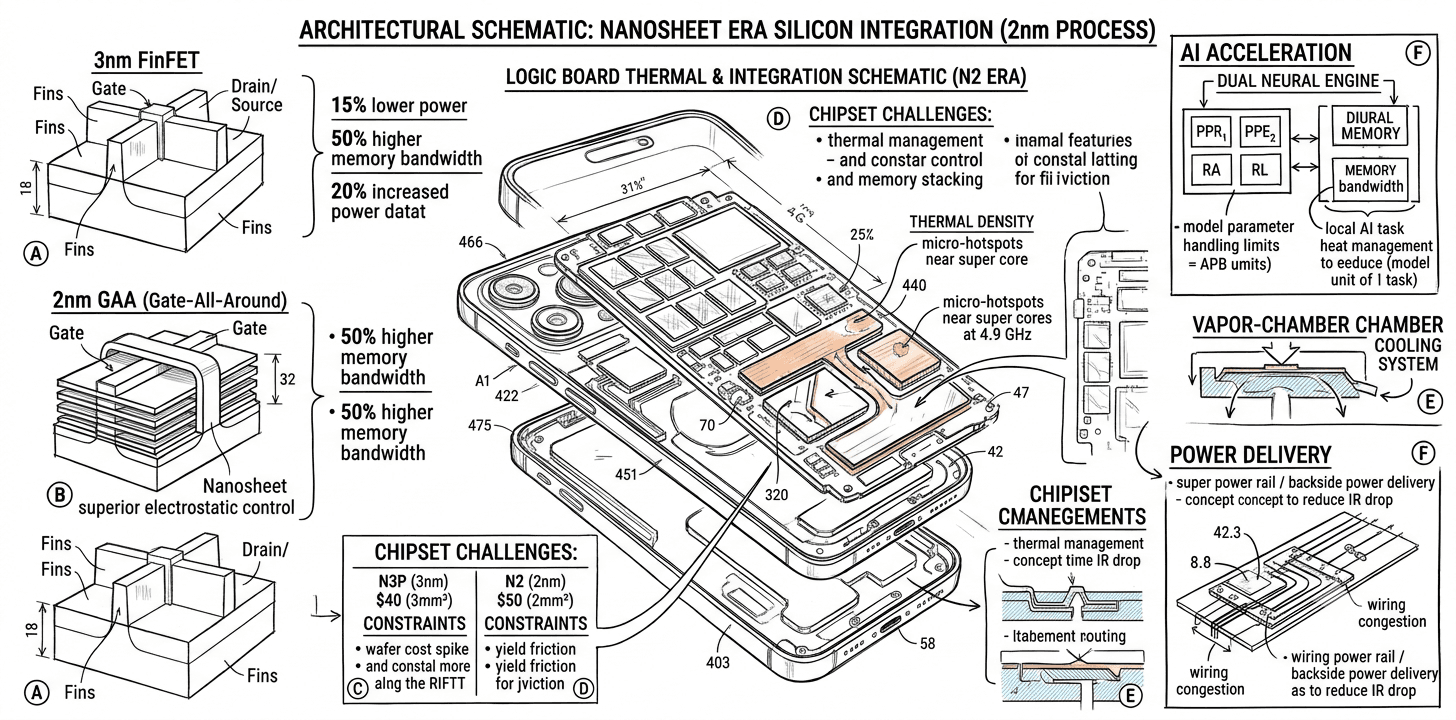
Extreme Thermal Output and Cooling Demands: Pushing multi-patterned 7nm dies to their absolute clock limits produces unprecedented heat. Maintaining these clusters requires specialized direct-to-chip liquid cooling networks and massive heat-exchange units. This drives Power Usage Effectiveness (PUE) metrics up and severely increases regional water consumption for evaporative cooling towers.
The Environmental Toll of Fabrication Scrap: Deprived of Extreme Ultraviolet (EUV) lithography tools, domestic fabs rely on multi-patterning using legacy Deep Ultraviolet (DUV) machines. This complex manufacturing dance drives silicon wafer defect rates to 55%–65%. The resulting e-waste, wasted chemical etchants, and discarded silicon represent a massive environmental tax per functional accelerator produced.
Regulatory Deadlines and Implementation Milestones
The timetable for China's AI hardware transition has shifted from a relaxed multi-year strategy into a high-stakes sprint:
September 18, 2025: Huawei formally releases its multi-year compute roadmap, setting expectations for the rollout of the Ascend 950 generation.
Q1 2026: Volume deployments begin for the Ascend 950PR accelerator, primarily targeted at low-precision inference and model execution.
October 28, 2026: A Huawei Ascend 950 thousand-card supernode goes live in Wuhan, while developers like DeepSeek prepare to pre-train frontier models on the high-density Ascend 950DT platform.
November 19, 2026: The U.S. Bureau of Industry and Security (BIS) enforces new cloud rental restrictions, effectively accelerating domestic migration across Chinese hyper-scalers.
Silicon Architecture: Compensating for Low Density with Super-Clustering
How do Chinese engineers fight back when locked out of the world’s best semiconductor foundries? By treating the entire data center as a single giant chip.
Silicon Compute Realities (Ascend 910C & 950 Series): The Ascend 910C acts as the foundational workhorse for mainland cloud providers, delivering FP16 compute roughly comparable to Nvidia’s legacy A100. The Ascend 950 Series (950PR / 950DT) ups the ante with 1 PFLOPS of dense FP8 compute, utilizing custom precision formats (HiF8) designed to accelerate large language model prefill and decoding phases.
System-Level Scaling via SuperPoD Interconnects: Since single dies lag behind Nvidia’s Blackwell architecture, Huawei clusters thousands of NPUs via near-packaged optical interconnects (NPO) and proprietary high-speed networking. Architectures like the Atlas 950 SuperPoD combine up to 8,192 NPUs into a logical supernode, allowing Chinese tech giants to execute trillion-parameter Mixture-of-Experts (MoE) training runs completely free of Western hardware.
Software Ecosystem Friction (CANN vs. CUDA): Huawei’s heterogeneous software layer, CANN (Compute Architecture for Neural Networks), serves as the primary domestic answer to Nvidia’s CUDA. While CANN has matured with native PyTorch backend integration and day-zero adaptation for open-source stacks like vLLM and DeepSeek toolchains, engineers still face frequent software bugs, compiler errors, and manual kernel rewrites when migrating off CUDA.
Market Metrics: The Financial Footprint of Hardware Localization
Market Share Reversal: During the first half of 2026, Nvidia’s historical stranglehold on mainland Chinese chip shipments slipped to 34% (678,000 units). Huawei surged to 28% (572,000 units), while local competitors Alibaba T-Head (7%), Cambricon (5%), Baidu Kunlunxin (4%), and Hygon (3%) captured the remaining pie.
Production Scaling Targets: Huawei targeted domestic production of 1.5 million Ascend units in 2026 (up 87.5% from 800,000 in 2025). Meanwhile, Cambricon targeted an annual production run of 500,000 AI chips for its flagship Siyuan series.
The Global Compute Disparity: Despite impressive domestic gains, China’s total domestic H100-equivalent compute output still accounts for just ~3.8% of global high-end GPU output, underscoring the massive scale gap that remains between domestic production and total international compute capacity.
Production Bottlenecks: The Manufacturing Wall
No amount of engineering cleverness can completely bypass the physical limits of semiconductor fabrication:
Foundry Lithography Limitations (SMIC Process Nodes): Semiconductor Manufacturing International Corporation (SMIC) fabricates advanced Ascend dies using DUV immersion lithography paired with multi-patterning. Without EUV lithography, functional wafer yields on 7nm-class nodes sit at an estimated 35% to 45%, multiplying unit manufacturing costs and capping total monthly wafer output.
High-Bandwidth Memory (HBM) Sanctions: Modern AI accelerators rely on high-density HBM (HBM3/HBM3e) to eliminate memory transfer bottlenecks. Export controls prohibit global leaders (SK Hynix, Samsung, Micron) from shipping advanced HBM dies to restricted Chinese firms. While domestic initiatives led by ChangXin Memory Technologies (CXMT) are scaling up, domestic thermal dissipation, stack density, and bandwidth limits remain the single biggest bottleneck capping chip-level throughput.
The Non-GPU Competitive Landscape
Huawei (HiSilicon): Ascend 910C / 950 Series — Serves as the national backbone for cloud supernodes and frontier model training.
Cambricon Technology: Siyuan 590 / 690 Series — Targets high-efficiency enterprise cloud inference, computer vision, and commercial AI workloads.
Alibaba T-Head: Zhenyue / Hanguang ASICs — Customized hyperscale hardware built specifically for internal e-commerce and cloud recommendation engines.
Baidu Kunlunxin: Kunlun R300 / R500 — Fully integrated into Baidu’s search engines, autonomous driving platforms, and Ernie model workloads.
Biren Technology: BR100 / BR104 Series — High-performance GPGPU architectures targeted at general-purpose data center clusters.
Sector Impact Analysis
Primary Impacted Sector: Domestic Cloud Providers and AI Developers
Hyperscalers and research labs bear the immediate brunt of the shift. Building foundation models on lower-density silicon requires larger physical data center footprints, bigger power budgets, and constant software tuning to manage node-level failures across sprawling clusters.
Secondary Sector Impact:
Domestic Semiconductor Equipment Manufacturers: Local foundries (SMIC) and domestic toolmakers receive guaranteed state-backed orders and capital injections, accelerating long-term supply-chain localization.
Western Enterprise AI Startups: Benefit from falling global GPU spot rental rates as surplus Nvidia hardware originally intended for Chinese cloud leases floods Western markets.
Strategic Mitigation Plan
For Enterprise AI Developers:
Framework-Agnostic Abstraction: Standardize codebase development on open, portable software layers (like PyTorch and Triton) to decouple model code from CUDA dependencies.
Model Quantization: Apply 4-bit and 8-bit precision techniques to reduce memory bandwidth reliance during inference.
For Hardware Designers & Foundries:
Optical Scale-Out Expansion: Invest heavily in near-packaged optics (NPO) and inter-chip optical buses to link multiple smaller, high-yield dies into larger logical units.
Localized Chiplet Packaging: Accelerate domestic 2.5D/3D interposer packaging initiatives to combine logic and domestic memory chips without relying on overseas advanced packaging lines.