BONC Network : India & Global Business Outlook. Trade Realignments, Monetary Tightening, and Shifting Market Dynamics
Global business and financial markets in mid-November 2026 are navigating a complex intersection of strong domestic growth in India alongside heightened geopolitical risks, trade policy shifts, and valuation pressures abroad. While export momentum and solid macroeconomic fundamentals continue to support India’s economic trajectory, evolving tariff regimes, central bank rate paths, and Middle East tensions require close monitoring by businesses and decision-makers.
1. Global Business & Financial Market Snapshot
Global markets reflect a mix of underlying resilience and sharp pockets of volatility:
AI Valuation Pullback: Equity markets experienced notable pressure tied to AI valuations, with the S&P 500 falling 4.4% and the Nasdaq dropping 5.5%, wiping out approximately $3 trillion in market value.
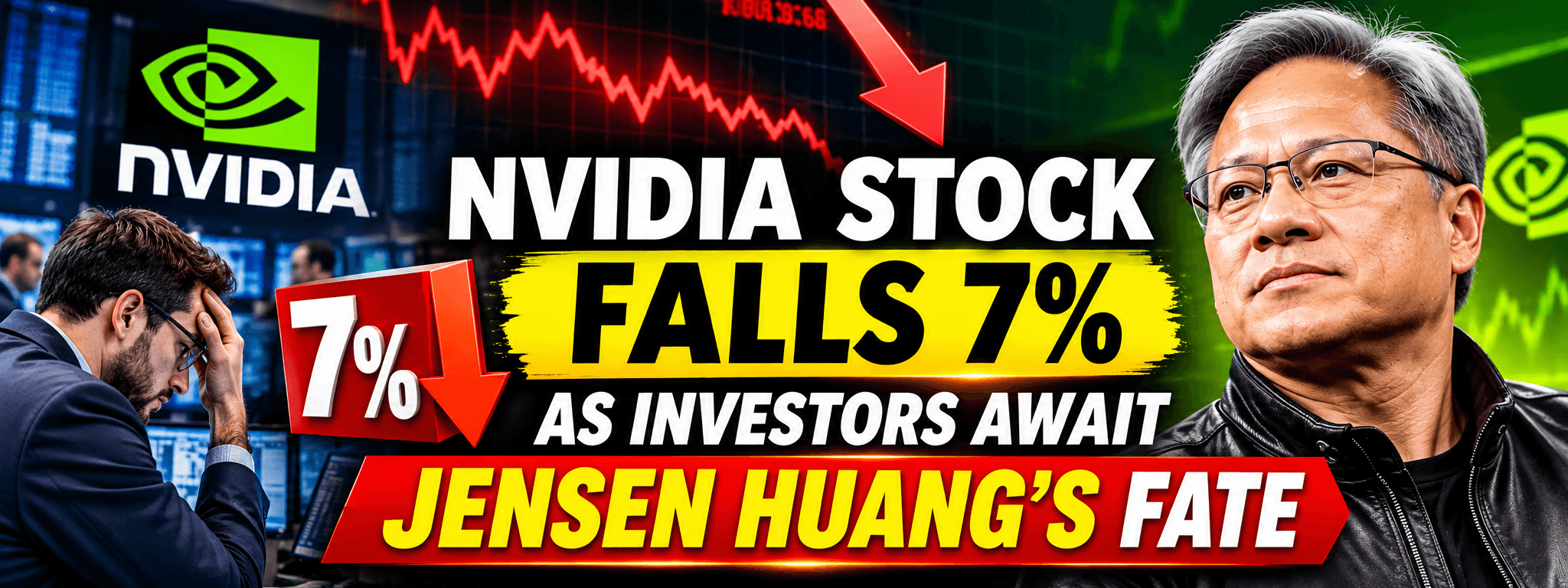
Leadership Transition at Nvidia: The Nvidia board announced Jensen Huang’s resignation, with CFO Colette Kress set to take charge ahead of Q3 results on November 17.
US Politics & Macro Backdrop: Democrats swept Congress in the US midterms, though the AI sell-off weighed on broader sentiment. Meanwhile, US inflation came in hot with CPI rising 0.4% month-over-month (above the 0.3% forecast), keeping Federal Reserve rate hike expectations in focus.
Middle East & Energy Dynamics: Tensions involving Iran and reduced transit through the Strait of Hormuz have kept global oil supply tight, with Brent trading near $59.40.
Indian Market & Banking Indicators: Domestic benchmarks advanced, with the BSE Sensex climbing 510 points to 82,102.85 and the Nifty gaining 147 points to 25,291.10. The Rupee strengthened by 27 paise against the US dollar to 93.92/$. Bank credit growth reached a 30-month high of 19.54% year-on-year alongside 16.86% deposit growth, while FPI flows totaled ₹54,925 crore ($5.8 billion) over a three-week period.
2. India’s Macroeconomic Update: Inflation, Policy, GDP & Trade
Inflation & RBI Monetary Stance
CPI Breaches 6%: India’s October 2026 retail inflation rose to 6.09% (up from 5.54% in September), crossing the RBI’s 6% upper tolerance limit for the first time in two years. Food inflation climbed from 7.74% to 8.94%, with rural CPI at 6.63% and urban CPI at 5.41%, driven by sharp price spikes in items such as onions (+116%) and garlic (+60.74%).
Near-Term Inflation Outlook: Union Bank of India estimates November CPI around 6.3% with an upward bias, ahead of the November print due on December 14.
Calibrated Tightening: Following the RBI’s October 7 move raising the repo rate by 25 bps to 5.50% (with SDF at 2.25% and MSF at 5.75%) and shifting to "calibrated tightening," rate cuts are viewed as off the table in the near term. Ahead of the December 4 policy announcement, economists largely anticipate further tightening—with institutions like ICRA and SBI Research pointing to a 25 bps hike in December, Barclays projecting 25 bps hikes in both December and February toward a 6% repo rate, and other market estimates pointing toward 50–75 bps of additional hikes (a 6%–6.25% terminal rate).
GDP Growth & Trade Performance
Strong Headline Growth: India’s economy expanded 7.8% in Q1 FY27 (with nominal GDP up 10.3% and GFCF up 11.9%), beating Reuters poll (7.1%) and RBI (7%) estimates. Q4 FY26 growth was also revised upward from 7.8% to 8.6%, while the RBI raised its full-year FY27 growth forecast from 6.7% to 7.1% (with Q2 GDP scheduled for November 30). Analysts note a low GDP deflator of 2.33%, suggesting real income growth could trail headline figures.
Exports & Reserves: Total exports in October rose nearly 30% to $89.99 billion, with merchandise exports jumping 45.06% to $49.47 billion and the trade deficit at $20.09 billion. Between April and September, merchandise exports to the US rose 11.1% to $50.81 billion while imports from the US increased 26% to $32.33 billion. Foreign currency assets stood at $591.118 billion for the week ended October 30 (down $2.088 billion).
3. Global Policy Shifts & Trade Watch
India–US Trade Deal: Commerce Minister Piyush Goyal indicated an announcement could come relatively soon as remaining major details are ironed out. Tariff comparisons highlight a 10% rate for India (including assured framing) versus 12.5% for others, alongside discussions around an additional Section 301 tariff commitment on certain goods.
EU CBAM Impact: The EU’s Carbon Border Adjustment Mechanism (CBAM) entered its definitive phase on January 1, 2026, with a benchmark price reference of €75.36 per tonne of CO₂. Initial steel and aluminium exporters could face a 15–22% price cut impact, with no major CBAM exemption secured under India–EU FTA discussions.
US Rate Trajectory: After hiking rates in September for the first time in three years, US policy rates sit in the 3.79%–4.00% range as of October 2026, with CME FedWatch pricing a high probability (79.6%) of another 25 bps hike amid rising yields.
US Section 232 Pharma Tariffs: Following the April 2, 2026 announcement of a 100% Section 232 tariff on patented drugs and the July 21 expansion covering generic medicines, trade exposure remains significant given India’s $25.8 billion in pharmaceutical exports (including $9.7 billion to the US).
US Sanctions on Iran & Gulf Spillovers: US Treasury sanctions targeting Indian firms to curb Iranian oil revenues heighten compliance risks across shipping and oil trade. Meanwhile, regional conflict in the Gulf carries implications for roughly 9 million Indians in the Gulf region, remittance inflows (~40% of roughly $135 billion), Gulf growth (projected at 1.3% in 2026), and tariff-sensitive exports such as leather and glassware.
4. Sector Outlook & Key Items to Watch
Sectors with Growth Potential: Specialty pharmaceuticals and out-licensing, the capital markets ecosystem, and AI / deep-tech startups.
Sectors Facing Pressure: Commodity generic exporters, Gulf-linked sectors, shipping and small oil traders, and consumer-tech startups.
Key Watchpoints Ahead:
The US Commerce Department’s one-year review report on generics (from April 2026).
Further US Treasury / OFAC sanctions actions and US–Iran diplomatic developments.
Gulf growth trends and RBI remittance data.
Upcoming macroeconomic prints (Q2 GDP on November 30, RBI policy on December 4, November CPI on December 14), IPO activity (including Crystal Crop from November 18–20), and weekly startup funding trends ($290.55 million across November 2–7).
5. Key Takeaway for B2B Leaders & Enterprises
For business leaders and enterprises navigating this environment, resilience depends on pairing domestic growth opportunities with disciplined risk management. Companies exposed to cross-border trade, commodities, energy logistics, or interest-rate-sensitive capital should stress-test supply chains, monitor regulatory and tariff developments closely, and build digital visibility and strategic partnerships across resilient markets.