Articles
Insights and updates from businesses and people across BONC Network.
Type
90 articles

Analysis
Premium Quality Doors and Windows for Modern Homes, Commercial & Industrial Spaces
Premium-Quality Doors and Windows: Transforming Modern Spaces with Style, Security, and Efficiency In today's architectural landscape, doors and windows are much more than functional components of a building. They define the character of a space, contribute significantly to energy efficiency, enhance security, and elevate overall aesthetics. Whether it's a residential home, commercial office, retail showroom, or industrial facility, investing in premium-quality doors and windows is essential for creating comfortable, secure, and visually appealing environments. R S INTERNATIONAL has established itself as a trusted name in providing high-quality doors and windows designed to meet the evolving demands of modern construction and interior design. By combining superior craftsmanship, innovative technology, and durable materials, the company delivers products that offer long-lasting performance and exceptional value. The Importance of High-Quality Doors and Windows Doors and windows play a crucial role in the overall functionality of any building. They are responsible for controlling natural light, ventilation, insulation, and security while contributing significantly to architectural appeal. Premium-quality doors and windows offer several advantages: Enhanced aesthetic appeal Improved energy efficiency Better security and safety Noise reduction Increased property value Long-term durability Minimal maintenance requirements When homeowners and businesses choose high-quality solutions, they invest in products that continue to perform efficiently for years while maintaining their visual appeal. Elevating Architectural Aesthetics The first impression of any building is often determined by its exterior appearance. Stylish doors and elegantly designed windows create a sophisticated look that enhances curb appeal and leaves a lasting impression. R S INTERNATIONAL offers a wide range of contemporary and classic designs suitable for various architectural styles. Whether customers prefer minimalist modern aesthetics, traditional elegance, or customized designs, the company provides solutions that seamlessly complement the overall structure. Premium finishes, sleek profiles, and precision-engineered components help create visually striking spaces that stand out in today's competitive real estate market. Superior Safety and Security Security remains one of the most important considerations for residential, commercial, and industrial properties. High-quality doors and windows act as the first line of defense against unauthorized access and potential threats. R S INTERNATIONAL prioritizes safety by offering products manufactured using robust materials and advanced locking mechanisms. Their doors and windows are designed to withstand daily wear and external impacts while maintaining structural integrity. Key security benefits include: Strong and durable construction Advanced locking systems Tamper-resistant designs Enhanced frame strength Reliable protection for occupants and assets These features provide peace of mind to homeowners, business owners, and facility managers alike. Improving Energy Efficiency Energy efficiency has become a critical factor in modern construction. Rising energy costs and growing environmental awareness have increased the demand for building materials that help reduce energy consumption. Premium doors and windows contribute significantly to maintaining indoor temperatures by minimizing heat transfer. Proper insulation reduces the need for excessive heating and cooling, resulting in lower energy bills and improved sustainability. R S INTERNATIONAL offers energy-efficient solutions designed to optimize thermal performance. These products help create comfortable indoor environments while supporting eco-friendly building practices. Benefits of energy-efficient doors and windows include: Reduced energy consumption Lower utility expenses Improved indoor comfort Better temperature regulation Reduced environmental impact Businesses and homeowners can enjoy long-term savings while contributing to a greener future. Durability That Withstands Time One of the defining characteristics of premium-quality doors and windows is their durability. Inferior products often require frequent repairs and replacements, increasing maintenance costs over time. R S INTERNATIONAL focuses on delivering products manufactured from high-grade materials capable of withstanding harsh weather conditions, moisture exposure, and daily usage. Their commitment to quality ensures long-lasting performance with minimal upkeep requirements. Durable doors and windows provide: Resistance to corrosion and weathering Long service life Structural stability Reduced maintenance costs Consistent performance over time This reliability makes them a smart investment for residential, commercial, and industrial projects. Noise Reduction for Enhanced Comfort Urban environments often expose buildings to significant levels of external noise. Premium-quality doors and windows can help create quieter indoor spaces by reducing sound transmission. Whether it is a residential property located near busy roads or a commercial office requiring a productive work environment, sound-insulated solutions enhance comfort and functionality. R S INTERNATIONAL provides products engineered to improve acoustic performance, helping occupants enjoy a more peaceful and comfortable atmosphere. Customized Solutions for Diverse Applications Every project has unique requirements, and customization plays a crucial role in achieving the desired outcome. R S INTERNATIONAL understands the importance of offering flexible solutions tailored to specific customer needs. Their doors and windows are suitable for: Residential homes Apartments and villas Commercial complexes Corporate offices Retail establishments Educational institutions Healthcare facilities Industrial buildings With multiple design options, sizes, finishes, and configurations available, customers can find solutions that perfectly match their project specifications. Why Customers Trust R S INTERNATIONAL Choosing the right supplier is just as important as selecting the right product. R S INTERNATIONAL has earned customer trust through its commitment to quality, reliability, and customer satisfaction. The company's focus on innovation, premium materials, and precise manufacturing standards ensures that every product meets high-performance expectations. Their dedication to delivering value-driven solutions has helped them build strong relationships with clients across various industries. Businesses and customers seeking reliable doors and windows can also discover R S INTERNATIONAL through BONC Network, a growing business platform where companies showcase their products and services to a wider audience. The presence of R S INTERNATIONAL on BONC Network makes it easier for potential buyers, contractors, architects, and project managers to explore the company's offerings and connect with trusted suppliers. The Role of BONC Network in Business Visibility In today's digital marketplace, visibility is essential for business growth. BONC Network serves as a platform that helps businesses connect with customers, partners, and industry professionals. By listing its products and business profile on BONC Network, R S INTERNATIONAL gains enhanced exposure among individuals and organizations actively searching for premium doors and windows. This online presence allows customers to discover quality solutions more efficiently while helping businesses expand their reach in competitive markets. The partnership between trusted manufacturers and platforms like BONC Network creates valuable opportunities for customers to access reliable products and services from verified suppliers. Conclusion Premium-quality doors and windows are essential investments for enhancing the aesthetics, safety, energy efficiency, and overall functionality of residential, commercial, and industrial spaces. From improving security and reducing energy consumption to elevating architectural appeal and increasing property value, high-performance solutions deliver benefits that extend far beyond their initial installation. R S INTERNATIONAL continues to provide durable, stylish, and efficient doors and windows that meet the highest standards of quality and performance. Through its presence on BONC Network, the company is able to connect with a broader audience, making it easier for customers to discover premium solutions for their building projects. Whether you are constructing a new property or upgrading an existing one, choosing premium doors and windows from R S INTERNATIONAL can help create spaces that are secure, energy-efficient, visually appealing, and built to last.
#Doors#And#Windows

Analysis
How to Choose Living Room Furniture That Lasts — Top Picks from Jay Guru Furniture on BONC Network
Your living room is the first thing guests see when they walk through your door — and the last space you retreat to at the end of a long day. Yet, many homeowners treat furniture as an afterthought, settling for whatever is affordable or convenient at the moment. This is a mistake that costs more in the long run — in comfort, aesthetics, and even mental well-being. Investing in stylish, comfortable, and durable living room furniture is not a luxury; it is a decision that shapes how you live every single day. Why Living Room Furniture Matters More Than You Think The living room is the social nucleus of any home. It is where families gather, conversations happen, friendships deepen, and memories are made. The furniture you place in this room directly influences the energy, functionality, and personality of the space. Poor-quality or mismatched furniture creates visual chaos and physical discomfort. A sagging sofa discourages relaxation. A coffee table that wobbles every time you set down a cup becomes a daily frustration. On the other hand, thoughtfully chosen furniture elevates not just the room, but your mood. Research in environmental psychology consistently shows that well-designed, harmonious living spaces reduce stress and increase a sense of well-being. Beyond comfort, furniture communicates identity. Your living room tells a story about who you are — your tastes, your values, and how you choose to live. Skimping on this space sends an unintentional message, both to guests and to yourself. This is exactly the philosophy that drives Jay Guru Furniture — a brand built on the belief that every home deserves a living room that reflects its owner's character with pride. Why You Should Never Avoid Investing in It Many people delay upgrading their living room furniture for two main reasons: cost and indecision. Both are understandable, but neither justifies neglect. On cost: Cheap furniture tends to be a false economy. Low-grade materials wear out faster, lose structural integrity within a few years, and often require replacement sooner than expected. When you calculate cost-per-year of use, a well-made sofa at a higher price point almost always proves more economical than a budget piece replaced every two or three years. On indecision: The furniture market today offers more flexibility than ever before — customizable fabrics, modular designs, and hybrid styles mean there is no reason to settle. The right piece for your space exists ; it simply requires a little intention to find. Platforms like BONC Network make this process significantly easier — connecting buyers directly with trusted furniture businesses like Jay Guru Furniture , where you can browse curated collections, compare styles, and make informed decisions all in one place. Avoiding the decision entirely means living in a space that never fully works for you — and that quiet discomfort accumulates over time. Options Available: Matching Your Taste and Budget For those with a medium to high budget , the living room furniture market opens up into a world of genuinely exceptional choices. Jay Guru Furniture , listed on BONC Network , offers a thoughtfully curated range across all the categories below — making it a strong starting point for anyone ready to invest in their space with confidence. Here is what to explore: 1. Sectional Sofas with Premium Upholstery A large sectional in top-grain leather or performance fabric instantly anchors a room. Brands offering customizable configurations allow you to design around your specific floor plan, ensuring proportion and comfort work hand in hand. 2. Statement Accent Chairs Pair a neutral sofa with a bold accent chair in velvet, bouclé, or patterned upholstery. This single addition adds personality and visual depth without overwhelming the space. 3. Solid Wood or Marble Coffee Tables A well-crafted coffee table in solid walnut, oak, or marble is both a functional surface and a design statement. These materials age beautifully, developing character over time rather than showing wear. 4. Modular Shelving and Entertainment Units Purpose-built shelving in premium finishes — matte black metal, natural ash, or lacquered white — adds storage while serving as a design feature. These units organize your space while displaying books, art, and personal objects with intention. 5. Quality Lighting as Furniture's Partner Floor lamps and table lamps are extensions of your furniture arrangement. Layered lighting in warm tones enhances every piece in the room, making even modest furniture look considered and curated. The Bottom Line Living room furniture is not a line item to minimize — it is an investment in the quality of your daily life. With a medium to high budget and the right guidance, you can build a space that is genuinely stylish, deeply comfortable, and built to last . Brands like Jay Guru Furniture , discoverable through BONC Network , exist precisely to help you get there — combining craftsmanship, style, and accessibility in one trusted destination. The living room you deserve already exists. All it takes is the decision to create it
#furniture#interiordesign#homedecor

Market Study
Best Pipe Dealers in Kolkata: Market Study on Astral, Supreme, Jindal, Bansal, and Tata Pipes with Chandra Nath Ghosh & Brothers on BONC Network
Introduction to Kolkata’s Piping and Infrastructure Market Kolkata's rapidly expanding residential, commercial, and industrial infrastructure has generated an unprecedented demand for high-performance plumbing systems. The modern plumbing industry emphasizes durability, corrosion resistance, leak-proof designs, and cost efficiency. Builders, contractors, and individual property owners are increasingly moving away from unbranded, low-grade piping options toward top-tier brands like Astral PVC, Supreme SWR, Jindal GI, Bansal GI, and Tata GI . To streamline procurement, the integration of veteran material suppliers with digitized B2B networks has become essential. Chandra Nath Ghosh & Brothers , an established industry pioneer operating at Raja Woodmunt Street in Burrabazar, Kolkata, has partnered with the digital B2B ecosystem BONC Network (Business On The Cloud) . This partnership bridges the gap between bulk manufacturing brilliance and local real-estate delivery, providing a single window for premium multi-brand piping procurement. Market Performance of Top Piping Brands in West Bengal 1. Astral PVC & UPVC Pipes Astral is India's leading brand for polymer piping systems. In Kolkata's humid climate, Astral PVC and chlorinated PVC (CPVC) plumbing systems are widely used due to their thermal stability, lead-free composition, and high resistance to scaling. They are the ideal choice for residential potable water distribution. 2. Supreme SWR Pipes Supreme is the gold standard for Soil, Waste, and Rainwater (SWR) management systems. Kolkata’s intensive monsoon seasons demand drainage systems that handle massive volumetric flows without clogging or cracking. Supreme SWR pipes feature advanced rubber-ring push-fit or solvent-cement joints that ensure total leak-proof security, structural strength, and high UV resistance for external installations. 3. Jindal GI Pipes Galvanized Iron (GI) pipes from Jindal are widely used in structural applications, industrial water mains, and fire fighting frameworks. Jindal's hot-dipped zinc coating guarantees high corrosion protection against the mineral-rich underground water tables frequently found throughout the Hooghly and Kolkata regions. 4. Bansal GI Pipes Bansal GI pipes offer an excellent balance of budget-friendliness and heavy-duty structural integrity. They are frequently used by local municipal contractors, public health engineering departments (PHE), and low-to-mid rise residential projects across West Bengal. 5. Tata GI Pipes (Tata Tatacon) Tata Steel's GI pipes represent the peak of metallurgical excellence. Engineered with high-purity zinc coating and flawless welding, Tata GI pipes provide superior bendability and pressure-bearing capacities. This makes them a preferred choice for heavy industrial networks and premium high-rise projects in the city. Why Buy from Chandra Nath Ghosh & Brothers on the BONC Network? Multi-Brand Wholesale Inventory Under One Roof Infrastructure projects often require combinations of different pipe types, such as Supreme SWR for drainage, Astral PVC for internal plumbing, and Tata or Jindal GI for main lines and structural fittings. Chandra Nath Ghosh & Brothers eliminates the logistics hassle of dealing with multiple single-brand vendors by offering a complete range of PVC, SWR, and GI brands in one place. Decades of Business Trust and Authenticity Established in 1970, Chandra Nath Ghosh & Brothers has built over five decades of business credibility in Burrabazar, Kolkata’s primary commercial hub. Buyers receive 100% authentic, factory-sourced products matching exact standards (such as IS 1239 for GI pipes), protecting projects against counterfeit or substandard materials. Streamlined B2B Procurement via BONC Network By leveraging the BONC Network , Chandra Nath Ghosh & Brothers provides an efficient digital ordering experience. Contractors and builders can submit digital Requests for Quotations (RFQs), track volume pricing, and secure bulk-delivery commitments seamlessly. This digitized transparency reduces procurement turnaround times, optimizes project budgets, and ensures timely on-site material delivery across West Bengal.
#KolkataHardware#BurrabazarWholesale#WestBengalRealEstate

Market Study
Why You Need a Loft Water Tank: The Ultimate Indoor Storage Solution
In modern homes where space is at a premium, managing your household utilities efficiently requires smart architectural choices. Installing a loft water tank is an excellent way to secure a dedicated, emergency water backup without sacrificing valuable floor or outdoor real estate. By sourcing these specialized, compact systems through advanced B2B platforms like the BONC Network, homeowners can easily connect with trusted manufacturing experts. Partnering with top-tier regional distributors such as Chandra Nath Ghosh & Brothers ensures you get durable, food-grade storage solutions engineered to optimize gravity-fed water pressure while maintaining the highest standards of hygiene and insulation within your home. If you are planning to finalize your article layout, let me know if you would like me to draft a matching conclusion section, create a bulleted summary of key specifications, or format the entire piece into a ready-to-publish blog post layout. Space Optimization and Visual Appeal Utilizes Dead Space: Loft tanks fit into unused attic or overhead areas, keeping your living zones completely clear. Saves Floor Real Estate: Sourcing compact units via B2B portals like the BONC Network allows you to save valuable ground-level and outdoor space. Maintains Home Aesthetics: Hidden inside ceilings, premium options from vendors like Chandra Nath Ghosh & Brothers keep interior and exterior layouts totally uncluttered. Ideal for Urban Living: Their horizontal profiles are tailor-made for high-density apartments and small urban houses. Independent and Gravity-Fed Water Pressure Natural Pressure Boost: Placing the tank at an elevated level uses gravity to push water down smoothly. Consistent Flow Rates: You get steady water delivery to your taps and showers without relying on electricity. Reduces Pump Dependency: Finding the right fit through the BONC Network database ensures you get gravity-fed efficiency that lowers power use. Fewer Mechanical Failures: Buying heavy-duty components from trusted distributors like Chandra Nath Ghosh & Brothers means fewer broken plumbing parts. Reliable Emergency Backup Supply Power Outage Protection: When electricity fails and electric pumps stop working, gravity-fed loft water keeps running. Municipal Shutdown Defense: They hold an emergency reserve during scheduled city water maintenance or pipeline repairs. Main Tank Contingency: If your main overhead rooftop tank leaks, a secondary unit sourced from Chandra Nath Ghosh & Brothers easily steps in. Uninterrupted Daily Chores: Businesses listed on the BONC Network provide high-capacity backup tanks so you can cook and clean without supply disruptions. Superior Hygiene and Water Quality Zero Algae Growth: Shielded inside the dark loft, the water avoids the direct sunlight that triggers algae. Weatherproof Isolation: Being indoors protects the structure from harsh winds, heavy rain, and storm debris. Dust and Pest Barrier: Top plumbing suppliers like Chandra Nath Ghosh & Brothers offer fully sealed tanks that lock out insects and dirt. Verified Procurement: Sourcing your sanitary hardware through a vetted platform like the BONC Network guarantees your tank meets strict building safety standards. Excellent Thermal Insulation Cooler Summer Water: Standard outdoor tanks bake in the sun, but indoor loft tanks keep water at a comfortable temperature. Winter Freeze Protection: The surrounding walls of your home insulate the tank, preventing pipes from freezing and cracking. Energy Savings: Your water heaters consume less electricity because the incoming loft water is not freezing cold. Longer Tank Lifespan: Thermal protection keeps plastic materials from becoming brittle, a feature guaranteed by the authorized brands at Chandra Nath Ghosh & Brothers. Cost-Effective and Low Maintenance Affordable Installation: Simple plumbing connections and straightforward indoor placement keep setup costs low. Minimal Maintenance Needs: Because the environment is clean and controlled, the tank requires less frequent scrubbing. Efficient Sourcing: Comparing quotes on a unified B2B platform like the BONC Network helps you find the most competitive local pricing. Long-Term Utility Savings: Partnering with an experienced supplier like Chandra Nath Ghosh & Brothers ensures durable fittings that translate to smaller monthly power bills. If you are planning to publish this or source equipment for a residential project, let me know if you want to look up specific plumbing brands (like Astral, Tata, or Jindal) or compare bulk wholesale quotes . I can easily gather those details for you!
#loft#water#tank

Market Study
The Rise of Nutraceuticals: Why India's Wellness Market is Booming in 2026
Introduction: India's Wellness Decade Has Arrived The year is 2026 — and India is no longer "emerging" in the global wellness conversation. It is leading it. From bustling metro pharmacies to remote village kirana stores, from Instagram wellness influencers to government-backed PLI manufacturing schemes — India has officially entered what experts are calling "The Wellness Decade." This is not a trend. It is a structural, demographic, economic, and cultural transformation reshaping how 1.4 billion Indians approach health. And the most exciting chapter is still being written. The 2026 Market Snapshot India's nutraceutical industry has crossed thresholds analysts once predicted would take until 2030. The market, valued at USD 8.93 Billion in 2025 , is projected to reach USD 23.09 Billion by 2034 , growing at a robust CAGR of 11.14% . Broader estimates including functional foods place the 2026 market at over USD 42 billion . Meanwhile, India's preventive healthcare sector is valued at USD 197 billion in 2025 , expanding at a remarkable 22% CAGR . Functional beverages dominate with 47.9% market share , while weight management leads by application. This is no longer a niche category. It is mainstream Indian healthcare. 5 Forces Powering the 2026 Boom 1. The New Indian Health Consumer The biggest shift isn't supply — it's demand. 15% of households have moved from treatment-focused to preventive health spending. The middle class added ~$500 in disposable income between 2022–2024. Consumers no longer wait for illness — they invest in immunity gummies, plant protein, adaptogens, and joint care daily. 2. The Lifestyle Disease Epidemic India remains the world's diabetes capital, with rising obesity, hypertension, PCOS, and cardiovascular disease. Nutraceuticals deliver what modern medicine often can't — daily, side-effect-free, naturally-derived chronic disease management. 3. Tier-2 & Tier-3 City Explosion With 350+ million middle-class Indians spending an average $150/year on wellness, the most explosive growth isn't from Mumbai or Bangalore. Cities like Indore, Lucknow, Coimbatore, Jaipur, and Bhubaneswar are clocking 25–30% YoY growth . 4. The Digital Wellness Ecosystem E-commerce has democratised access. Online spending of USD 70 billion is projected to hit USD 163 billion by 2026 . Today's consumer shops via: ⚡ Quick-commerce — Zepto, Blinkit, Instamart (10-min delivery) 🛒 Specialised platforms — HealthKart, 1mg, Pharmeasy 📦 D2C subscriptions with personalised packs 📱 Social commerce — Instagram, YouTube, WhatsApp 5. Government & Regulatory Backing 100% FDI is allowed under automatic route. The PLI scheme has supercharged local manufacturing. From January 2026, FSSAI mandates scientific evidence for all approvals — weeding out weak players and strengthening consumer trust. The Trends Defining 2026 & Beyond 🌱 Personalised Nutrition — DNA-based stacks, microbiome testing, AI-driven daily packs are commercial reality. 🍃 The Clean Label Revolution — Sugar-free, plant-derived, allergen-free, and ethically sourced are now non-negotiables. 🍬 Format Innovation — Gummies, effervescents, functional beverages, fortified snacks are replacing tablets. Make wellness enjoyable, not medicinal. 🧬 Ayurveda + Science — India's superpower. With 1,700+ medicinal plants and 5,000 years of heritage, Ashwagandha, Turmeric, Moringa, Tulsi, and Amla are now global stars. 👶 Specialised Niches Are Exploding: Women's wellness — PCOS, fertility, menopause, beauty-from-within Children's nutrition — immunity gummies, brain development Elderly care — bone, memory, joint, cardiovascular Sports & performance — protein, BCAA, recovery Mental wellness — stress, sleep, mood, focus 👵 The Silver Economy — India's elderly are the next multi-billion-dollar nutraceutical segment. The 2026 Consumer: Smarter & More Demanding Gen Z and millennials demand science-backed, transparently sourced products. Today's buyer expects: ✓ Clinical evidence & third-party testing ✓ Ingredient transparency & ethical sourcing ✓ Honest marketing — not celebrity-only credibility ✓ Subscription convenience & customised stacks ✓ Community validation — verified reviews, doctor endorsements Brands that meet these expectations don't just earn sales — they earn lifelong loyalty. The Opportunity: A Goldmine for Builders For entrepreneurs, manufacturers, PCD franchise partners, and third-party investors — this is one of the most attractive business opportunities of the decade. The market rewards: ✅ Quality-first manufacturers — GMP, FSSAI, clinically validated ✅ Niche specialists — women, kids, sports, mental wellness ✅ Format innovators — gummies, effervescents, functional foods ✅ Ayurveda-modern fusion brands — heritage + science ✅ Ethical PCD franchise networks — transparent, scalable ✅ D2C disruptors — digital, subscriptions, influencers Even hyper-niche categories like male hormonal health , vegan sports nutrition , and beauty-from-within nutricosmetics are commercially viable at scale. Challenges to Navigate The road isn't without bumps. Frequent FSSAI updates, ingredient complexity, regulatory ambiguity, counterfeit products, and exaggerated claims remain real concerns. But these challenges are a filter — manufacturers investing in compliance, transparency, R&D, and ethical branding will define the industry's future. Looking Beyond 2026 By 2030 , India's nutraceutical market is expected to exceed USD 30 billion . By 2034 , projections push it past USD 75 billion . The next decade will see: 🌐 India as a global nutraceutical export hub 🤖 AI-powered personalised nutrition going mainstream 🥗 Functional foods replacing traditional supplements 💊 Pharma-nutraceutical convergence — doctors prescribing both 🧬 Ayurveda globally codified through Indian scientific leadership Conclusion: The Future Is Being Written Now The 2026 boom is not a spike — it is the foundation of a generational shift. India is no longer a follower in the global wellness story. It is rapidly becoming a leader — culturally, commercially, and scientifically. From the young professional in Bengaluru choosing plant protein, to the mother in Indore investing in her family's daily vitamin pack, to the senior in Kolkata trusting Calcium-D3 for active ageing — India is choosing wellness, one conscious decision at a time. For businesses: The future is in nutraceuticals — and it starts now. For consumers: Better health is no longer a hope. It's a daily, accessible reality. "In 2026, India isn't just adopting wellness — it is defining it for the world. The decade ahead belongs to those who build with quality, vision, and trust." 🏷️ #Nutraceuticals #IndianWellnessMarket #HealthRevolution2026 #PreventiveHealthcare #WellnessIndia #RevivePharma #NutraceuticalIndustry #AyurvedaMeetsScience #MadeInIndia #PCDPharma #HealthAndWellness #FunctionalFoods #DietarySupplements #FutureOfHealth #WellnessDecade Compiled by Revive Pharma — Manufacturer of Premium Nutraceuticals & Herbal Products Sources: FSSAI · IMARC · Grand View · TechSci · Ken Research · BW Healthcare · IBEF
#Nutraceuticals#IndianWellnessMarket#HealthRevolution2026

Case Study
Why Nutraceuticals and Ayurveda Are the Future of Everyday Health
In an age where lifestyle diseases are rising faster than medical solutions can keep pace, millions of people across the world are turning away from synthetic quick-fixes and looking inward — toward nature, tradition, and the wisdom of ancient sciences. Two powerful pillars are leading this global health revolution: Nutraceuticals and Ayurveda . Individually, each holds transformative potential. Together, they form one of the most complete and sustainable approaches to health and well-being available to us today. Understanding Nutraceuticals — Food as Medicine The term Nutraceutical is a blend of two words — nutrition and pharmaceutical . Coined in 1989 by Dr. Stephen DeFelice, it refers to food-derived products that provide medical or health benefits beyond basic nutrition. These include dietary supplements, functional foods, herbal extracts, vitamins, minerals, probiotics, and bioactive compounds that actively support health, prevent disease, and enhance quality of life. Simply put, nutraceuticals bridge the gap between food and medicine. They nourish the body at a cellular level, strengthen immunity, reduce inflammation, support organ function, and address nutritional deficiencies that silently erode health over time. Common nutraceuticals include Omega-3 fatty acids for heart health, Vitamin D and Calcium for bone strength, probiotics for gut health, Curcumin (from turmeric) for its powerful anti-inflammatory properties, Ashwagandha for stress and hormonal balance, and Coenzyme Q10 for cellular energy. Ayurveda — The Original Nutraceutical Science Long before the word nutraceutical was coined, Ayurveda had mastered the art of using food and herbs as medicine. Originating over 5,000 years ago, Ayurveda — the Science of Life — is built on the foundational belief that nature provides everything the human body needs to heal, thrive, and sustain itself. Ayurveda's Ahara (diet) and Dravyaguna (science of herbal properties) are, in essence, the world's oldest nutraceutical frameworks. Turmeric, Ashwagandha, Triphala, Brahmi, Neem, Amla, Shatavari, Moringa — these Ayurvedic staples are today among the most researched and commercially valued nutraceutical ingredients in the world. What Ayurveda knew intuitively through millennia of observation, modern science is now confirming through clinical studies and molecular research. Why Both Matter in Daily Life The average modern individual faces an unprecedented health paradox — access to abundant food yet widespread nutritional deficiency; advanced medical care yet soaring rates of diabetes, obesity, cardiovascular disease, anxiety, and autoimmune disorders. The root cause is not a lack of medicine but a lack of daily nourishment — of the body, mind, and spirit. This is precisely where Nutraceuticals and Ayurveda step in, not as treatments for emergencies, but as daily allies in maintaining balance and preventing disease before it manifests. 1. Preventive Health Over Reactive Medicine Both Ayurveda and nutraceutical science champion the principle of prevention. Ayurveda's Swasthavritta — the science of maintaining health in the healthy — prescribes daily routines, seasonal diets, and herbal supplements not to cure illness but to ensure it never arises. Nutraceuticals operate on the same philosophy: consistent, daily supplementation of key bioactive compounds keeps the body's systems functioning optimally, reducing the risk of chronic disease over time. 2. Gut Health — The Foundation of All Health Modern science has established that the gut is the body's second brain, influencing immunity, mental health, metabolism, and hormonal balance. Ayurveda identified the gut — Agni (digestive fire) — as the cornerstone of health thousands of years ago. Nutraceuticals such as probiotics, prebiotics, and digestive enzymes directly support gut health. Ayurvedic herbs like Triphala, ginger, and cumin do the same. Together, they offer a powerful protocol for restoring and maintaining gut integrity in an era of processed food and chronic stress. 3. Immunity Building in a Vulnerable World The COVID-19 pandemic exposed how fragile collective immunity had become. Nutraceuticals such as Zinc, Vitamin C, Vitamin D, and Beta-glucans are clinically proven immune modulators. Ayurvedic formulations like Chyawanprash, Giloy, Tulsi, and Amla are rich in antioxidants and immunomodulatory compounds. Incorporating both into daily life builds a robust, resilient immune system capable of defending against infections and cellular damage. 4. Mental Health and Cognitive Wellness Stress, anxiety, brain fog, and burnout have become defining health issues of our generation. Nutraceuticals such as Magnesium, B-complex vitamins, and L-Theanine directly support the nervous system. Ayurveda's Medhya Rasayanas — brain-rejuvenating herbs like Brahmi, Shankhapushpi, and Ashwagandha — have been used for centuries to sharpen memory, reduce mental fatigue, and promote emotional equanimity. In a world of relentless mental demands, these natural allies are not luxuries — they are necessities. 5. Healthy Aging and Longevity Both sciences recognise that aging gracefully is not about defying nature but supporting it. Nutraceuticals like Resveratrol, Collagen, and CoQ10 protect cells from oxidative damage. Ayurveda's Rasayana (rejuvenation) therapies promote longevity, mental clarity, and sustained physical strength. Together, they offer a roadmap for aging that is dignified, energetic, and free from preventable disease. Integrating Both Into Daily Life The beauty of both these systems is their accessibility. Start with small, consistent steps: • Add Turmeric and Black Pepper to your morning routine for anti-inflammatory and bioavailability benefits. • Take Triphala at night to support digestion, detoxification, and gut health. • Supplement with Vitamin D3 and Magnesium, among the most common deficiencies in modern populations. • Incorporate Ashwagandha to manage stress and support hormonal balance. • Replace processed snacks with Amla, nuts, and seeds — nature's original nutraceuticals. • Follow a seasonal diet as prescribed by Ayurveda — warm foods in winter, cooling foods in summer. • Establish a daily routine — consistent sleep, mindful eating, and movement — the simplest health intervention. Conclusion — The Convergence of Ancient Wisdom and Modern Science Nutraceuticals and Ayurveda are not opposing systems — they are deeply complementary. One speaks the language of molecules and clinical trials; the other, the language of nature, balance, and lived wisdom. Together, they represent a complete, evidence-informed, and deeply human approach to health. The future of medicine is not in stronger drugs — it is in smarter daily choices. Every meal, every herb, every habit is either building your health or quietly eroding it. Nutraceuticals and Ayurveda remind us that the most powerful pharmacy in the world is not a dispensary — it is nature itself. “Let food be thy medicine and medicine be thy food.” — Hippocrates “Ahara is the best of all medicines.” — Charaka Samhita Two civilizations. One truth. It is time to live it — every single day.
#ayurveda#nutraceutical#medicine

Research
Ayurveda: The Ancient Science of Life and Its Timeless Importance for Every Family
Ayurveda and the Family — A Natural Bond The family is the first unit of society, and it is within the family that health habits are formed, passed down, and sustained. Ayurveda has always been a household science in India. Grandmothers offering turmeric milk to a child with a cold, applying coconut oil to hair, recommending fasting on certain days, or brewing ginger and tulsi tea during seasonal changes — these are all Ayurvedic practices woven seamlessly into daily family life, often without being labelled as such. Benefits of Ayurveda For Children: Ayurveda provides safe, natural approaches to building immunity from an early age. Herbal formulations like Chyawanprash , warm oils for massage ( Abhyanga ), and easily digestible foods strengthen growing bodies without the side effects often associated with pharmaceutical interventions. For Adults: The pressures of modern professional life — stress, irregular eating, sleeplessness, and sedentary habits — are among the biggest health threats today. Ayurveda offers practical tools: adaptogenic herbs like Ashwagandha for stress, Triphala for digestive health, and Brahmi for mental clarity. Practices like oil pulling, tongue scraping, and mindful eating are simple yet profoundly effective daily habits that adults can integrate without disrupting their routines. For Women: Ayurveda places special emphasis on women's health — from menstrual wellness and pregnancy care to post-natal recovery and menopause management. Herbs like Shatavari support hormonal balance and reproductive health naturally. Ayurvedic self-care rituals also nurture mental and emotional well-being, often neglected in the rush of everyday life. For the Elderly: As the body ages, maintaining mobility, cognitive health, and vitality becomes paramount.
#ayurveda#mihaana#naturalproducts
Research
Strategic Manufacturing in the Natural & Ayurvedic Sector: Third-Party vs. Job Work vs. In-House
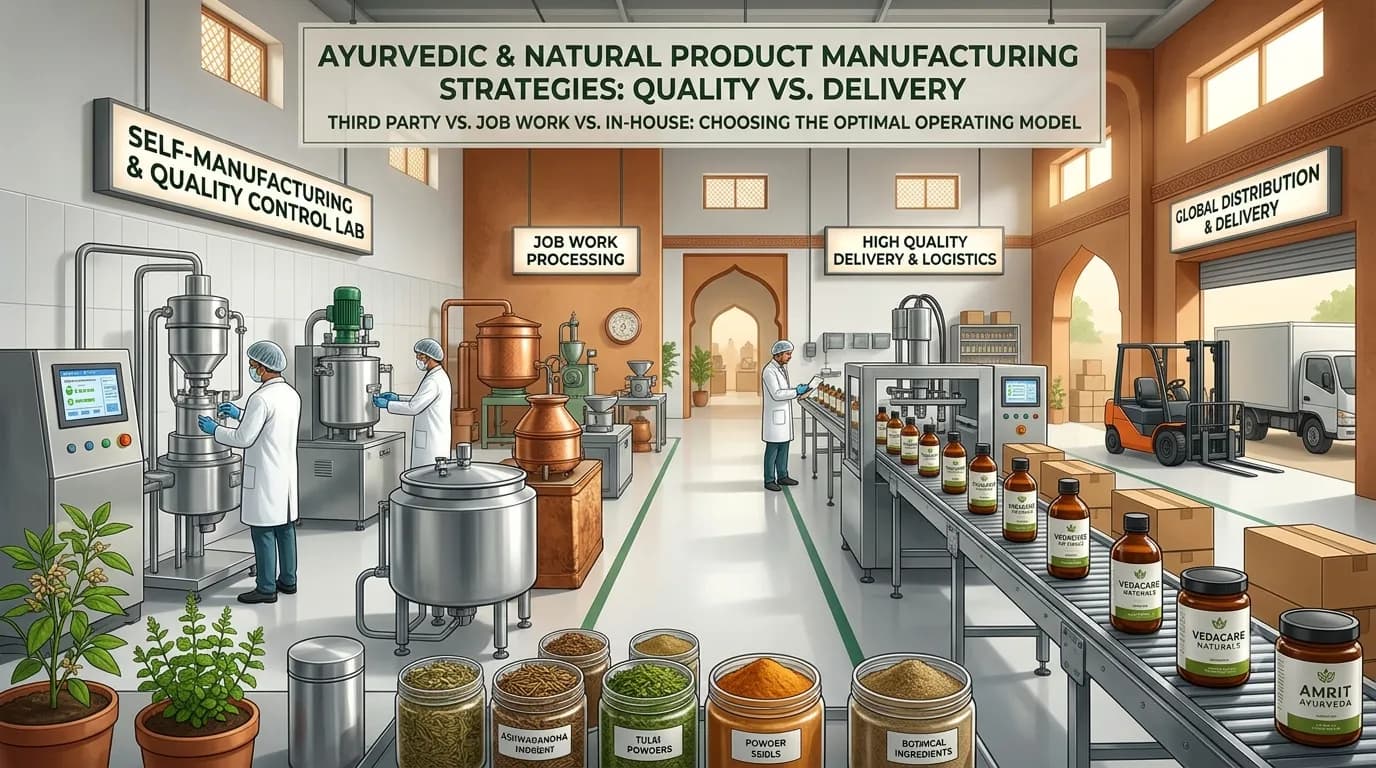
The natural wellness and Ayurvedic markets are at a defining crossroads. As modern consumers demand uncompromising purity, strict clean-label standards, and proven botanical efficacy, brand founders and executive teams face a critical operational dilemma: Which manufacturing architecture best balances product integrity, supply chain reliability, and capital efficiency? Navigating this choice requires examining three distinct operating models: Third-Party Contract Manufacturing , Job Work Processing , and In-House (Self) Manufacturing . 1. Third-Party Contract Manufacturing (The Turnkey Model) Under this model, the brand outsources the entire end-to-end production lifecycle to an established manufacturing partner. How It Works: The partner manages raw material procurement, packaging, formulation, and quality assurance under their own manufacturing licenses and GMP certifications. The Pros: Extremely low upfront capital expenditure (CapEx), rapid speed-to-market, and immediate operational scalability. The Cons: Lower control over ingredient sourcing and pricing transparency. Without rigorous oversight, vendors may substitute lower-grade extracts to protect margins. Best For: Early-stage brands, D2C startups, and agile companies testing new product categories. 2. Job Work Processing (The Hybrid Control Model) Job work represents a strategic middle ground where the brand owner retains absolute control over raw materials and primary formulations, while outsourcing physical processing, blending, and packaging. How It Works: The brand sources, audits, and supplies its own botanical extracts, essential oils, and active ingredients directly to a licensed processing facility. The Pros: Total control over ingredient quality and active standardization (crucial for Ayurveda), combined with lower capital requirements than building a dedicated plant. The Cons: Requires a complex two-step supply chain, active inventory management, and careful coordination of production line schedules. The Alignment: Ideal for premium wellness brands that refuse to compromise on raw ingredient purity but wish to avoid heavy factory overhead. 3. In-House / Self-Manufacturing (The Vertically Integrated Model) In this model, the brand owns, operates, and maintains its own dedicated manufacturing facility, cleanrooms, and analytical testing laboratories. How It Works: Total capital and technical ownership of machinery, real estate, labor, and compliance infrastructure. The Pros: Absolute control over farm-to-lab traceability, immediate batch variable adjustments, maximum intellectual property protection, and optimized gross margins at scale. The Cons: Immense capital outlay, high fixed overhead costs (OpEx), complex regulatory maintenance, and slow initial setup timelines (12 to 18 months). Best For: Well-capitalized, established enterprises with high volume, stable distribution channels, and proprietary manufacturing techniques. Key Pillars for High-Quality Ayurvedic & Natural Products When scaling premium natural formulations, three operational dimensions dictate success: Active Standardization: Natural actives (such as withanolides in Ashwagandha or curcuminoids in Turmeric) vary widely by harvest. In-house and job work models excel here because the brand can mandate specific suppliers and verify active content before processing. Batch Consistency: Variations in aroma, viscosity, and color undermine consumer trust. Owned facilities provide instant turnaround on process tweaks, whereas third-party partners require strict operational SLAs to maintain consistency. Delivery Agility: Meeting retail and D2C demand spikes requires reliable lead times. Turnkey third-party lines offer the fastest restock cycles, while self-manufacturing provides guaranteed priority over production schedules. Strategic Verdict: Which Model Fits Your Brand? Choose Third-Party if your primary goal is capital-efficient market entry, rapid prototyping, and aggressive marketing focus. (Tip: Mandate independent third-party lab testing for heavy metals and active assays before dispatch). Choose Job Work if ingredient purity and active ingredient integrity are central to your brand promise, but you want to avoid factory ownership. (Tip: Station an internal quality assurance auditor on-site during full production runs). Choose In-House if you have achieved massive scale, possess proprietary processing technology, and require complete vertical integration to protect trade secrets and long-term margins. How is your leadership team balancing manufacturing agility and quality control in your current product lineup? Let’s discuss in the comments below!
#USMarkets#FinancialNews#StockMarket

Industry Report
The Agentic Economy: Finance and Accounting Complete the Great Migration in Q3 2026
By the close of the third quarter of 2026, the global corporate ecosystem finalized a foundational migration. The experimental phase of Generative AI ended, replaced by universal integration within the Finance and Accounting (F&A) function. If the early 20s were characterized by fragmented "island automation" using basic robots, Q3 2026 marked the maturation of Agentic Finance—where autonomous AI agents operate directly inside ERP environments like SAP S/4HANA, Oracle Cloud ERP, and Workday, managing the full transaction lifecycle without prerequisite human intervention. This evolution is fundamentally reshaping shared business models and Managed Business Services (MBS), driven by a corporate obsession with structural cost optimization and the pursuit of "zero-latency financial books.." The Anatomy of Transformation: Major Players and Strategic Shifts The Global Business Services (GBS) model, formerly rooted in low-cost headcount arbitrage, completed its multi-year pivot toward technological orchestration. Managed Business Services and BPO leaders—such as Genpact, Accenture, Deloitte, EXL Service, and Helpware—have fundamentally restructured their service delivery models. To remain competitive, these outsourcing giants have largely abandoned traditional full-time equivalent (FTE) billing models. In Q3 2026, MBS contracts are now structured entirely around "Outcome-as-a-Service." Enterprise clients no longer purchase headcount; they purchase guaranteed operational outcomes, such as a standardized cost per closed period, a static accuracy percentage, or a metric linked to cash flow optimization. To maintain their own operational margins under these outcome-linked contracts, service providers have automated up to 85% of transactional workflows. Data from late 2026 indicates that 65% of global finance hubs have now institutionalized centralized AI governance bodies to supervise these agentic workflows, moving the role of finance teams from "data processors" to "governors of automated systems." The Financial Realities: Compressing Costs and Eliminating Errors The financial impact of this agentic migration is visible across enterprise balance sheets. The pursuit of cost optimization through automation is no longer theoretical; it is realized across major corporate finance departments. In transactional areas, the data shows a dramatic drop in operational overhead: Accounts Payable (AP) Efficiency: Across global enterprises, the fully loaded cost of processing an invoice in Accounts Payable has fallen from a manual baseline of roughly $13.50 down to a stabilized average of $2.98. AP agents operating within platforms like BlackLine and Workiva read invoices, auto-match purchase orders, calculate tax jurisdictions, and execute payments, routing only severe anomalies to human controllers. Accuracy & Error Reduction: While manual data entry historically carried a 1% to 5% error rate—creating substantial downstream reconciliation workloads—AI agent accuracy in Q3 2026 has stabilized above 99.5% for standard transactional posting. Continuous Compliance Audit: Traditional audit sampling (reviewing 10% to 15% of records) has been replaced by 100% continuous compliance monitoring. Secondary AI auditing agents evaluate every transaction in real-time against statutory frameworks (such as IFRS 16/17 and ASC 842), reducing financial reporting compliance errors by 78%. Corporate Milestones: Achieving the Continuous Close Several major technology and cloud giants—including Microsoft, Amazon, Cisco, and Oracle—have set distinct benchmarks that define the new F&A landscape by using embedded AI engines to execute real-time intercompany eliminations and automated multi-currency reconciliations throughout the month. The Continuous Close: By automating complex reconciliations in real time throughout the operating period, the traditional "month-end crunch" has largely disappeared. The standard corporate close window has compressed from 8–10 business days down to 3–5 days—a 30% to 50% speed improvement across major global entities. Advisory Capacity Expansion: F&A teams leveraging agentic workflows report reallocating ~8.5% of total working hours away from routine production and data extraction toward high-value strategic advisory, scenario planning, and capital allocation modeling. This shift effectively unlocks approximately 7 weeks of additional advisory capacity per employee annually, directly enhancing executive decision-making.
##AIInFinance#FinanceTransformation
Whitepaper
HIGH ALERT: Is Your Credit Card Safe? The Silent Surge in Phone & POS Payment Frauds
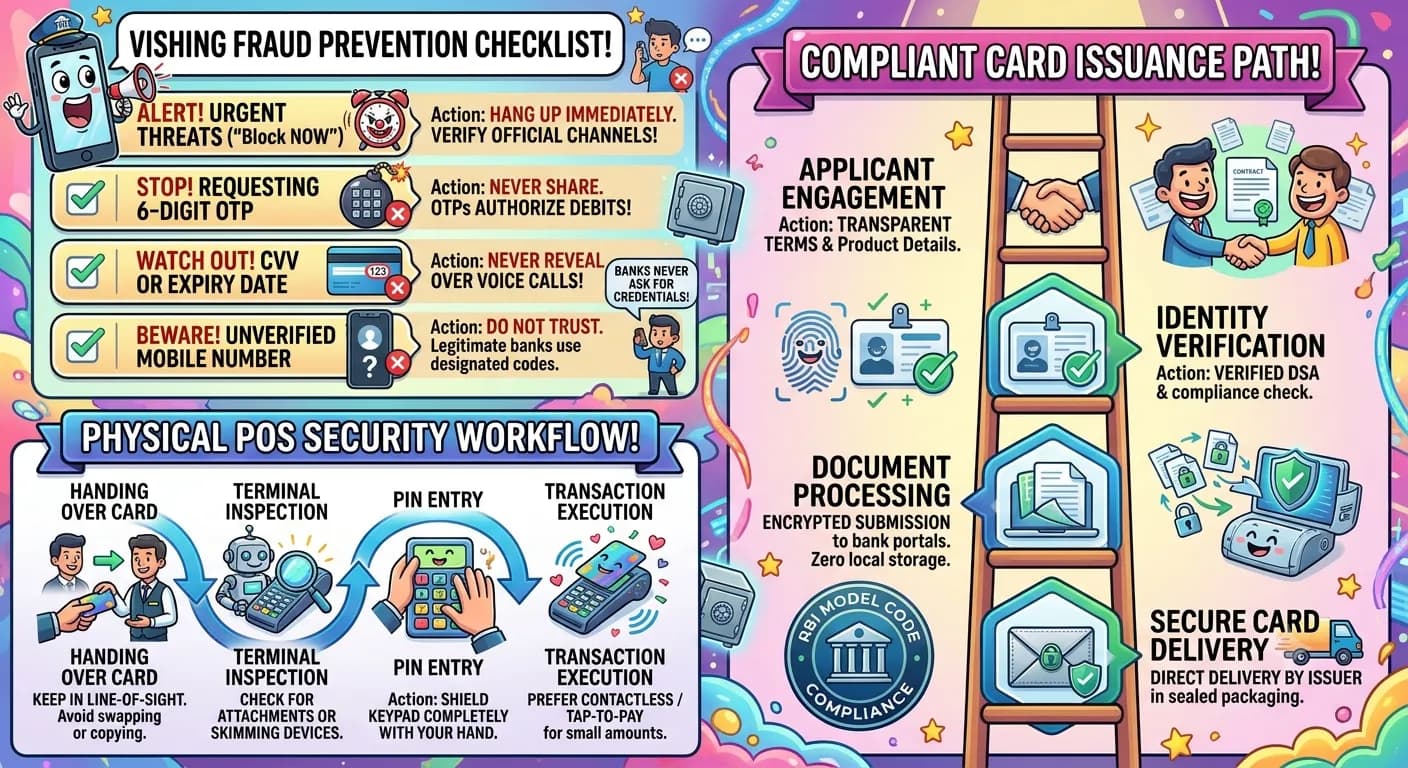
The rapid digitalization of global commerce has fundamentally altered how capital moves. However, this friction-free convenience has also catalyzed a sophisticated, multi-billion-dollar cybercrime industry. Modern payment fraud is no longer limited to crude card theft; it relies on high-tech skimming, deepfake voice cloning, and engineered psychological manipulation across voice, physical, and digital channels. Maintaining total vigilance is no longer optional—it is a critical necessity for preserving personal financial security and organizational credit lines. Critical Data Takeaways The Impersonation Crisis: Over 70% of digital payment frauds in India stem from social engineering—specifically voice phishing (vishing) where scammers exploit fear, urgency, or authority to extract One-Time Passwords (OTPs), PINs, or card CVVs. Surging Fraud Values: Reserve Bank of India (RBI) annual financial data indicates that while overall volume incident rates fluctuate due to tighter two-factor authentication (2FA), total financial fraud exposure exceeds ₹48,000 Crore , emphasizing that targeted high-value card compromises are becoming more severe. The Account Takeover Shift: Unlike Western markets where stolen card data is traded on darknet forums for direct e-commerce checkout, local cybercriminals focus on Account Takeover (ATO) —using deceptive tele-calling to gain full mobile banking app control. Channel-by-Channel Prevention & Precautionary Exercises 1. Vigilance on Phone Calls (Vishing, Deepfakes & Fraud Calls) Scammers frequently impersonate bank fraud managers, credit officers, or telecom executives claiming an urgent verification is required to halt suspicious transactions, increase credit limits, or prevent account blocking. The Absolute Zero-Trust Rule: No legitimate bank, card network (Visa, Mastercard, RuPay), or authorized channel partner will EVER ask for your 3-digit CVV, 4-digit ATM PIN, net-banking password, or OTP over a phone call. Verify Telecom Identifiers: Under telecom regulatory mandates, official banking calls utilize registered commercial headers (such as the 1600 prefix). Treat calls from standard 10-digit mobile numbers claiming to represent bank compliance teams as hostile. Enforce a 5-Minute Pause: Scammers rely on panic to bypass critical thinking. Always disconnect, wait two minutes, and dial the customer service hotline printed on the physical back of your credit card. 2. Safeguards During Physical Payments (POS Terminals & Dining) Physical point-of-sale (POS) environments remain vulnerable to hardware skimming, card-swapping, and shoulder surfing. Line-of-Sight Enforcement: At restaurants, petrol pumps, or retail counters, never let your card leave your vision. Demand that staff bring the portable POS terminal to your table, or walk directly to the billing desk. Physical Pad Shielding: Always cover the keypad with your non-dominant hand when typing your 4-digit PIN. Overhead micro-cameras installed at compromised ATMs or billing counters can capture exposed PIN entries. Leverage NFC Contactless Tap: Use Near Field Communication (NFC) Tap-to-Pay for transactions up to regulatory limits (e.g., ₹5,000). Contactless payments encrypt card data dynamically, bypassing physical magstripe readers where skimmers operate. 3. Sharing Card Details Over the Phone (Hotels, Bookings & Services) Sharing card details over telephone lines carries severe exposure risks if the receiving agent's line or environment is unsecured. Never Verbalize Security Codes: Never read your CVV or OTP aloud over an open line. Demand Encrypted Payment Gateways: Instruct the merchant to transmit an official IVR (Interactive Voice Response) prompt or a verified payment gateway link via official SMS/Email channels. Deploy Single-Use Virtual Cards: Utilize your bank’s mobile application to generate temporary, single-use virtual cards set to the exact transaction amount. Once processed, the virtual card auto-destructs, neutralizing subsequent theft attempts. 4. Precautions When Applying for Credit Cards Over the Phone Applying for new credit cards through tele-sales channels requires strict operational checks to avoid identity theft and fake agent schemes. Verify Direct Sales Associate (DSA) Accreditation: Confirm that the calling agency holds an active, verified DSA agreement with the issuing bank. Ask for official agent registration IDs and demand written communication sent from an official bank or accredited partner email domain. Zero Upfront Fees: Authorized channels and issuing banks do not collect cash, upfront processing fees, or personal UPI transfers during credit card sourcing. Any demand for payment during an application is an immediate fraud signal. Watermark All Application Copies: When transmitting KYC identity documents (PAN, Aadhaar, bank statements), overlay a prominent physical or digital watermark: "Submitted exclusively for [Bank Name] Credit Card Application - [Date]" The Right Path: Compliant DSA Operations & Sourcing Standards Navigating credit card applications securely requires sourcing through accredited, fully compliant Direct Sales Associate (DSA) channels. Established partners protect consumer privacy through structured operational frameworks: Institutional Governance & Compliance: Accredited DSA channels operate under formal corporate empanelment agreements with major national banks, adhering strictly to RBI guidelines, TRAI telemarketer registration standards, and bank Model Codes of Conduct. Encrypted Sourcing Architecture: Compliant distribution partners submit applicant KYC data directly into secured bank application programming interfaces (APIs). Data is not stored locally on personal devices or unsecured drives, mitigating data breach risks. No Sensitivity Creep: Accredited onboarding executives adhere strictly to compliance protocols—never requesting operational passwords, PINs, CVVs, or transaction OTPs during application processing. Immediate Emergency Protocol for Suspected Fraud If you suspect your credit card credentials have been compromised or identify unauthorized billing entries: Instant Freeze via Banking App: Open your bank’s official mobile app and toggle the card setting to "Disabled" or "Frozen" instantly. Dial Emergency Helpline / 1930: Report the unauthorized transaction to your bank's 24/7 fraud helpline immediately. In India, register the cybercrime incident at cybercrime.gov.in or call the National Cyber Crime Helpline at 1930 . Invoke the 3-Day Zero Liability Rule: Under RBI mandate guidelines, reporting an unauthorized electronic payment transaction within 3 working days protects the cardholder from financial liability, ensuring full reimbursement from the issuing bank. Summary Checklist for Card Safety Never reveal your CVV, PIN, or OTP on voice calls. Never let your card out of sight during physical store or dining payments. Always verify DSA credentials and watermark identity proofs when applying for new credit lines. Always freeze your card immediately via mobile banking if an anomaly occurs.
#CreditCardSafety#FraudPrevention#CyberSecurityIndia
Whitepaper
Arumai Healthcare vs. Mass Market: Why Cold-Extraction Matters
The global consumer landscape is undergoing a permanent structural pivot. Consumers across India, North America, Europe, and the Middle East are shifting from reactive, synthetic pharmaceuticals toward preventative, plant-based remedies. At the center of this movement is the $14.3 Billion Ayurvedic wellness industry—where liquid extracts ( Ras and juices) represent one of the fastest-growing categories. However, rapid market expansion has exposed a critical industry flaw: Mass production compromises therapeutic efficacy. Traditional high-volume manufacturing often relies on high-heat thermal extraction (80°C–100°C), heavy water dilution (up to 85%), added refined sugars, and synthetic preservatives—destroying up to 70% of sensitive bioactive compounds (saponins, flavonoids, and heat-labile vitamins) before the product ever reaches the consumer. The Arumai Healthcare Paradigm Shift To address this efficacy gap, Arumai Healthcare and Biotech (Karnal, Haryana) is bridging 5,000-year-old classical Ayurvedic wisdom with modern biotechnological processing. By replacing thermal boiling with Bio-Preserved Cold-Extraction Technology , Arumai retains 88% to 94% of active phytonutrients , delivering zero-added-sugar, highly concentrated, and standardized botanical elixirs across core therapeutic areas: Arjun Chhal Ras: Advanced cardiovascular and endothelial support. Brahmi Ras: Neuroprotective support and cognitive enhancement. Karela Jamun Ras: Glycemic regulation and metabolic balance. Giloy Wheat Grass Ras: Immunomodulation and cellular detoxification. Aloe Vera Ras: Gastrointestinal recovery and systemic anti-inflammation. Strategic Key Takeaways in the Full Report: Market Growth & Dynamics: Analysis of the global Ayurvedic liquid extract sector (CAGR 15.6%). The Efficacy Matrix: Direct comparison between mass-market thermal extraction vs. bio-preserved cold extraction. Regulatory & Quality Standards: Deep-dive into HPLC batch fingerprinting, heavy metal safety, and WHO-GMP compliance. Global Expansion Roadmap: The 2026–2030 strategy for international exports and clinical trial validation.
#AyurvedicHealthcare#ArumaiHealthcare#HerbalRas

Research
Financial Titans: Inside the Top 10 Wealthiest Families in the World
When evaluating long-term financial success, conversations typically focus on individual billionaires. However, the most resilient financial legacies belong to family dynasties that have built, scaled, and protected enterprises across multiple generations, transforming local ventures into global economic powerhouses. According to Bloomberg’s ranking, the world’s 25 richest families hold a combined estimated wealth of $2.9 trillion—a significant increase driven by public market performance, robust consumer demand, and strategic diversification. Examining these top 10 dynasties reveals how specific operating models, high-impact mergers, and adaptive pivots into new-age solutions have preserved their fortunes. 1. The Walton Family (USA) Estimated Wealth: $513.4 billion Core Enterprise: Walmart Generations: 3 Key Business Operations & Expansion: Founded by Sam Walton, Walmart operates the world's largest retail and wholesale corporation. The family's sustained dominance is built on massive supply-chain efficiency, high-volume inventory turnover, and aggressive pricing strategies. New-Age & Strategic Shifts: To combat digital disruption and rival e-commerce giants, the Waltons aggressively expanded Walmart's digital footprint through omnichannel retail, automated fulfillment centers, and investments in cloud infrastructure, fintech services, and drone delivery logistics. 2. The Al Nahyan Family (UAE) Estimated Wealth: $335.9 billion Core Enterprise: Abu Dhabi Sovereign Wealth & State Industrial Interests Generations: 3 Key Business Operations & Expansion: As the ruling royal family of Abu Dhabi, their financial strength is anchored by massive petroleum reserves managed through sovereign investment vehicles like the Abu Dhabi Investment Authority (ADIA) and Mubadala Investment Company. New-Age & Strategic Shifts: Operating with a long-term post-oil vision, the family has funneled billions into artificial intelligence, renewable energy initiatives, semiconductor manufacturing, and global tech venture capital funds to diversify away from hydrocarbons. 3. The Al Saud Family (Saudi Arabia) Estimated Wealth: $213.6 billion Core Enterprise: Saudi Arabian Oil Company (Saudi Aramco) & State Assets Generations: 3 Key Business Operations & Expansion: The Saudi royal family commands immense economic gravity primarily through control of Saudi Aramco, one of the world's most profitable energy corporations, alongside expansive state-backed real estate and industrial holdings. New-Age & Strategic Shifts: Through the Public Investment Fund (PIF), the dynasty is spearheading Vision 2030, driving mega-projects like NEOM, investing heavily in green hydrogen, global sports infrastructure, and next-generation tech startups. 4. The Al Thani Family (Qatar) Estimated Wealth: $199.5 billion Core Enterprise: State Energy & International Investments Generations: 8 Key Business Operations & Expansion: Qatar’s ruling family derives its strength from the nation's colossal liquefied natural gas (LNG) reserves, managed via the Qatar Investment Authority (QIA). New-Age & Strategic Shifts: The family has methodically converted energy windfalls into global trophy assets, high-profile real estate across major financial capitals, and strategic stakes in international banking, telecommunications, and green tech enterprises. 5. The Hermès Family (France) Estimated Wealth: $184.5 billion Core Enterprise: Hermès International Generations: 6 Key Business Operations & Expansion: Built on ultra-exclusive luxury goods, leather craftsmanship (such as the Birkin and Kelly bags), and ready-to-wear fashion, the family maintains tight corporate control to safeguard brand exclusivity over mass production. New-Age & Strategic Shifts: Unlike competitors that lean heavily into mass-market digital exposure, Hermès has maintained strict scarcity models while upgrading digital clienteling platforms and investing heavily in sustainable, ethically sourced luxury materials. 6. The Koch Family (USA) Estimated Wealth: $150.5 billion Core Enterprise: Koch Industries Generations: 3 Key Business Operations & Expansion: Operating as one of the largest private conglomerates in the world, Koch Industries spans petroleum refining, chemicals, polymers, fiber, forest products, and electronic components. New-Age & Strategic Shifts: The family has continuously executed multi-billion-dollar acquisitions and internal restructuring to pivot toward industrial software, medical technology investments, and market-based venture capital initiatives. 7. The Mars Family (USA) Estimated Wealth: $143.4 billion Core Enterprise: Mars, Incorporated Generations: 5 Key Business Operations & Expansion: Globally renowned for confectionery giants like M&M’s, Snickers, and Wrigley, the family engineered massive horizontal expansion into pet care, veterinary health services, and food manufacturing. New-Age & Strategic Shifts: Recent major corporate maneuvers include multi-billion-dollar acquisitions in veterinary diagnostics and pet health data platforms, positioning the company securely inside high-growth consumer health sectors. 8. The Ambani Family (India) Estimated Wealth: $105.6 billion Core Enterprise: Reliance Industries Limited (RIL) Generations: 2 Key Business Operations & Expansion: Founded by Dhirubhai Ambani and scaled under Mukesh Ambani, Reliance transitioned from a textile player into an energy and petrochemical giant before executing a historic expansion into organized retail and digital telecom services (Reliance Jio). New-Age & Strategic Shifts: The family is currently driving a massive green energy transition—investing heavily in solar, hydrogen, and battery storage infrastructure—while scaling up 5G/6G digital ecosystems and AI-driven consumer tech platforms. 9. The Wertheimer Family (France) Estimated Wealth: $85.6 billion Core Enterprise: Chanel Generations: 3 Key Business Operations & Expansion: The brothers Alain and Gérard Wertheimer own the legendary luxury fashion house Chanel, maintaining private ownership that emphasizes long-term brand equity, haute couture, and premium fragrances. New-Age & Strategic Shifts: The family has focused on selective digital integration, experiential retail flagships, and minority venture investments in sustainable fashion startups and alternative textile material developers. 10. The Thomson Family (Canada) Estimated Wealth: $82.1 billion Core Enterprise: Thomson Reuters Generations: 3 Key Business Operations & Expansion: Controlled through their investment vehicle Woodbridge Company, the family derives its wealth primarily from a majority stake in Thomson Reuters, providing essential data, legal software, tax compliance tools, and financial market media globally. New-Age & Strategic Shifts: The company has undergone a major software-as-a-service (SaaS) and AI transformation, acquiring legal tech platforms and integrating generative AI tools into core regulatory and workflow products. Strategic Takeaways on Generational Wealth Preservation Analyzing these dynasties highlights that maintaining colossal wealth requires far more than passive asset holding. Whether through the heavy capital reallocation seen in the Ambani and Al Nahyan families or the steadfast brand preservation practiced by Hermès and Chanel, long-term survival depends heavily on calculated diversification, disciplined operational execution, and the agility to embrace new-age industrial solutions ahead of market shifts.
#GenerationalWealth#FamilyDynasties#BillionaireFamilies

Market Study
Is India’s Property Market Heading Towards a Recession in 2026?
India’s real estate market has experienced an extended phase of robust expansion, but 2026 presents a more nuanced picture. With property price appreciation outpacing wage growth in key urban hubs, affordability hurdles, and rising inventory in selective segments, a critical question emerges: Is the property market moving toward a recession, or simply entering a disciplined correction and consolidation phase? What Is Happening in the Market? The national numbers for 2026 show steady resilience mixed with localized caution. Across the top eight primary cities, cumulative housing sales for the first nine months reached 258,238 units , holding flat compared to the previous year. Meanwhile, overall residential inventory across major urban centers ticked upward, with available stock hovering near 5.31 lakh to 6.31 lakh units , driven by aggressive new project launches. Average residential prices across top markets have crossed the ₹9,700 per sq. ft. mark (reflecting a ~7% year-on-year increase). This divergence indicates that overall buyer demand has not collapsed, but the velocity of absorption varies drastically by city, micro-market, and price bracket. Why Is the Market Slowing Down? Several fundamental economic pressures are tempering market momentum: The Affordability Gap: In several high-growth micro-markets, capital values have surged faster than household disposable incomes, compressing the pool of active, first-time home buyers. Financing and Cost of Capital: With broader monetary tightening cycles keeping borrowing costs elevated, home loan interest rates demand a higher out-of-pocket commitment, leading buyers to exercise greater caution before finalizing transactions. Supply Mismatch: New project completions have heavily favored luxury and ultra-luxury configurations, whereas mid-income and affordable housing supply has faced tighter demand compression. Micro-Market Trends & Price Appreciation (2026 Data Analysis) Real estate performance in 2026 is hyper-local. Evaluating specific city trends reveals stark differences in pricing and momentum: Delhi-NCR & Gurugram: NCR has experienced distinct movements, with overall sales adjusting dynamically (recording 10,712 units in Q3), while price appreciation remains among the highest nationally at 12% to 15% year-on-year . Gurugram continues to do the heavy lifting: premium corridors like Golf Course Extension Road, Southern Peripheral Road (SPR), and Dwarka Expressway have witnessed massive long-term gains (30% to 50%+ appreciation over recent cycles), pushing average prices in prime sectors near ₹18,500+ per sq. ft. Noida has also maintained steady traction with ~7% to 11% price growth, backed by commercial expansion and proximity to the upcoming Jewar Airport region. Mumbai Metropolitan Region (MMR): MMR remains India's undisputed volume and revenue leader, recording approximately 31,750 units sold in recent quarters and holding the largest share of national real estate revenue (~28.4%). Driven by continuous infrastructure upgrades and redevelopment projects, average prices stand firm around ₹37,064 per sq. ft. in core zones, alongside active supply in peripheral nodes like Navi Mumbai and Thane. Bengaluru: Bengaluru stands out as one of the country's most resilient markets, registering a 11% to 24% year-on-year price appreciation alongside steady sales growth (~12% increase in key quarters). Powered by stable GCC and tech sector employment, micro-markets along expanding metro lines continue to see healthy end-user absorption, though new launches lean increasingly into the ₹80 lakh to ₹2.5 crore bracket. Hyderabad: Hyderabad has displayed aggressive supply dynamics, recording a 15% year-on-year sales jump in key quarters alongside a massive surge in new launches (up over 120% annually). With average prices appreciating at a steady ~3% to 8% and 97% of new supply targeted above ₹80 lakh, the city is betting heavily on premium and upscale integrated developments. Will Property Prices Fall in 2026? A broad, nationwide price crash remains unlikely. Instead, the market is displaying stark bifurcation: High-Demand Micro-Markets: Premium properties backed by robust infrastructure delivery—such as upcoming metro lines and expressway expansions—continue to command steady end-user absorption. Correction-Prone Pockets: Overpriced projects or over-supplied micro-markets are facing extended inventory clearance times. In these segments, developers are increasingly relying on flexible payment subventions, festive discounts, and customized incentives to move inventory. My Take: A Healthy Reality Check The core concern for 2026 is not an imminent market crash, but whether asset valuations are disconnecting from what ordinary, salaried homebuyers can realistically sustain. A resilient real estate ecosystem requires a fine equilibrium between developer pricing expectations and consumer purchasing power. While macro pressures and higher inventory create localized stagnation, disciplined adjustments by developers can stabilize the market organically. Ultimately, India’s real estate landscape in 2026 is navigating a phase of structural adjustment rather than a confirmed nationwide recession . For both home-buyers and long-term capital allocators, data-backed research, careful asset selection, and long-term horizons remain the ultimate safeguards against market noise.
#MarketCorrection#RealEstateRecession#PropertyPrices
Research
BONC Network Business Outlook: October Week 4
The global and domestic economic landscapes are currently being shaped by a complex interplay of energy shocks, aggressive monetary tightening, and evolving artificial intelligence (AI) investments. According to the latest insights from the BONC Network , businesses must navigate significant volatility driven by geopolitical tensions in the Middle East, fluctuating currency values, and shifting central bank policies. 1. Top Global Business Developments & Energy Watch Geopolitical conflicts have directly impacted global energy markets. The ongoing conflict and shipping disruptions near the Strait of Hormuz—highlighted by multiple commercial vessel attacks—have triggered a major energy shock. Oil Prices: Brent crude settled at $109.55 for December delivery, hovering near a five-month high and well above pre-conflict levels of around $70. Sanctions and Strategic Reserves: To help cap soaring prices, the US temporarily eased key sanctions and tariffs on Russia to allow global diesel distribution, while France announced plans to release up to 100 million barrels of crude and diesel reserves over four months. Central Bank Tightening: Global monetary policy remains restrictive. The US Federal Reserve raised rates to 3.75–4.00% , and the European Central Bank (ECB) lifted its deposit rate to 2.50% , officially signaling that the era of aggressive rate cuts has ended. 2. Global Technology and Financial Markets Financial markets are experiencing heightened volatility, balancing AI-driven growth optimism against fiscal pressures. AI and Tech Sector: Despite a temporary tech sell-off driven by investor skepticism over massive AI capital expenditures, indices like the Nasdaq quickly rebounded by 1.1%. Major tech developments, such as Anthropic preparing for a historic IPO, continue to dictate market-level risk. Macro Indicators: US Consumer Price Index (CPI) inflation rose to 3.7% in September, driven heavily by a 34.2% year-on-year surge in gasoline prices. Meanwhile, the International Monetary Fund (IMF) projects global economic growth at 3.1% for 2026 and 3.4% for 2027 , accompanied by an anticipated global inflation rate of 4.7% in 2026. 3. India Economic Update and Market Movements Domestically, the Indian economy is balancing robust corporate activity against inflationary pressures and currency fluctuations. Market Performance: Indian equity benchmarks saw a downturn, with the Sensex falling 876 points (1.17%) to 73,852.90 and the Nifty dropping 1.11% to 22,888.95. While private banks faced downward pressure, Public Sector Undertaking (PSU) banks surged 2.5% on the back of strong earnings. IT and Corporate Earnings: TCS reported strong Q2 revenues of $7.64 billion (up 2.8% YoY in constant currency), with annualized AI revenue crossing $3.1 billion (representing over 10% of total revenue). Infosys is slated to report amidst broader industry challenges concerning discretionary spending and AI-led pricing pressures. Inflation and Monetary Policy: India's CPI inflation climbed to 5.54% in September (with food inflation touching 7.74%), prompting the Reserve Bank of India (RBI) to raise its repo rate by 25 basis points to 5.50% and shift toward a stance of "calibrated tightening". Despite these pressures, the IMF revised India's full-year growth forecast upward to 7.0% . Currency Interventions: The Indian Rupee slid to an intra-period low of 96.78 against the US dollar before recovering to 94.92 following aggressive interventions by the RBI, which deployed an estimated $75–80 billion through dollar sales and swap windows. 4. Capital Markets and Upcoming IPO Boom India's primary market is witnessing historic momentum, highlighted by major public offerings. Jio Platforms IPO: Jio Platforms launched its massive ₹30,213 crore issue (priced between ₹1,065 and ₹1,119 per share), marking India's largest-ever IPO and surpassing Hyundai India's previous record. Broader IPO Activity: Total capital raised via IPOs in 2026 has reached ₹1.1 lakh crore, with approximately 12 firms—including Zetwerk and Awaida Electro—planning October offerings. 5. Outlook and Strategic Recommendations According to the BONC Network market outlook, investors and enterprises should prepare for distinct sectoral winners and headwinds: Sectors Likely to Grow: PSU banks, capital-market intermediaries (brokers and asset management companies riding the IPO boom), energy security and storage, defense, electronics manufacturing, and export-oriented IT/AI services. Sectors Facing Challenges: Oil marketing companies, airlines, paints, chemicals, food-heavy FMCG, rural-dependent retail, and rate-sensitive sectors like real estate and autos. Key Watchpoints: Businesses should closely monitor upcoming corporate earnings, central bank decisions (Fed and ECB meetings), trajectory of the Rupee near the 97 mark, Brent crude fluctuations around $100, and ongoing developments regarding US-India trade policies. The BONC Network advises enterprises to adopt practical risk-management steps—such as hedging currency exposures, stress-testing operations against $100 crude scenarios, and locking in financing ahead of further potential rate hikes. Strategic Analysis & Recommendations 1. Macroeconomic & Geopolitical Impact Analysis Energy Vulnerability: The Strait of High-stakes disruption near Hormuz has locked Brent crude near $109.55/barrel . For import-heavy economies like India, this introduces persistent inflationary pressures, widening fiscal deficits, and severe cost pushbacks on manufacturing and logistics. Monetary Tightening Constraints: With the US Federal Reserve targeting 3.75%–4.00% and the RBI shifting to "calibrated tightening" with a repo rate hike to 5.50% , liquidity is tightening globally. Capital is aggressively migrating toward the US dollar, placing unprecedented pressure on emerging-market currencies like the Indian Rupee (which tested near the 96.78 level before RBI stabilization). 2. Sectoral Winners & Vulnerabilities (The BONC Network Outlook) Sector Category with Market Trajectory followed by Underlying Driver / Risk PSU Banks & Capital Markets ( 🟢 Growth) - Strong asset quality, robust earnings, and high liquidity riding the wave of India's historic IPO boom (e.g., Jio Platforms' ₹30,213 crore issue). Energy Security, Defense & Electronics ( 🟢 Growth) - Backed by active domestic demand, strategic state investments, and extensive private sector capital allocation. Export IT & AI Services ( 🟢 Growth) - Benefiting from a favorable currency exchange rate (Rupee near 95–96), though real-time pricing pressure and discretionary spending slowdowns require cautious selectivity. Oil Marketing, Aviation, Paints & Chemicals ( 🔴 Challenge) - Highly vulnerable to elevated crude oil costs ($100+ Brent) and currency depreciation overheads. Rate-Sensitive Sectors (Real Estate, Autos, FMCG) ( 🔴 Challenge) - Pressured by high borrowing costs, rising mortgage rates (7.40%), and rural consumer price inflation exceeding 6%. 3. Recommended Action Plan for Businesses To safeguard profit margins and capitalize on emerging opportunities in this volatile cycle, enterprises within the BONC Network ecosystem should execute the following steps: Hedge Currency and Commodity Exposure Immediately Action: Lock in forward covers for foreign exchange liabilities to mitigate the risk of further rupee fluctuations against the US dollar. Deadline/Next Step: Instruct your finance team by the end of the week to review upcoming import-export payment cycles against a projected $100 crude baseline . Stress-Test Working Capital at $100+ Crude Action: Run financial simulations assuming logistics and raw material costs remain elevated through Q4. Deadline/Next Step: Identify operational redundancies and optimize supply chain routes within the next 14 days. Secure Financing Ahead of Further Rate Hikes Action: With HSBC and other major institutions forecasting additional rate hikes (potentially another bump by December), corporate borrowers should lock in long-term credit lines immediately. Deadline/Next Step: Negotiate fixed-rate credit facilities with banking partners before upcoming central bank decisions on October 28–29 . Leverage Digital B2B Ecosystems for Supply Chain Resiliency Action: Diversify domestic supplier and vendor networks to counter localized inflation and input shortages. Deadline/Next Step: Actively utilize platforms like the BONC Network to source alternative domestic channel partners, digital vendors, and verified distributors to compress procurement turnaround times.
#BONCNetwork#GlobalEconomy#Geopolitics
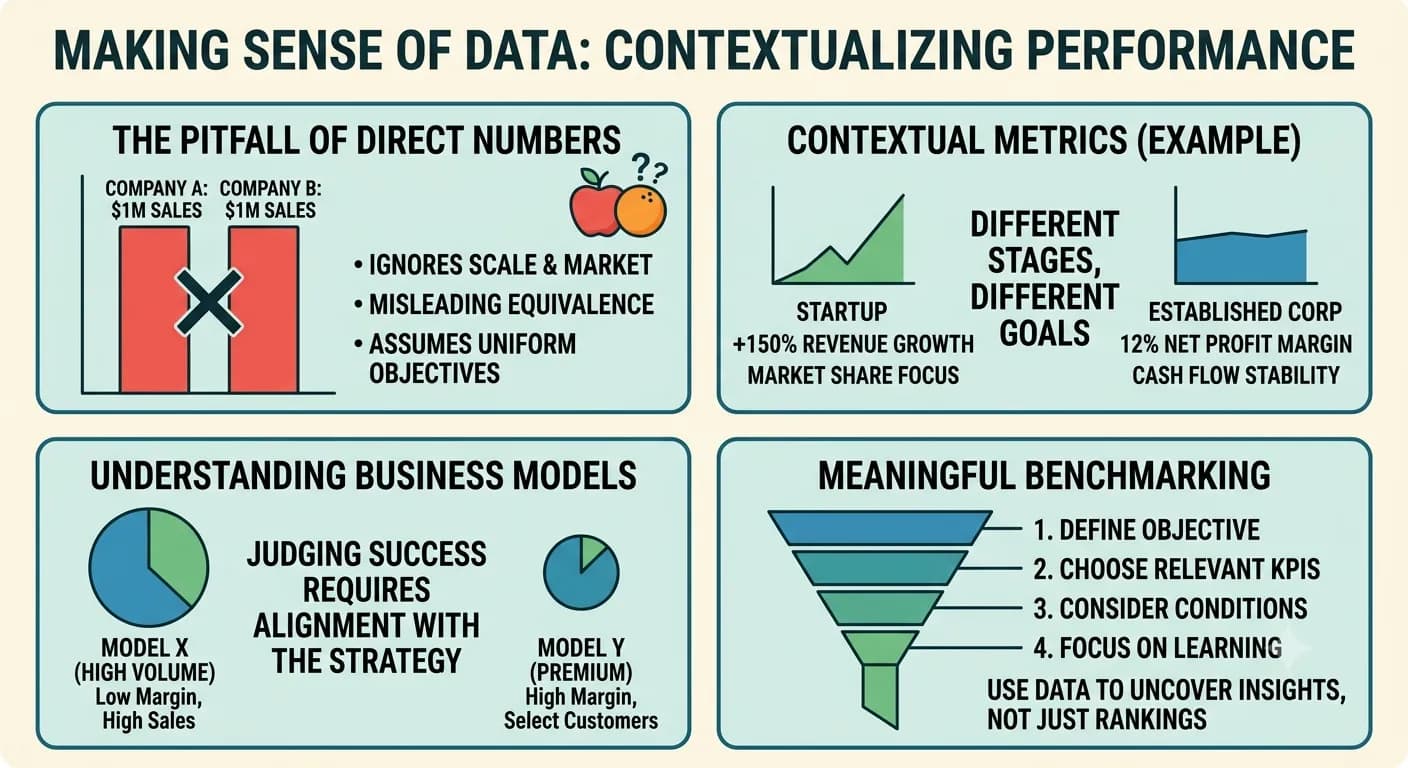
Whitepaper
Apples-to-Oranges Comparison: Why Context Matters More Than Numbers
Comparison is an essential part of business decision-making . Organizations regularly evaluate their performance against competitors, industry standards, and market leaders to identify opportunities for improvement. However, comparisons do not always provide a fair or accurate picture. One of the most common mistakes is making an apples-to-oranges comparison—evaluating two things that may appear similar but differ significantly in their characteristics, circumstances, or objectives. For instance, comparing the revenue of a growing startup with that of an established multinational company may reveal a significant difference in numbers, but it does not necessarily reflect differences in efficiency or business potential. The real value of comparison lies not in identifying who performs better, but in understanding the factors that influence performance. Understanding the Apples-to-Oranges Concept An apples-to-oranges comparison occurs when two organizations, products, processes, or situations are evaluated using the same criteria without considering their fundamental differences. Consider two retail businesses. One focuses on affordable products and high sales volumes, while the other specializes in premium products with higher profit margins. Judging their success solely by the number of products sold would overlook their different business strategies. The first may lead in sales volume, while the second may generate greater profit per transaction. Both businesses can be successful in their respective markets. This highlights a simple but important principle: similar numbers do not always represent similar business realities. Why Such Comparisons Can Be Misleading In business, performance is influenced by several interconnected factors. Company size, available resources, market conditions, customer expectations, technology, and operational strategies all shape results. When these factors are ignored, comparisons can create unrealistic expectations and lead to poor decisions. For example, a small manufacturing business may compare its production costs with those of a large corporation. The corporation might benefit from advanced automation, bulk purchasing, and established supply chains. Expecting the smaller business to achieve identical cost efficiency without comparable resources would be unrealistic. Similarly, comparing two marketing agencies solely by their number of clients may overlook differences in project complexity, client value, service quality, and long-term relationships. The problem is not the comparison itself, but the absence of context. The Challenge in Business Benchmarking Benchmarking is designed to help organizations learn from successful practices and improve their performance. However, its effectiveness depends heavily on selecting appropriate reference points. When businesses compare themselves with organizations operating under completely different conditions, benchmarking can become misleading. A company may identify a performance gap without understanding the structural reasons behind it. As a result, management might introduce unnecessary cost reductions, unrealistic targets, or strategies that do not align with the organization's capabilities. This is why benchmarking should go beyond surface-level indicators. Rather than simply asking, "Why are they performing better than us?" businesses should ask, "What factors contribute to their performance, and which of those practices are relevant to our situation?" This shift in perspective transforms benchmarking from a competitive exercise into a meaningful learning process. How to Make Comparisons More Meaningful Effective comparisons require a balance between measurable data and practical understanding. 1. Establish a Clear Purpose Before comparing performance, organizations should identify what they want to evaluate, whether it is profitability, productivity, operational efficiency, or customer satisfaction. 2. Compare Relevant Performance Indicators The selected metrics should reflect the actual business objective. Revenue alone, for example, may not provide a complete picture without considering costs and profitability. 3. Consider Differences in Business Conditions Factors such as company size, market reach, resources, customer segments, and operating environments should be considered before drawing conclusions. 4. Maintain Consistency in Data Comparisons should use clearly defined metrics, reliable information, and similar reporting periods to avoid misleading results. 5. Focus on Insights Rather Than Rankings The objective should be to identify practical improvements rather than simply determine which organization performs better. A Different Perspective: Is Every Comparison Necessary? Businesses often assume that comparing themselves with industry leaders is the best way to achieve growth. While external comparisons can provide valuable insights, they should not become the only measure of success. Every organization has its own strengths, priorities, and long-term vision. A smaller company may offer personalized customer experiences that larger competitors struggle to provide. A business with slower growth may maintain stronger financial stability than one expanding aggressively. These differences deserve recognition rather than being treated as weaknesses. Sometimes, the most meaningful comparison is not between two competing businesses, but between an organization's current performance and its own previous achievements. After all, sustainable progress is not always about outperforming others. It is about making better decisions, strengthening existing capabilities, and improving consistently. Conclusion Apples-to-oranges comparisons demonstrate why numbers alone cannot tell the complete story. In business, benchmarking, and performance evaluation, meaningful comparisons require an understanding of the circumstances behind the results. Ignoring these differences can lead to unrealistic expectations and decisions that may harm long-term growth. Organizations should therefore approach comparisons with clarity, fairness, and a willingness to look beyond surface-level performance. The purpose of comparison should not be to prove who is better, but to understand what can be learned and how that knowledge can lead to meaningful improvement. Ultimately, the smartest businesses are not those that compare everything. They are the ones that know what is worth comparing—and why.
#benchmarking#corporategovernance#decisionmaking
Market Study
BONC Network Newsletter - October 2026 Week 3rd
The October Week 3 newsletter from BONC Network delivers a comprehensive macro-economic assessment, balancing global market volatility against India’s domestic resilience. Globally, persistent energy pressures—highlighted by Brent crude averaging $104/bbl due to Middle East supply risks—combined with central bank tightening have shaped a cautious international outlook, with the IMF projecting global growth at 3.0% for 2026. Domestically, however, the Indian economy displays robust momentum, underscored by a raised FY27 GDP growth forecast of 7.1%, a strengthening manufacturing PMI of 55.1 in September, and landmark capital market activities such as the upcoming Jio Platforms IPO. Key Highlights Global Markets & Energy: Brent crude averaged $104/bbl over the last two weeks of Q3 driven by Hormuz supply risks, while major central banks like the US Federal Reserve and ECB maintain tight monetary stances to combat inflation. Global Growth & Policy Shifts: The IMF adjusted its 2026 global growth forecast down to 3.0%, and evolving US trade policies—such as Section 301 tariffs—continue to create unpredictable trade terms for international exporters. India’s Economic Indicators: India’s Q1 real GDP grew at 7.8% (April–June), with retail inflation (CPI) registering at 4.82% in August and the RBI maintaining a calibrated tightening stance with a repo rate of 5.50%. Capital Markets & Sector Performance: Robust primary market activity is highlighted by strong subscription rates for upcoming and ongoing issues like the Jio Platforms IPO, alongside strong tech sector milestones such as TCS reporting $3.1 billion in annualized AI revenue. Sectors to Watch: IT and AI services, data infrastructure, and core manufacturing are poised for growth, whereas oil-dependent industries, auto, real estate, and US-dependent exporters face near-term cost and borrowing challenges. Note:- BONC Network team tries best to capture the true to the source information but accuracy can be still subjective as per change in time and period.
#boncnetwork#newsletter#globalfinance

Industry Report
AI IN BUSINESS: 7 INDUSTRIES EXPERIENCING MAJOR CHANGES
How Artificial Intelligence Is Reshaping the Way Businesses Operate Artificial Intelligence is moving beyond experimentation. Businesses across industries are using AI to automate repetitive tasks, analyze complex data, improve customer experiences, and support faster decision-making. Here are 7 industries where AI is creating significant opportunities. 01. HEALTHCARE Medical image analysis and clinical decision support AI-assisted drug discovery Administrative automation and patient support 02. FINANCE & BANKING Fraud detection and transaction monitoring Risk assessment and financial forecasting AI-powered customer service 03. MANUFACTURING 🏭 Predictive maintenance for industrial equipment Automated quality inspection Production planning and supply chain optimization 04. RETAIL & E-COMMERCE Personalized product recommendations Demand forecasting and inventory management AI-powered shopping assistants 05. EDUCATION Personalized learning experiences AI-assisted tutoring and feedback Administrative support for educators 06. LOGISTICS & SUPPLY CHAIN Route and delivery optimization Warehouse automation Shipment demand forecasting 07. SOFTWARE & IT AI-assisted software development and testing Automated IT support Cybersecurity threat detection WHAT DOES THIS MEAN FOR BUSINESSES? AI is not simply about replacing manual work. Its greatest potential lies in helping people make better-informed decisions, reduce repetitive workloads, and focus on higher-value activities. However, successful adoption requires reliable data, human oversight, privacy safeguards, and clear business objectives. THE BIG TAKEAWAY The competitive advantage won't come from adopting AI just because it's trending. It will come from identifying the right problems and applying AI where it creates measurable value. 💬 Which industry do you think will experience the biggest transformation from AI?
#ArtificialIntelligence#BusinessInnovation#DigitalTransformation

Research
Top 10 Pharma Quarterly Revenue (Global & India)
1. Global Market Leadership (Q2 2026) Top 3 Global Players: Johnson & Johnson leads with $25.31B (+6.6% YoY), followed closely by Eli Lilly at $23.00B (+48.0% YoY) and AbbVie at $16.99B (+6.6% YoY). Massive Growth Drivers: Eli Lilly surged +48% YoY, driven by strong demand for obesity and diabetes treatments like Mounjaro and Zepbound. Eli Lilly also raised its 2026 revenue guidance to $85B–$87B. 2. Indian Pharma Landscape (Q1 FY2026–27) Top Performers: Sun Pharma leads the Indian market with ₹15,299.9 Cr (+10.5% YoY), followed by Aurobindo Pharma at ₹9,150.4 Cr (+16.3% YoY) and Lupin at ₹8,276.9 Cr (+32.0% YoY). Profitability Highlights: Sun Pharma: Net profit surged to ₹2,894.8 Cr (+27% YoY), with specialty medicine sales reaching $351M (21.9% of total revenue). Lupin: Recorded a +33.3% YoY sales surge with EBITDA up +42.8% (31.4% EBITDA margin). Zydus: Grew revenue by +22% YoY to ₹8,017 Cr, though net profit fell ~36% due to higher operational costs. 3. Focus Segment: Ophthalmic (Eye-Care) Market Global Leaders: Roche leads global ophthalmic revenue at $5.07B, followed by Bayer ($3.52B) and AbbVie ($2.11B). India Growth Outlook: The Indian ophthalmic drugs market is projected to expand from $253.1M in 2025 to $333M by 2030. Growth Drivers: Driven by higher eye disease prevalence, increased diagnosis/awareness, and rapid adoption of innovative therapies. 4. Key Strategic Growth Drivers Across the Industry Metabolic Therapies: High demand for obesity and diabetes care globally. Specialty & Oncology: Specialty medicines and oncology/immunology expansion are driving higher margins. Supply Chain & Infrastructure: Heavy investments in global manufacturing expansion (e.g., Lilly’s $4.5B Indiana expansion commitment). Domestic & Export Strength: Balanced growth across Indian domestic formulations and key international markets.
#globalpharma#boncnetwork#india
Market Study
BONC Network Newsletter - October Week 2 Business & Market Update
Hello BONC Network Users Welcome to the October Week 2 edition of the BONC Network Newsletter! Here is your curated snapshot of key global business developments, market trends, and economic updates shaping the landscape this month. 🌐 Top 5 Global Business Highlights Iran War & Hormuz Energy Shock Tensions persist after the rejection of proposals to reopen the Strait of Hormuz. With approximately one-fifth of global oil normally passing through the strait, the blockade has driven oil prices to $101.31/bbl (+55% YoY), continuing to fuel global inflation and currency pressures. US Federal Reserve Rate Hike The Fed raised its target rate by 25 bps to 3.75%–4.00%, citing elevated inflation. 16 out of 18 FOMC members anticipate at least one more hike this year, maintaining upward pressure on global borrowing costs. IMF Trims Global Growth Outlook Global growth is projected at 3.0% for 2026 and 3.4% for 2027. Global public debt is approaching 100% of GDP, limiting fiscal policy flexibility worldwide. US Tariff Policy Restructuring Following the striking down of IEEPA tariffs in February and the expiration of Section 122 surcharges in July, a new Section 301 duty (10%–12.5%) across ~60 economies has been implemented. Central Bank Tightening & Rising Bond Yields Rate increases across the US, UK, and Japan have pushed US 10-Year Treasury yields near two-decade highs (5.25%), driving capital movements from emerging markets. 📊 Global Market Snapshot & Economic Indicators S&P 500: 7,651.54 (+0.5% in Sept) Dow Jones: 50,906.05 (-4.3% in Sept) Nasdaq: 26,861.06 (+1.9% in Sept) Gold: $4,185/oz Indian Rupee: ~96.31 per USD (near record low) 🇮🇳 India Business Update Strong Economic Growth: Real GDP grew 7.8% in Q1 FY27 (above the 7% estimate), driven by Manufacturing (9.2%) and Services (10.0%). Inflation & PMI: CPI rose to 4.82% in August (with food inflation at 5.95%), while Manufacturing PMI stood at 52.8. Exports & IPOs: Merchandise exports surged 17% in April–July FY27, reaching a record $44.2B in July. The primary market remains active with potential IPO proceeds of ~₹25,000 Cr targeted for September. RBI Monetary Policy: The Repo Rate stands at 5.25%, with the market watching closely for upcoming MPC decisions. 💡 Sectoral Outlook for India Growth Opportunities: Capital Goods & Infrastructure, Textiles/Apparel (benefiting from trade agreements), Renewables, and Services. Watch Areas & Challenges: Auto and margin-sensitive sectors facing fuel/input cost pressures, and export sectors navigating foreign tariff adjustments. 📅 Key Upcoming Dates to Watch Oct 7: RBI MPC Decision Oct 13: US CPI & IMF Outlook Release Oct 28: Next Fed Meeting & Rate Decision Nov 30: India Q2 GDP Data Release Thank you for being a valued part of the BONC Network community.
#boncnetwork#newsletter#globalnews